Fungi are discussed mostly when something goes wrong — mold on a wall, mildew in a bathroom, or a musty smell after a leak. But fungi are a consistent part of every indoor environment, and a basic understanding of how they behave makes home care more straightforward. These five principles explain the conditions that matter most when it comes to moisture, materials, and prevention.
1. Moisture Matters More Than Mess
Many people assume mold develops only in dirty or neglected homes. In practice, moisture is the primary factor. Fungi can consume a wide variety of building materials and household dust as a food source, but sustained dampness is what determines whether growth occurs. Clean, well-maintained spaces can still develop mold after a water problem if materials remain wet long enough.
Common moisture sources — a slow drip under a sink, condensation on a cold wall, or damp carpet padding from a spill — create conditions that support fungal growth even when the surrounding space appears clean. The location and duration of moisture matter more than the cleanliness of the room.
When a musty smell or damp patch appears, the first question should concern the moisture source: leaks, condensation, poor ventilation, or elevated indoor humidity. Cleaning alone is rarely sufficient without identifying and correcting whatever keeps the area wet.
2. Spores Are Already Present Indoors
Fungal spores are microscopic particles that exist naturally in both indoor and outdoor environments. They enter homes through windows, doors, ventilation systems, clothing, shoes, and pets. The presence of spores indoors is essentially unavoidable and does not indicate a problem on its own.
The concern arises when spores land on a damp surface that remains wet for an extended period. This is why prevention focuses on controlling moisture rather than eliminating spores. Drying affected areas quickly, improving ventilation, and monitoring indoor humidity are more effective strategies than attempting to block spore entry, which is not practically achievable.
After spills, leaks, or flooding, drying the area promptly — including hidden surfaces like baseboards, cabinet floors, and carpet edges — reduces the chance that settled spores will find conditions suitable for growth. Speed of drying is more protective than the intensity of subsequent cleaning.
3. Porous Materials Retain Moisture Below the Surface

Materials such as drywall paper, cardboard, ceiling tiles, carpet padding, fabric, unfinished wood, and certain insulation types can hold moisture below the surface even when the exterior appears only slightly damp or already dry. This makes surface assessment unreliable — a wall may feel dry outside while moisture persists within it.
Surface cleaning and drying may not fully address the problem when absorbent materials have been saturated. A rug may look visually acceptable while the pad underneath retains significant moisture. For items or building areas exposed to standing water or extended dampness, hidden moisture content is a critical variable that visual inspection alone cannot confirm.
If a porous item smells musty, has changed color, feels soft, or appears distorted, treat the issue as more than a surface-cleaning task. For larger affected areas or water that may have penetrated building materials, professional moisture inspection provides more reliable information than visual assessment alone.
4. Airflow Helps Surfaces Dry More Effectively
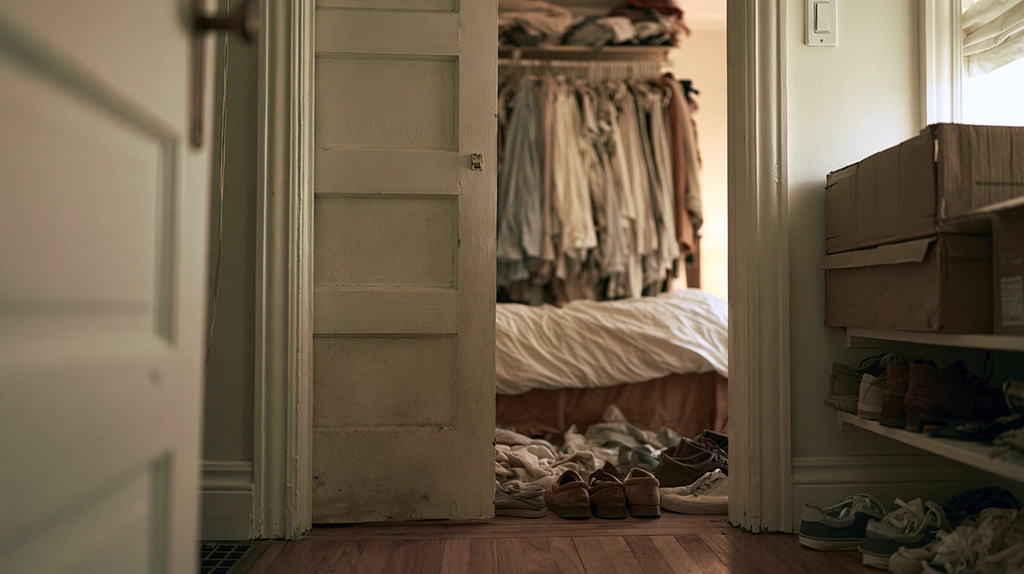
Still air combined with damp surfaces creates favorable conditions for fungal growth. Areas that consistently lack airflow — behind large furniture, inside densely packed closets, under sinks, around window frames, and in bathrooms with inadequate exhaust ventilation — tend to stay wetter longer after moisture exposure, increasing the window of time during which growth can establish.
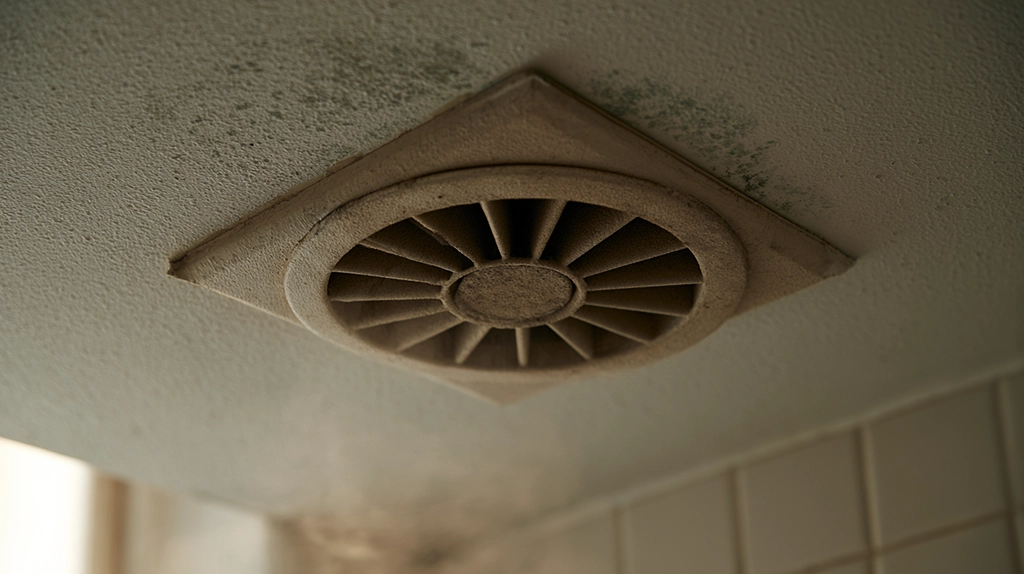
Practical improvements are often simple: maintaining space between furniture and exterior walls, occasionally opening closet doors, running bathroom exhaust fans consistently, and avoiding overfilled storage spaces all help surfaces dry more effectively. In humid seasons, these habits become more important because baseline indoor humidity is already elevated.
Airflow improvements do not resolve active water problems, but they reduce the residual dampness that allows small moisture issues to persist and enables mold to recur after apparent cleanup.
5. Not Every Mold Problem Should Be a DIY Project
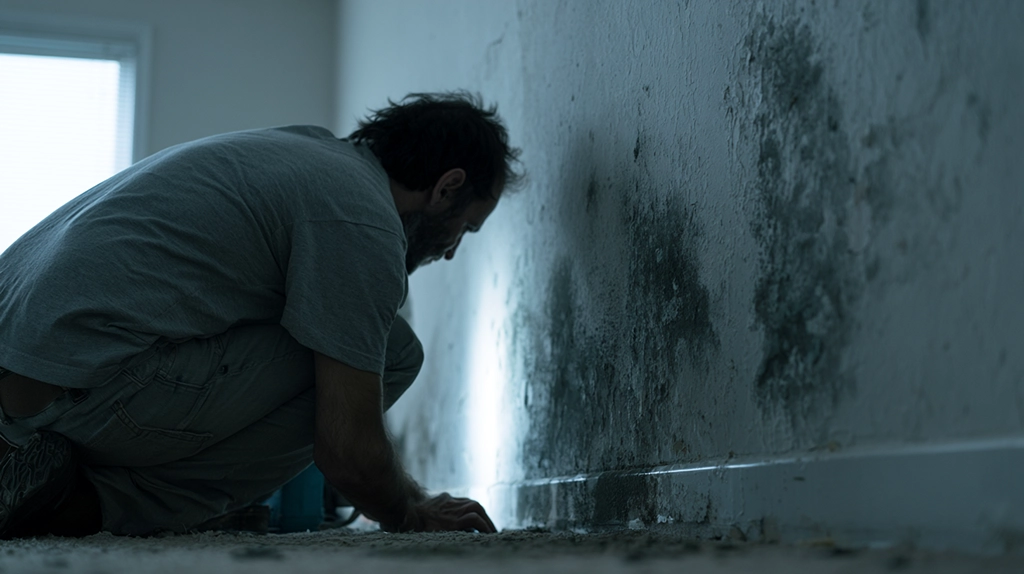
Small areas of surface mold on hard, non-porous materials can often be handled carefully with appropriate cleaning and moisture correction. Larger or more complex problems involve greater risk and uncertainty. Mold that covers a significant surface area, returns after cleaning, follows major water damage, or appears inside walls, ceilings, or HVAC-related spaces warrants professional evaluation rather than independent removal attempts.
Basic cleaning precautions include avoiding product combinations that release hazardous fumes (particularly bleach with ammonia or acidic cleaners), minimizing scrubbing that could aerosolize material, and using appropriate protective equipment. For residents with asthma, allergies, a compromised immune system, or respiratory symptoms correlated with indoor exposure, additional caution is appropriate regardless of the apparent problem size.
A useful decision framework: if the affected area is small, on a hard surface, and the moisture source has been identified and corrected, careful cleaning may be reasonable. If the problem is large, hidden, recurring, or connected to significant water damage, professional assessment is the more appropriate response.
Common Indoor Mold Species
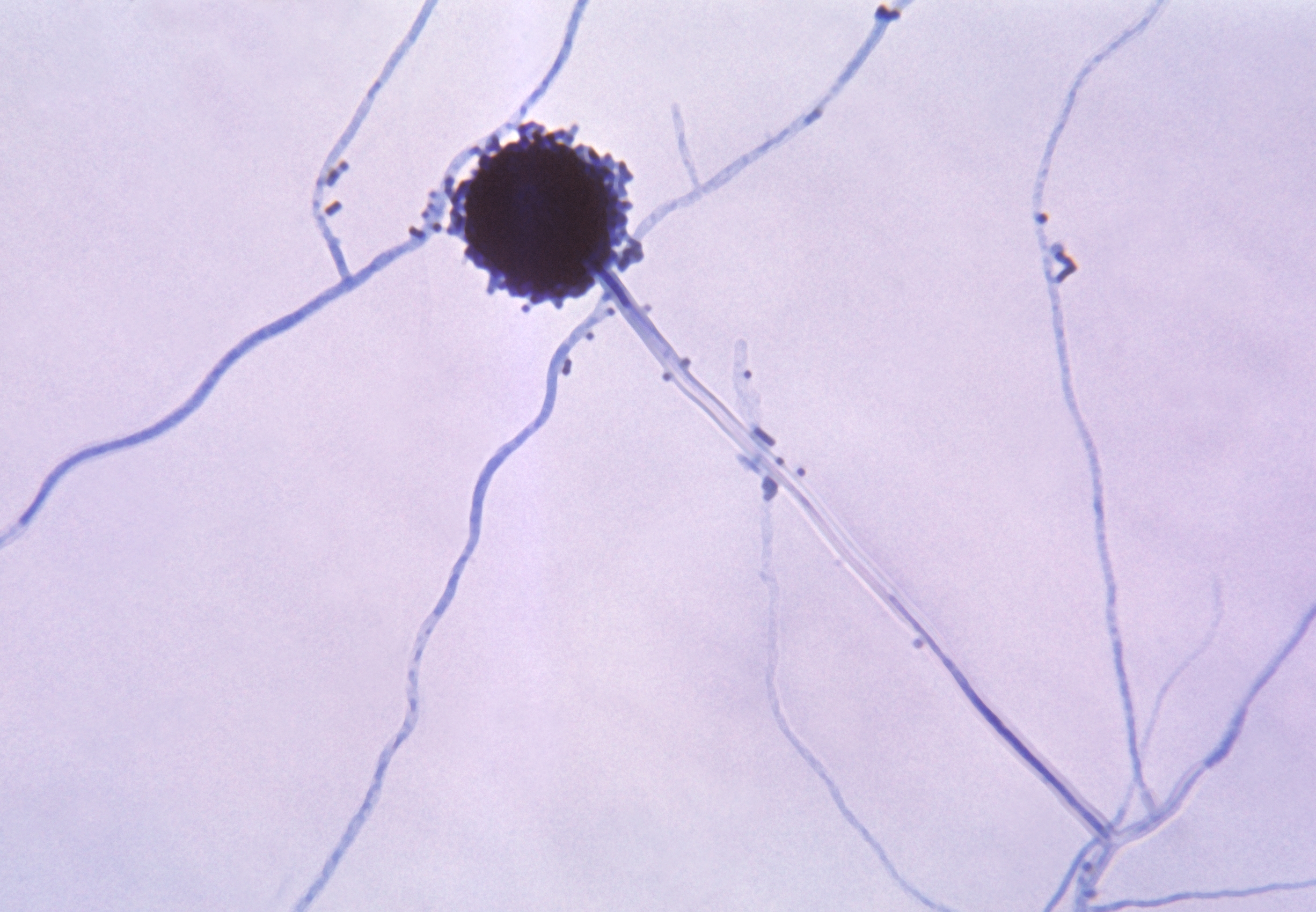
Several mold species are commonly found in household environments. Research into indoor fungal ecology has documented the prevalence of Cladosporium herbarum, Aspergillus niger, Penicillium chrysogenum, Alternaria alternata, and Stachybotrys chartarum in damp indoor settings. These species vary in their preferred moisture levels, typical growth substrates, and health implications — but all are more likely to establish when moisture conditions are sustained and materials remain damp.
Frequently Asked Questions
Do fungi only grow in dirty homes?
No. Moisture is the primary factor. Clean homes with persistent dampness can develop mold, while dry but untidy spaces typically do not.
Are fungal spores dangerous on their own?
Spores are a normal component of indoor air. They become a concern when sustained moisture on a suitable surface allows them to germinate and grow into visible colonies.
How quickly can mold develop?
Development depends on moisture persistence, temperature, and substrate type. Under favorable conditions, visible growth can begin within 24 to 48 hours on some materials.
Why do porous materials grow mold faster?
Porous materials retain moisture at depth, providing sustained dampness that hard surfaces lose more quickly through surface evaporation.
Can improving airflow really prevent mold?
Airflow reduces moisture retention by helping surfaces dry more quickly after exposure. It does not prevent mold from all moisture sources, but it limits the residual dampness that allows mold to persist and recur.