
An Expanding Threat Beyond Human Health
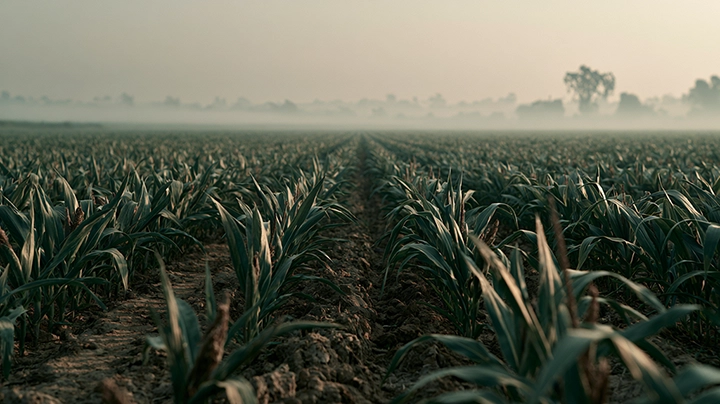
Fungal diseases in public conversation tend to orbit a familiar set of concerns: mold in buildings, crop losses, human infections that are difficult to treat. The framing is almost always anthropocentric — fungi as a problem for people, for food supplies, for healthcare systems.
What receives far less attention is what fungi are doing to ecosystems.
In Australia, researchers are tracking an emerging pattern of fungal disease affecting reptile populations across multiple habitats. What began as reports of isolated infections has been reframed, as evidence accumulates, into something more significant: a picture of fungi operating not simply as decomposers in the background of ecological systems, but as adaptive agents capable of destabilizing the wildlife communities they move through.
At the center of this concern is Nannizziopsis barbatae, a fungal pathogen spreading among Australian reptiles and raising the possibility of another large-scale wildlife epidemic — one that follows a pattern scientists have seen before, and found very difficult to stop.
A Lethal Fungus Emerging in Australian Reptiles
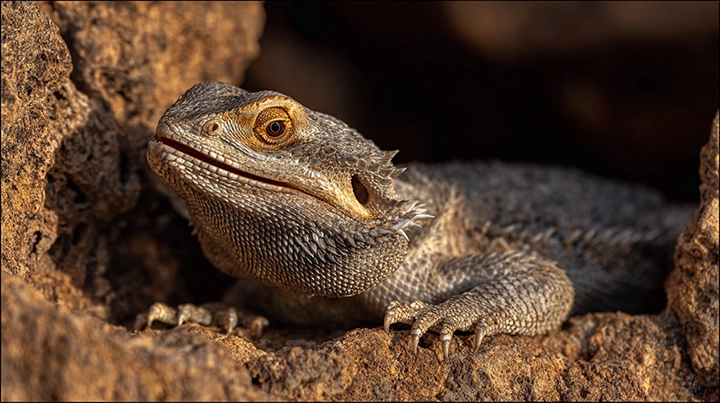
Nannizziopsis barbatae produces severe skin infections in reptiles. Infected animals develop crusted lesions, scale damage, swelling, and progressive tissue deterioration. As the disease advances, it impairs the basic functions that reptiles depend on for survival: mobility, feeding, and thermoregulation — the capacity to regulate body temperature through environmental heat that all reptiles rely on as ectotherms.
Infections have been identified across multiple reptile species within Australian ecosystems, including dragons, skinks, and snakes. The geographic spread suggests the pathogen is not confined to a single habitat type or host species.
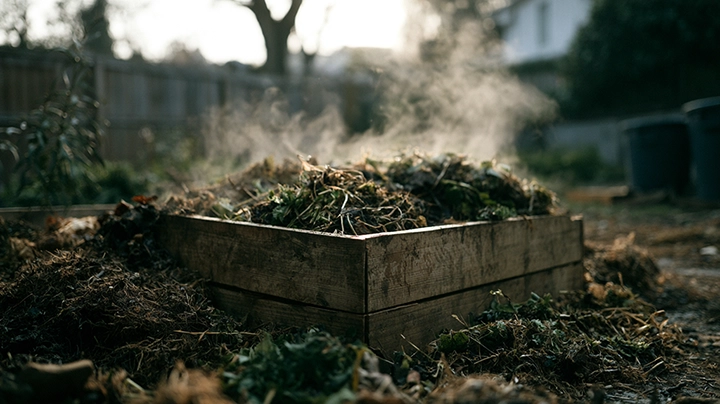
What makes the ecological situation particularly concerning is the fungus’s relationship with the environment. Nannizziopsis barbatae does not depend exclusively on direct animal-to-animal contact for transmission. Fungal spores can survive within soil and surrounding habitats for extended periods — meaning that even after infected animals move through or die within an area, the environment itself retains the capacity to infect new hosts.
This is a critical distinction. The landscape becomes a reservoir, not just a backdrop.

Credit: Felix Frost-Savage, via Wikimedia Commons, CC BY-SA 4.0
The Shadow of the Chytrid Fungus Disaster
Researchers drawing comparisons to chytridiomycosis are not being alarmist. They are pointing to the closest available precedent — and it is a severe one.
Batrachochytrium dendrobatidis (Bd), the chytrid fungus responsible for chytridiomycosis, is now considered one of the most destructive wildlife pathogens ever documented. It contributed to the collapse or extinction of hundreds of amphibian species across multiple continents, and Australia was among the most heavily affected regions. The speed with which the disease spread through frog populations, and the difficulty of intervening once environmental contamination was established, made it a defining case study in wildlife disease ecology.
The parallels with Nannizziopsis barbatae are structural rather than taxonomic. Both pathogens demonstrate the ecological advantages that fungi possess over many other disease agents: environmental persistence that allows transmission to continue without active host populations, the capacity to infect multiple host species, the ability to spread quietly through ecosystems without generating immediately visible population collapse, and the difficulty of early detection before establishment is already wide.
By the time wildlife decline becomes visible in the field — when animals are clearly sick, when populations are measurably smaller — fungal pathogens may already be deeply embedded in the surrounding environment. The visible crisis is a lagging indicator of a process that began much earlier.
Climate Change and the Expanding Fungal Frontier
The relationship between environmental stress and disease emergence is becoming one of the central themes in modern fungal ecology, and the Australian reptile situation reflects it clearly.
Reptiles are particularly vulnerable to environmental disruption because they are ectotherms — their metabolism, movement, and physiological function all depend on external temperatures. Climate fluctuations that shift temperature regimes, alter rainfall patterns, extend drought conditions, or disrupt habitat structure do not simply inconvenience reptiles. They directly reduce the physiological resilience that allows immune systems to respond to infection.
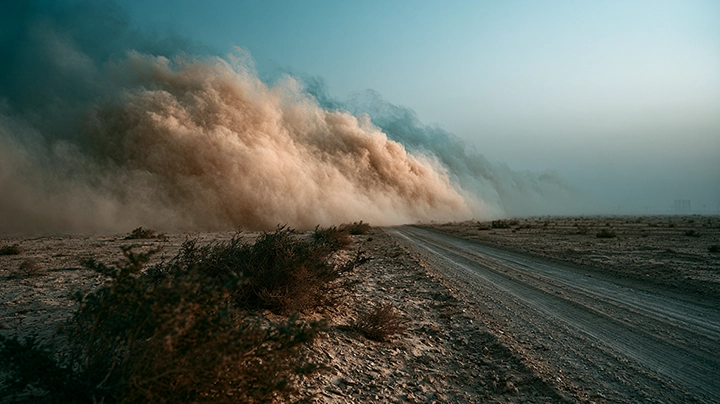
Into that reduced resilience, opportunistic fungi can expand. Stressed hosts are more susceptible. Warming environments may allow fungal pathogens to persist in regions where cooler temperatures previously limited them, or to remain active for longer periods within existing habitats.
The Australian situation is one example within a global pattern. White-nose syndrome has devastated bat populations across North America, caused by Pseudogymnoascus destructans. Chytrid fungus continues affecting amphibian biodiversity worldwide. Myrtle rust has altered plant community composition across sensitive habitats in Australia and beyond. Aspergillus species are under increasing scrutiny in relation to climate-linked shifts in their geographic range and host interactions.
Scientists are beginning to articulate what the data suggests: fungi are not simply responding passively to ecological instability. In some cases, they are actively amplifying it.

Credit: Voyles J, Vredenburg VT, Tunstall TS, Parker JM, Briggs CJ, et al., via Wikimedia Commons, CC BY 2.5
Why Fungal Diseases Are So Difficult to Control
Managing fungal outbreaks in wildlife ecosystems is fundamentally different from managing them in clinical or agricultural settings — and harder in almost every dimension.
In a hospital, contaminated surfaces can be treated. In a field or forest, soil contamination with viable fungal spores across thousands of hectares is not addressable through any practical intervention currently available. Antifungal treatment of individual animals is possible in captivity, but treating wild populations at scale — especially across open ecosystems where infected animals cannot be reliably identified, captured, and treated — is rarely feasible.
The biological characteristics of fungal pathogens compound the management challenge. Spores remain viable in soil, vegetation, water systems, and organic material for periods that can extend well beyond the lifespan of any single host. Multiple species can serve as infection reservoirs simultaneously, creating overlapping transmission networks that sustain spread even as individual host populations decline.
And fungal diseases tend to progress quietly. Symptoms accumulate slowly. Population-level effects may not become measurable until the pathogen has been circulating through an ecosystem for months or years. By the time the data shows a problem, the window for early intervention has usually closed.
This is why researchers describe these pathogens as silent spreaders — not because they hide intentionally, but because the ecological timeline of their spread consistently outpaces the detection systems available to track them.
From Wildlife Infection to Ecosystem Instability
The consequences of fungal wildlife disease do not stop at the species being infected.
Ecosystems are not collections of independent species. They are webs of interaction — predator-prey relationships, pollination and seed dispersal networks, nutrient cycling, microbial communities, habitat engineering by keystone species. When a fungal pathogen destabilizes one component of that web, the effects propagate outward.
Reptile populations in Australian ecosystems play roles in insect control, small mammal predation, seed dispersal, and soil disturbance. Declines in reptile populations do not leave the rest of the ecosystem unchanged. They alter the conditions for the species that interacted with them — sometimes in ways that take years to become apparent, and sometimes in ways that create new vulnerabilities for other organisms.
The deeper concern with Nannizziopsis barbatae is not simply the mortality of infected animals. It is the cascading ecological instability that follows from the removal or reduction of functional populations within a connected system.
Monitoring and Early Detection
Given the difficulty of controlling fungal diseases once environmental contamination is established, early detection is among the most practically important responses available.
Australian researchers are encouraging public reporting of reptiles showing abnormal skin conditions — crusted or deteriorating scales, unusual lethargy, visible lesions — as a way of building the geographic picture of where Nannizziopsis barbatae is present and how it is moving. Experts also caution against relocating wild reptiles or releasing captive animals into natural habitats, both of which can introduce pathogens into new areas or expose already-stressed wild populations to additional disease pressure.
The monitoring challenge is significant. Reptiles in many Australian habitats are cryptic, often active in ways that make systematic population surveys difficult. The ecological scale across which Nannizziopsis barbatae may be operating is large. But early signals — patterns in where lesion cases are being reported, which species are affected, which habitats show clustering — can provide the lead time needed to investigate before population-level consequences become irreversible.
When the Environment Becomes the Reservoir
Nannizziopsis barbatae is one pathogen in one set of habitats. But it represents something broader in fungal ecology: the capacity of fungi to transform ecosystems from passive settings into active participants in disease transmission.
When a fungal pathogen establishes itself within soil and vegetation across a landscape, that landscape does not return to a neutral baseline after infected animals die or move on. The environment remains capable of infecting new hosts — for seasons, potentially for years. The disease does not need ongoing animal-to-animal transmission to persist. The ecosystem sustains it.
This is the characteristic that distinguishes fungal wildlife disease from many other outbreak scenarios, and the one that makes early response so important. Once an ecosystem becomes a reservoir, the question shifts from containment to management across an indefinite timeline.
Understanding fungal ecology early — before population collapse makes the scale of the problem undeniable — is becoming one of the more important priorities in conservation science. The tools for doing so are improving. Whether they improve fast enough, and whether the institutional attention follows, may determine the outcome for reptile communities and the broader ecosystems they are part of.
FAQ
Why are fungal diseases dangerous to wildlife? Because fungi can persist in environments independently of animal hosts, spread through ecosystems across multiple species simultaneously, and sustain transmission long after initial infection events.
How does climate change affect fungal outbreaks in wildlife? Environmental stress reduces immune resilience in wildlife populations while warming conditions may expand the geographic range and persistence of fungal pathogens.
Can wildlife fungal diseases be eradicated? In most cases, no. Once environmental contamination is established, management focuses on monitoring, reducing ecological stressors, and protecting habitat rather than elimination.
Why are fungi difficult to control in natural environments? Because fungal spores survive in soil, water, and organic material for extended periods, making environmental decontamination across open ecosystems practically impossible.
Do wildlife fungal diseases directly threaten humans? Most wildlife fungal pathogens are species-specific and do not directly infect humans, but the ecological disruption they cause can affect biodiversity, agricultural systems, and environmental stability.
References
- Nature Scientific Reports — Nannizziopsis barbatae in Australian Reptiles: https://www.nature.com/articles/s41598-020-77865-7
Key Takeaways
- Please login An Expanding Threat Beyond Human Health Fungal diseases in public conversation tend to orbit a familiar set of concerns: mold in buildings, crop losses, human infections that are difficult to treat.
- What receives far less attention is what fungi are doing to ecosystems.
- Infected animals develop crusted lesions, scale damage, swelling, and progressive tissue deterioration.
- The landscape becomes a reservoir, not just a backdrop.
- Batrachochytrium dendrobatidis (Bd), the chytrid fungus responsible for chytridiomycosis, is now considered one of the most destructive wildlife pathogens ever documented.
Frequently Asked Questions
What should you know about please login to bookmark?
Please login An Expanding Threat Beyond Human Health Fungal diseases in public conversation tend to orbit a familiar set of concerns: mold in buildings, crop losses, human infections that are difficult to treat. The framing is almost always anthropocentric — fungi as a problem for people, for food s
What should you know about an Expanding Threat Beyond Human Health?
Fungal diseases in public conversation tend to orbit a familiar set of concerns: mold in buildings, crop losses, human infections that are difficult to treat. The framing is almost always anthropocentric — fungi as a problem for people, for food supplies, for healthcare systems.
What should you know about a Lethal Fungus Emerging in Australian Reptiles?
Nannizziopsis barbatae produces severe skin infections in reptiles. Infected animals develop crusted lesions, scale damage, swelling, and progressive tissue deterioration. As the disease advances, it impairs the basic functions that reptiles depend on for survival: mobility, feeding, and thermo
What should you know about the Shadow of the Chytrid Fungus Disaster?
Researchers drawing comparisons to chytridiomycosis are not being alarmist. They are pointing to the closest available precedent — and it is a severe one.
What should you know about climate Change and the Expanding Fungal Frontier?
The relationship between environmental stress and disease emergence is becoming one of the central themes in modern fungal ecology, and the Australian reptile situation reflects it clearly.