According to
According to NEWS WISE
Nature’s Solution to Forever Chemicals
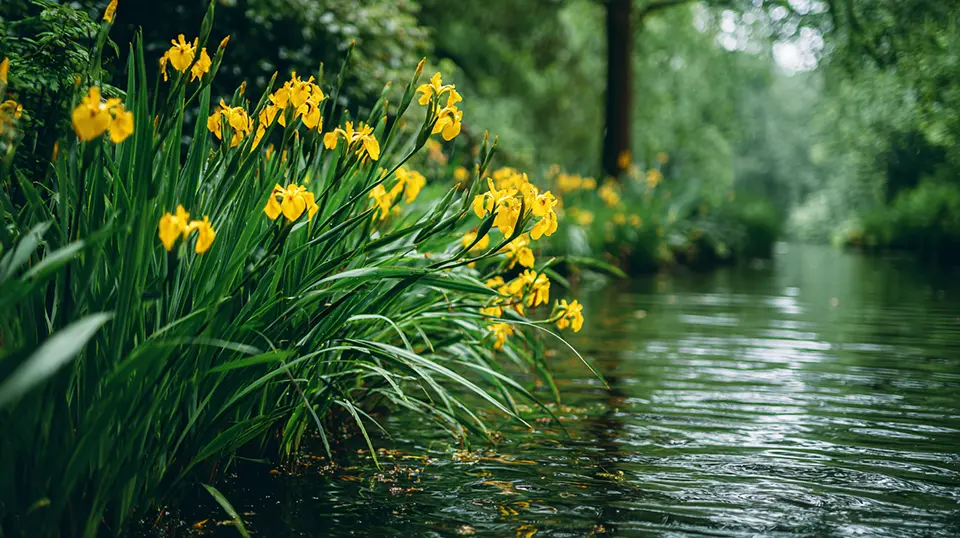
In a breakthrough pilot study, scientists have discovered a powerful natural combination capable of reducing toxic “forever chemicals” from contaminated water: the yellow flag iris (Iris pseudacorus L.) and a common soil fungus, Rhizophagus irregularis.
This innovative pairing offers new hope for sustainable water purification systems and addresses one of the most persistent environmental pollutants of our time—per- and polyfluoroalkyl substances (PFAS).

Source: Wikimedia Commons, CC BY-SA 3.0
PFAS: The “Forever Chemicals”
Often found in products like non-stick cookware, fire-fighting foams, and water-resistant textiles, PFAS are notoriously difficult to break down in the environment.
Their chemical stability has earned them the nickname “forever chemicals,” and their presence in water systems poses long-term health risks to humans and wildlife alike.
A team of researchers led by Bo Hu and Feng Zhao set out to evaluate whether constructed wetlands, bolstered by fungal symbiosis, could offer a nature-based solution to this problem.
Their study, published in Environmental Science & Technology, demonstrates that combining the yellow flag iris with R. irregularis can significantly reduce PFAS levels in artificial wetland settings.
The Role of Constructed Wetlands
Wetlands are widely recognized for their ecological services: they filter out sediments, absorb excess nutrients, and support biodiversity.
Constructed wetlands are engineered systems that mimic these functions to treat wastewater.
What this study adds is a focus on PFAS—pollutants so resilient that even advanced chemical treatments often fall short.
In the controlled greenhouse environment, the team recreated wetland conditions using tall plastic tubes filled with a mix of sand and soil.
Some of the irises were inoculated with R. irregularis, a type of arbuscular mycorrhizal fungus (AMF), while others served as controls.
These systems were then exposed to wastewater spiked with realistic concentrations of four different PFAS compounds.

Source: Wikimedia Commons, CC BY-SA 4.0
Stress and Survival: How Fungi Helped Plants Cope
Exposure to PFAS negatively affected the plants.
Yellow flag irises exhibited reduced growth and physiological stress symptoms such as decreased antioxidant enzyme activity.
However, irises partnered with the fungus fared better. They showed improved root and shoot development and higher resilience to PFAS toxicity.
Not only did the fungus improve plant health, but it also aided in pollutant removal.
The AMF-enhanced plants:
- Removed 10–13% more PFAS than the non-fungal group.
- Showed higher uptake of long-chain PFAS in roots and shoots.
- Promoted the breakdown of PFAS into smaller, less toxic byproducts.
This breakdown likely occurred due to the stimulation of surrounding microbial communities by the fungus, which acted as catalysts in the degradation process.
Water Quality Improvement
Researchers also tested the drainage water that flowed out of the tubes.
The fungal-enhanced wetland setups had 17–28% less PFAS in the effluent compared to their fungal-free counterparts.
These results suggest that a natural filtration system, enriched by specific fungal partners, could enhance PFAS remediation in real-world applications.
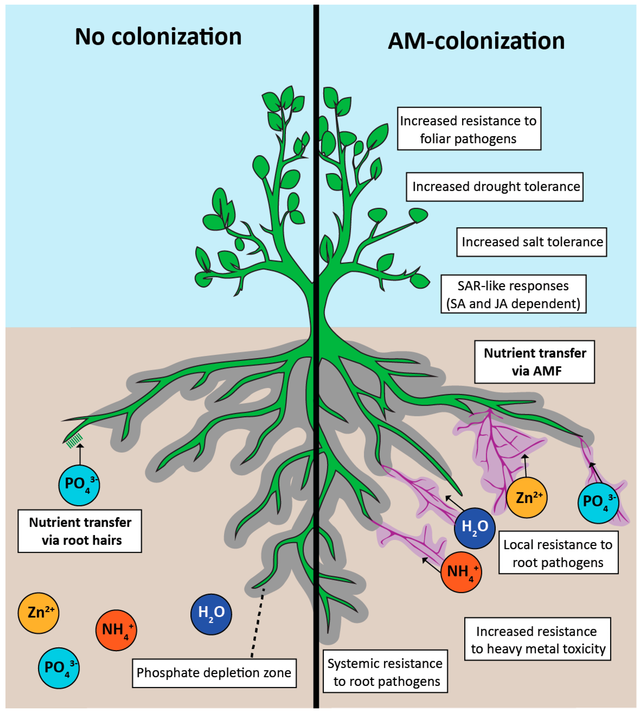
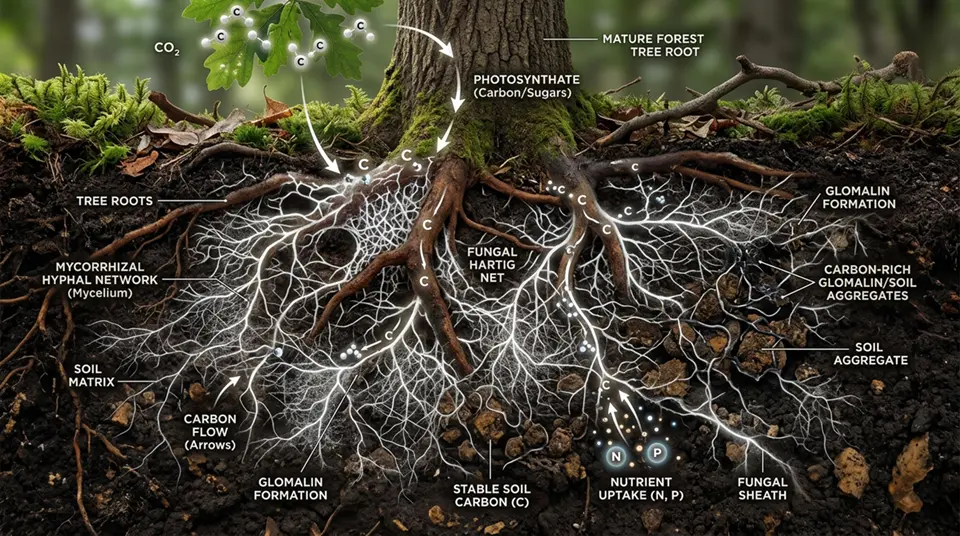
The hyphal network of arbuscular mycorrhizal fungi (AMF) extends beyond the depletion zone (grey), accessing a greater area of soil for phosphate uptake. A mycorrhizal-phosphate depletion zone will also eventually form around AM hyphae (purple). Other nutrients that have enhanced assimilation in AM-roots include nitrogen (ammonium) and zinc. Benefits from colonization include tolerances to many abiotic and biotic stresses through induction of systemic acquired resistance (SAR).
Source: Wikimedia Commons, CC BY-SA 4.0
The Science Behind Fungal Partnerships
Arbuscular mycorrhizal fungi like R. irregularis form symbiotic relationships with more than 80% of plant species.
By colonizing plant roots, they exchange nutrients—particularly phosphorus—for carbohydrates.
This mutualistic relationship not only boosts plant nutrient uptake but also increases tolerance to various environmental stresses—including heavy metals and now, as this study shows, synthetic pollutants like PFAS.
This partnership represents an ancient and highly effective biological strategy, now being harnessed for contemporary environmental challenges.
What Are PFAS and Why Do They Matter?
PFAS (per- and polyfluoroalkyl substances) are synthetic chemicals used since the 1940s.
They are prized for their water-, grease-, and stain-resistant properties, making them popular in a vast array of consumer and industrial products.
However, PFAS do not naturally degrade, and they can persist in the environment for decades.
Scientific studies have linked PFAS exposure to:
- Cancer
- Liver damage
- Immune system dysfunction
- Developmental issues in infants
Given their persistence and health risks, reducing PFAS in water systems is a high priority for environmental scientists and policy-makers worldwide.
Scaling the Solution
While the greenhouse results are promising, the next challenge is field implementation.
Researchers are preparing for trials in larger constructed wetlands using actual PFAS-contaminated wastewater.
These trials will test the robustness of the plant-fungus system outside the lab, accounting for variables like changing weather, competing microbial populations, and fluctuating water chemistry.
If successful, this could pave the way for a cost-effective, low-energy alternative to conventional PFAS treatment methods.
Potential Global Impact
The innovation could be especially impactful in regions lacking the infrastructure for high-tech water treatment.
Constructed wetlands are relatively easy to build and maintain, making them ideal for rural communities or developing nations facing water contamination issues.
Furthermore, this approach aligns with United Nations Sustainable Development Goals (SDGs), offering a natural and regenerative solution.
It also opens up new research frontiers in plant-microbe interactions for environmental remediation.
Conclusion
The yellow flag iris and Rhizophagus irregularis have emerged as unlikely yet effective allies in the fight against forever chemicals.
Their cooperative ability to extract and degrade PFAS could redefine how we approach environmental cleanup.
This study serves as a compelling reminder that nature often holds the key to solving human-made problems—if we know where to look.

Source: Wikimedia Commons, CC BY-SA 4.0
References
- Environmental Protection Agency (EPA). (2024). PFAS Explained.
- World Health Organization (WHO). (2023). Per- and polyfluoroalkyl substances (PFAS) in drinking water.
According to NEWS WISE
Key Takeaways
- Yellow flag iris (Iris pseudacorus), an invasive wetland plant in North America, forms symbiotic associations with root fungi that may be exploited to facilitate phytoremediation of heavy metal-contaminated water and sediments.
- The root-associated fungi enhance the plant’s uptake and tolerance of toxic metals including copper, cadmium, and zinc, suggesting potential for mycorrhiza-assisted phytoremediation approaches.
- Yellow flag iris is itself considered an invasive species in wetland areas outside its native Europe—its use in remediation must be carefully managed to avoid further spread.
- Fungi in the rhizosphere of iris species can also produce enzymes that break down organic pollutants in contaminated wetland sediments, adding another remediation pathway.
- Mycorrhiza-assisted phytoremediation offers a nature-based alternative or complement to expensive engineering-based remediation of polluted water bodies and sediments.
Frequently Asked Questions
What is phytoremediation and how do fungi enhance it?
Phytoremediation uses living plants to remove, stabilise, or degrade pollutants from contaminated soil, water, or sediments. Plants can accumulate heavy metals in their tissues (phytoextraction), bind metals in root zones (phytostabilisation), degrade organic pollutants through root-zone microbial activity (rhizodegradation), or volatilise certain pollutants (phytovolatilisation). Fungi enhance phytoremediation by: extending the root zone through hyphal networks, dramatically increasing metal uptake capacity; producing metal-binding proteins (metallothioneins) that detoxify metals in plant tissue; secreting organic acids that mobilise metals from soil particles into plant-available forms; and enabling plants to tolerate higher metal concentrations through compartmentalisation strategies that concentrate metals in fungal tissue rather than plant cells.
Which heavy metals can iris-fungus systems help remove from water?
Research on iris species and their root-associated fungi has primarily investigated cadmium, copper, zinc, lead, and chromium—metals commonly found in industrial wastewater, urban stormwater, and contaminated wetland sediments. The capacity for uptake varies by species combination and environmental conditions, but studies have reported yellow flag iris accumulating 2–5 times greater concentrations of cadmium and zinc when colonised by metal-tolerant fungi compared to uninoculated controls. Mycorrhizal communities in contaminated sites often consist of metal-tolerant ‘ecotypes’ that are genetically adapted to high-metal conditions and provide superior protective function in those environments compared to non-adapted fungal strains.
Is yellow flag iris safe to use for remediation given its invasive status?
Yellow flag iris (Iris pseudacorus) is listed as invasive in many North American jurisdictions because it escapes cultivation into natural wetlands where it forms dense monocultures that displace native vegetation. Using it for active phytoremediation requires balancing the remediation benefit against the risk of establishing new invasive populations. Risk management strategies include: using physically contained wetland cells rather than open water; implementing comprehensive harvesting programmes to remove all above-ground biomass before seed set; monitoring for escape and implementing immediate removal protocols; and investigating whether native North American iris species with similar phytoremediation capacity could serve as alternatives to the invasive species.
How long does mycorrhiza-assisted phytoremediation take to clean contaminated wetlands?
Phytoremediation timelines are generally measured in years to decades rather than weeks or months—this is the primary limitation of biological compared to engineering-based remediation. For metal-contaminated sediments, realistic modelling suggests 10–30 years may be required to reduce metal concentrations to regulatory standards in moderately contaminated sites. However, mycorrhizal assistance can accelerate the process by 30–50% compared to uninoculated plants in some studies, by increasing plant biomass production, enhancing metal accumulation per unit biomass, and improving plant survival under stressful conditions. The approach is most cost-effective for large, diffuse contamination areas where engineering alternatives (dredging, soil washing) would be prohibitively expensive.
What other plant-fungus combinations are used for remediation?
Numerous plant-fungus partnerships have been researched for remediation applications. Poplar trees (Populus species) inoculated with ectomycorrhizal fungi have been widely used for organic pollutant degradation (polycyclic aromatic hydrocarbons, chlorinated solvents) at contaminated industrial sites. Sunflowers (Helianthus annuus) with AMF show enhanced lead and cadmium accumulation. Vetiver grass (Chrysopogon zizanioides) with selected AMF strains has been deployed at mining waste sites. Alpine pennycress (Noccaea caerulescens), a natural hyperaccumulator of zinc and cadmium, is being combined with mycorrhizal enhancements to boost already exceptional metal uptake rates. Research in this area is extensive, with over 400 plant species evaluated as potential phytoremediators.