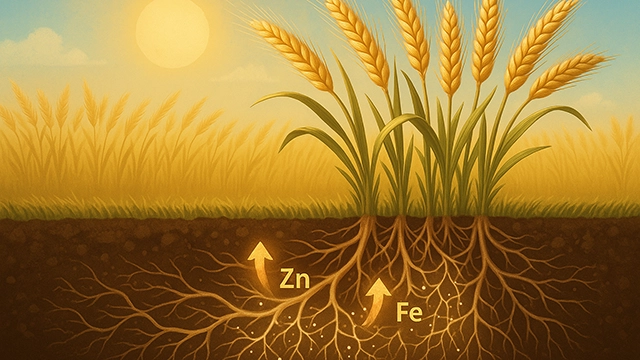
In the golden wheat fields of Australia, a quiet revolution is underway. Researchers have uncovered a biological ally that could shift the tide in the global fight against malnutrition: a humble soil-dwelling fungus known as arbuscular mycorrhizal fungi (AMF). Long known for enhancing plant growth, AMF is now revealing a deeper role—enhancing not just the size of crops, but their nutritional power.
Beyond Bigger Grains: Bioavailability Is the Game-Changer
A recent study tested eight widely cultivated wheat varieties, comparing those partnered with AMF to untreated controls. The outcomes were striking: grains from AMF-treated plants were not only larger but also contained significantly more zinc and iron. But the real breakthrough? These minerals were in bioavailable forms—the kind human bodies can absorb and use.
In the realm of nutrition, that distinction matters. Many efforts to enrich foods with micronutrients fall short when phytic acid, a natural compound in plants, locks minerals away from human digestion. This study found that in AMF-treated wheat, there was no spike in phytic acid—and in high-phosphorus soils, levels of this antinutrient even dropped. That means more nutrition, not just on paper, but in people.

A Biological Route to Better Nutrition
This isn’t just academic progress. It’s a game-changer for biofortification—the effort to enhance the nutrient content of crops. Traditional strategies rely on plant breeding or synthetic fertilizers, often with limited reach in low-income regions. AMF offers a low-input, scalable biological strategy that works in harmony with plant roots.
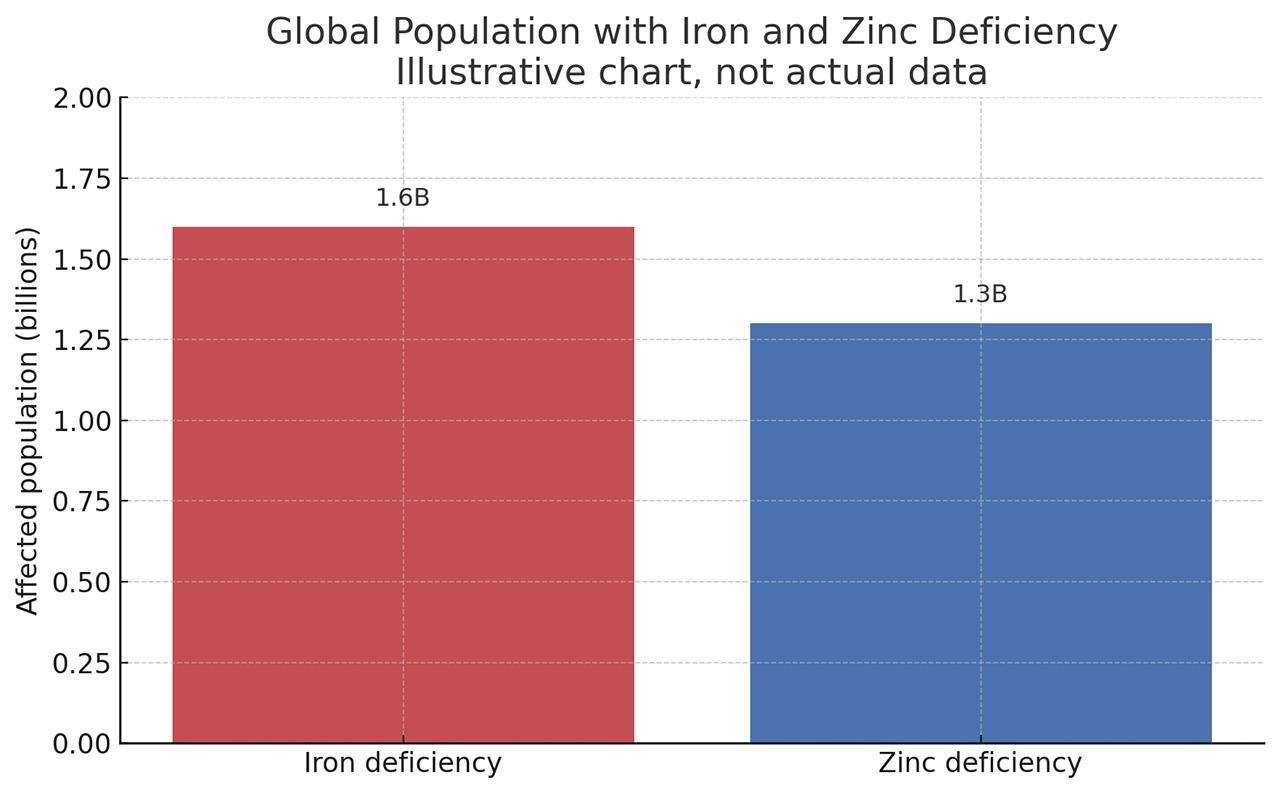
And it couldn’t come at a more urgent time. According to WHO, over 2 billion people globally suffer from iron or zinc deficiency, leading to stunted growth, weakened immunity, and reduced cognitive development. If a naturally occurring fungus can significantly boost essential mineral levels in a staple crop like wheat, that’s not just a scientific win—it’s a humanitarian one.
A Fungal Fix for Sustainable Farming
AMF doesn’t just help wheat. Its potential spans a wide range of crops, from rice to maize to legumes. And because it operates at the root-soil interface, AMF-based solutions dovetail beautifully with sustainable agriculture.
Unlike chemical fertilizers, which often degrade soil health over time, AMF supports long-term fertility by creating symbiotic networks that share resources and improve resilience.
It’s also responsive to soil conditions. The study noted that AMF effects were especially powerful in high-phosphorus soils—a common legacy of intensive agriculture. In those environments, not only did mineral content improve, but the grains became more usable by the body, offering a dual benefit for nutrition and soil restoration.
Next Steps: Scaling the Underground Revolution
What comes next is critical. Researchers aim to test more AMF strains, soil conditions, and crop types. How does this fungal partnership behave under drought? Can it reduce the need for mineral supplementation? Could AMF become part of a national or international biofortification policy?
Policymakers and global health agencies should be paying attention. A microscopic fungus may be one of the most elegant tools in our nutritional toolbox—a living bridge between healthy soils and healthy people.
In a world facing intersecting crises of hunger, soil degradation, and climate change, AMF invites us to rethink agriculture not as a top-down imposition of inputs, but as a bottom-up system powered by relationships. And perhaps, the solutions to malnutrition have been right beneath our feet all along.
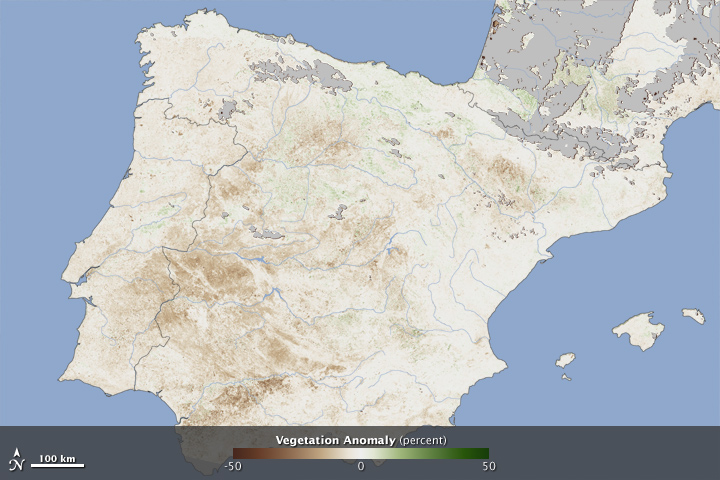
Source: World wheat production map – Wikimedia Commons, CC BY-SA 4.0
References
- WHO. Malnutrition Factsheet. WHO.int
- FAO. Sustainable agriculture. FAO.org
- PubMed. Mycorrhiza and crop nutrition studies. PubMed.gov
- Wikipedia. Arbuscular mycorrhiza, Phytic acid, Biofortification, Wheat, Rice, Maize
Key Takeaways
- Arbuscular mycorrhizal fungi (AMF) are critical for global food security: they colonise 72% of crop plant roots and can reduce the need for phosphate fertilisers by 20–50% in well-managed agricultural systems.
- Intensive tillage, synthetic fertiliser overuse, and broad-spectrum fungicides have severely depleted native AMF populations in agricultural soils worldwide over the past century.
- Restoring AMF communities in degraded agricultural soils can increase crop yields by 15–30% under low-input conditions and significantly improve drought resilience.
- AMF inoculant products for agricultural use represent a rapidly growing market, projected to exceed $1 billion annually by 2025, though product quality and efficacy varies widely.
- AMF’s role in soil carbon sequestration—estimated at 5 billion tonnes of CO₂ equivalent annually—makes mycorrhizal soil health a climate mitigation strategy, not just an agricultural one.
Frequently Asked Questions
How do arbuscular mycorrhizal fungi improve crop yields?
AMF improve crop yields through multiple mechanisms. Primary among these is phosphorus acquisition: AMF hyphae extend the effective root exploration zone by 10–100 fold, accessing phosphorus in soil pores too small for roots to enter. This is particularly valuable in phosphorus-limited soils. AMF also improve water uptake by extending the zone of soil moisture access and by producing aquaporin channels in root cells; enhance uptake of zinc, copper, and other micronutrients; improve resistance to certain root pathogens by competitively excluding harmful organisms; and stimulate plant immune responses through hormonal signalling pathways, making colonised plants more resilient to both biotic and abiotic stresses.
Which farming practices best support AMF communities?
AMF-supportive farming practices include: minimising tillage (particularly deep inversion ploughing, which physically destroys hyphal networks and disrupts soil structure); maintaining living root cover year-round through cover cropping, since AMF require a living plant host to survive and bare fallow periods allow AMF communities to collapse; reducing synthetic phosphate fertiliser applications, since high soil phosphate suppresses AMF colonisation (plants ‘switch off’ mycorrhizal investment when phosphorus is abundant from synthetic sources); avoiding broad-spectrum fungicides during the growing season; and managing crop rotations to maintain AMF host continuity (avoiding brassica monocultures, since brassicas are non-mycorrhizal).
Are AMF inoculant products effective, and how should farmers choose between them?
Commercial AMF inoculant products vary enormously in quality and efficacy. A systematic review of published trials found that under low-input or degraded soil conditions, high-quality AMF inoculants increase yields by an average of 15–25%; under high-input, high-fertility conditions (where native AMF are suppressed and synthetic fertilisers replace their function), benefit is minimal. Key quality indicators when selecting products include: verification that the label species are genuinely present and viable (look for ISO 10832 certification or equivalent); propagule counts per unit (higher counts increase colonisation probability); use in combination with practices that allow AMF to establish (low phosphate, no fungicides, living roots); and matching the inoculant species to the target crop.
Why are native AMF communities declining in agricultural soils?
Agricultural practices have dramatically reduced the diversity and abundance of native AMF communities in cultivated soils over the past century. The primary drivers are: synthetic phosphate fertilisation (suppresses AMF colonisation by removing the plant’s incentive to invest in the symbiosis); deep tillage (mechanically severs and destroys hyphal networks that take months to re-establish); broad-spectrum fungicide applications (directly kill AMF spores and hyphae); extended bare fallow periods (AMF starve without a plant host); and monoculture cropping (reduces the diversity of plant signals that support diverse AMF communities). Studies comparing organic and conventional farms consistently find significantly higher AMF diversity and abundance in organic systems.
Can AMF help with climate change adaptation in agriculture?
AMF offer multiple climate adaptation benefits for agriculture. Drought resilience: AMF-colonised plants maintain water potential better under dry conditions due to extended root water-access zones; this could be critical as rainfall becomes less predictable in many agricultural regions. Heat stress: AMF colonisation has been shown to help plants tolerate higher temperatures by modulating oxidative stress responses. Soil carbon: AMF networks contribute significantly to stable soil carbon through glomalin production and aggregate formation, helping soils retain moisture and reducing erosion risk under intense rainfall events. Reduced fertiliser dependence: as synthetic fertiliser costs increase with natural gas price volatility (nitrogen fertiliser) and phosphate reserve depletion, AMF-supported low-input agriculture becomes increasingly economically viable.