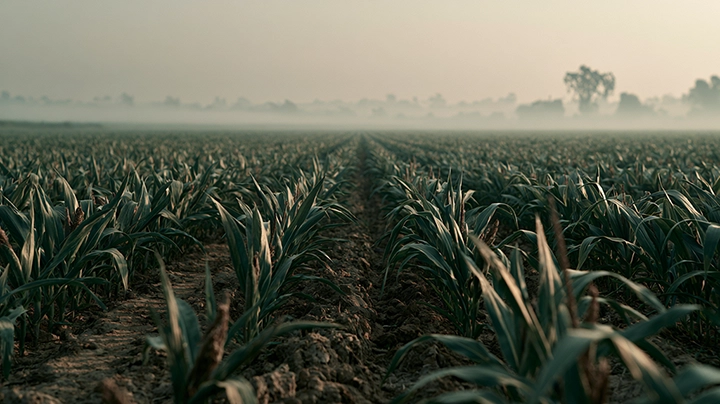

In the world of poultry production, three notorious names haunt the feed supply chain: aflatoxin B1 (AFB1), deoxynivalenol (DON), and zearalenone (ZEN). These mycotoxins don’t just ruin grain — they derail growth, damage organs, and threaten food safety at its foundation.
But what if a single natural tool could degrade all three, right inside the gut?
That’s the promise delivered by a new mycotoxin-degrading enzyme complex (MDE) — a coated enzymatic cocktail that not only tackles these toxins in vitro, but shows powerful in vivo effects in broiler chicks.
The Science of Degradation: Three Toxins, One Solution
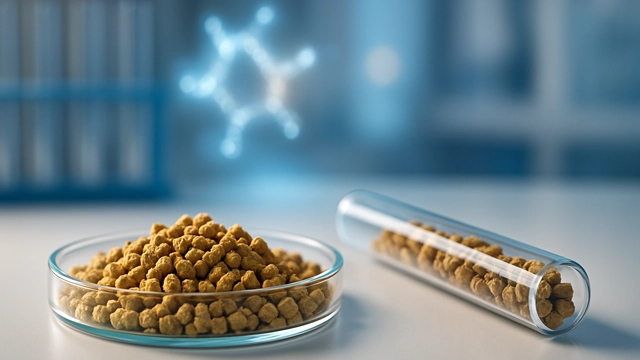
Developed using a microcapsule delivery system, the MDE in this study combined three targeted enzymes, each specialized to break down one of the toxic trio.
In simulated pig digestion systems, the results were impressive:
- AFB1 degraded by 76.3%
- DON by 74.0%
- ZEN by 60.8%
But laboratory digestion is only half the battle. The real test? Live animals.
Chicks, Toxins, and Turnaround
Researchers exposed one-day-old male Cobb broilers to a mycotoxin cocktail: 50 µg/kg of AFB1, 3.0 mg/kg of DON, and 1.5 mg/kg of ZEN.
As expected, the toxin-fed group suffered — stunted growth, liver stress (ALT, AST up), kidney issues (BUN up, CREA down), and visible stomach damage.
But adding just 0.02% of MDE into the feed brought the birds back from the brink:
- Partial recovery of body weight by day 7
- Normalization of liver and kidney biomarkers
- Reduced stomach inflammation
- Gastric toxin levels dropped by 29–40%
The enzyme complex wasn’t just chewing up toxins — it was changing outcomes.
What Makes This Enzyme Complex Different?

Unlike common toxin binders like bentonite or activated carbon, MDE doesn’t trap mycotoxins — it destroys them. That matters, because:
- Enzymes are selective, reducing risk of nutrient binding.
- The coated formulation survives feed processing and stomach acid.
- It can be tailored to specific feed challenges.
And while most existing solutions focus on one mycotoxin at a time, this MDE handles three — AFB1, DON, ZEN — making it one of the few truly broad-spectrum detox tools in the game.
The Future of Safe Feed?

The poultry sector has long been vulnerable to co-contamination, especially in warmer climates where storage conditions aren’t always ideal. If this enzyme complex can scale — and hold up across different species — it could be a game-changer not just for chickens, but for global feed security.
Will it replace traditional binders? Maybe not overnight. But it might supplement them, or offer a safer, more precise alternative for sensitive systems.
MoldNewsman’s Verdict
This isn’t just a detox study — it’s a proof of concept for a smarter class of feed additives.
It blends:
- Molecular science (enzyme targeting)
- Practical formulation (microcapsules)
- Real-world relevance (in vivo validation)
Next step? Longer trials, larger cohorts, and application in pigs or aquaculture.
But for now, MDEs like this may be the start of a new era in precision mycotoxin control.
References
- Wang, X. et al. (2025). A multi-enzyme complex degrades AFB1, DON, and ZEN in broiler diets. Toxicology and Applied Pharmacology, ScienceDirect.
- PubChem: Aflatoxin B1; Deoxynivalenol; Zearalenone.
- Li, C. & Zhang, Y. (2024). Mycotoxin detoxification through enzymatic degradation. Animal Feed Science and Technology, 322, 115082.
Key Takeaways
- In the world of poultry production, three notorious names haunt the feed supply chain: aflatoxin B1 (AFB1), deoxynivalenol (DON), and zearalenone (ZEN).
- Developed using a microcapsule delivery system, the MDE in this study combined three targeted enzymes, each specialized to break down one of the toxic trio.
- But adding just 0.02% of MDE into the feed brought the birds back from the brink:
- And while most existing solutions focus on one mycotoxin at a time, this MDE handles three — AFB1, DON, ZEN — making it one of the few truly broad-spectrum detox tools in the game.
- If this enzyme complex can scale — and hold up across different species — it could be a game-changer not just for chickens, but for global feed security.
Frequently Asked Questions
What should you know about the Science of Degradation: Three Toxins, One Solution?
Developed using a microcapsule delivery system, the MDE in this study combined three targeted enzymes, each specialized to break down one of the toxic trio.
What should you know about chicks, Toxins, and Turnaround?
Researchers exposed one-day-old male Cobb broilers to a mycotoxin cocktail: 50 µg/kg of AFB1, 3.0 mg/kg of DON, and 1.5 mg/kg of ZEN.As expected, the toxin-fed group suffered — stunted growth, liver stress (ALT, AST up), kidney issues (BUN up, CREA down), and visible stomach damage.
What Makes This Enzyme Complex Different?
Unlike common toxin binders like bentonite or activated carbon, MDE doesn’t trap mycotoxins — it destroys them. That matters, because:
What should you know about the Future of Safe Feed??
The poultry sector has long been vulnerable to co-contamination, especially in warmer climates where storage conditions aren’t always ideal. If this enzyme complex can scale — and hold up across different species — it could be a game-changer not just for chickens, but for global feed secur
What should you know about moldNewsman’s Verdict?
This isn’t just a detox study — it’s a proof of concept for a smarter class of feed additives.