A Hidden Killer: The Deadly Reality of Mold Contamination
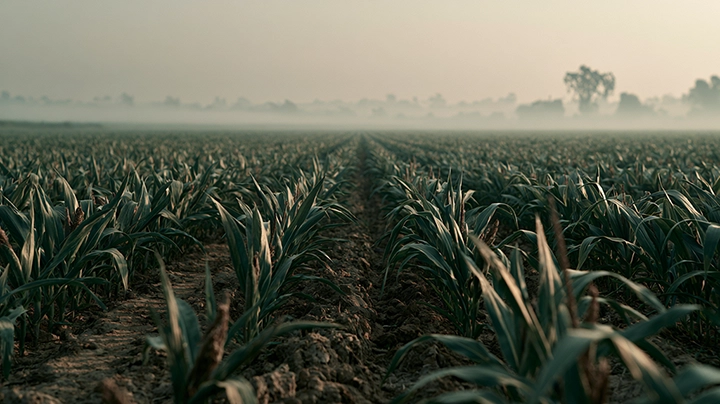
In 2004, Kenya witnessed one of the deadliest food poisoning outbreaks in modern history. Over 125 people died, and hundreds more suffered acute illness after consuming maize heavily contaminated with aflatoxins — a toxic byproduct of mold growth — reportedly 317 confirmed cases with a 39% case-fatality rate (Environmental Health Perspectives). This tragedy, driven by drought, poor harvest conditions, and improper storage, was a grim reminder that mold contamination is not merely an issue of food spoilage — it is a lethal threat to human health.

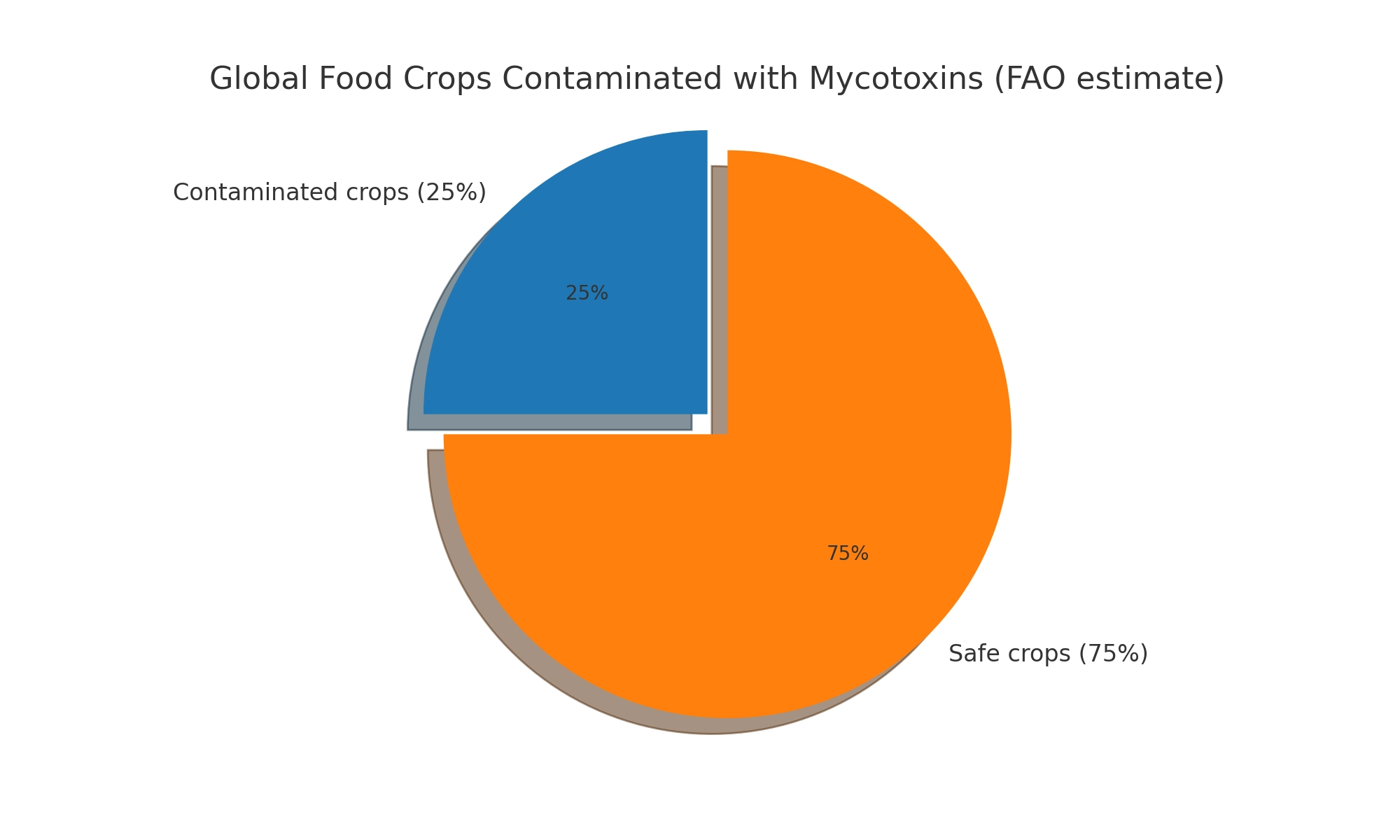
Today, even as food technologies advance, an invisible biological war continues to rage, often undetected. According to the Food and Agriculture Organization (FAO), approximately 25% of the world’s food crops are contaminated with mycotoxins annually (Crit Rev Food Sci Nutr), leading to massive food loss and billions of dollars in economic damage. More insidiously, mycotoxins such as aflatoxins and fumonisins — classified as Group 1 carcinogens by the World Health Organization (WHO) — pose severe health risks even at trace levels. Safeguarding our food against mold contamination, therefore, is not just about preserving quality — it is about saving lives.
A Two-Phase Battle: Endophytic Infection and Surface Colonization
It is commonly assumed that mold is a result of poor storage conditions after harvest. In reality, mold contamination often begins much earlier, operating through a two-phase infection model. In the first phase, known as endophytic infection — meaning fungi silently invade and live inside plant tissues like stealthy intruders — fungi like Aspergillus flavus and Fusarium species infiltrate living plant tissues, including kernels, leaves, and stems, during crop growth. These fungi can accumulate toxins silently within the plants, even when the outward appearance of the crops remains seemingly healthy.
In the second phase, post-harvest surface colonization occurs. If harvested grains are stored under warm and humid conditions, particularly with a relative humidity above 70% and temperatures over 25 °C, molds proliferate visibly on the surface, potentially producing even more toxins. In short, the absence of visible mold does not guarantee food safety.
Field Management: The First Line of Defense
Winning this battle requires starting from the very beginning — crop management at the field level. Studies have shown that proper irrigation significantly reduces the risk of A. flavus infection. Under drought stress, plant cell structures weaken, and the production of defensive proteins declines, making crops more susceptible to fungal invasion. Field trials have demonstrated that irrigating maize fields can lower aflatoxin contamination risk by over 50%.
Furthermore, balanced nitrogen supplementation plays a crucial role. Adequate nitrogen promotes healthy plant growth, which enhances natural resistance to infection, while excessive nitrogen application may inadvertently stimulate fungal proliferation. Good Agricultural Practices (GAP) — including crop rotation, selection of resistant varieties, and timely harvesting — are essential strategies for preventing mold contamination at its source.
Post-Harvest Management: Securing the Last Line
Even with excellent field management, the battle can still be lost if post-harvest handling falters. The United States Food and Drug Administration (FDA) recommends that grains be dried immediately after harvest to a moisture content below 13% to inhibit mold growth. Proper storage environments require well-controlled ventilation, humidity, and temperature to maintain grain quality and prevent contamination.
Emerging technologies such as Controlled Atmosphere Storage — essentially giant “breathable fridges” where oxygen levels are carefully lowered and carbon dioxide levels increased — have shown promise in effectively suppressing mold growth and toxin production. Think of it like placing grains in a protective bubble where the air is specially adjusted to keep mold away.
Moreover, smart storage monitoring systems now enable warehouses to “sense” when conditions become too humid or warm. Much like how a smart thermostat at home can alert you when your room gets too hot, these systems send real-time alerts to managers, allowing immediate corrective actions to prevent mold outbreaks.
Climate Change: Expanding the Frontiers of Risk
Climate change is adding unprecedented complexity to the mold contamination problem. According to the Intergovernmental Panel on Climate Change (IPCC), rising global temperatures are driving more frequent and severe droughts, especially in Africa, South America, and southern Europe. Such hot and dry conditions are ideal for fungi like Aspergillus flavus, facilitating their expansion and dominance.
Alarmingly, studies have also indicated that regions previously considered too cold for significant mycotoxin risks are now experiencing contamination episodes. For instance, a 2013 report documented the presence of aflatoxins in maize crops in Northern Italy — a region historically considered low-risk — following an exceptionally hot and dry summer. This event underscores that climate change is not only intensifying mold risks in vulnerable areas but is also pushing contamination into temperate zones once deemed safe. The global food system must therefore brace for a broader and less predictable battlefield.
Implications and Actions for Farmers and the Food Industry
Facing this escalating threat, both farmers and food industry players must act decisively. For agricultural producers, this means upgrading irrigation systems, adopting resistant crop varieties, fine-tuning fertilizer use, and strengthening field-level monitoring of fungal infections. For food processors and manufacturers, stricter raw material inspection standards, increased toxin testing frequency, and enhanced storage protocols are now essential. Across the entire supply chain, transparency and traceability systems must be implemented to ensure that every step — from field to table — is meticulously controlled and verifiable.

Policymakers also bear a crucial responsibility: establishing stringent regulatory frameworks and early warning systems to prevent large-scale contamination events.
Fighting for Our Food, Health, and Future
Mold contamination represents an invisible yet deadly war unfolding across both agricultural fields and storage warehouses. Dual-axis prevention — addressing vulnerabilities in both crop production and post-harvest management — is the only viable path to secure the future of food. In an era where climate instability is rewriting the rules of agriculture, complacency is no longer an option.
Safeguarding against mold contamination is not merely about protecting harvests; it is about defending public health, preserving economic stability, and ensuring resilience in a rapidly changing world. Every stakeholder — farmers, manufacturers, policymakers, and consumers alike — must recognize that inaction today will cost us dearly tomorrow. The battle for safe, sustainable food has already begun, and it demands our collective, unwavering vigilance.
References
- Lewis L, Onsongo M, Njapau H, Schurz-Rogers H, et al. Aflatoxin contamination of commercial maize products during an outbreak of acute aflatoxicosis in Eastern and Central Kenya. Environ Health Perspect. 2005;113(12):1763–1767. PMC1314920
- Eskola M, Kos G, Elliott CT, et al. Worldwide contamination of food-crops with mycotoxins: validity of the widely cited ‘FAO estimate’ of 25%. Crit Rev Food Sci Nutr. 2020;60(16):2773–2789. PubMed
- WHO Fact Sheet – Mycotoxins
- IARC Monographs – Aflatoxins and Citrinin
- NIH– Fumonisin
- FAO – Good Agricultural Practices (GAP)
- FDA – Aflatoxins
- Giorni P, Magan N, Pietri A, Bertuzzi T, Battilani P. Studies on Aspergillus section Flavi isolated from maize in northern Italy. Int J Food Microbiol. 2007;113(3):330–338. PubMed
- IPCC – Intergovernmental Panel on Climate Change
- FAO – Food Traceability Guidance
- WHO – Early Warning Systems for Food Safety
Key Takeaways
- Food crops face a double mold threat: pre-harvest field infections during wet growing seasons, and post-harvest storage infections if grain is stored at excessive moisture content or temperature.
- Major pre-harvest mold pathogens include Fusarium species (producing DON, fumonisins, and zearalenone), Aspergillus flavus (producing aflatoxins), and Botrytis cinerea (grey mold on fruits and vegetables).
- Post-harvest molds—particularly Aspergillus, Penicillium, and Cladosporium—proliferate rapidly when grain moisture exceeds 14% or storage temperatures are above 25°C.
- Integrated management approaches combining resistant crop varieties, timely harvest at optimum moisture, proper drying, and monitored storage conditions are more effective than any single intervention.
- Rapid field-deployable mycotoxin tests (lateral flow immunoassay strips) now allow grain buyers and food processors to screen incoming shipments in minutes rather than waiting for laboratory results.
Frequently Asked Questions
What is the difference between field molds and storage molds?
Field molds and storage molds represent different ecological guilds of fungal pathogens with different growth optima. Field molds (also called ‘field fungi’) infect crops during growth and at harvest—key species include Fusarium, Gibberella, Botrytis, and Alternaria. These fungi thrive at moderate temperatures (15–30°C) and higher moisture levels typical of growing season conditions. Storage molds (including Aspergillus and Penicillium) are xerophilic (moisture-tolerant, able to grow at lower water activity than field fungi) and proliferate under the dry-warm conditions of grain storage. Understanding which group is causing a contamination problem guides the appropriate intervention strategy.
At what moisture level does grain become unsafe to store?
Grain moisture content (MC) is the critical parameter for storage mold prevention. Each grain type has a ‘safe moisture content’ below which mold growth is negligible: wheat and corn should be stored below 13.5% MC; rice below 14% MC; soybeans below 12% MC. These thresholds assume storage temperatures around 15–20°C. At higher temperatures, safe MC thresholds are lower. Modern grain elevators use continuous monitoring of grain temperature and moisture with embedded sensor networks; unusual temperature hotspots (‘hot spots’) indicate microbial activity and require immediate ventilation or removal of affected grain.
How do mycotoxin contamination regulations affect global food trade?
Mycotoxin regulations set maximum limits on specific toxins in food and feed commodities, and non-compliant shipments can be rejected at import. The EU has the world’s most stringent mycotoxin regulations, with limits for aflatoxin B1 in cereals (2 μg/kg for human food), DON (1,750 μg/kg in unprocessed cereals), and zearalenone (100 μg/kg in unprocessed cereals). The US FDA has action levels for aflatoxin in corn (20 ppb for human food, 200 ppb for some feed uses) but more permissive limits on many other toxins than the EU. These differences create trade complications when a commodity meets US or South American standards but fails EU import requirements.
Can mycotoxins be removed from contaminated grain?
Mycotoxin decontamination is challenging because the toxins are chemically stable, do not degrade under normal cooking temperatures, and bind tightly to grain components. Some reduction methods include: physical cleaning and sorting to remove broken kernels and fine particles (which concentrate mycotoxins); density separation using gravity tables; wet milling processes (nixtamalisation for corn tortilla production can reduce fumonisins and DON significantly); and ozone treatment at commercial grain storage scale. Chemical decontamination (ammoniation of aflatoxin-contaminated corn) is approved in the US for animal feed but not human food. Dilution with clean grain is generally prohibited for regulated food-grade products.
What role does climate change play in worsening mold contamination of food crops?
Climate change is altering the geographic range and severity of food crop mold problems in several ways: higher temperatures are expanding the area where Aspergillus flavus (aflatoxin producer) can infect corn and groundnuts, with aflatoxin contamination events now occurring in previously cool regions of Europe; increased drought stress in arid regions pre-disposes crops to aflatoxin infection; altered rainfall patterns change Fusarium disease pressure; and more frequent extreme weather events (flooding followed by drought) create conditions ideal for multiple pathogen types. IPCC modelling suggests that without adaptation, mycotoxin-contaminated grain supply could increase substantially by 2050 under high-emission scenarios.