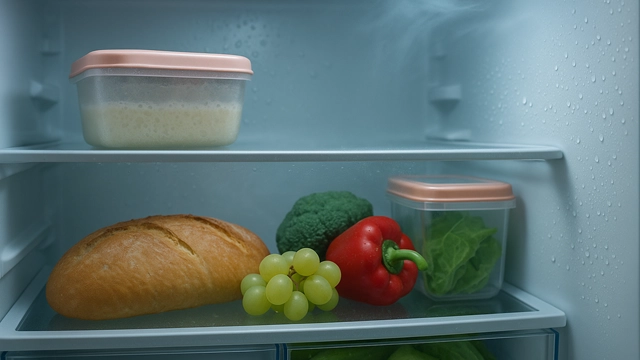

Most people believe that placing food in the refrigerator keeps it safe from spoilage. Yet disappointment is common: fruits, bread, or leftovers often develop fuzzy patches within days. This raises an intriguing question: does the cold inside your fridge actually stop mold?
Cold Slows, But Doesn’t Kill
Refrigerators typically operate at around 4 °C, a temperature that slows bacterial activity significantly. Mold is different. Its spores are remarkably resilient, remaining viable under cold conditions. Instead of dying, they simply slow down, ready to germinate once the surface provides moisture and nutrients. This explains why even in the fridge, bread or fruit can still sprout visible colonies after a few days.

Cold-Tolerant Fungi
Some fungi are particularly well adapted to cold storage. Penicillium expansum, for instance, causes blue mold rot in apples and pears even at refrigeration temperatures. Similarly, Cladosporium herbarum frequently contaminates refrigerated meats and dairy products. These species have evolved enzymes that remain active at low temperatures and flexible cell membranes that function in cold conditions. The result: they grow slowly but steadily in environments where bacteria are suppressed.

Different Zones, Different Risks
Not all refrigerator compartments are equal. The vegetable drawer, often slightly warmer and more humid, is highly vulnerable to mold. Fruits and leafy greens stored here are frequent victims. The main cooling shelves are colder, yet condensation on packaging creates microclimates where spores thrive. Even the freezer is not final—at −18 °C, active mold growth halts, but spores survive. Once thawed, food can mold rapidly, as confirmed by studies on spore survival after freezing.

Moisture and Microclimates
Condensation plays a decisive role. Droplets form along walls, shelves, or food containers, creating pockets of high humidity. Research shows that surface moisture strongly influences fungal growth. Poor air circulation in an overfilled fridge amplifies the problem, as warm air enters when the door opens and condenses on cold surfaces. Spores exploit these microenvironments to germinate and colonize.
Health and Safety Concerns
Mold in refrigerated food is not only a spoilage issue but also a health concern. Certain species, such as Penicillium expansum, produce mycotoxins like patulin, which remain stable even at low temperatures. Consuming moldy food, or food contaminated by invisible fungal metabolites, can be harmful—especially for children or immunocompromised individuals. This is why simply cutting away a visible moldy spot on bread or fruit does not guarantee safety.
Lessons from Food Science
The food industry has long studied cold-tolerant fungi. Cold storage extends shelf life but cannot eliminate fungal contamination. Controlled atmosphere packaging, reduced oxygen, and antifungal coatings are strategies used commercially to slow mold. These measures highlight an important fact: temperature alone is never enough.
Smarter Food Storage at Home
For households, simple habits make a big difference. Keep the fridge uncluttered so air circulates freely. Wipe away condensation regularly, and avoid leaving containers open. Store food in airtight packaging to prevent spores from drifting across items. Most importantly, avoid long storage times—refrigeration buys time but does not grant food immortality.
Mold doesn’t fear the cold—it adapts. Refrigerators slow its growth but cannot stop it entirely. By pairing cold storage with dryness, sealing, and mindful habits, we can keep mold in check. The next time you see fuzzy spots on refrigerated bread, remember: the fridge didn’t fail. Mold simply waited patiently for its chance.
References
- Academic
- Magan, N., & Aldred, D. (2007). Why do fungi grow in cold storage? Mycological Research, 111(1), 1–11. DOI:10.1016/j.mycres.2006.10.008
- Official
Key Takeaways
- Most people believe that placing food in the refrigerator keeps it safe from spoilage.
- This raises an intriguing question: does the cold inside your fridge actually stop mold?
- Its spores are remarkably resilient, remaining viable under cold conditions.
- Some fungi are particularly well adapted to cold storage.
- Similarly, Cladosporium herbarum frequently contaminates refrigerated meats and dairy products.
Frequently Asked Questions
What should you know about cold Slows, But Doesn’t Kill?
Refrigerators typically operate at around 4 °C, a temperature that slows bacterial activity significantly. Mold is different. Its spores are remarkably resilient, remaining viable under cold conditions. Instead of dying, they simply slow down, ready to germinate once the surface provides moisture an
What should you know about cold-Tolerant Fungi?
Some fungi are particularly well adapted to cold storage. Penicillium expansum, for instance, causes blue mold rot in apples and pears even at refrigeration temperatures. Similarly, Cladosporium herbarum frequently contaminates refrigerated meats and dairy products. These species have evolved enzyme
What should you know about different Zones, Different Risks?
Not all refrigerator compartments are equal. The vegetable drawer, often slightly warmer and more humid, is highly vulnerable to mold. Fruits and leafy greens stored here are frequent victims. The main cooling shelves are colder, yet condensation on packaging creates microclimates where spores thriv
What should you know about moisture and Microclimates?
Condensation plays a decisive role. Droplets form along walls, shelves, or food containers, creating pockets of high humidity. Research shows that surface moisture strongly influences fungal growth. Poor air circulation in an overfilled fridge amplifies the problem, as warm air enters when the door
What should you know about health and Safety Concerns?
Mold in refrigerated food is not only a spoilage issue but also a health concern. Certain species, such as Penicillium expansum, produce mycotoxins like patulin, which remain stable even at low temperatures. Consuming moldy food, or food contaminated by invisible fungal metabolites, can be harmful—e