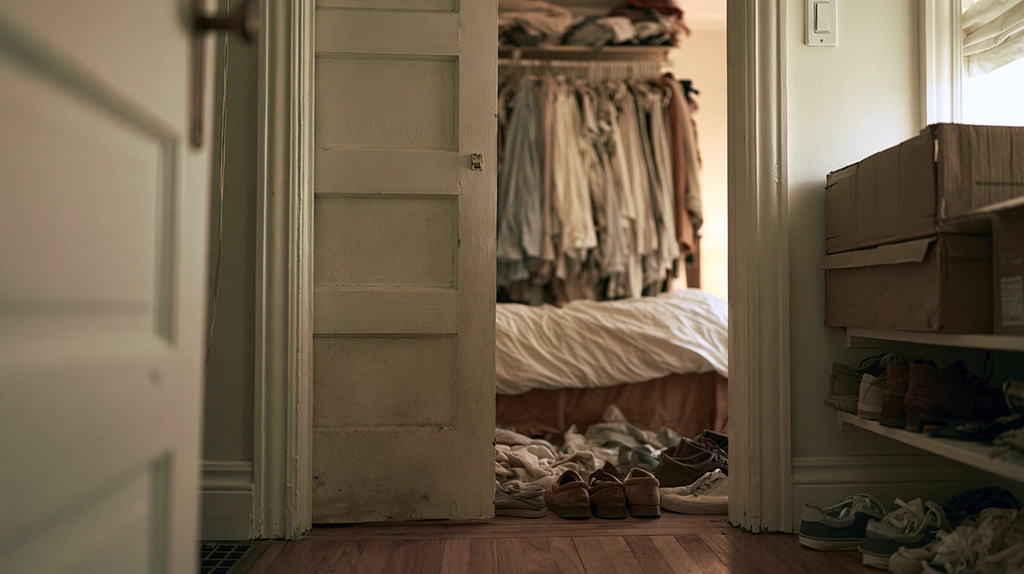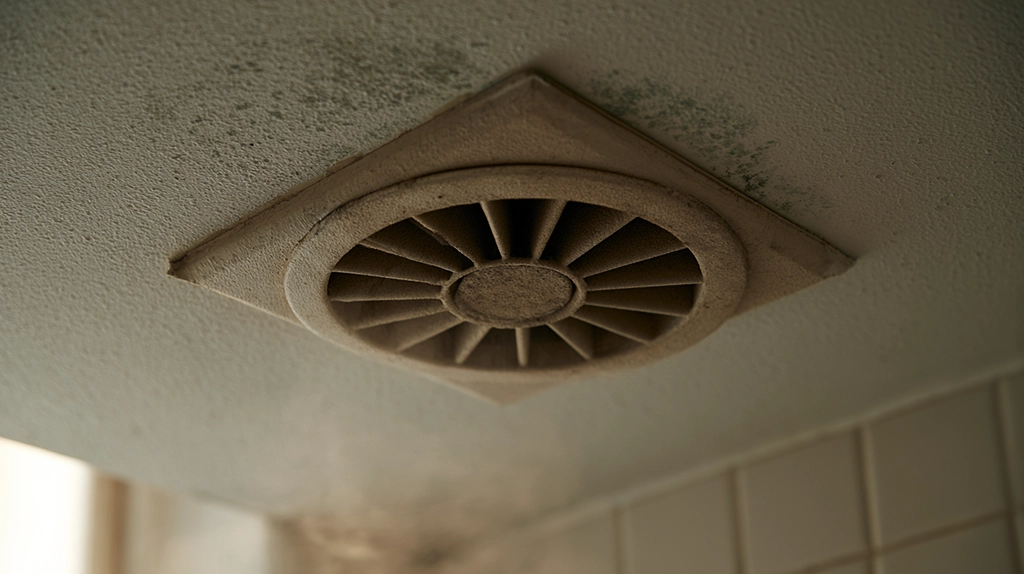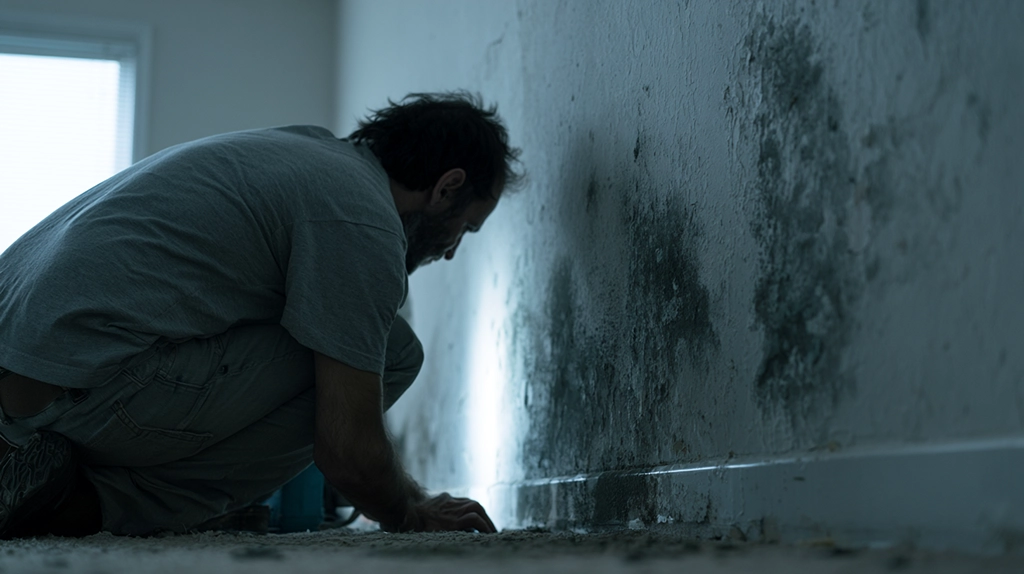


You’ve probably been there: the rainy season arrives, gray patches bloom on the wall, and that familiar musty smell fills the air. You turn on the air purifier, watch the indicator light shift from red to green, and feel reassured—until a few weeks later, the smell returns and the wall looks worse.
So, can an air purifier really protect you from mold?
The Aerobiology of Mold

Mold doesn’t just grow on walls—it floats through the air. When humidity exceeds 60%, mold releases spores to reproduce. These microscopic spores typically range from 2 to 10 micrometers (µm) in diameter.
For example:
- Aspergillus niger produces spores about 3–5 µm wide.
- Aspergillus fumigatus, even smaller at 2–3 µm, is one of the most easily inhaled molds.
- Penicillium chrysogenum measures 2.5–4 µm.
- Cladosporium cladosporioides reaches 5–10 µm.
- Stachybotrys chartarum (black mold) averages 4–7 µm.
These spores fall within the size range of PM10 particles, meaning they can remain airborne for hours, travel deep into the lungs, and trigger allergic or asthmatic reactions. Among them, A. fumigatus poses particular concern—its tiny spores can bypass non-HEPA filters and reach the alveoli, where they may cause allergic bronchitis or fungal pneumonia, especially in people with weakened immunity.
Theoretically, HEPA (High Efficiency Particulate Air) filters capture 99.97% of particles ≥0.3 µm, making them highly effective against most mold spores. However, many consumer purifiers aren’t true HEPA devices—they use “HEPA-like” filters with efficiencies between 85–95%. That means smaller spores, like those from A. fumigatus, can slip through.
In short, not all air purifiers can trap mold—and none can remove the microbial volatile organic compounds (MVOCs) that molds emit, which contribute to the musty odor but are far too small for filters to stop.
What Air Purifiers Can—and Can’t—Do

What they can do:
With genuine HEPA filters, air purifiers can significantly reduce airborne spore concentrations. The U.S. National Institute for Occupational Safety and Health (NIOSH) reports that operating HEPA systems in enclosed rooms for eight hours can cut fungal spore counts by more than 80%. This helps allergy and asthma sufferers breathe easier.
What they can’t do:
An air purifier can’t clean mold off walls, carpets, or HVAC ducts. It doesn’t fix humidity or temperature problems, and it won’t stop leaks or condensation.
Think of it this way: a doctor can give you painkillers, but not heal a broken bone. Similarly, an air purifier offers relief—but it won’t cure a moldy wall.
An air purifier can clean the air, not the wall.
The Real Solution: Dehumidify, Ventilate, and Filter
Long-term mold control isn’t about a single machine—it’s about three systems working together: dehumidification, ventilation, and HEPA filtration.
- Dehumidify: Keep indoor relative humidity between 45–55%. Once it exceeds 60%, mold spore production accelerates dramatically.
- Ventilate: Good airflow prevents localized condensation and reduces moisture accumulation.
- Filter: HEPA filters remove airborne spores, reducing short-term exposure and secondary contamination.
Both the U.S. Environmental Protection Agency (EPA) and the American Society of Heating, Refrigerating and Air-Conditioning Engineers (ASHRAE) emphasize that air purifiers alone cannot control mold—the root cause must be addressed by removing moisture sources.
When Data Speaks
In a home experiment with two identical rooms:
- Room A used only an air purifier.
- Room B combined a dehumidifier, ventilation, and an air purifier.
Both started with an average spore concentration of about 1,000 CFU per cubic meter. After three weeks:
- Room A dropped to 400 CFU, mainly due to air movement.
- Room B fell to below 60 CFU, with no visible new mold growth.
That’s a sevenfold difference—clear proof that the purifier is a sidekick, while dryness is the hero.
Clean Air Starts with the Wall

An air purifier can make the air feel cleaner, but that feeling is temporary. Truly clean air comes from dry walls, stable humidity, and proper ventilation. When buildings can breathe, people can breathe.
So, the next time you catch a whiff of that musty smell, ask yourself:
Do I need a new filter—or do I need to find the leak?
Because fighting mold isn’t about the wind you generate; it’s about drying the walls and letting the air flow.
Only dryness—not gadgets—defeats mold for good.
References
- U.S. Environmental Protection Agency (EPA): Mold and Moisture
- ASHRAE: Position Document on Limiting Indoor Mold and Dampness in Buildings
- Andersen, A. A. et al. (2020). Airborne fungal spores and indoor mold risk in humid climates. Building and Environment, 185, 107270.
- PubChem: Aspergillus fumigatus, Stachybotrys chartarum.
Key Takeaways
- Please login Mold buildup on damp interior walls — Source: Wikimedia Commons You’ve probably been there: the rainy season arrives, gray patches bloom on the wall, and that familiar musty smell fills the air.
- When humidity exceeds 60%, mold releases spores to reproduce.
- These spores fall within the size range of PM10 particles, meaning they can remain airborne for hours, travel deep into the lungs, and trigger allergic or asthmatic reactions.
- However, many consumer purifiers aren’t true HEPA devices—they use “HEPA-like” filters with efficiencies between 85–95%.
- What they can do:With genuine HEPA filters, air purifiers can significantly reduce airborne spore concentrations.
Frequently Asked Questions
What should you know about please login to bookmark?
Please login Mold buildup on damp interior walls — Source: Wikimedia Commons You’ve probably been there: the rainy season arrives, gray patches bloom on the wall, and that familiar musty smell fills the air. You turn on the air purifier, watch the indicator light shift from red to green, and fe
What should you know about the Aerobiology of Mold?
Mold doesn’t just grow on walls—it floats through the air. When humidity exceeds 60%, mold releases spores to reproduce. These microscopic spores typically range from 2 to 10 micrometers (µm) in diameter.
What Air Purifiers Can—and Can’t—Do?
What they can do:With genuine HEPA filters, air purifiers can significantly reduce airborne spore concentrations. The U.S. National Institute for Occupational Safety and Health (NIOSH) reports that operating HEPA systems in enclosed rooms for eight hours can cut fungal spore counts by more
What should you know about the Real Solution: Dehumidify, Ventilate, and Filter?
Long-term mold control isn’t about a single machine—it’s about three systems working together: dehumidification, ventilation, and HEPA filtration.
When Data Speaks?
In a home experiment with two identical rooms: