Some threats announce themselves. Mold is not one of them.
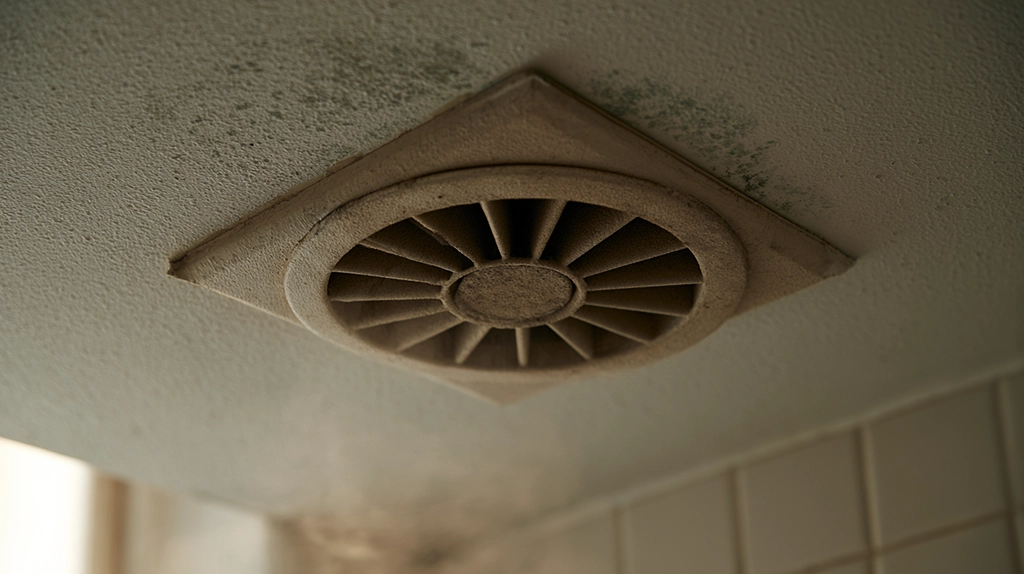
It settles into walls and ceilings quietly, finding its niche in the small, damp corners of buildings that go unexamined — beneath a baseboard that stays slightly wet after rain, inside a ventilation shaft where humidity pools, behind drywall that never dried properly after a slow leak. It does not ask for attention. It simply grows.
And yet, the body notices — often before anything else does. The first signal is rarely dramatic. A cough that lingers a few days longer than it should. Fatigue that feels disconnected from any clear cause. Nasal irritation that seems almost seasonal but refuses to follow the calendar. These early signs move through daily life like background noise — noticed but not quite assigned a source. Until a pattern begins to form.
What “Black Mold” Really Means
“Black mold” is a phrase that carries weight — sometimes more than the science behind it. In most clinical and environmental contexts, it refers to Stachybotrys chartarum, a species that requires sustained moisture and organic material to survive. Drywall, insulation, wood: the standard architecture of any building. The conditions it needs are not exotic. They are ordinary.
Under those conditions, S. chartarum produces microscopic spores — not unusual on their own, since fungal spores are present in virtually every environment. What changes indoors is concentration. In enclosed spaces with limited airflow, spores that would otherwise disperse are allowed instead to accumulate. And certain strains of Stachybotrys, under specific conditions, produce mycotoxins: biologically active compounds that add a distinct layer to the question of exposure.
When mycotoxins enter the picture, mold is no longer simply present in a space. It is interacting with it.

When Exposure Becomes Experience
The clinical picture of mold exposure is not a single, defining event. It assembles itself gradually, often borrowing the language of more familiar conditions — allergies, colds, seasonal fatigue — before it becomes legible as something else.
Respiratory symptoms tend to appear first. A cough that persists. Nasal congestion without an obvious cause. Throat irritation that softens when you leave the building and returns when you come back. These environmental clues — symptoms tethered to specific spaces — are among the most reliable early indicators that something in the indoor environment is contributing to what the body is experiencing.
Skin responses can emerge in tandem, particularly for those with sensitivities: itching, rashes, or localized irritation that tracks with exposure patterns rather than season or weather. Over time, in cases of prolonged or higher-concentration exposure, symptoms can move beyond the respiratory system. Persistent headaches. A specific, heavy kind of fatigue that rest does not resolve. A fogginess in thinking that makes the ordinary feel effortful.
These later symptoms are less specific — and that is precisely what makes them easy to misread. They wear the vocabulary of stress, overwork, or aging. But for those affected, the distinction matters. For individuals with asthma, compromised immune function, or pre-existing respiratory conditions, the progression from mild irritation to significant health burden can happen more quickly.
The key detail is this: the body does not always wait for visible evidence. It responds first.
The Environment Behind the Symptoms
Mold does not appear randomly. Its presence is a consequence — a biological record of a building’s relationship with water.
Leaks that went undetected for seasons. Condensation that formed on window frames through winter, absorbed into surrounding material, never fully released. Flooding remediated quickly on the surface but not completely beneath it. High indoor humidity sustained long enough that the walls themselves became a reservoir. These are the conditions that precede mold — not catastrophe, most of the time, but ordinary, accumulated neglect of moisture.
Ventilation governs how serious those conditions become. Air that circulates draws spores outward. Air that stagnates allows them to build. In spaces where filters go unchanged, where windows stay closed through humid months, where airflow is interrupted by poor design or structural change, spores concentrate rather than disperse. And what begins as a colony behind drywall can spread into adjacent cavities, into filter systems, into the circulating air of a building. Its reach is determined not by drama, but by physics: humidity, airflow, and time.

Why It Matters in Real Life
The implications of black mold exposure reach beyond physical discomfort. They shape how we interpret our environments — and how much trust we place in the spaces where we spend the most time.
In homes, symptoms often trigger the first investigation. A persistent cough or unexplained fatigue may lead to the discovery of hidden moisture damage — behind walls, beneath flooring, or within ventilation systems that haven’t been serviced in years. In workplaces, the dynamic is quieter. Reduced concentration, lingering irritation, and low-grade fatigue can be attributed to stress or overload, when the building itself is the source. In healthcare settings and other high-sensitivity environments, the stakes are higher still: individuals with weakened immune systems have less margin for error.
In each of these contexts, the underlying message is the same. Indoor spaces are not passive shelters. They are active systems that shape human health — and the organisms that establish themselves within those systems do not always announce their presence.
From Reaction to Prevention
Understanding symptoms is only the beginning. The more important shift lies in what comes before them.
Moisture control is the foundation. Identifying leaks early, maintaining balanced indoor humidity, and addressing water damage completely — not just on the surface — are protective measures, not afterthoughts. The difference between a leak that becomes mold and one that doesn’t is almost always a matter of how quickly and thoroughly moisture is removed.
Ventilation deserves equal attention. Clean filters, consistent air exchange, and adequate airflow through occupied spaces help prevent the accumulation of airborne contaminants, including spores. In many situations, improving ventilation alone can meaningfully reduce exposure risk. There is also a broader principle at work here: indoor air quality belongs in the same category of concern as water quality and food safety. It is not a secondary consideration. It is a direct determinant of health.
The goal is not to react when symptoms appear. It is to build and maintain environments where those symptoms are less likely to arise.
Common Indoor Mold Species
Several mold species are commonly found in damp indoor environments. Each has different growth requirements and biological profiles, though all are associated with moisture issues and poor ventilation:
- Stachybotrys chartarum
- Aspergillus spp.
- Penicillium spp.
- Cladosporium spp.
- Alternaria spp.
FAQ
Is black mold always dangerous?
Not necessarily. Its presence does not guarantee severe health effects. However, prolonged exposure — especially in poorly ventilated environments — increases the likelihood of symptoms, particularly for sensitive individuals.
How quickly do symptoms appear?
This varies widely. Some individuals notice irritation within days. Others develop symptoms gradually over weeks or months, making the environmental connection harder to identify.
Can symptoms resolve on their own?
In many cases, symptoms improve once the source of exposure is identified and addressed. Persistent symptoms that continue after apparent removal of the source should be evaluated by a medical professional.
Is black mold always visible?
No. It frequently grows behind walls, under flooring, or within HVAC systems — locations not visible during routine inspection. Professional assessment may be needed to locate hidden growth.
References
Centers for Disease Control and Prevention. (n.d.). Mold health effects: Facts and statistics. https://www.cdc.gov/mold-health/data-research/facts-stats/index.html
Peraica, M. et al. (2022). Health effects of mycotoxins in humans. National Library of Medicine. https://pmc.ncbi.nlm.nih.gov/articles/PMC8945704/