According to LISTVERSE
I. The Fungal Renaissance: From Decomposers to Innovators
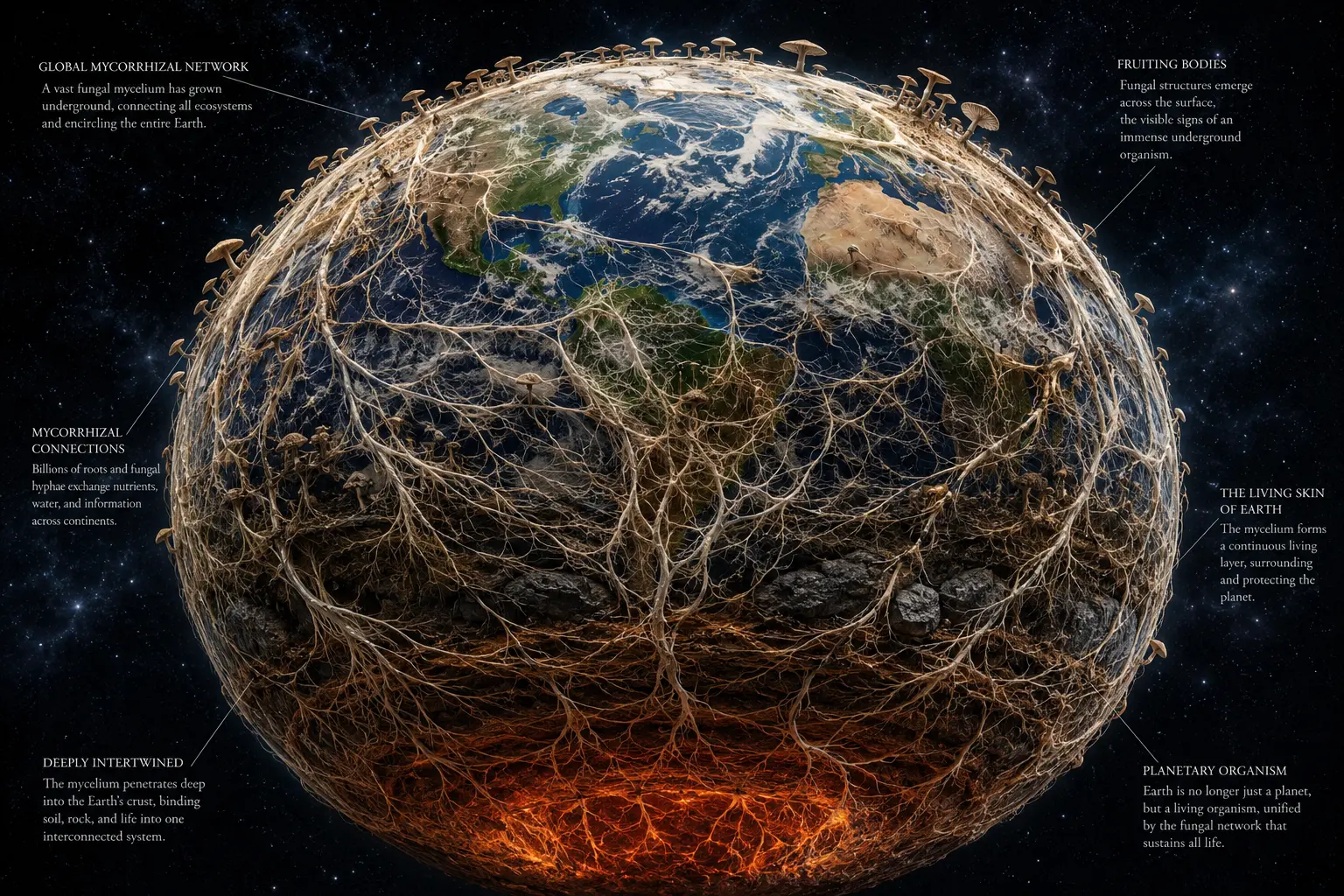
For millennia, fungi were primarily viewed through the lens of food, decay, and medicine (like penicillin). Today, however, scientists and engineers are recognizing the extraordinary potential of the fungal kingdom, particularly the versatile, root-like network known as mycelium, to solve some of the planet’s most pressing challenges. This biological revolution is integrating mycology with advanced fields like materials science, computing, and sustainable technology.
The following technologies, currently under development, illustrate how fungi are being leveraged as biological factories and intelligent systems to build a more sustainable future.

Source: Wikimedia Commons — CC BY-SA 4.0
II. Fungi in Architecture and Material Science
The material properties of mycelium—lightweight yet strong—make it an ideal candidate to replace energy-intensive, environmentally costly materials.
Growing Your Own Buildings (Myco-Architecture): Mycelium is being used as a self-assembling binder, grown around agricultural waste (like sawdust or corn husks) to form composite bricks, insulation panels, and acoustic tiles. These materials are carbon-negative, fire-resistant, and fully biodegradable, offering a truly green alternative to concrete and Styrofoam.
Mushroom Leather: Mycelium can be grown into sheets that closely mimic the structure and durability of animal leather. This Myco-Leather provides a sustainable, cruelty-free, and cost-effective alternative for fashion, automotive, and furniture industries, significantly reducing reliance on petroleum-based synthetics or animal agriculture.
Bio-Packaging: Replacing Styrofoam—which takes centuries to decompose—with mycelium-based packaging is becoming a commercial reality. The material can be grown into custom molds for protective shipping inserts, which can then be safely composted after use.

Source: Wikimedia Commons — CC BY-SA 4.0
III. Fungi in Electronics and Computing
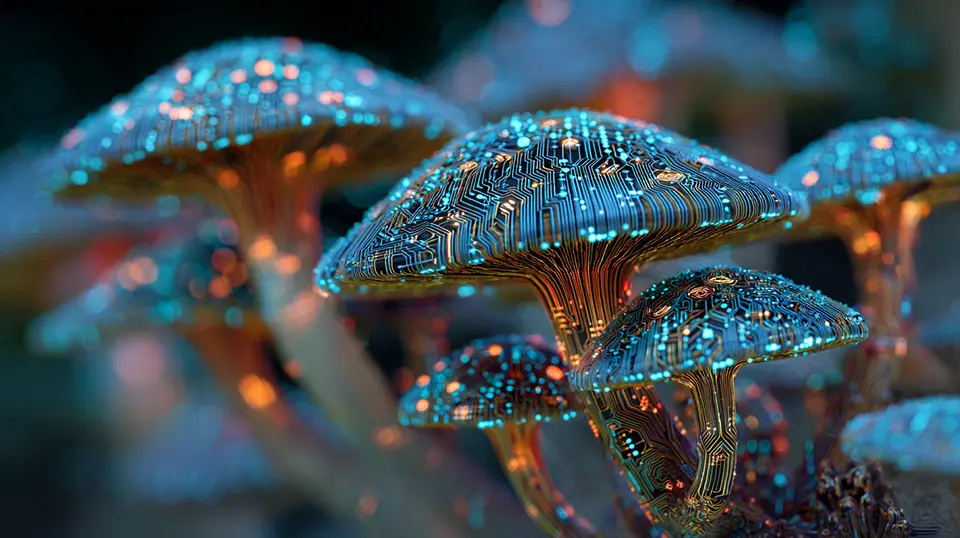
The intricate, web-like structure of mycelium is proving to be an effective biological analogue for electrical circuits and neural networks.
Fungal Microchips (Myco-Computing): Edible mushrooms, such as shiitake (Lentinula edodes), are being dehydrated and engineered to function as memristors—memory components that retain information after a charge is removed. This research pioneers neuromorphic computing, using the fungus’s natural neural-like network to create biodegradable, energy-efficient microchips.
Self-Healing Circuits: Researchers are exploring the capacity of living mycelial networks to repair breaches in electrical conductivity. If a small circuit or wire made of fungal filaments is damaged, the living network may naturally grow across the gap, offering a futuristic path toward self-healing electronic devices.

Source: Wikimedia Commons — CC BY-SA 4.0
IV. Fungi in Health and Environmental Remediation
Fungi’s role as nature’s ultimate recyclers and chemical engineers makes them invaluable tools for cleaning up pollution and advancing medicine.
Myco-Remediation (Environmental Cleanup): Certain fungal species possess powerful extracellular enzymes that can break down complex, toxic compounds. Oyster Mushrooms (Pleurotus ostreatus) are being used to filter and degrade oil spills, chemical dyes in wastewater, and even stubborn plastic polymers, offering a biological alternative to harsh chemical treatments.
Fungal Vaccines: Given the rise of antifungal resistance, scientists are developing broad-spectrum vaccines to protect immunocompromised individuals from fatal invasive fungal infections. These vaccines target common structures found across multiple pathogenic species, providing cross-protective immunity.
New Drug Discovery: Only a tiny fraction of the fungal kingdom has been studied, and fungi remain an immense source for novel therapeutic compounds. Researchers are screening species for new antibiotics, antivirals, and anti-cancer agents to combat the growing issue of drug resistance in human medicine.
V. Fungi in Textiles and Defense
Water-Resistant Coatings: Mycelium from edible fungi is being processed into thin, protective films that are naturally water, grease, and oil-resistant. This biodegradable coating offers a sustainable alternative to single-use plastics and petroleum-based sealants in food packaging and textiles.
Biological Defense: Scientists have successfully engineered fungi to act as targeted biological pest controls. For instance, creating a sweet-scented fungus like Metarhizium pingshaense to lure and kill mosquitoes offers a highly effective, eco-friendly method to curb vector-borne diseases such as malaria, minimizing reliance on chemical insecticides.
The overarching viewpoint is that the fungal kingdom, once synonymous with decay, is now proving to be one of the most resource-efficient and chemically sophisticated platforms for technological innovation, promising a future where our materials and devices are grown, not manufactured.
References
Zhai & Ghosh (2025). Organic Memristors from Dehydrated Edible Mushrooms. PLOS ONE.
According to LISTVERSE
Key Takeaways
- Fungi are being developed for applications across ten major industrial sectors including construction (mycelium composites), medicine (antifungal vaccines, cancer compounds), electronics (biological semiconductors), and food production (mycoprotein).
- Mycelium—the root-like network of fungi—can be grown into virtually any shape using agricultural waste as substrate, creating biodegradable alternatives to plastics, foams, and leather.
- Fungal computing research, pioneered by Professor Andrew Adamatzky, explores whether mycelial electrical signals can perform basic logic operations, potentially enabling biological computing substrates.
- The global mycoprotein market (fungi-based meat alternatives) was valued at over USD $130 million in 2023 and is projected to grow at 8%+ annually through 2030.
- Mycoremediation—using fungi to break down environmental pollutants including petroleum, pesticides, and heavy metals—is an established and commercially available bioremediation technology.
Frequently Asked Questions
What is mycelium and why is it technologically significant?
Mycelium is the vegetative network of thread-like filaments (hyphae) that make up the body of a fungus. Unlike the mushroom (the fruiting body most people recognise), mycelium grows continuously through soil, wood, or substrate material, binding it together with remarkable tensile strength. This network can be cultivated to grow into precise shapes within days, using cheap agricultural byproducts as fuel, making it an extraordinarily versatile and low-cost biological manufacturing platform for materials science and engineering applications.
What is mycoremediation and how does it work?
Mycoremediation is the use of fungi to degrade, neutralise, or remove environmental contaminants from soil and water. Certain fungi—particularly white-rot species such as Pleurotus ostreatus (oyster mushroom) and Phanerochaete chrysosporium—produce powerful oxidative enzymes (laccases, peroxidases) that break down complex organic molecules including petroleum hydrocarbons, polycyclic aromatic hydrocarbons (PAHs), pesticides, and certain dyes. Field applications have achieved significant contamination reduction in oil-spill sites and agricultural runoff zones.
Can fungi really be used in computing?
Research into fungal computing remains highly experimental. Professor Andrew Adamatzky and collaborators at the University of the West of England have demonstrated that mycelial electrical networks can produce responses to stimuli that mimic basic logic gate behaviour. However, this work is decades from practical computing applications and faces fundamental challenges around signal speed, reliability, and miniaturisation. The research is scientifically interesting but should not be interpreted as meaning fungi will replace silicon in the near term.
What is mycoprotein and how is it made?
Mycoprotein is a high-protein food ingredient produced by fermenting the filamentous fungus Fusarium venenatum in large bioreactors. The resulting biomass has a fibrous texture resembling meat and a nutritional profile comparable to chicken—approximately 11g protein per 100g—while requiring significantly less land, water, and energy to produce than animal protein. Quorn is the most widely known commercial mycoprotein brand, sold in over 15 countries. The global market is expanding rapidly as consumers seek sustainable protein alternatives.
Are fungal-based materials (mycelium composites) commercially available?
Yes. Several companies now produce mycelium-based materials at commercial scale. Ecovative Design (USA) produces mycelium packaging and insulation; Bolt Threads (USA) developed Mylo, a mycelium-based leather alternative used by Stella McCartney and Lululemon; Mogu (Italy) manufactures mycelium acoustic panels and flooring tiles; and Grown.bio (Netherlands) supplies mycelium packaging to European brands. The sector is growing rapidly, with increasing investment from major consumer goods companies seeking biodegradable alternatives to single-use plastics.