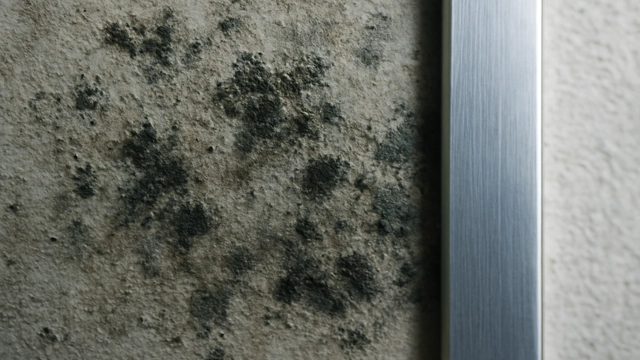

We’ve all heard that dryness keeps mold away. But reality is messier — mold doesn’t just depend on humidity; it depends on chemistry. Modern science is discovering new ways to make materials themselves “mold-unfriendly.” From silver and copper coatings to natural oils and bio-based films, the future of mold prevention lies in the surfaces around us.

1. Mold as a Chemical Survivor
Mold spores are built for survival. Even when a wall feels dry, microscopic layers of moisture on the surface can be enough to trigger germination. Studies show that at relative humidity above 60%, common indoor molds such as Aspergillus niger or Penicillium chrysogenum can begin to germinate within hours under favorable nutrient conditions.
That’s why recent innovations focus not only on drying the air, but on modifying surfaces so that mold cells can’t attach, feed, or replicate.

2. Metal-Based Barriers: Silver and Copper Ions
Metals have long been known to inhibit microbial growth. Today, silver (Ag⁺) and copper (Cu²⁺) ions are integrated into paints, plastics, and coatings to suppress mold on contact.
Research shows that these ions damage fungal cell membranes and interfere with vital enzymes, limiting colony growth.
Silver-based systems gradually release ions, providing months of residual protection under moderate humidity.
Copper coatings maintain antifungal activity even in warm, moist conditions — making them ideal for tropical or coastal environments.
3. Synthetic Antifungal Agents: The Coating Chemistry You Don’t See
Mold-resistant paints and sealants often rely on active compounds like OIT (2-n-Octyl-4-isothiazolin-3-one), DCOIT, or IPBC. These disrupt fungal cell wall formation and respiration, stopping spores before colonies appear.
Some modern coatings are even humidity-sensitive, designed to release antifungal compounds only when moisture rises. This controlled-release approach reduces chemical use while extending the protective lifespan of the product.
Such coatings don’t sterilize a room — they simply make surfaces chemically inhospitable to mold.
4. Natural Defense: Essential Oils and Bio-Based Films
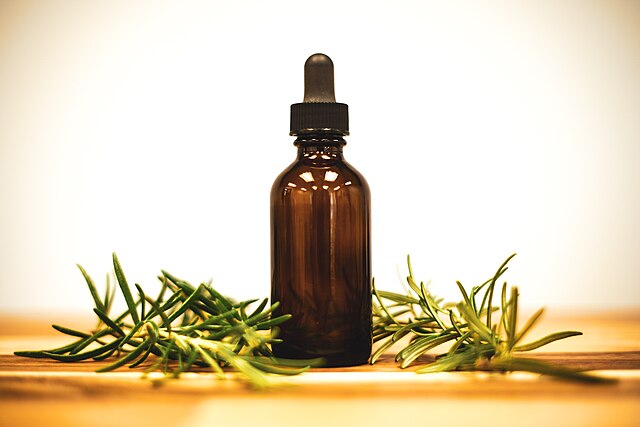
Nature provides its own antifungal arsenal. Essential oils like tea tree, clove, thyme, and lemongrass have been confirmed to inhibit indoor mold genera such as Aspergillus, Penicillium, and Cladosporium.
When formulated as sprays or films, these oils offer environmentally safe protection. However, because volatile compounds dissipate over time, reapplication every few weeks is required to sustain antifungal activity.
Meanwhile, bio-derived materials such as chitosan (from shellfish shells) and plant polyphenols are showing promise as sustainable antifungal coatings — reducing fungal adhesion and slowing spore germination.
5. Smart Materials: The Next Frontier
Recent advances in coating technology are moving toward responsive systems — materials that react to humidity or pH changes.
Self-healing coatings are also emerging, capable of closing micro-cracks that trap moisture. These approaches represent a shift from passive barriers to active defenses — surfaces that respond as conditions change.
6. The Layered Strategy: Products That Work Together
There’s no single “perfect” mold blocker. Long-term prevention relies on layered protection — combining materials and behaviors:
- Use metal-ion or antifungal coatings on vulnerable surfaces (wood, leather, rubber).
- Apply essential-oil sprays periodically in closed or damp spaces.
- Add dehumidifying packs or mold-control stickers where air circulation is limited.
Each layer targets a different weakness in mold’s life cycle: moisture, nutrients, or surface adhesion. Together, they build an invisible defense system that keeps mold from gaining a foothold.
Conclusion: Design, Not Disinfection
Keeping mold away isn’t about endless cleaning — it’s about designing smarter surfaces.
Silver and copper ions disrupt its biology, synthetic agents stop its metabolism, and natural oils or biopolymers restore environmental balance.
When prevention becomes a matter of materials engineering instead of cleaning routines, mold stops being a recurring problem — it becomes something your walls, floors, and products quietly outsmart.
References
- Silver-based and copper ion mold control research
- Thymol: A Natural Antifungal Compound
- Tea tree oil antifungal properties
Key Takeaways
- But reality is messier — mold doesn’t just depend on humidity; it depends on chemistry.
- Even when a wall feels dry, microscopic layers of moisture on the surface can be enough to trigger germination.
- Mold-resistant paints and sealants often rely on active compounds like OIT (2-n-Octyl-4-isothiazolin-3-one), DCOIT, or IPBC.
- Recent advances in coating technology are moving toward responsive systems — materials that react to humidity or pH changes.Self-healing coatings are also emerging, capable of closing micro-cracks that trap moisture.
- Long-term prevention relies on layered protection — combining materials and behaviors:
Frequently Asked Questions
What is Beyond Dry Air and why does it matter?
We’ve all heard that dryness keeps mold away. But reality is messier — mold doesn’t just depend on humidity; it depends on chemistry. Modern science is discovering new ways to make materials themselves “mold-unfriendly.” From silver and copper coatings to natural oils and bio-based films, the future
How does Beyond Dry Air affect human health and safety?
Mold spores are built for survival. Even when a wall feels dry, microscopic layers of moisture on the surface can be enough to trigger germination. Studies show that at relative humidity above 60%, common indoor molds such as Aspergillus niger or Penicillium chrysogenum can begin to germinate within
What are researchers and experts doing to address Beyond Dry Air?
Metals have long been known to inhibit microbial growth. Today, silver (Ag⁺) and copper (Cu²⁺) ions are integrated into paints, plastics, and coatings to suppress mold on contact.Research shows that these ions damage fungal cell membranes and interfere with vital enzymes, limiting colony growth.Silv
What are the main risks associated with Beyond Dry Air?
Mold-resistant paints and sealants often rely on active compounds like OIT (2-n-Octyl-4-isothiazolin-3-one), DCOIT, or IPBC. These disrupt fungal cell wall formation and respiration, stopping spores before colonies appear.Some modern coatings are even humidity-sensitive, designed to release antifung
What actions are recommended regarding Beyond Dry Air?
Nature provides its own antifungal arsenal. Essential oils like tea tree, clove, thyme, and lemongrass have been confirmed to inhibit indoor mold genera such as Aspergillus, Penicillium, and Cladosporium.When formulated as sprays or films, these oils offer environmentally safe protection. However, b