
How bark beetles and symbiotic fungi are reshaping Europe’s spruce forests
A Small Insect With Enormous Impact
Deep within Europe’s spruce forests, a creature smaller than a grain of rice has been reshaping entire landscapes. The spruce bark beetle, Ips typographus, has surged in recent decades to become one of the continent’s most destructive forest pests. Across Germany, the Czech Republic, Austria, and parts of Scandinavia, millions of spruce trees have died in widespread waves of infestation.
At first glance the explanation appears straightforward: a tiny insect boring beneath tree bark and damaging the living tissue inside. But scientists now know the story is far more complicated. New research from the University of Freiburg suggests the beetle is not acting alone.
Instead, the insect forms part of a hidden partnership with fungi. Together they create a biological alliance capable of overwhelming the defenses of living trees. What once looked like a simple pest outbreak is now understood as a coordinated ecological system involving insects, microbes, and stressed forests.

The Fungal Passengers Beneath the Bark
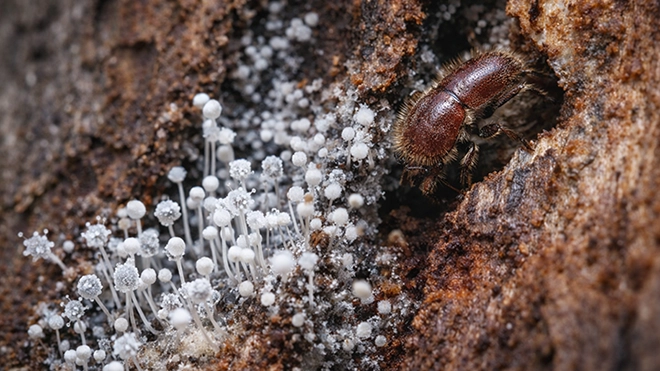
When bark beetles drill into the bark of spruce trees to create breeding galleries, they carry microscopic passengers with them. Fungal spores travel on the beetles’ bodies and within specialized structures called mycangia, which function as storage chambers for symbiotic fungi.
Once inside the tree, these fungal spores begin to grow throughout the wood. Their activity alters the internal chemistry of the tree, weakening its natural defenses and creating a more suitable environment for beetle larvae.
Spruce trees normally respond to insect attacks with a sophisticated defense system. They release sticky resin that can trap invading insects and produce toxic chemicals designed to deter pests and pathogens. However, the fungi transported by bark beetles interfere with these defenses.
Some fungal species break down the toxic compounds produced by the tree, while others colonize water-conducting tissues that move nutrients and moisture through the trunk. As these systems become disrupted, the tree’s ability to defend itself weakens dramatically.
In effect, bark beetles function as delivery vehicles, introducing a fungal toolkit that dismantles the tree’s internal defenses.

Not One Fungus But a Microbial Coalition
Research from the University of Freiburg revealed that bark beetles are associated with an entire community of fungal partners rather than a single species. By analyzing fungal DNA from beetle-infested spruce trees, scientists identified several fungal genera frequently present during outbreaks, including Ophiostoma, Ceratocystis, and Endoconidiophora.
Many of these organisms belong to a group commonly called blue-stain fungi, named for the dark discoloration they produce in infected wood. Although the staining may appear cosmetic, it signals deeper structural and chemical changes occurring inside the tree.
Different fungal species appear to perform different ecological roles. Some help degrade plant tissue and weaken the tree’s structural defenses. Others neutralize toxic chemicals produced by the tree’s immune response. Certain species alter nutrient conditions within the wood, creating an environment that allows beetle larvae to develop more efficiently.
Together these fungi form a cooperative microbial community that enhances the success of bark beetle infestations. In some ways the relationship resembles a form of insect agriculture, where beetles cultivate fungal growth that benefits their offspring.

Climate Change Strengthens the Beetle–Fungus Alliance
The rapid expansion of bark beetle populations in recent decades is closely linked to climate change. Historically, cold winters played an important role in controlling beetle numbers by killing large portions of the population.
Today, milder winters across many parts of Europe allow more beetles to survive until spring. At the same time, warmer summers accelerate insect development. In certain regions bark beetles can now produce two or even three generations per year instead of just one.
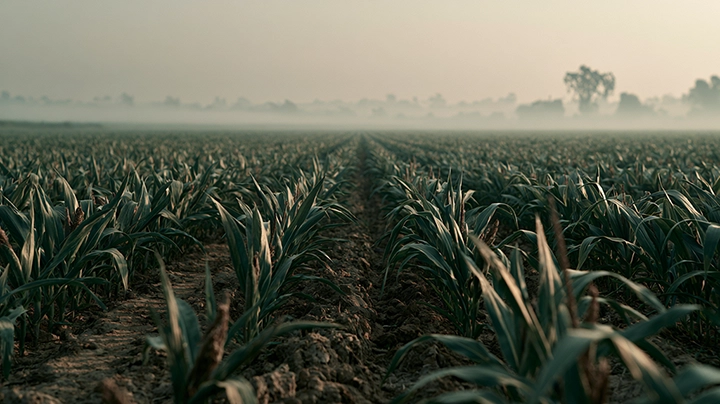
Drought also plays a crucial role. When spruce trees experience prolonged water stress, they produce less resin and fewer defensive chemicals. These weakened trees become far easier targets for bark beetles and the fungi they carry.
The result is a reinforcing cycle: weakened trees invite infestation, successful infestations produce more beetles, and expanding beetle populations spread additional fungal partners through already stressed forests. Across Central Europe, the consequences have become visible on a landscape scale as hillsides of once-green spruce forests turn gray with dead timber.

Rethinking Forest Management
Traditional forest management strategies have focused primarily on controlling the beetles themselves. Infested trees are often removed to reduce beetle reproduction, and pheromone traps may be deployed to lure beetles away from healthy stands.
However, the new research suggests this insect-focused strategy may overlook a critical part of the system. If fungal partners play a central role in helping beetles overcome tree defenses, then disrupting the fungal side of the alliance could become an important tool in forest protection.
Scientists are beginning to explore new monitoring strategies that track fungal DNA in forest ecosystems as an early indicator of infestation risk. Other research is investigating biological approaches that might interfere with fungal partners before beetle populations explode.
These ideas represent a shift in thinking. Instead of treating bark beetle outbreaks as purely insect-driven events, forest managers may need to address the complex ecological network that allows the infestations to succeed.

A Larger Lesson From the Forest
The bark beetle story illustrates a broader principle of ecology: environmental crises often emerge from interactions between species rather than from a single organism acting alone.
In this case, a tiny insect working together with microscopic fungal partners has proven capable of transforming entire forest ecosystems. Their combined influence can reshape landscapes, alter habitats, and affect carbon storage across large regions.
Understanding these hidden biological partnerships may become increasingly important as climate change reshapes ecosystems worldwide. Protecting forests in the future may depend on recognizing that ecological systems are built not from individual species, but from networks of collaboration.

❓ Frequently Asked Questions (FAQs)
What is the spruce bark beetle (Ips typographus)?
The spruce bark beetle is a small insect that lives beneath the bark of spruce trees. It reproduces by tunneling into the wood and laying eggs in galleries under the bark. Large outbreaks can kill vast numbers of trees across forest landscapes.
Why are fungi important in bark beetle infestations?
Bark beetles carry fungal spores into trees when they bore through the bark. These fungi weaken tree defenses, disrupt nutrient flow, and create conditions that help beetle larvae survive and grow.
What are blue-stain fungi?
Blue-stain fungi are a group of fungi commonly associated with bark beetles. They produce dark discoloration in infected wood and can interfere with the tree’s water transport systems.
How does climate change influence bark beetle outbreaks?
Warmer winters allow more beetles to survive, while hotter summers speed up reproduction. At the same time, drought weakens spruce trees, making them easier for beetles and fungi to attack.
Can forests recover from bark beetle outbreaks?
Forests can recover over time, but the process may take decades. Management strategies such as monitoring, selective tree removal, and improving forest diversity can help reduce the severity of future outbreaks.
References
Six, D. L., & Wingfield, M. J. (2011). The role of phytopathogenicity in bark beetle–fungus symbioses. Annual Review of Entomology.
DOI: https://doi.org/10.1146/annurev-ento-120709-144839
Kirisits, T. (2007). Fungal associates of European bark beetles with special emphasis on the ophiostomatoid fungi. Fungal Biology Reviews.
University of Freiburg — Forest pathology and bark beetle research.
Key Takeaways
- Please login How bark beetles and symbiotic fungi are reshaping Europe’s spruce forests
- The spruce bark beetle, Ips typographus, has surged in recent decades to become one of the continent’s most destructive forest pests.
- At first glance the explanation appears straightforward: a tiny insect boring beneath tree bark and damaging the living tissue inside.
- Instead, the insect forms part of a hidden partnership with fungi.
- What once looked like a simple pest outbreak is now understood as a coordinated ecological system involving insects, microbes, and stressed forests.
Frequently Asked Questions
What should you know about please login to bookmark?
Please login How bark beetles and symbiotic fungi are reshaping Europe’s spruce forests
What should you know about a Small Insect With Enormous Impact?
Deep within Europe’s spruce forests, a creature smaller than a grain of rice has been reshaping entire landscapes. The spruce bark beetle, Ips typographus, has surged in recent decades to become one of the continent’s most destructive forest pests. Across Germany, the Czech Republic, Austria, a
What should you know about the Fungal Passengers Beneath the Bark?
When bark beetles drill into the bark of spruce trees to create breeding galleries, they carry microscopic passengers with them. Fungal spores travel on the beetles’ bodies and within specialized structures called mycangia, which function as storage chambers for symbiotic fungi.
What should you know about not One Fungus But a Microbial Coalition?
Research from the University of Freiburg revealed that bark beetles are associated with an entire community of fungal partners rather than a single species. By analyzing fungal DNA from beetle-infested spruce trees, scientists identified several fungal genera frequently present during outbreaks, inc
What should you know about climate Change Strengthens the Beetle–Fungus Alliance?
The rapid expansion of bark beetle populations in recent decades is closely linked to climate change. Historically, cold winters played an important role in controlling beetle numbers by killing large portions of the population.