
8 Scientific Clues That Reveal the Truth
Mold Is Not a Plant — It’s an Ancient Relative of Animals
On the great evolutionary tree of life, fungi and animals both belong to a branch called Opisthokonta. Genetic studies show that the most recent common ancestor of fungi and animals is much younger than the one fungi share with plants.
If evolution held a family reunion, molds would be standing closer to humans, insects, and fish — certainly not beside the ferns and flowers.
This shared ancestry explains why molds possess many traits that plants do not, and why they often resemble animals more than we expect.
Mold Cannot Perform Photosynthesis — It Must “Eat” Like an Animal

Plants produce their own energy using sunlight through photosynthesis. Molds, however, lack chlorophyll and have zero ability to harness light as energy. Like animals, they rely entirely on consuming external organic matter.
Instead of swallowing food, molds release extracellular enzymes outward into their surroundings. These enzymes break down materials — wood, bread, leather, drywall — into simpler molecules. The mold then absorbs these nutrients back into its body.
This process mirrors animal digestion — only externalized. Their ability to damage buildings, decay furniture, or spoil food all stems from this unique form of digestion.
Mold’s Body Structure Tells the Same Story: It’s Closer to Animals
One of the clearest pieces of evidence comes from the mold’s cell wall composition.
- Plant cell walls are made of cellulose.
- Fungal cell walls are made of chitin — the same material found in shrimp shells, crab shells, and the exoskeletons of insects.
Even their method of storing energy leans toward the animal side. Plants store energy as starch, while both animals and fungi store energy as glycogen.
The glycogen in your liver and muscles shares its chemical identity with the energy stored in mold cells — a biochemical signature of shared ancestry.
Mold Appears Still, but It Actually Moves and Explores
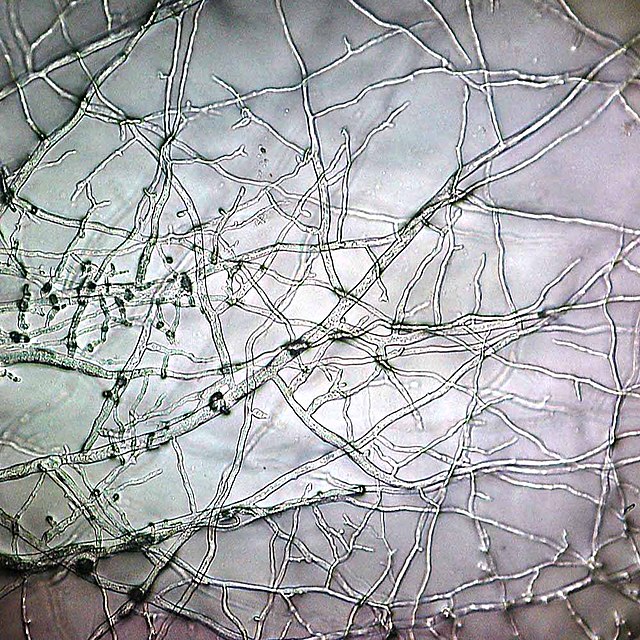
Although molds do not crawl or walk, their hyphae (the thread-like structures forming a colony) actively grow toward nutrient sources, avoid toxins, and adjust to environmental cues.
This directional, goal-oriented growth is strikingly similar to how animals seek food or avoid danger — just at a microscopic and slower scale. If mold growth were sped up a hundredfold, it would resemble a living organism exploring its environment.
Mold Reproduction Is Surprisingly Animal-Like

Fungi do not rely on pollen or seeds. Instead, they possess mating types — systems conceptually similar to male and female, though not identical. Their reproductive process involves plasmogamy, karyogamy, and genetic recombination — mechanisms reminiscent of animal reproduction.
Their spores are tiny, tough capsules that survive dryness, heat, and mechanical stress, behaving more like durable animal survival units than delicate plant pollen.
Inside the Human Body, the Immune System Treats Mold Like an Animal Threat
When mold spores enter the lungs, the immune system reacts along pathways similar to those used against parasitic or animal-like pathogens — not plants.
Immune cells detect fungal cell wall molecules such as β-glucans and mannans, triggering innate immuneresponses that defend against invasive organisms rather than inert plant material.
Even at the immunological level, the body instinctively recognizes fungi as something fundamentally different from plants — an active biological invader.
Mold Is Not a Plant — It’s a Quiet Neighbor from the Animal Side of the Family
Across every biological category — evolution, cell structure, metabolism, behavior, reproduction, and immunity — molds consistently align more closely with animals than plants.
They do not perform photosynthesis, do not self-feed, and do not behave like vegetation. Instead, they digest, explore, store energy, and reproduce in ways that echo animal strategies.
Understanding mold’s “animal-like” nature helps us handle mold-related issues more effectively, from indoor air qualityto construction materials and medical treatment.
Molds are not silent plant intruders; they are our evolutionary neighbors — living quietly in every corner of our world.
References
- Wikipedia: Fungus, Opisthokonta, Chitin, Glycogen, Hypha, Fungal spore, Innate immune system
- Nature Reviews Microbiology. (2024). Evolutionary relationships between fungi and animals in the Opisthokonta clade.
- Frontiers in Immunology. (2023). Fungal recognition pathways in human innate immunity.
- PubChem Database: Chitin (CID 6857448), Glycogen (CID 439177)
Key Takeaways
- On the great evolutionary tree of life, fungi and animals both belong to a branch called Opisthokonta.
- If evolution held a family reunion, molds would be standing closer to humans, insects, and fish — certainly not beside the ferns and flowers.
- Plants produce their own energy using sunlight through photosynthesis.
- Instead of swallowing food, molds release extracellular enzymes outward into their surroundings.
- The mold then absorbs these nutrients back into its body.
Frequently Asked Questions
What should you know about 8 Scientific Clues That Reveal the Truth?
On the great evolutionary tree of life, fungi and animals both belong to a branch called Opisthokonta. Genetic studies show that the most recent common ancestor of fungi and animals is much younger than the one fungi share with plants.
What should you know about mold Is Not a Plant — It’s an Ancient Relative of Animals?
On the great evolutionary tree of life, fungi and animals both belong to a branch called Opisthokonta. Genetic studies show that the most recent common ancestor of fungi and animals is much younger than the one fungi share with plants.
What should you know about mold Cannot Perform Photosynthesis — It Must “Eat” Like an Animal?
Plants produce their own energy using sunlight through photosynthesis. Molds, however, lack chlorophyll and have zero ability to harness light as energy. Like animals, they rely entirely on consuming external organic matter.
What should you know about mold’s Body Structure Tells the Same Story: It’s Closer to Animals?
One of the clearest pieces of evidence comes from the mold’s cell wall composition.
What should you know about mold Appears Still, but It Actually Moves and Explores?
Although molds do not crawl or walk, their hyphae (the thread-like structures forming a colony) actively grow toward nutrient sources, avoid toxins, and adjust to environmental cues.