
The Threat That Stays After the Mold Is Gone
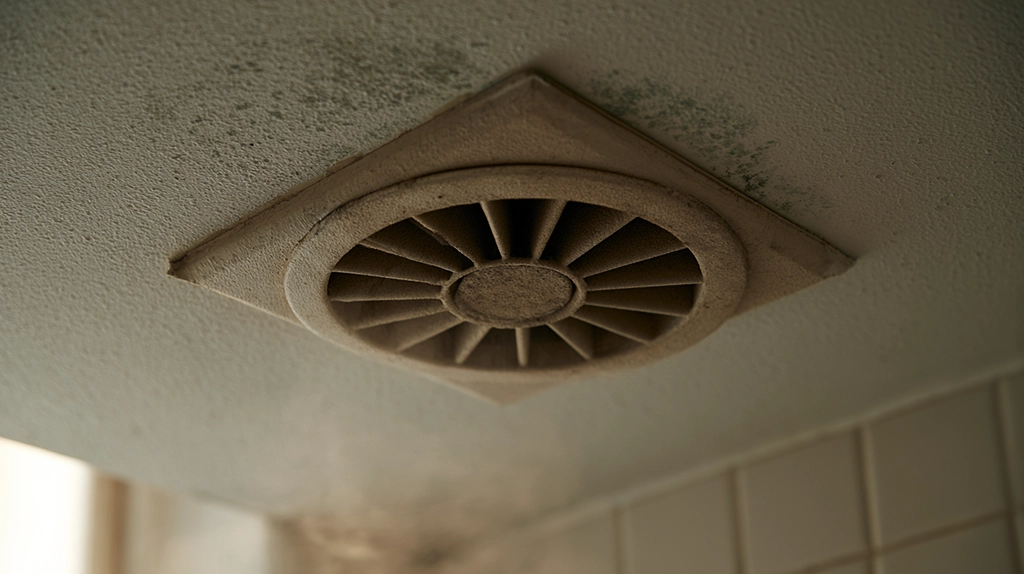
Food safety inspections are built around visibility. Inspectors look for mold growth, discoloration, damaged kernels, signs of moisture intrusion. These visible indicators are real and important — but they miss a category of risk that operates below the threshold of what any eye can see.
Aflatoxins are produced primarily by certain Aspergillus species and can contaminate peanuts, maize, grains, and nuts during growth, harvest, or storage. Once formed, they are chemically stable, persist in food matrices long after the producing fungus is gone, and remain hazardous at concentrations far too low to produce any visible sign of their presence.
This makes aflatoxin contamination a chemical contamination problem as much as a biological one. Eliminating the mold does not eliminate the hazard. The toxin persists independently, and detecting it requires molecular-level tools that conventional inspection methods are not designed to provide.
What Conjugated Microporous Polymers Are
The material at the center of this research is a conjugated microporous polymer, or CMP — a class of organic material that has attracted significant research interest for its unusual combination of structural and electronic properties.
CMPs are characterized by three key features: stable chemical frameworks that resist degradation, permanent micropores that create a high internal surface area, and extended π-conjugated structures that give the material electronic sensitivity. In practical terms, this means CMPs can be engineered to interact with specific chemical compounds through both physical adsorption — trapping molecules within their pore structure — and electronic response — generating a detectable signal when target molecules are present.
The result is a material that functions, in simplified terms, like a highly selective molecular trap with a built-in alarm. When an aflatoxin molecule enters the pore system, the material both captures it and signals its presence.

A conjugated microporous polymer (CMP) monomer structure, showing the rigid alkyne linkages and aromatic rings that form the backbone of these materials. The extended π-conjugated framework and permanent micropore architecture make CMPs capable of both detecting and adsorbing specific chemical compounds such as aflatoxins.Credit:
Mofchem, via Wikimedia Commons, CC BY-SA 3.0The Core Innovation: One System, Two Functions
Most food safety workflows treat detection and removal as sequential steps. A sample is tested; if contamination is confirmed, a separate remediation process is initiated. This sequence introduces delays, requires additional handling, and adds operational complexity to systems that are often already under pressure.
The CMP-based platform developed in this research collapses that sequence. Stabilized onto sieve plates — a design choice that addresses one of the most persistent barriers to practical use of advanced porous materials — the system can detect aflatoxins and simultaneously adsorb them within the same process step.
This is not a passive sensor. It is an active interface: a material that responds to contamination and begins managing it in real time, without requiring a separate remediation step to follow detection.
The sieve plate configuration is worth dwelling on. Many high-performance porous materials exist only as powders in laboratory settings, which are difficult to handle, recover, and integrate into fluid-based processing systems. Anchoring the polymer onto a structured support transforms it from a research curiosity into a deployable tool — one that can function within filtration systems, liquid processing lines, or contamination monitoring setups without the handling problems that typically limit translation from lab to application.
Why Aflatoxins Demand Molecular Solutions
The chemistry of aflatoxins makes them particularly resistant to conventional control approaches. They are not degraded by standard cooking temperatures. They do not respond to the visual or microbial indicators that food safety systems are calibrated to detect. They persist across processing steps that eliminate the fungus that produced them.
What they are vulnerable to is molecular recognition — selective chemical interaction with materials designed to identify and bind specific molecular structures. This is the category of solution that CMP-based systems belong to.

The molecular structure of aflatoxin B1 — the most potent naturally occurring aflatoxin and a primary target for detection and remediation systems. Its chemical stability makes it persistent in food matrices long after visible fungal growth has ended, driving the need for molecular-level detection and adsorption materials.Credit:
Calvero, via Wikimedia Commons, Public DomainThe pore geometry and chemical properties of a CMP can be tuned to favor interaction with aflatoxin molecules specifically, allowing the material to distinguish target toxins from the complex chemical environment of a food matrix. This selectivity is what makes the approach viable for real detection and remediation rather than broad-spectrum chemical treatment.
The Path From Laboratory to Application
Materials science research has a well-documented translation problem. A compound that performs impressively under controlled laboratory conditions frequently fails to survive contact with the messier reality of industrial processing: variable temperatures, competing chemical species, mechanical stress, the need for recovery and reuse.
The design decisions in this research reflect awareness of that problem. The sieve plate configuration directly addresses handleability and recovery. The focus on a system that performs both detection and adsorption reduces the number of process steps required for implementation, lowering the barrier to integration.
Potential application environments include grain washing systems, liquid food processing lines, post-harvest storage monitoring, and wastewater treatment — contexts where aflatoxin contamination is a known risk and where a material that simultaneously detects and captures toxins would offer meaningful operational advantages over current sequential approaches.
The research does not claim the technology is ready for commercial deployment. Scalability, long-term stability, performance across variable food matrices, and cost competitiveness all require further development. What it establishes is a functional proof of concept with a design architecture that is oriented toward real-world use rather than laboratory performance alone.
Rethinking What Mold Control Means
There is a conceptual shift embedded in this line of research that extends beyond the specific material.
Conventional mold control focuses on the organism: prevent growth, kill the fungus, reduce spore loads. This approach is necessary and remains important. But it is incomplete for a category of hazard where the organism and the hazard can be decoupled — where the fungus is gone but the toxin remains, stable and undetected, moving through the food supply.
For aflatoxins and other chemically stable mycotoxins, control strategies that target only fungal biology leave a gap. The gap is not in the biology — it is in the chemistry that biology leaves behind. CMP-based detection and adsorption systems address that gap directly, treating mycotoxin contamination as a chemical problem that requires a chemical solution, operating at the molecular level where the actual risk exists.
This reframing — from mold control to toxin control — is where the longer-term significance of this research lies. Not in the specific polymer or the specific sieve plate design, but in the direction it represents: toward food safety systems that can respond to contamination at the level where contamination actually operates.
FAQ
Can CMP materials detect aflatoxins in food systems? Yes. Conjugated microporous polymers can be engineered to interact selectively with aflatoxin molecules, functioning as detection platforms at the molecular level.
Do these materials only detect toxins, or can they remove them as well? Both. The system described in this research detects aflatoxins and simultaneously adsorbs them, managing contamination within a single process step rather than requiring sequential detection and remediation.
Why are aflatoxins particularly difficult to control? They are chemically stable, invisible, and hazardous at very low concentrations. They persist in food after the producing fungus is gone, making visual inspection and standard microbial controls insufficient.
Are CMP-based systems used commercially today? Not yet. They remain in the research and development stage. Further work on scalability, stability, and real-world integration is required before commercial application becomes feasible.
What food safety contexts could this technology address? Potential applications include grain processing, liquid food testing, post-harvest storage monitoring, and wastewater treatment systems where aflatoxin detection and removal need to occur close to the contamination source.
References
- Journal of Hazardous Materials (2025). CMP-based platform for simultaneous detection and adsorption of aflatoxins. Journal of Hazardous Materials. https://www.sciencedirect.com/science/article/abs/pii/S0304389425023738
Key Takeaways
- Inspectors look for mold growth, discoloration, damaged kernels, signs of moisture intrusion.
- Aflatoxins are produced primarily by certain Aspergillus species and can contaminate peanuts, maize, grains, and nuts during growth, harvest, or storage.
- This makes aflatoxin contamination a chemical contamination problem as much as a biological one.
- When an aflatoxin molecule enters the pore system, the material both captures it and signals its presence.
- A sample is tested; if contamination is confirmed, a separate remediation process is initiated.
Frequently Asked Questions
What should you know about the Threat That Stays After the Mold Is Gone?
Food safety inspections are built around visibility. Inspectors look for mold growth, discoloration, damaged kernels, signs of moisture intrusion. These visible indicators are real and important — but they miss a category of risk that operates below the threshold of what any eye can see.
What Conjugated Microporous Polymers Are?
The material at the center of this research is a conjugated microporous polymer, or CMP — a class of organic material that has attracted significant research interest for its unusual combination of structural and electronic properties.
What should you know about the Core Innovation: One System, Two Functions?
Most food safety workflows treat detection and removal as sequential steps. A sample is tested; if contamination is confirmed, a separate remediation process is initiated. This sequence introduces delays, requires additional handling, and adds operational complexity to systems that are often already
Why Aflatoxins Demand Molecular Solutions?
The chemistry of aflatoxins makes them particularly resistant to conventional control approaches. They are not degraded by standard cooking temperatures. They do not respond to the visual or microbial indicators that food safety systems are calibrated to detect. They persist across processing steps
What should you know about the Path From Laboratory to Application?
Materials science research has a well-documented translation problem. A compound that performs impressively under controlled laboratory conditions frequently fails to survive contact with the messier reality of industrial processing: variable temperatures, competing chemical species, mechanical stre