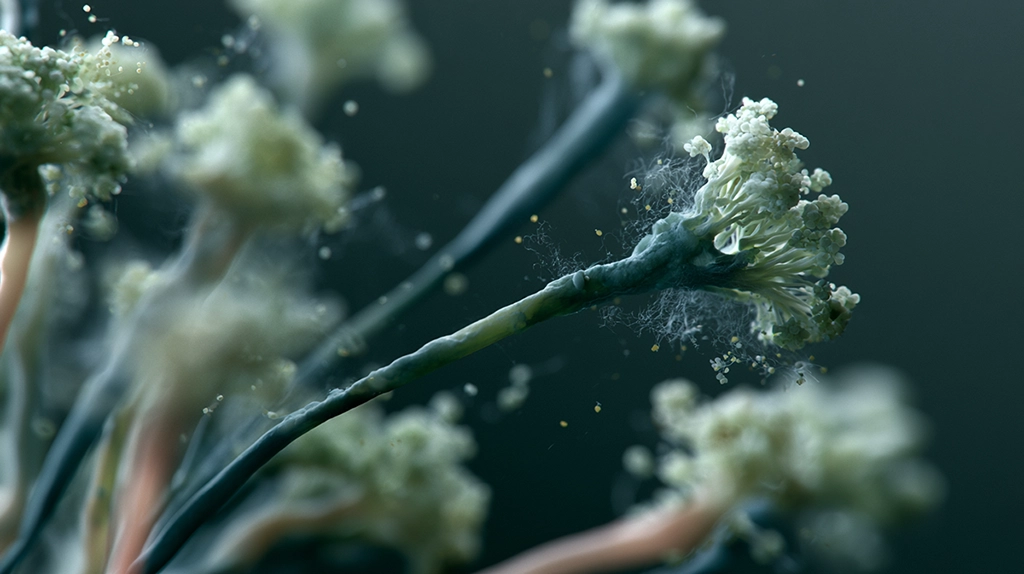
How Trichosporonales Reveal Genomic and Physiological Pathways Toward Host Adaptation

Most research on fungal pathogens begins after infection is established — when the organism is already operating inside a host. Yet many of these fungi spend most of their existence in soil, water, and decaying organic matter, where disease plays no part in their survival.
A recent study focused on Trichosporonales — a fungal order that spans both environmental and clinical species — asks what happens before infection, not during it. How do environmental organisms develop the capacity to survive conditions that closely resemble what a mammalian body presents?
The answer, it turns out, may not require entirely new biological machinery.
Gene Content Alone Does Not Explain Pathogenicity
One of the most persistent frameworks in microbiology holds that pathogens carry distinct virulence genes absent from their non-pathogenic relatives. Under this model, disease-causing capacity is treated as a matter of gene inventory.
The study challenges this directly. Pathogenic and non-pathogenic Trichosporonales share broadly similar gene repertoires. The genomic difference between a harmless environmental species and a clinically relevant opportunist is not, within this group, a matter of entirely distinct toolkits.
What differs is how those shared tools are used.
Adaptive Translation as a Candidate Mechanism

One mechanism the study identifies is adaptive translation — the efficiency with which genetic information is converted into functional proteins. This is not about which proteins a cell can theoretically produce, but how quickly and reliably it produces them under stress.
Pathogenic Trichosporonales lineages show signatures of codon optimization, particularly in metabolic genes. Codons are the three-letter sequences in genetic code that specify amino acids; when an organism’s preferred codon choices align with available transfer RNAs, translation proceeds more efficiently.
For fungi facing sudden environmental transitions — including entry into a host — this kind of efficiency may mean faster, more reliable metabolic responses. The organism does not wait for slow translation machinery to catch up.
The study treats this as a contributing factor, not a complete explanation. Translation efficiency improves survival odds. It does not guarantee infection.
Surviving Host-Like Stress Conditions
Entering a mammalian host confronts a microorganism with simultaneous stressors: elevated temperature, oxidative pressure from immune cells, nutrient competition, and sustained immune surveillance. Most environmental microbes cannot tolerate this combination long enough to establish infection.

Pathogenic Trichosporonales appear better equipped to manage these demands. Their genomic and physiological profiles support more efficient stress responses — the ability to mount defenses quickly, maintain metabolic function under pressure, and persist long enough for infection to take hold.
Stress tolerance is framed here as a prerequisite rather than a guarantee. It creates the conditions under which infection becomes possible. It does not predict that infection will occur.
Adaptation Does Not Equal Virulence
This distinction matters. Enhanced stress tolerance, faster translation, and metabolic efficiency are adaptive traits. They improve an organism’s ability to survive. They do not, by themselves, constitute virulence.
Virulence involves the capacity to cause measurable harm within a host — tissue damage, immune evasion, toxin production. An organism may persist inside a host without actively damaging it, or cause damage without establishing persistent infection.
For Trichosporonales, the study identifies the genomic and physiological foundations of adaptation. Whether a given species or strain translates those foundations into clinical pathogenicity depends on additional factors: host immune status, route of exposure, strain-level variation, and ecological context.
Repeated Evolution of Pathogenic Traits
One of the more significant findings is that pathogenic traits within Trichosporonales have evolved more than once. Different lineages have independently developed similar adaptive characteristics under comparable environmental pressures.
This is convergent evolution applied to pathogenic potential. When conditions consistently favor certain physiological traits — thermal tolerance, oxidative stress resistance, metabolic flexibility — those traits tend to emerge across unrelated lineages facing the same pressures.
Pathogenicity in this group is not the result of a single evolutionary origin or an inherited set of virulence factors. It is a recurring adaptive outcome.
Implications for Fungal Risk Assessment

Standard surveillance approaches prioritize detection of established virulence markers — specific genes or traits associated with known pathogenic behavior. These frameworks are well-suited to identifying familiar threats but less effective at flagging organisms developing pathogenic potential through different routes.
The study points toward a broader set of indicators. Translation efficiency, metabolic readiness, codon optimization patterns, and stress tolerance profiles may each carry signal even in the absence of classical virulence genes. An environmental organism with optimized metabolic translation and robust stress responses is not necessarily a pathogen — but it may represent elevated risk under the right conditions.
Incorporating these functional metrics into surveillance could improve early detection of emerging opportunistic pathogens before clinical exposure occurs.
Rethinking Pathogens as Adaptive Systems
The broader argument this study supports is a conceptual shift. Rather than treating pathogenicity as a fixed biological state defined by gene presence or absence, it may be better understood as a dynamic property — one that emerges from the interaction between an organism’s existing capabilities and the conditions it encounters.
Environmental fungi operate under constant selection pressure. They face fluctuating temperatures, resource scarcity, microbial competition, and oxidative environments. Some of these pressures overlap substantially with what a host body presents. Fungi that have evolved to manage environmental stress efficiently may, under the right conditions, find that those same adaptations support survival in a very different context.
Pathogenicity, in this view, can emerge through optimization rather than acquisition. What changes is not the organism’s fundamental biological toolkit, but how effectively that toolkit is deployed under pressure.
Opportunistic Pathogenic Fungi
Trichosporon asahii, Trichosporon inkin, Trichosporon mucoides, Candida albicans, and Cryptococcus neoformans are among the fungi associated with opportunistic infections in immunocompromised patients. While these species differ substantially in their biology and clinical behavior, their shared capacity to exploit host vulnerability reflects the broader pattern this research describes — the adaptive expression of existing capabilities under new conditions.
FAQ — Environmental Fungi and Pathogenic Adaptation
Do fungi need new genes to become pathogenic?
Not always. This study suggests that pathogenicity can arise through improved use of existing genes rather than acquisition of entirely new ones.
What is adaptive translation?
It refers to the efficiency with which organisms convert genetic information into proteins, influencing how quickly they can respond to environmental stress.
Does better translation efficiency make a fungus pathogenic?
Not directly. It may improve survival under host-like conditions, but additional factors are required for infection to occur.
Why are environmental fungi a concern for human health?
Some environmental fungi already possess traits that allow them to tolerate host conditions, making opportunistic infections possible under certain circumstances.
Can pathogenic traits evolve multiple times?
Yes. The study shows that similar adaptations can emerge independently in different lineages under comparable environmental pressures.
References
- Trichosporonales genomic and physiological adaptation study. Nature Communications. https://www.nature.com/articles/s41467-026-68330-6