According to NEWSCIENTIST
Introduction: Seeing Fungi Anew
Fungi are often misunderstood—associated with rot, mildew, or at best, something edible on a pizza. But in Funga Obscura: Photo Journeys Among Fungi, ecologist and photographer Alison Pouliot invites us to see fungi differently—not just as decomposers or curiosities, but as deeply aesthetic, intricate beings woven into the fabric of life on Earth.
With over 30 years of experience studying fungi, Pouliot’s latest work shifts from data to drama, from taxonomic study to visual storytelling. Her goal? To challenge our ideas of what fungi are—and to reveal how enchanting and bizarre they can truly be.
The Birth of Funga Obscura
In this deeply personal project, Pouliot turns her lens toward the overlooked and underappreciated fungal world. Her book is not just a collection of photographs but a meditation on beauty, time, and transformation in the natural world.
“I guess I was trying to challenge people’s notions of what a fungus is,” she says. “Many of them are aesthetically beautiful. But they are also bizarre, unusual and crazy.”
From the structural to the ephemeral, Funga Obscura showcases fungi not as background players, but as stars in their own strange and delicate ecosystems.
The Stars of the Show: Cage Fungus and the Velvet Caps
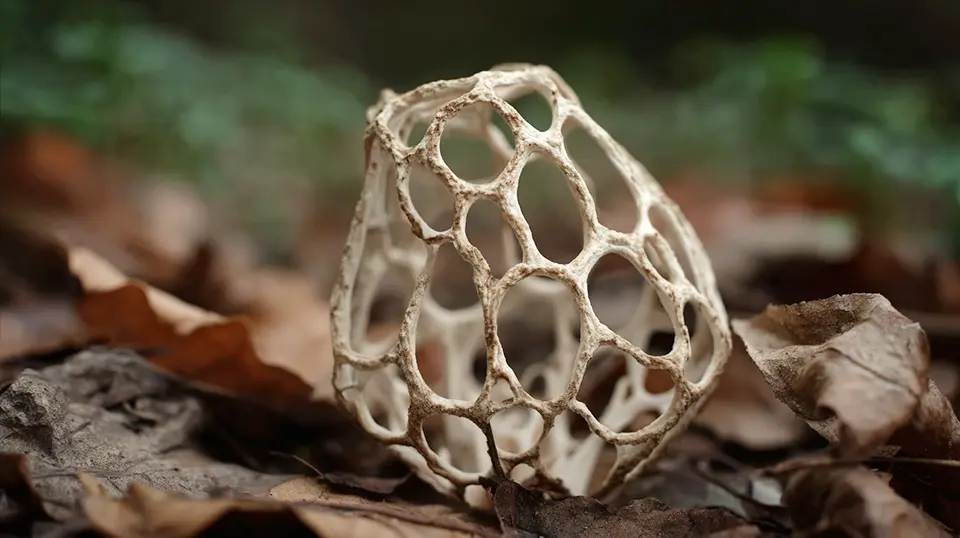
Among the stunning cast of mushrooms in Funga Obscura, one of the most talked-about is the cage fungus (Clathrus ruber). This vibrant red, lattice-like structure looks like a mutant sculpture rather than a mushroom. It actively emits a foul odor to attract flies, which in turn spread its spores.

Source:Wikimedia Commons, CC BY-SA 3.0
Another standout is the violet webcap (Cortinarius violaceus), loved not just for its bold color, but also its texture. “It’s exquisitely soft,” Pouliot explains, likening its cap to velvet.

Source:Wikimedia Commons, CC BY-SA 3.0
The Beauty of the Battered: The Giant Bolete
Even the less pristine fungi get a moment in the spotlight. The giant bolete (Boletus edulis)—though worn and weathered—becomes a symbol of resilience. For Pouliot, this aging specimen tells a story of survival, a quality fungi embody with quiet persistence.
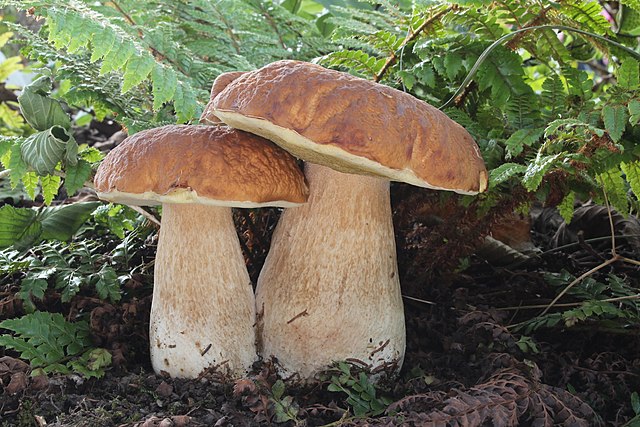
Source:Wikimedia Commons, CC BY-SA 3.0
Ephemeral Lives: The Small and Fleeting
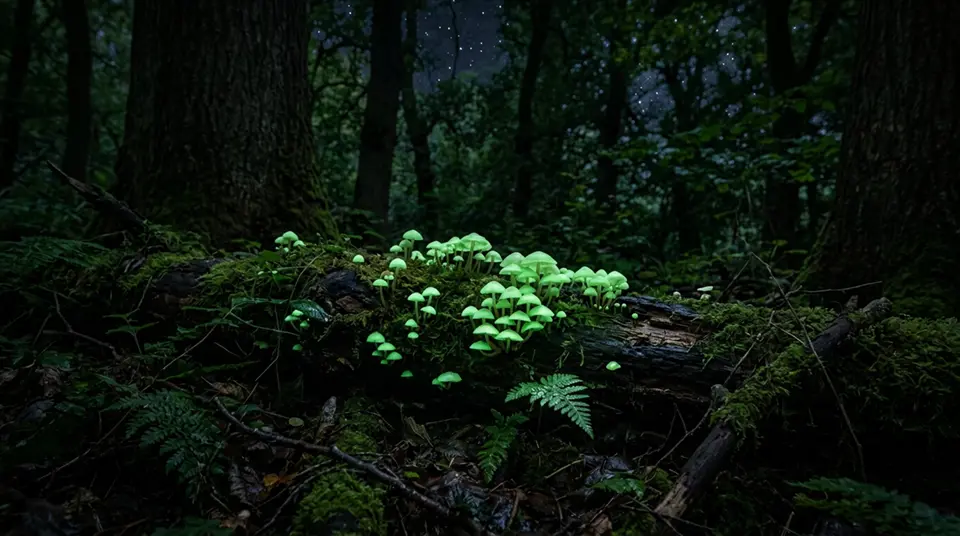
Some of Pouliot’s most poignant images are of mushrooms so small and transient they might vanish within hours. The Mycena bonnet (Mycena) is captured in a moment of delicate vulnerability.

Common name: pixie’s parasol.
Source:Wikimedia Commons, CC BY-SA 3.0
Nearby, a button-sized, unnamed fungus nestled in moss reminds us how much remains undiscovered and unnamed in the fungal world.
Aesthetic Meets Ecology
What makes Pouliot’s work stand out is the marriage of science and art. Her deep understanding of fungal ecology informs her images, creating not just visually striking pictures, but informed meditations on fungal life.
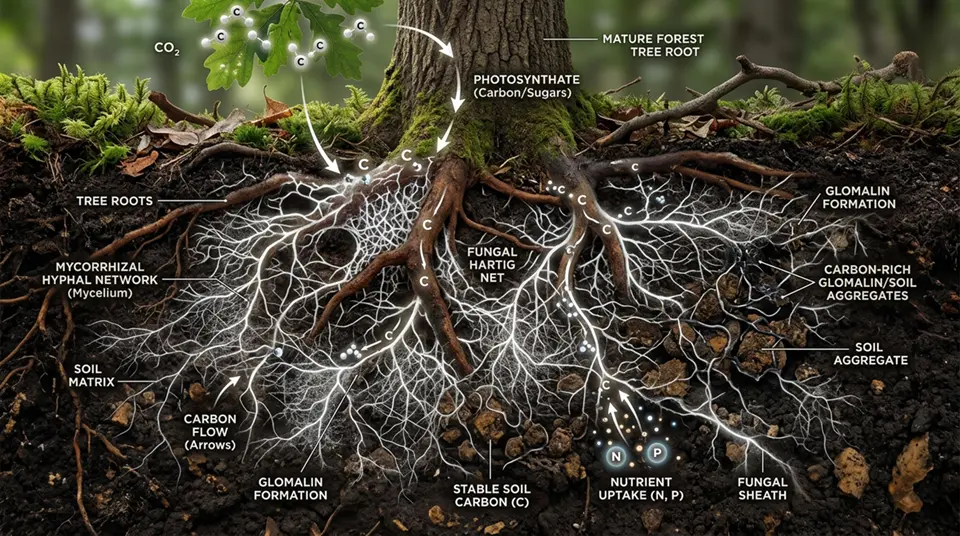
Her photos remind us that fungi are not outliers, but crucial connectors. They recycle nutrients, form mycorrhizal partnerships with plants, and knit ecosystems together underground.
And yet, they remain largely unseen.
The Underdogs of the Natural World
In Funga Obscura, mushrooms step out of the shadows. Through her lens, we see that fungi can be comical, tragic, seductive, or eerie. From squat toadstools to jelly-like globules and translucent filaments, Pouliot presents them as actors in nature’s theatre—each one with its own personality and tale.
This reframing asks us to reconsider our relationships with all forms of life—especially those that are quiet, slow, or hidden.
The Human Connection: Seeing What We’ve Overlooked
What do we miss when we forget fungi?
Pouliot’s work reminds us that wonder often lives just below the surface. By crouching down, focusing the camera, and spending time where most people don’t look, she gives voice to an overlooked kingdom.
Funga Obscura is not just a guide to mushrooms. It’s a philosophy. A call to pay attention. A whisper that maybe the world is stranger, more interconnected, and more beautiful than we ever thought.
The Importance of Fungal Awareness
Beyond beauty, there’s urgency in this work. Fungi are essential to life on Earth, yet they’re vulnerable to climate change, pollution, and habitat loss. Few fungal species are protected, and fungal conservation remains in its infancy.
Books like Funga Obscura not only open our eyes—they open doors for dialogue, appreciation, and action.
The Artist’s Voice
Pouliot’s photographs speak for fungi—but so does her passion.
This is someone who has spent decades not just photographing mushrooms, but crawling beside them, studying their life cycles, their roles in soil regeneration, their aesthetics.
“If you sit with them long enough, they reveal themselves. But you have to be still enough to see.”
Rediscovering the Kingdom of Fungi
From the alien architecture of the cage fungus to the velvet softness of the violet webcap, from weathered boletes to fleeting Mycenas—Pouliot reframes fungi as protagonists in the grand story of Earth.
It reminds us that life is not just what blooms, but also what decomposes. Not just what we build, but what breaks down and nourishes anew.
In her lens, fungi are no longer background—they are the main characters.
References
- Pouliot, A. (2023). Funga Obscura: Photo Journeys Among Fungi. CSIRO Publishing.
- Alison Pouliot – Official Website
- Clathrus ruber – Wikipedia
- Cortinarius violaceus – Wikipedia
- Boletus edulis – Wikipedia
- Mycena – Wikipedia
According to NEWSCIENTIST
Key Takeaways
- Funga Obscura—’obscure fungi’—refers to the vast majority of fungal species that remain undescribed, unstudied, and essentially unknown to science, despite fungi representing one of the most species-rich kingdoms of life.
- Fungal biodiversity is estimated at 1.5–3.8 million species globally, yet only approximately 150,000 have been formally described—meaning we know fewer than 10% of all fungal species, compared to over 90% of vertebrates.
- Modern environmental DNA (eDNA) and metagenomic techniques have transformed fungal diversity studies, revealing enormous unknown fungal diversity in soil, water, deep sea sediments, and extreme environments.
- Many undescribed fungal species are almost certainly already extinct—habitat destruction, climate change, and land-use change eliminate species before they can be discovered, studied, or potentially valued for medical or biotechnological properties.
- Amateur mycologists, fungal forays, and citizen science initiatives play an increasingly important role in discovering and documenting fungal diversity—reflecting the distributed nature of fungi and the impracticality of professional-only coverage.
Frequently Asked Questions
What percentage of fungal species have been discovered?
Scientific consensus is that we have discovered and formally described a small minority of the world’s fungal species—likely under 10%—making fungi one of the most poorly known major groups of life on Earth. Current estimates of fungal diversity: total estimated fungal species: estimates have ranged widely, from 1.5 million to 5.1 million species; the most frequently cited figure is approximately 1.5–3.8 million species based on various extrapolation methods (extrapolating from known ratios of fungi to plants in well-studied ecosystems to global plant diversity); a 2017 estimate (Blackwell, 2011 and subsequent revisions) suggests approximately 3.8 million; others suggest 2.2–3.8 million. Formally described species: approximately 120,000–150,000 fungal species have been formally described and named (as of 2020–2022); this represents approximately 4–10% of estimated total diversity. Comparison with other groups of life: known proportions of animals—approximately 75% of animal species are estimated to have been described; vertebrates—approximately 95%+ are described; mammals and birds are almost certainly complete inventories; plants—approximately 90–95% of flowering plants are known. Fungi vs. bacteria: bacterial diversity may be even greater than fungal (billions of species by some estimates); metagenomics has similarly revealed that bacteria are far more diverse than cultured-based studies suggested; the gap between estimated and described species is proportionally similar. Why so many remain unknown: fungi are morphologically cryptic—many species are microscopic or have minimal morphological characteristics; many species do not produce visible fruiting bodies; taxonomic bottleneck—the number of trained fungal taxonomists (mycologists) globally has declined in recent decades; DNA-based studies reveal species that are genetically distinct but morphologically identical.
Why are fungi so poorly known compared to plants and animals?
The relative obscurity of fungal diversity compared to plants and animals reflects fundamental biological differences in visibility and identification, historical research priorities, and the challenge of studying mostly invisible organisms. Why fungi are harder to discover and study: mostly invisible—the dominant stage of most fungi is a network of microscopic hyphae in soil, wood, or host tissues; the mushrooms we see are comparable to the fruiting of a tree—they are the reproductive structure, not the organism itself; most of the fungal biomass in any ecosystem is invisible to the naked eye; species-level identification is difficult—many closely related fungal species are morphologically indistinguishable without microscopy and now molecular (DNA) analysis; for much of mycology’s history, species identification relied on subtle morphological characters that required expert training. Historical research priorities: zoology and botany developed as formal sciences earlier; collections of animals and plants were prioritised for major national museums and natural history institutions; herbaria (plant collections) are enormous; mycological collections are much smaller. Ecological habits of fungi: many fungi fruit infrequently and unpredictably, appearing only when temperature, moisture, and nutritional conditions align; a fungal species present in an ecosystem may go years without producing visible fruiting bodies; repeated sampling of the same site is needed. Technical challenges: growing fungi in culture for study is difficult or impossible for many species, particularly mycorrhizal fungi that require plant partners to grow; endophytic fungi living inside plant tissues require destructive sampling to discover. DNA revolution: metagenomic environmental DNA sequencing has revealed that even well-studied sites (forest floor, tropical soil) contain hundreds to thousands of fungal operational taxonomic units (OTUs), most with no known representatives in culture collections or described species names.
What makes fungal diversity important for human society?
The undiscovered majority of fungal diversity represents an enormous reservoir of potential medical, industrial, and ecological value that is currently inaccessible—and which may be permanently lost if habitats are destroyed before species are even catalogued. Medical significance of unknown fungal diversity: most antibiotic and antifungal drugs, and many other medicines, were discovered from natural products; documented examples show that medically important compounds can be found in previously obscure fungal species; the vast majority of fungal secondary metabolite diversity remains unscreened; potential medicines already lost—species driven extinct by habitat loss before discovery may have contained unique bioactive compounds; given that roughly 1 in 1,000 natural compounds screened has drug potential, losing millions of undescribed species is losing enormous medical potential. Industrial biotechnology: fungal enzymes already drive industries—cellulases (Trichoderma reesei), proteases (Aspergillus oryzae), and laccases (many species) are used in food, textile, and chemical industries; undiscovered species in extreme environments (deep sea, hydrothermal vents, Arctic soil) may produce novel enzymes with properties adapted to industrial conditions (high temperature, high salt, extreme pH). Agricultural significance: most plant roots are colonised by mycorrhizal fungi; 85–90% of plant species depend on mycorrhizal partners; undescribed mycorrhizal species in tropical and other ecosystems are essential for plant nutrition and forest resilience; deforestation may eliminate these fungal partners from ecosystem memory. Ecosystem services: fungi are the primary decomposers of lignocellulosic material globally—a function critical to carbon cycling; diversity in decomposer fungi ensures redundancy and resilience in nutrient cycling under changing conditions.
Are there still new mushroom species being discovered?
Yes—new mushroom species (fungal species with macroscopic fruiting bodies) continue to be discovered and formally described at a significant rate globally, reflecting both the genuine richness of undiscovered fungal diversity and the recent application of DNA-based identification that reveals cryptic species. Discovery rates: approximately 2,000–5,000 new fungal species are formally described annually; this rate has increased in recent years as molecular tools reveal cryptic species within morphologically defined species; the majority of newly described species come from: tropical ecosystems with high biodiversity and low mycological research intensity; molecular re-examination of existing herbarium specimens revealing that specimens labelled as known species are in fact previously undescribed species (cryptic diversity); deep sea and extreme environment surveys revealing fungi in previously little-explored habitats. Notable recent discoveries: ghost fungus (Omphalotus nidiformis)—well-known in Australia but molecular analysis revealed it is more complex than previously thought. New Ophiocordyceps species—the zombie-ant fungi are far more species-rich than the originally described Ophiocordyceps unilateralis; multiple new species have been described from various ant genera and geographic regions. New truffle-like fungi—Tuber species (truffles) are being described from Asia at a high rate; Chinese black truffles and related species represent previously undescribed diversity. New ectomycorrhizal species—particularly in subtropical and tropical Asia and Africa where ectomycorrhizal tree forests have been relatively poorly studied. Citizen science contributions: platforms like iNaturalist, Mushroom Observer, and regional recording groups allow amateur mycologists to contribute observations that form the basis of new species descriptions.
How does losing fungi affect ecosystems?
Fungal diversity loss has consequences for ecosystem function that are proportionally greater than loss of most other organism groups, because fungi occupy unique functional roles—particularly decomposition and plant symbiosis—that cannot be fully replaced by other organisms. Decomposition and nutrient cycling: white rot fungi (Agaricomycetes capable of degrading lignin) are the only organisms that can efficiently break down lignin—the second most abundant terrestrial polymer after cellulose; without white rot fungi, plant material would accumulate, carbon would become locked in recalcitrant organic matter, and nutrient cycling would slow dramatically; loss of decomposer fungal diversity reduces the functional redundancy in decomposition—meaning that unusual substrates or extreme conditions are more likely to defeat the remaining community’s capacity. Mycorrhizal network disruption: ectomycorrhizal fungi are species-specific in their plant partners to varying degrees; some fungal species associate preferentially with specific tree genera; loss of specific fungal species can impair the recruitment and nutrient nutrition of specific tree species; in tropical forests, where mycorrhizal diversity appears particularly high, deforestation may eliminate unique mycorrhizal combinations that specific forest types depend on. Plant disease dynamics: many natural forests have low rates of specific plant pathogens because diverse fungal communities include antagonists that suppress pathogens; reducing fungal diversity can tip the balance toward pathogen dominance. Food web effects: many invertebrates (insects, springtails, mites, earthworms) depend on fungi as their primary food source; fungi-dependent invertebrates are the food of small vertebrates; loss of fungal diversity cascades through these food webs. Evidence from field studies: experimental manipulations of soil fungal diversity consistently show that reduced fungal diversity impairs nutrient mineralisation rates, plant biomass production, and decomposition efficiency.