According to THE MIRROR US
Bread’s Biggest Enemy Isn’t Time—It’s Storage
In many households, bread is more than food—it’s comfort, culture, and a daily ritual. Yet for all its simplicity, one of bread’s enduring challenges is keeping it fresh. Few things are as disappointing as reaching for a soft slice only to find green spots or a sour smell clinging to the crust.
But what if preventing mold and prolonging freshness didn’t require fancy gadgets or chemical preservatives? What if the secret was hiding in your kitchen drawer all along?
The Secret Weapon: A Cotton Tea Towel
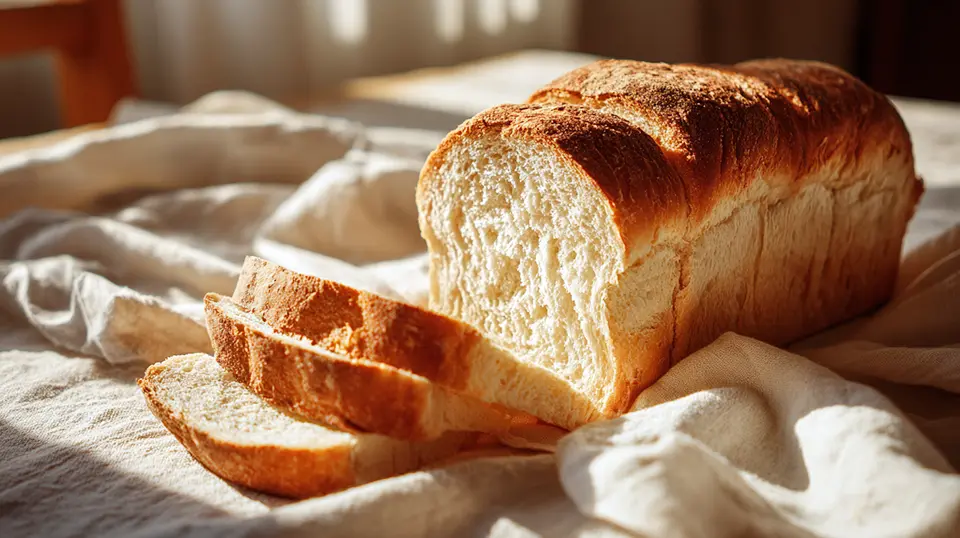
Mimi Morley, Senior Recipe Developer at HelloFresh, offers a remarkably effective solution: wrap your bread in a clean, dry cotton tea towel. That’s it.
The reason this works lies in how mold forms. Bread mold—most often Rhizopus stolonifer, the familiar fuzzy black or green growth—is triggered by warmth, moisture, and limited airflow. A tea towel acts as a breathable barrier. It allows excess moisture to escape, preventing sogginess that breeds mold, while still retaining enough humidity to keep the loaf from drying out too quickly.

Source: Wikimedia Commons, CC BY-SA 3.0
The Science Behind the Cloth
Cotton is a natural fiber that permits air circulation—something plastic wrap or sealed bags block entirely. When bread is wrapped in plastic, especially while still warm, condensation forms inside. That trapped moisture turns your loaf into the perfect home for mold spores already floating invisibly in the air.
The tea towel solves this by being both protective and porous. It absorbs minimal surface moisture while allowing the bread to breathe. That means:
- Crust stays crisp
- Interior remains soft
- Mold has fewer conditions to thrive
This technique is especially effective for artisanal or sourdough loaves, which often lack commercial preservatives and are more susceptible to early spoilage.

Source: Wikimedia Commons, CC BY-SA 3.0
Expert-Backed Bread Storage Tips
Morley offers more than just the towel tip. She also explains location matters just as much. Bread should always be stored in a cool, dark, and dry place—ideally inside a bread bin or cabinet away from appliances like dishwashers or refrigerators.
Why? These appliances emit heat and humidity, which can unintentionally “cook” your bread, making it stale or soggy faster.
Here are the main takeaways from her advice:
- Never store bread near heat sources
- Let fresh bread cool before wrapping
- Keep it in breathable materials, not sealed plastic
- Avoid the fridge—bread dries out faster there
Why the Fridge Is Bread’s Worst Enemy
It’s a common belief that refrigeration preserves freshness. That might be true for produce or dairy—but not for bread.
The refrigerator speeds up a process called starch retrogradation, which means the starch molecules re-crystallize. This causes the crumb (the soft interior) to firm up and go stale even before mold sets in. You’re left with a loaf that’s hard on the inside and tasteless.
Unless you plan to toast it, keeping bread in the fridge often accelerates staleness, defeating the purpose of preservation.

Source: Wikimedia Commons, CC BY-SA 4.0
The Freezer: Your Long-Term Ally
If you won’t finish a loaf within a few days, the freezer is your best option. Here’s how to do it right:
- Let bread cool completely before freezing
- Wrap tightly in plastic wrap, then foil or freezer-safe bags
- Label with date to track shelf life (generally up to 3 months)
- Freeze in slices so you can toast directly from frozen
- Avoid freezer burn by removing excess air before sealing
This method halts microbial activity entirely—no mold, no staling.

Source: Wikimedia Commons, CC BY-SA 4.0
Other Simple Ways to Keep Bread Fresh
Aside from the tea towel, here are several other tried-and-true methods for prolonging bread’s life:
A. Use a Bread Bin
A classic solution, bread bins offer protection from light while maintaining slight airflow. Choose one made from bamboo, metal, or ceramic with ventilation holes.
B. Wrap in Paper or Linen
These materials also allow the loaf to “breathe” without locking in too much moisture.
C. Slice as You Go
Cutting the loaf only when needed preserves the remaining bread’s structure and moisture balance.
D. Avoid Sunlight
Sun can heat the bread’s surface, encouraging condensation inside bags and containers.
How to Spot Mold and When to Toss Bread
Bread mold starts subtly—tiny white or green dots, a soft texture shift, or a sour smell. But even a small patch is a warning.
Never cut mold off and eat the rest. Mold filaments (hyphae) spread deeply into the bread even before visible spots appear. Rhizopus stolonifer and other species may also produce mycotoxins, which can be harmful if ingested.
Signs it’s time to toss:
- Discoloration (green, black, blue, or white fuzz)
- Musty or sour odor
- Wet or sticky texture on inner crumb
Why Bread Spoils So Quickly
Unlike sealed snacks or canned goods, bread is:
- Moist
- Exposed to air
- Free of chemical preservatives (in the case of artisanal loaves)
Its shelf life is short—2 to 5 days at room temp, depending on ingredients and conditions. That’s why how you store it is just as important as where.
A Zero-Waste Bonus: What to Do with Stale (Not Moldy) Bread
Before tossing out old bread, consider giving it a second life. If it’s dry but not moldy, try:
- Making breadcrumbs in a food processor
- Turning it into croutons with a little oil and seasoning
- Creating bread pudding
- Toasting it for crostini or bruschetta
With a bit of creativity, even yesterday’s loaf can shine in today’s meal.
Simple Solutions Still Work
There’s something almost charming about the fact that the answer to a modern frustration—keeping bread fresh—is not found in a gadget or app, but in a cloth your grandmother likely used.
As someone who writes often about sustainability and home living, I believe this tea towel trick is not just functional—it’s a return to common sense. It respects the food, reduces waste, and costs nothing. In an era of rising food prices and climate awareness, such habits matter.
It’s a quiet reminder that sometimes the best answers are the simplest ones. In this case, the softness of a fresh slice and the absence of mold can be owed to the humble tea towel.
Wrap with Intention, Eat with Joy
Bread is more than food—it’s memory, ritual, and nourishment. Keeping it fresh doesn’t require fancy tools or expensive storage—just a breathable cloth, a cool cupboard, and a bit of foresight.
With this tea towel method, you can enjoy your bread longer, avoid waste, and sidestep the heartbreak of moldy loaves. All while turning a daily routine into something a little more thoughtful—and delicious.
References
- HelloFresh – Recipes & Tips
- Rhizopus stolonifer – Wikipedia
- WHO – Dampness and Mould Fact Sheet
- NHS – Asthma
- NCBI – Mycotoxins Overview
- USDA – Food Safety Basics
According to THE MIRROR US
You can’t see it — but it may already be active.
Check your environment

Key Takeaways
- Storing bread wrapped in a clean, breathable cotton tea towel is one of the most effective simple kitchen methods for extending freshness while preventing mold—it allows enough air circulation to prevent moisture accumulation.
- Airtight plastic bags trap moisture from bread’s water content and create humid conditions that accelerate mold growth—counterintuitively, the packaging most people reach for is one of the worst choices for mold prevention.
- Bread boxes serve a similar function to tea towels—maintaining slightly humid but air-circulated conditions that keep crust from hardening while limiting the extreme humidity that promotes mold.
- Freezing is the most effective method for long-term bread mold prevention: frozen bread retains quality for 2–3 months and is readily thawed slice by slice.
- The speed at which different breads mold reflects their water activity (Aw) and preservative content: high-moisture artisan sourdoughs mold faster than factory white bread, while the acidity of real sourdough (lactic and acetic acid) naturally inhibits mold growth.
Frequently Asked Questions
Does wrapping bread in a tea towel really prevent mold?
Wrapping bread in a clean, breathable cotton tea towel is a genuinely effective mold-prevention technique grounded in sound food science—it works by managing moisture at the bread surface in a way that plastic bags cannot. The mechanism: moisture management—freshly baked or purchased bread contains significant internal moisture; this moisture migrates toward the surface over time (staling/moisture redistribution); if wrapped in an airtight plastic bag, surface moisture cannot escape and accumulates on the crust, raising water activity at the bread surface to levels (above Aw 0.85) that readily support Penicillium, Rhizopus, and other bread molds; a cotton tea towel allows slow, controlled moisture exchange—absorbing excess surface moisture while maintaining a slightly elevated humidity that prevents the bread from drying out completely; the result is a surface water activity below the mold growth threshold while the bread retains acceptable texture. Comparison with alternatives: plastic bag—traps moisture; mold typically appears within 3–5 days (faster in summer); good for retaining softness but promotes mold. Bread box/bin—functions similarly to a tea towel; the enclosed space maintains slightly elevated humidity without being airtight; wooden bread boxes absorb excess moisture well. Paper bag—allows moisture escape; excellent for crusty bread; reduces mold risk but bread can become stale/hard within 1–2 days. Refrigerator—dramatically reduces mold growth; bread stays safe much longer; but staling (starch retrogradation) accelerates at refrigerator temperatures, making refrigerated bread go stale faster than room-temperature storage.
Why does bread mold so quickly?
Bread molds quickly because its composition—moderate water activity, abundant simple and complex carbohydrates, proteins, and fats—makes it one of the most nutritionally suitable substrates for common environmental mold species. Bread’s vulnerability to mold: water activity—standard bread has a water activity (Aw) of approximately 0.93–0.96, well above the minimum growth threshold (approximately 0.85–0.90) for the most common bread mold species; this moisture availability ensures that mold spores landing on bread have sufficient water to germinate. Nutrient richness—bread provides sugars (glucose, fructose, maltose from starch hydrolysis), starches, proteins, and lipids—all the nutrients mold requires for rapid growth; bread is essentially pre-digested by the baking process, making nutrients readily accessible. Surface area and porosity—bread’s porous, open crumb structure provides enormous surface area for spore landing and attachment, and allows mold hyphae to penetrate into the interior rapidly. Common bread molds: Rhizopus stolonifer (black bread mold)—the classic ‘black mold’ of bread; grows very rapidly; spreads widely with visible black sporangia (spore-containing bodies) on long white stalks. Penicillium species—blue-green molds; the most frequently seen bread molds in refrigerated conditions; some species produce secondary metabolites on bread. Aspergillus species—less common on fresh bread but can occur, particularly on stored or improperly dried products. Cladosporium—black-green surface mold; common on bread stored in humid conditions. Speed of mold development: at 25°C (room temperature) and typical bread water activity, visible mold colonies can appear within 3–7 days on unpreserved bread.
What additives in commercial bread prevent mold?
Commercial bread manufacturers routinely use approved preservatives and mold inhibitors to extend shelf life from days to weeks, reflecting the economic importance of mold control at industrial scale. Major bread mold inhibitors: calcium propionate (E282)—the most widely used bread preservative globally; calcium salt of propionic acid; produced naturally in small amounts by cheese fermentation (Swiss cheese gets its flavour partly from propionic acid); effective against Rhizopus, Penicillium, and Aspergillus; typical use level 0.1–0.4% of flour weight; mode of action: propionic acid disrupts the cellular uptake of nutrients by fungal cells and inhibits spore germination. Sorbic acid and potassium sorbate (E200, E202)—broad-spectrum antimicrobial; effective against both molds and yeasts; more effective than propionate against xerophilic yeasts; used in moist, high-moisture products. Vinegar (acetic acid)—sometimes added to bread formulations; natural preservative; lowers pH, which inhibits mold growth; detectable in products labelled with natural ingredients. Modified atmosphere packaging (MAP)—nitrogen-flushed bread packaging removes oxygen, preventing aerobic mold growth; used in premium and specialty breads where preservative-free labelling is desired; extends shelf life by 1–3 weeks without chemical additives. Ethanol (food-grade alcohol) spraying—some bakeries spray surfaces of baked products with food-grade ethanol before packaging; ethanol at 40–70% concentration kills surface mold spores; evaporates completely before consumption; not a chemical preservative per se but a processing aid. Natural alternatives being adopted: rosemary extract (carnosic acid)—antioxidant and some antimicrobial activity. Cultured wheat/corn (from fermented grain)—contains natural organic acids including propionic and acetic acid; allowed in ‘clean label’ products without listing propionate directly.
How long does different bread last before molding?
Bread shelf life before mold development varies dramatically by bread type, storage conditions, and whether artificial preservatives are used. Typical timelines at room temperature (20–22°C): Homemade artisan sourdough (no preservatives): 3–5 days wrapped in a tea towel; 2–3 days in a plastic bag (moisture accumulation accelerates mold). Real sourdough (extended fermentation with genuine lactobacillus cultures): somewhat longer than standard homemade bread due to lactic and acetic acid from fermentation; 5–7 days in good storage conditions. Commercial preservative-containing white bread: 7–14 days or more due to calcium propionate; bread box or loose wrap conditions. Preservative-free artisan bakery bread: 3–5 days; no preservatives but often lower moisture content in crusty varieties extends shelf life somewhat. High-moisture sandwich loaves (enriched with oil, sugar): shorter shelf life than lean breads at similar preservative levels. Gluten-free breads: typically shorter shelf life than wheat bread due to higher water activity and different starch structures; 2–4 days for homemade; 5–7 days for commercial with preservatives. Refrigerator storage—all bread types last 2–3 weeks without mold in the refrigerator, though staling accelerates; bread that has already started to mold should not be refrigerated and hoped to be recovered—discard and clean the storage area. Freezer storage—virtually all bread types maintain quality for 2–3 months frozen; freeze in slices for easy single-serving thawing; thaw at room temperature for 1–2 hours or toast directly from frozen.
Is bread mold dangerous to eat?
Eating bread with visible mold is generally inadvisable, and the old practice of ‘cutting off the mold and eating the rest’ is not reliably safe for most bread types. The key issue—invisible mycelium penetration: mold on bread is not only the visible coloured surface colony; fungal hyphae penetrate the bread’s porous structure, often extending 1–3 cm into the loaf beyond the visible colony margin; cutting away the visible mold and 2 cm of surrounding bread still leaves potentially mold-penetrated bread; the penetration depth depends on how porous the bread is—dense, moist bread allows deeper penetration than airy, open-crumb bread. Mycotoxin concerns: some bread mold species produce mycotoxins (toxic secondary metabolites) that accumulate in the bread as the mold grows; Penicillium species on bread can produce patulin (in some species) and citrinin; Aspergillus species can produce aflatoxins in warm conditions; Rhizopus stolonifer does not produce significant mycotoxins. Heating does not reliably destroy mycotoxins—toasting moldy bread is not a safe decontamination method as mycotoxins are heat-stable. The ‘hard cheese’ exception: with hard cheeses, mold does not penetrate deeply (the dense matrix limits diffusion) and cutting away 2.5 cm is considered safe by many food scientists; this logic does NOT apply to soft bread with its open, moist, porous structure. Practical recommendation: discard bread with visible mold; do not rely on the ‘cut the mold off’ approach for bread; avoid sniffing moldy bread to check if it is bad (inhaling mold spores should be minimised); clean the bread box or storage container with vinegar solution to remove spores before storing new bread.