According to POPULAR SCIENCE
I. The Need for a Breakthrough in Nail Infection Treatment
Nail infections, caused by various fungi and bacteria, are a widespread public health issue, affecting 4 to 10 percent of the global population, with rates skyrocketing to nearly half of those over age 70. These infections, such as onychomycosis (toenail fungus) and paronychia (bacterial cuticle infection), are more than just cosmetic nuisances; they pose risks, particularly to vulnerable groups like the elderly and those with diabetes, leading to medical complications.
Current treatments are notoriously difficult:
Oral Antifungals: These pills are effective but can take two to four months to clear an infection and carry risks for immunocompromised patients or those with underlying medical conditions.
Topical Treatments: While safer, topical ointments and liquids often fail or take years to work. The main obstacle is the difficulty the active ingredients have in penetrating the hard nail plate to reach the embedded microbes underneath.

Source: Wikimedia Commons — CC BY-SA 4.0
II. Hydrogen Sulfide: The Rotten Egg Gas to the Rescue
A team of scientists from the University of Bath and King’s College London believe they have found that necessary breakthrough in a seemingly unlikely candidate: hydrogen sulfide (H₂S). This colorless, flammable gas, infamous for its unpleasant “rotten egg” smell, has shown potential as a highly effective new topical treatment for persistent nail infections.
A. The Mechanism of Penetration and Destruction
The research, recently published in the journal Scientific Reports, demonstrates a powerful, dual advantage for hydrogen sulfide:
Superior Penetration: Previous studies had already suggested that the small, naturally occurring gas can penetrate the nail plate more effectively than current topical drugs. This solves the long-standing delivery problem that plagues existing treatments.
Targeted Microbial Disruption: In lab tests, a chemical was used to release the hydrogen sulfide gas directly onto the nail pathogens. The gas then disrupts the way the microbes, including drug-resistant fungi, produce energy. By cutting off the energy supply, the gas effectively kills the microbes at the source of the infection.
Study co-author Dr. Albert Bolhuis, a microbiologist at the University of Bath, stated that this process “lays the foundation for a compelling alternative to existing treatments.”
III. Treatment Prospects and Overcoming the Odor
This treatment offers the potential for healing nail infections faster and with fewer side effects than current options.
Speed and Efficacy: The efficient targeting of the microbes’ energy production suggests a shorter treatment duration compared to the months or years required by existing methods.
Safety Profile: While hydrogen sulfide can be toxic in high concentrations, the researchers believe the small amounts required for topical treatment are well below toxicity levels.
Odor Management: Acknowledging the gas’s powerful and unpleasant odor, the team is confident that the correct final formulation of the medicine will effectively limit any unpleasant smells during patient use.
Though the treatment has only been conducted in a lab thus far, the researchers, including Dr. Stuart Jones from King’s College London, are optimistic and aim to develop a final product for patient use within the next five years, offering new hope for millions suffering from persistent and drug-resistant fungal nail infections.

Source: Wikimedia Commons — CC BY-SA 4.0
References
King’s College London. (2024).
Centers for Disease Control and Prevention (CDC). (2023).
According to POPULAR SCIENCE
Key Takeaways
- Hydrogen sulfide (H₂S)—the gas that smells like rotten eggs—is being explored as a novel antifungal agent because it can kill or inhibit mold growth at low concentrations while being naturally produced by many living organisms.
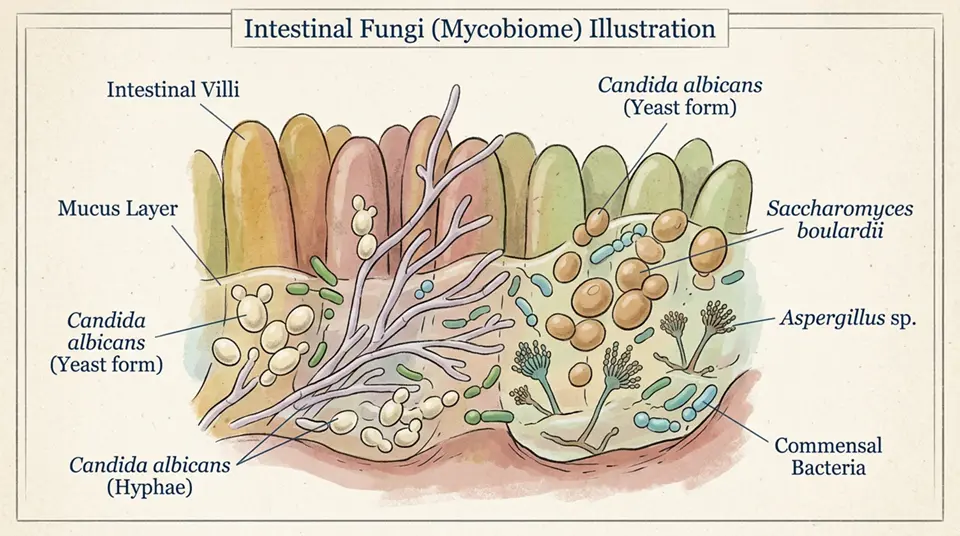
- H₂S donors (compounds that slowly release hydrogen sulfide) have shown broad-spectrum antifungal activity in laboratory studies, including against azole-resistant Candida and Aspergillus species that are difficult to treat clinically.
- The mechanism of H₂S antifungal action involves disruption of fungal mitochondrial function—hydrogen sulfide inhibits cytochrome c oxidase (complex IV), interfering with fungal energy production.
- At low concentrations, H₂S paradoxically promotes the growth of mammalian cells while killing fungi—a potential therapeutic window that could allow killing of fungal pathogens while sparing host tissue.
- H₂S-releasing compounds are also being explored for food preservation applications where traditional fumigants (sulfur dioxide) are being restricted for health and environmental reasons.
Frequently Asked Questions
How does hydrogen sulfide kill mold and fungi?
Hydrogen sulfide (H₂S) exerts its antifungal activity through multiple simultaneous mechanisms, with mitochondrial electron transport chain inhibition being the most well-characterised. Primary mechanism—cytochrome c oxidase (complex IV) inhibition: H₂S binds to and inhibits cytochrome c oxidase (the terminal enzyme of the mitochondrial electron transport chain) in a manner similar to cyanide; this inhibition blocks cellular respiration, reducing ATP production and creating reactive oxygen species (ROS); fungal cells are particularly sensitive to H₂S-mediated respiratory inhibition because fungi have limited alternative energy metabolism pathways. Secondary mechanisms: disruption of cellular sulfur metabolism—fungi require specific sulfur-containing metabolites for growth; H₂S at higher concentrations disrupts cysteine and methionine synthesis pathways that fungi depend on. Protein modification—H₂S can react with cysteine residues in fungal proteins through persulfidation, altering protein function and potentially disrupting essential enzymatic processes. Oxidative stress induction—H₂S exposure can paradoxically increase cellular ROS production as a secondary consequence of respiratory inhibition; oxidative damage to fungal DNA, lipids, and proteins contributes to cell death. Species-specific sensitivity: different fungal species show very different sensitivities to H₂S; some common environmental molds are killed at relatively low H₂S concentrations; Candida albicans shows higher resistance than many other pathogens; azole-resistant Candida auris appears more sensitive to H₂S than azole-resistant isolates are to azoles.
Is hydrogen sulfide safe to use against mold?
Hydrogen sulfide’s extreme toxicity at high concentrations makes direct application as an antifungal impractical; research is focused on H₂S donor compounds that release small, controlled amounts of H₂S slowly and locally. H₂S toxicity context: at high concentrations, H₂S is acutely lethal—800 ppm H₂S causes rapid unconsciousness and death (comparable to hydrogen cyanide in acute toxicity); this is the concentration produced in industrial accidents (sewage, petroleum, natural gas processing). At low concentrations—H₂S at 0.1–1 ppm range has been proposed to have biological signalling roles; it is produced endogenously in small amounts by mammalian cells as a gasotransmitter; at these concentrations, H₂S appears to protect mammalian cells from oxidative stress rather than harming them. The therapeutic window rationale: research groups (including work from the University of Exeter and other institutions) have explored the hypothesis that H₂S concentrations that are inhibitory to fungi are tolerated by mammalian host cells—creating a potential therapeutic window for antifungal applications; this requires very precise control of H₂S delivery. H₂S donor compounds under investigation: GYY4137 (morpholin-4-ium 4-methoxyphenyl(morpholino) phosphinodithioate)—a slow-releasing H₂S donor; AP67-based compounds; nanoparticle-encapsulated H₂S donors for local delivery; allicin (from garlic)—a naturally occurring H₂S donor. Status: research on H₂S-based antifungals is in early preclinical stages; no clinical applications have been approved; safety and efficacy in animal models are still being characterised.
What applications could hydrogen sulfide have in food preservation?
H₂S and H₂S-releasing compounds have potential food preservation applications as antifungal agents, though current applications are at research stage and substantial regulatory and safety hurdles exist before commercial application. Post-harvest food preservation context: fungal contamination of stored fruits, vegetables, grains, and other foods is a major cause of post-harvest losses globally; conventional fumigants (sulfur dioxide for grapes and dried fruits; methyl bromide for many commodities) are effective but face increasing restrictions: methyl bromide is controlled under the Montreal Protocol as an ozone-depleting substance; sulfur dioxide leaves residues and causes reactions in sulfite-sensitive individuals. H₂S as a potential preservative: controlled atmosphere storage using very low H₂S concentrations (ppm-level) could suppress mold growth on stored produce without sulfur dioxide residues; H₂S volatilises completely after treatment, potentially leaving no residue. Research evidence: studies have demonstrated that H₂S fumigation at carefully controlled concentrations reduces post-harvest fungal infection in strawberries, apples, and other fruits; strawberry studies found reduced Botrytis (grey mold) infection after H₂S treatment with preserved fruit quality. Practical and regulatory challenges: H₂S is toxic at higher concentrations and requires careful handling and exposure monitoring; regulatory frameworks for H₂S as a food fumigant do not currently exist in most jurisdictions; development would require extensive toxicological and residue studies; the distinctive smell of H₂S, even at sub-toxic concentrations, would affect food palatability unless completely removed before sale.
Are there natural sources of hydrogen sulfide that affect mold growth?
H₂S is a naturally occurring compound produced by multiple biological processes, and its presence in various environments may naturally modulate mold growth—a phenomenon with implications for agricultural and food storage contexts. Natural H₂S sources: microbial sulfate reduction—anaerobic bacteria (particularly sulphate-reducing bacteria such as Desulfovibrio species) reduce sulfate to H₂S as part of their energy metabolism; this process occurs in waterlogged soils, sewage, compost heaps, and anaerobic sediments; the ‘rotten egg’ smell of marshes and swamps is predominantly H₂S from this source. Organic matter decomposition—sulfur-containing amino acids (cysteine, methionine) in decomposing organic matter release H₂S as they break down; the distinctive smell of rotting onions, cruciferous vegetables (cabbage, broccoli), and meat includes H₂S. Geological sources—volcanic gases, hot springs, and natural gas seeps release H₂S; in geothermally active areas, soil H₂S levels are naturally elevated. Allicin from garlic—allicin and other allyl sulfur compounds from garlic decompose to release H₂S and other reactive sulfur species; garlic’s well-known antimicrobial properties partly reflect H₂S release. H₂S in agricultural soils: elevated H₂S in waterlogged paddy soils can inhibit root pathogens but also cause phytotoxicity at high levels; the ‘straighthead disorder’ of rice in some soils involves H₂S toxicity; maintaining controlled soil H₂S levels through water management is part of rice disease management in some systems. Natural product angle: garlic, onion, and leek extracts with H₂S-releasing allyl sulfur compounds have traditional use as antimicrobial agents; their antifungal properties partially reflect H₂S and related reactive sulfur species generation.
Could H₂S donors become antifungal drugs for human infections?
The potential of H₂S-releasing compounds as human antifungal drugs is an active research area, though the pathway from laboratory concept to clinical drug is long and faces significant hurdles. Scientific rationale for H₂S antifungals: antifungal drug resistance is a growing clinical problem with limited new drug options; azole resistance in Aspergillus and Candida auris resistance to all classes are causing treatment failures; H₂S-releasing compounds represent an entirely novel mechanism of action that would not be affected by existing resistance mechanisms (ergosterol pathway modifications, efflux pump overexpression). In vitro and animal model evidence: several studies have demonstrated that H₂S donors reduce fungal burden in murine infection models; GYY4137 and related compounds reduce Candida biofilm formation and increase survival in infected mice; synergy has been demonstrated between H₂S donors and existing antifungals (azoles), suggesting potential combination therapy. Drug development challenges: delivery systems—H₂S must be delivered to the site of infection at appropriate concentrations without causing systemic toxicity; systemic delivery of H₂S donors risks cardiovascular and neurological effects; topical delivery for superficial fungal infections (nail, skin, mucosal) may be more tractable than systemic delivery. Therapeutic window definition—precise characterisation of the concentration range that kills fungi while sparing mammalian tissue is needed for each application. Formulation stability—H₂S donor compounds must be stable during manufacture, storage, and in physiological fluids. Manufacturing—scalable synthesis routes for H₂S donor compounds are needed. Current status: H₂S antifungal research is predominantly preclinical; no H₂S-based antifungal has entered clinical trials; timeframe to potential clinical application is at minimum 10–15 years if research continues to advance.