According to THE GUARDIAN
Cranbrook, Kent — September drifts in with a familiar palette: fading greens, low golden light, and the damp, musky scent of the forest preparing to shed its summer skin. It’s a moment of quiet anticipation. For mushroom lovers like myself, this is not merely the changing of seasons—it’s the rising curtain on nature’s most flavorful performance.
I’ve learned over the years that in certain woods, autumn doesn’t announce itself with color, but with smell. A visceral, unmistakable perfume of decay rising through the trees. Today, that smell is laced with something more pungent—a note of putrefaction that stops me mid-step, my forager’s basket swaying in one hand.
This, I know, is no ordinary woodland scent. This is the calling card of Phallus impudicus—the common stinkhorn.
A Mushroom of Myth and Misunderstanding
The stinkhorn is a creature of contradiction. Visually explicit, olfactorily offensive, yet ecologically ingenious. Most people recoil at its scent—a revolting aroma reminiscent of carrion or rotting onions. But for me, and a small sect of mycophiles, that stink is a signal: the mycelial world is at work, breaking down summer’s end into the fertile promise of next spring.
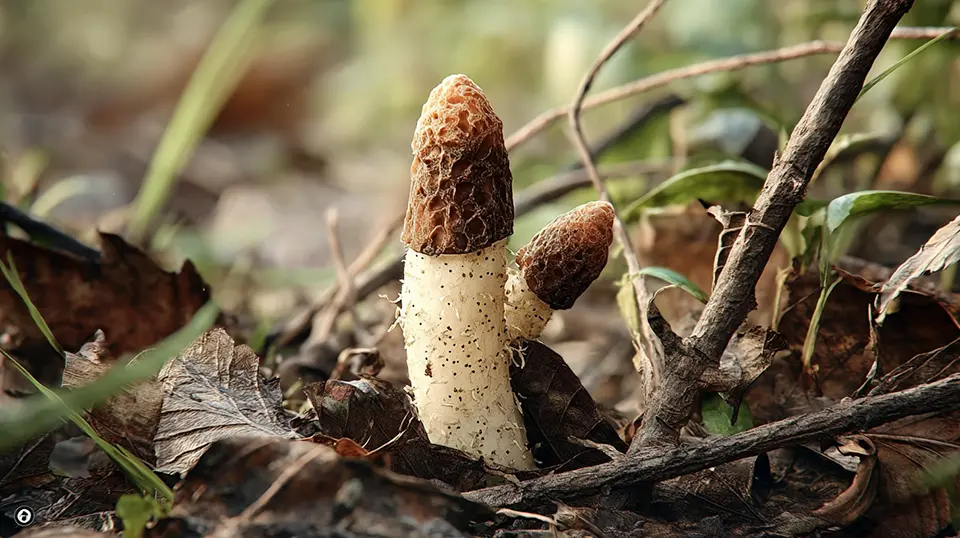
When I finally spot one pushing brazenly through the bracken, it does not disappoint. Its phallic shape, coated in a shiny, brown gleba, is both surreal and oddly mesmerizing. Flies buzz around it in an ecstatic dance, drawn by the putrid smell that mimics decomposing flesh. Nature’s design here is brilliant—the flies pick up fungal spores and carry them elsewhere, fulfilling the stinkhorn’s reproductive mission.

Source: Wikimedia Commons, CC BY-SA 3.0
From Witch’s Egg to Vegan Delight
While the mature stinkhorn earns gasps and gags in equal measure, few know that its culinary reputation is quietly undergoing rehabilitation. Traditionally, it has been consumed at the “witch’s egg” stage—before it bursts forth into its infamous form. In this embryonic state, encased in a gelatinous sac, the stinkhorn bears a texture and flavor surprisingly reminiscent of radish or mild garlic.
However, my interest lies beyond novelty. Over years of experimentation, I’ve found that drying and powdering the fully grown stinkhorn yields a complex umami profile—akin to well-aged beef. The savory depth it brings to plant-based stews and gravies is revelatory. Vegan dishes often struggle with that elusive “meaty” richness. This mushroom, foul in scent but rich in molecular savoriness, solves that challenge elegantly.
And so, beneath the autumn canopy, I gather my lone specimen with care. There are other mushrooms that fill my basket—chanterelles, blewits, hedgehogs—but this stinkhorn will be the quiet star in my next broth, its funk tamed and transformed by heat and patience.

Source: Wikimedia Commons, CC BY-SA 3.0
Ecological Role and Public Misconception
Despite its edible potential, the stinkhorn remains misunderstood. Gardeners often yank them up in horror. Hikers wrinkle their noses and walk faster. But stinkhorns, like many saprotrophic fungi, are crucial players in forest health. They break down lignin and cellulose, recycling dead plant matter into fertile soil. Their presence is not a problem—it’s a sign of life finding new paths through decay.
Still, stigma lingers. Perhaps it’s the name. Perhaps the smell. Or perhaps it’s the visual that Victorian botanists so accurately captured in its Latin title: “shameless phallus.”
But there’s a kind of punk defiance in this mushroom’s biology. It doesn’t beg for acceptance. It simply erupts, performs its function, and collapses—leaving the forest just a little richer for its performance.
A Reflection in Decay
Autumn, after all, is the season of slow fading. Trees shed what no longer serves them. The light thins, the air cools. And in the undergrowth, fungi rise—not in spite of the death around them, but because of it. The stinkhorn, in all its provocative glory, reminds me that rot is not the end of the story. It is transformation made visible. It is flavor, fertility, and fungus—shameless, unapologetic, and, to the brave, unforgettable.

Source: Wikimedia Commons, CC BY-SA 3.0
References
- Phallus impudicus – Wikipedia
- Stinkhorn fungi – Phallaceae
- Mycology – Wikipedia
- Saprotrophic fungi – Wikipedia
- Umami – Wikipedia
- Chanterelle – Wikipedia
- Blewit mushroom – Wikipedia
- Hedgehog mushroom – Wikipedia
According to THE GUARDIAN
Key Takeaways
- Stinkhorn mushrooms (order Phallales) are among the most distinctive organisms in nature—emerging rapidly from a gelatinous ‘egg’ and releasing foul-smelling mucilage that attracts insects for spore dispersal.
- The fetid odor of stinkhorns mimics rotting meat or dung to attract flies and other carrion-feeding insects, which inadvertently disperse the sticky spores (gleba) on their bodies to new locations.
- Despite their unpleasant odor, stinkhorn eggs—the immature white or pale egg-like form before the stalk emerges—are considered a culinary delicacy in parts of France, Germany, and China, tasting somewhat like radishes.
- Several stinkhorn species, particularly Phallus indusiatus (the veiled lady) and Clathrus ruber (the red cage mushroom), are used in traditional medicine in China and other Asian countries for their bioactive polysaccharides.
- Stinkhorn mushrooms play an important ecological role in decomposing dead wood and leaf litter, contributing to nutrient cycling in forest ecosystems despite being perceived as a pest in gardens and ornamental plantings.
Frequently Asked Questions
What are stinkhorn mushrooms and why do they smell so bad?
Stinkhorn mushrooms belong to the order Phallales (and related orders in some classifications) within the Agaricomycetes (basidiomycetes), a large diverse group that includes many familiar mushrooms. The distinctive features of stinkhorns—rapid growth, distinctive shapes, and foul odor—are all adaptations for a unique spore dispersal strategy. Taxonomy and common species: Phallus impudicus—the common stinkhorn; widespread in European and North American forests; emerges from a white egg to produce a phallus-shaped fruiting body 10–20 cm tall with a brown spore mass (gleba) on the cap. Phallus indusiatus—the veiled lady; produces a distinctive white lacy veil (indusium) hanging from the cap; more common in tropical regions; highly valued in Chinese medicine and cuisine. Clathrus ruber—the red cage or latticed stinkhorn; produces a spectacular red cage-like structure; common in gardens and parks in Europe and warm-temperate regions; different from Phallus but equally foul-smelling. Dictyophora duplicata and related species—related to Phallus indusiatus; produces a similar veil; found in North America and Asia. Why stinkhorns smell: the gleba (dark, slimy spore mass covering the cap or lattice) produces a mixture of volatile organic compounds that include: dimethyl trisulfide—produces a sulphurous, garbage-like odor; indole—fecal odor; trimethylamine—fishy odor; various fatty acid derivatives—rancid, meat-like odors. This odor cocktail is remarkably similar to the volatiles produced by carrion and dung, which attract the same carrion flies and dung beetles that the stinkhorn targets for spore dispersal.
Are stinkhorn mushrooms edible?
Stinkhorn mushrooms in their egg (immature, unexpanded) stage are genuinely edible and have a culinary history in several European and Asian countries, though the mature expanded fruiting body is rarely eaten due to its overwhelming odor. Culinary use of stinkhorn eggs: in France, stinkhorn eggs (called ‘oeufs de sorcière’—witch eggs) were historically gathered and consumed as a delicacy, particularly in certain regional French cuisines; the eggs are peeled to reveal a gelatinous flesh (the immature cap and stalk compressed within an egg-like outer shell); eaten raw or lightly cooked; texture somewhat crisp; taste described as mild, radish-like, or reminiscent of a mild nut. In Germany, stinkhorn eggs were collected and sold in some markets historically; similar preparation to French use. In China and Southeast Asia, Phallus indusiatus (the veiled stinkhorn or 竹蓀 zhúsūn) is cultivated commercially; the mature fruiting body with the veil (indusium) is consumed—the gleba (spore mass) is washed off and the cap and veil are used in soups, particularly ‘Buddha Jumps Over the Wall’ and other premium Chinese cuisines; commercially cultivated stinkhorns for culinary use do not carry the same odor as wild ones grown in decomposing matter. Mature wild stinkhorns: the mature expanded fruiting body of Phallus impudicus (common stinkhorn) is rarely eaten by choice; the gleba must be completely washed off, and residual odor makes culinary use challenging; adventurous foragers have eaten the cleaned cap but it is not generally recommended for culinary use.
What vegan nutrition benefits do stinkhorn mushrooms provide?
Stinkhorn mushrooms—particularly the commercially cultivated Phallus indusiatus (veiled lady mushroom)—offer nutritional properties similar to other edible fungi, with particular interest in their polysaccharide and protein content relevant to plant-based diets. Nutritional composition of Phallus indusiatus (dried): protein—typically 25–40% of dry weight; amino acid profile includes all essential amino acids; lysine content is higher than most plant protein sources; dried mushroom protein is a nutritionally useful plant-based protein contribution. Dietary fibre—40–50% of dry weight; predominantly beta-glucans, chitin, and other non-starch polysaccharides; contributes to gut health. Minerals—significant source of potassium, phosphorus, magnesium, and zinc; iron content (though much lower bioavailability than haem iron). Vitamins—ergosterol (vitamin D precursor) present; some B vitamins including riboflavin (B2) and niacin (B3). Low fat and calorie content—typical of edible fungi; suitable as a protein-contributing, low-calorie food. Specific bioactive components of interest: Phallus indusiatus polysaccharides—researched for immunomodulatory and antitumour activity (similar to other medicinal mushroom polysaccharides); beta-glucans and glycoproteins from P. indusiatus have shown immune stimulation in animal studies. Antioxidant compounds—various phenolic compounds with antioxidant activity have been characterised from P. indusiatus extracts. Vegan dietary relevance: as a cultivated mushroom, P. indusiatus provides a meaningful contribution to protein and micronutrient intake in vegan diets; its culinary applications in soups, stir-fries, and traditional Chinese dishes make it relatively accessible in Asian cuisine traditions.
Are stinkhorn mushrooms used in traditional medicine?
Several stinkhorn species have significant histories of use in traditional medicine systems, particularly in Traditional Chinese Medicine (TCM), where they are valued for their polysaccharide content and attributed bioactive properties. Phallus indusiatus (竹蓀, zhúsūn—bamboo fungus or veiled stinkhorn) in TCM: attributed properties in TCM: tonifying, benefiting the lungs, stopping cough and bleeding, clearing heat and dampness; used historically for respiratory conditions, leukorrhoea, and constitutional weakness; modern TCM and nutraceutical applications focus on the polysaccharide fractions. Phallus rugulosus and related species: used in traditional South Asian medicine for topical application to skin conditions and reportedly as an aphrodisiac. Research basis for bioactivity: P. indusiatus polysaccharides—multiple in vitro and animal model studies from Chinese research groups have documented antitumour activity of P. indusiatus polysaccharides in animal models; immune stimulation via macrophage activation and cytokine induction; antimicrobial activity against various bacteria and fungi; anti-inflammatory effects. These findings provide scientific rationale for traditional uses, though clinical trial evidence in humans is limited. Clathrus ruber: no significant traditional medicinal use; primarily an ornamental curiosity and garden ‘pest’. Limitations of traditional medicine claims: many bioactive studies use crude extracts; clinical evidence from well-designed human trials is absent for most stinkhorn medicinal claims; quality control of wild-harvested or poorly standardised preparations is uncertain; stinkhorn medicinal products should be approached with the same critical evaluation as other mushroom supplement claims.
How do stinkhorn mushrooms grow so fast?
Stinkhorn mushrooms achieve some of the fastest recorded growth rates in the fungal kingdom—emerging from the ground and expanding to full size in hours—through a remarkable mechanism based on pre-formed cellular expansion rather than conventional cell growth. The growth mechanism: pre-formed structure—unlike most mushrooms that grow by producing new cells, stinkhorns pre-form their entire internal structure within the egg stage; during egg development (which takes days), all the cellular components of the mature fruiting body form within the egg shell in compressed, folded form. Turgor-driven expansion—when conditions trigger expansion (typically overnight in appropriate temperature and humidity), the pre-formed cells expand rapidly by taking up water; this turgor-driven expansion (inflation by water) allows extraordinarily fast growth; cell division (mitosis) plays almost no role in the expansion phase—the cells simply inflate. Growth rates: Phallus impudicus can emerge and reach full height (15–20 cm) within 1–2 hours; some measurements record growth rates of up to 4–5 mm per minute during rapid expansion; this is among the fastest growth rates of any macroscopic organism. Egg development period: before the dramatic rapid expansion, the egg develops over 1–4 weeks underground as the mycelium allocates resources to pre-forming the fruiting body structure; the egg contains all the components in compressed form, rich in water and nutrients. Environmental triggers: the transition from egg to expanded fruiting body appears to be triggered by a combination of appropriate temperature, adequate moisture, and possibly other environmental signals; the timing often results in emergence overnight or in early morning, before heat and desiccation can damage the delicate structure.