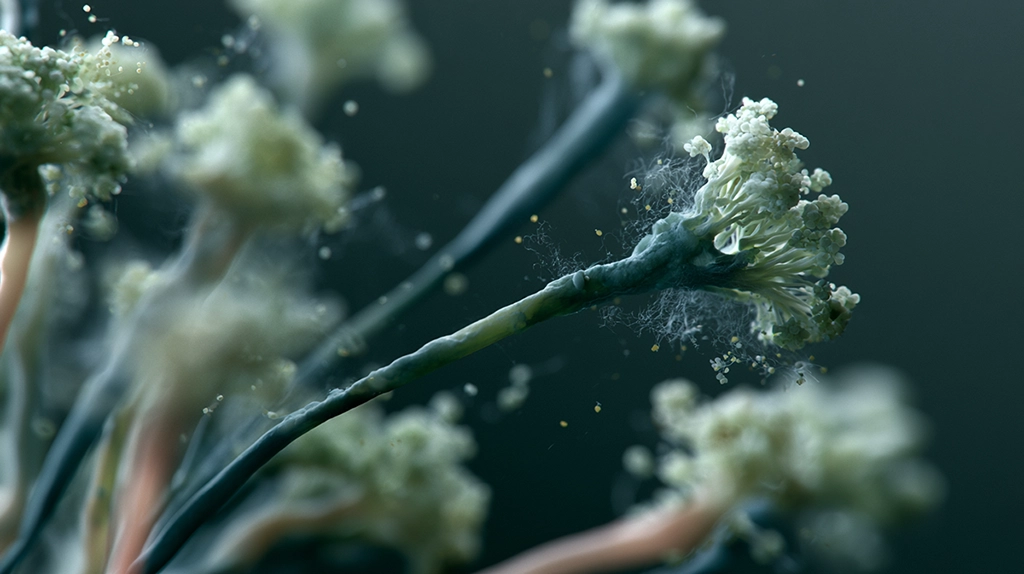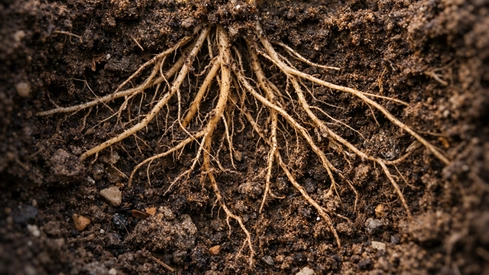
Unseen Partnerships Beneath Our Feet
Take a walk through any field, forest, or garden, and you might be tempted to credit the lushness to good soil, sunlight, or just a little luck. But, as this insightful editorial from Frontiers in Microbiology reminds us, the true architects of plant health and resilience are often hidden from sight. Underneath every living landscape, a vibrant alliance is at work—where fungi, bacteria, and roots are in constant conversation, negotiating the terms of growth, defense, and survival.
This isn’t just an academic curiosity. As climate pressures mount and agriculture faces new challenges, understanding these ancient cross-kingdom alliances could reshape how we grow food, protect ecosystems, and even engineer new solutions for a rapidly changing planet.
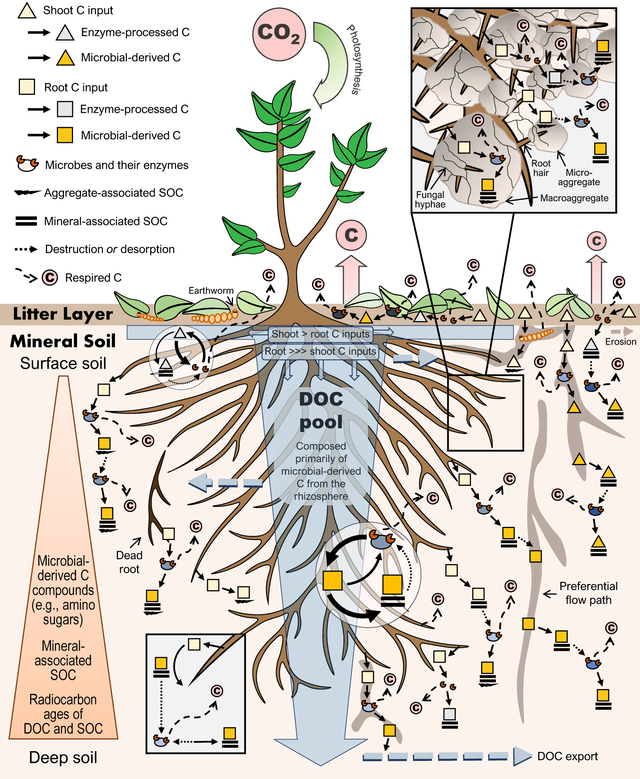
Fungi Don’t Work Alone—And That’s the Secret
Most readers know the basics of mycorrhizal fungi—the underground partners that extend a plant’s reach, swapping nutrients for sugars and helping crops thrive with less fertilizer. But fungi aren’t the only players. Right beside them, root-associated bacteria, or plant growth-promoting rhizobacteria (PGPR), cluster near and even inside roots, contributing their own talents: breaking down nutrients, protecting against disease, and helping plants withstand stress.
What the editorial argues is simple but profound: we need to look beyond the fungus or bacterium in isolation, and instead see the entire microbial “orchestra” at the root-soil interface. It’s in the collaboration, not the competition, that plant success is truly forged.

Cross-Kingdom Cooperation: The Science in Motion
Plants send out a complex mix of root exudates—sugars, amino acids, and signaling molecules—to attract the microbial partners they need. Fungi weave vast mycorrhizal networks, extending the plant’s access to water and minerals. Meanwhile, bacteria not only colonize root surfaces but also hitch rides on fungal hyphae, assisting in nutrient solubilization, pathogen defense, and even communication.
These interactions aren’t just elegant—they’re powerful. The article suggests that instead of adding single microbial “super strains” to soils, the future may lie in designing synthetic microbial communities (SynComs): pre-assembled, stable combinations of fungi and bacteria that function like a well-rehearsed symphony. By harnessing this cross-kingdom teamwork, researchers envision crops that are more drought-tolerant, less dependent on chemical fertilizers, better at capturing carbon, and more resilient to climate shocks.

Why This Matters: Food Security, Climate
It’s easy to focus on fungi as household nuisances or food spoilers, but this editorial challenges us to see them as ecosystem engineers—critical for food security, soil health, and climate adaptation.
Fungi don’t act alone. Their behaviors, strengths, and weaknesses depend on the company they keep: the plant hosts, the bacterial partners, and the environmental backdrop. By engineering or managing these alliances, we could transform sustainable agriculture—not by fighting nature, but by learning from its oldest partnerships.
From Soil to Indoors: The Mold Continuum
You might wonder, what do these root alliances have to do with indoor mold? More than you think. The genera that help plants thrive outdoors—like Trichoderma, Penicillium, Fusarium, Aspergillus, and Alternaria—are the very same that can invade our walls, air ducts, and food. Their flexibility, adaptability, and talent for cooperation come from their evolutionary history as “team players” in the wild.
Understanding how fungi work with other microbes—how they share, compete, or defend—can help us predict which species are likely to adapt to indoor life, how they’ll behave under stress, and even how we might use beneficial strains for biocontrol or green building materials.

The Big Lesson: Designing with Nature, Not Against It
The editorial closes with a challenge: shift our mindset from adding microbes to soil “hoping for the best” to assembling and maintaining true microbial alliances. Whether in agriculture or environmental engineering, success will come not from isolating winners, but from creating harmony. Fungi can be collaborators, not just competitors—and the most resilient systems are those built on diversity, flexibility, and connection.
What I find most moving about this story is its celebration of partnership—humble, invisible, and ancient. The future of agriculture, sustainability, and even our homes may depend on how well we learn from these alliances. Instead of fighting nature’s networks, we can work with them—designing soils, crops, and even buildings that are stronger, healthier, and more resilient.
In a world that often prizes individual achievement, the lesson beneath our feet is one of community, communication, and shared survival. That’s a tune worth listening to—every time we walk across a patch of earth.
References
Academic sources
de Vries, F. T., & Wallenstein, M. D. (2017). Below-ground connections underlying above-ground food production. Frontiers in Microbiology, 8, 1480. https://doi.org/10.3389/fmicb.2017.01480
Vorholt, J. A., Vogel, C., Carlström, C. I., & Müller, D. B. (2017). Establishing causality: Opportunities of synthetic communities for plant microbiome research. Cell Host & Microbe, 22(2), 142–155. https://doi.org/10.1016/j.chom.2017.07.004
Official / institutional sources
Food and Agriculture Organization of the United Nations (FAO). Soil biodiversity and ecosystem services. https://www.fao.org/soils-portal/soil-biodiversity/en/
National Institutes of Health (NIH). Microbiome research overview. https://commonfund.nih.gov/microbiome
Key Takeaways
- Fungi and bacteria co-exist in intimate physical and chemical partnerships in soil ecosystems, with their interactions fundamentally shaping nutrient cycling, plant health, and soil structure.
- The mycorrhizal fungal network—through which fungi exchange nutrients with plant roots—is simultaneously inhabited by specific bacterial communities that have co-evolved to exploit the nutrient-rich fungal hyphal surface.
- Bacterial communities (‘mycorrhizosphere bacteria’) associated with mycorrhizal networks include strains that actively stimulate fungal colonisation of plant roots, creating a tripartite plant-fungus-bacteria symbiosis.
- Chitin degradation—the breakdown of fungal cell wall material—is performed primarily by chitinolytic bacteria that specialise in this substrate, with chitin representing a major nitrogen source in forest soil ecosystems.
- Fungal hyphae create ‘highways’ in soil along which certain bacteria preferentially travel, extending bacterial dispersal range far beyond what would be achievable by bacterial motility alone.
Frequently Asked Questions
How do fungi and bacteria work together in soil?
Fungi and bacteria are the two most abundant and metabolically active microbial groups in soil, and their relationships span the full spectrum from cooperation to competition, with complex and context-dependent outcomes. Cooperative interactions: bacterial communities (‘mycorrhizosphere’ bacteria) thrive specifically on and around fungal hyphae; the fungal surface provides a carbon-rich exudate environment and a physical substratum; in return, some bacteria provide fungi with nutrients, protect fungal hyphae from competitors, or directly stimulate fungal growth and root colonisation. The ‘fungal highway’ phenomenon: certain bacteria (particularly motile Pseudomonas and Bacillus species) use fungal hyphae as physical corridors through the soil, travelling along hyphal surfaces using flagella-based motility; this allows bacteria to reach resource patches and colonise plant roots much faster than they could by diffusion through the soil matrix alone; fungal hyphae effectively serve as a dispersal infrastructure for bacteria. Cross-kingdom nutrient exchange: fungi specialised in wood decay produce cellulase and ligninase enzymes that break down plant structural polymers; bacterial communities colonise this degrading wood material, gaining access to sugars and products they cannot access independently; fungi gain access to bacterial-produced vitamins and metabolites they cannot synthesise. Competition and antagonism: many soil fungi produce antibacterial compounds (penicillin being the paradigmatic example) that suppress bacterial competitors; bacteria retaliate with fungal-inhibiting compounds including volatile organic compounds (VOCs), siderophores, and antifungal metabolites; the balance of cooperative and competitive interactions shifts depending on resource availability.
What are mycorrhizal fungi and why are they so important for plants?
Mycorrhizal fungi form symbiotic associations with the roots of approximately 80–90% of all land plant species—one of the most widespread and ecologically fundamental biological partnerships on Earth, dating back at least 400 million years to the earliest land plants. Types of mycorrhizal associations: Ectomycorrhizal (ECM) fungi—form a dense sheath around plant roots without penetrating root cells; predominantly associated with forest trees (pine, oak, beech, birch); includes many familiar forest mushrooms (chanterelles, porcini, truffles are ECM fungal fruiting bodies); network of hyphae extends into surrounding soil as an enormously effective nutrient-gathering system. Arbuscular mycorrhizal (AM) fungi—penetrate root cells and form elaborate branched structures (arbuscules) inside cells for nutrient exchange; associated with most agricultural crops, grassland plants, and tropical trees; all belong to the phylum Glomeromycota. Ericoid mycorrhizal fungi—specialised associations with heather and related Ericaceae plants in acidic, nutrient-poor soils. Functional value to plants: phosphorus acquisition—soil phosphorus is largely immobile and depleted rapidly near roots; mycorrhizal hyphae extend 10–100× further into the soil than roots alone, accessing phosphorus in soil pores too small for roots; plants receive 40–80% of their phosphorus through mycorrhizal fungi. Nitrogen acquisition—particularly in ECM systems; fungal proteases and nitrogen-mobilising enzymes allow access to organic nitrogen pools that roots cannot directly access. Water uptake enhancement—in drought conditions, mycorrhizal hyphae access water in smaller soil pores than roots. Plant value to fungi: plants supply 10–20% of their photosynthetically fixed carbon to mycorrhizal fungi as sugars and lipids—a substantial metabolic investment.
What is the ‘wood wide web’ and is it real?
The ‘wood wide web’ is a popular term for the mycorrhizal fungal network that connects trees in forests, through which carbon, water, and nutrients can be transferred between trees—a concept that has attracted enormous public interest and some scientific controversy. What is established: mycorrhizal fungal networks do physically connect multiple trees and plants simultaneously; a single fungal individual can simultaneously colonise roots of dozens to hundreds of trees; nutrients and carbon marked with radioactive tracers have been shown in controlled experiments to move from one plant to another via mycorrhizal networks; seedlings in dense, nutrient-limited environments can receive carbon from established trees through these networks; stressed or shaded trees do receive more carbon input through networks than unstressed trees in some experimental systems. What is contested: whether ‘mother trees’ preferentially direct carbon to related seedlings (kin recognition through mycorrhizal networks) has been tested but with conflicting results; some researchers (Suzanne Simard’s work is frequently cited) argue for active, directed resource sharing; others argue that observed transfer is a passive consequence of concentration gradients rather than active ‘communication’; the degree to which mycorrhizal network transfers are significant relative to individual tree-fungus relationships and atmospheric CO₂ uptake is actively debated. The public perception problem: popular science communication has somewhat overstated the certainty and directionality of tree-to-tree communication; the actual science is more nuanced; the networks are real and functional transfers occur, but the ‘communication’ framing implies intentionality that the scientific evidence does not support.
How do fungi and bacteria affect agricultural soil health?
The composition and activity of the fungal-bacterial microbiome in agricultural soils is strongly correlated with soil health indicators including nutrient availability, soil structure, disease suppression, and crop productivity—making this community a major focus of sustainable agriculture research. Impacts on nutrient cycling: nitrogen cycling—bacteria perform the key nitrogen transformations (nitrogen fixation by Rhizobium and free-living nitrogen fixers; nitrification by Nitrosomonas/Nitrobacter; denitrification); fungi provide the carbon inputs that fuel these processes and produce extracellular proteases that mobilise organic nitrogen; fungal-bacterial interactions determine the overall efficiency of the nitrogen cycle in soil. Phosphorus—as described for mycorrhizal fungi above; phosphate-solubilising bacteria (Bacillus, Pseudomonas, Rhizobium species) work synergistically with mycorrhizal fungi; some bacteria stimulate mycorrhizal colonisation of crop roots. Soil structure: fungal hyphae physically bind soil particles into stable aggregates; these aggregates resist erosion, improve water infiltration and retention, and create pore architecture that supports root growth; glomalin—a glycoprotein produced by AM fungi—is a major contributor to aggregate stability. Suppressive soils: some soils are ‘suppressive’ to soilborne plant pathogens (Fusarium, Pythium, Rhizoctonia) due to microbial community activity; specific bacterial groups (Pseudomonas fluorescens producing 2,4-diacetylphloroglucinol; Bacillus producing lipopeptide antifungals) working alongside fungal communities create a microbial environment hostile to pathogens. Agricultural management effects: tillage disrupts fungal networks (fungi rebuild slowly; bacteria recover within days to weeks); synthetic nitrogen fertiliser reduces mycorrhizal colonisation (plants ‘need’ mycorrhizal partners less when nutrients are abundant); fungicide use, including soil fungicides, disrupts soil fungal communities with cascading effects on bacterial partners.
Can we use fungi-bacteria relationships to improve crop production?
The exploitation of beneficial fungal-bacterial partnerships is an active and commercially growing area of agricultural biotechnology, with several products already on the market and a robust research pipeline. Commercial bioinoculant products: mycorrhizal inoculants—commercial mycorrhizal products (containing spores of Glomus, Rhizophagus, and other AM fungi) are widely sold for horticultural and some agricultural applications; effectiveness varies substantially depending on soil type, existing mycorrhizal community, crop species, and application method; meta-analyses of field trials show average yield improvements of 10–20% in phosphorus-limited soils. Bacterial inoculants: Rhizobium inoculants for legume nitrogen fixation are among the most widely used agricultural bioinoculants globally; plant growth-promoting rhizobacteria (PGPR) including Bacillus subtilis, Pseudomonas fluorescens, and Azospirillum species are sold as seed treatments and soil amendments; Trichoderma species (fungi, not bacteria) are widely used as biocontrol agents and growth promoters. Combined fungal-bacterial inoculants: research has shown that co-inoculation of mycorrhizal fungi with compatible bacteria (particularly phosphate-solubilising bacteria) produces synergistic growth promotion greater than either organism alone; commercial products combining mycorrhizal fungi with PGPR bacteria are increasingly available. Challenges and limitations: inoculant survival and establishment in agricultural soils is highly variable; competition with native soil microbiota often limits establishment of introduced organisms; soil type, climate, and crop management all affect outcomes; product quality control in the bioinoculant industry has historically been inconsistent, with some commercial products found to contain few or no viable organisms.