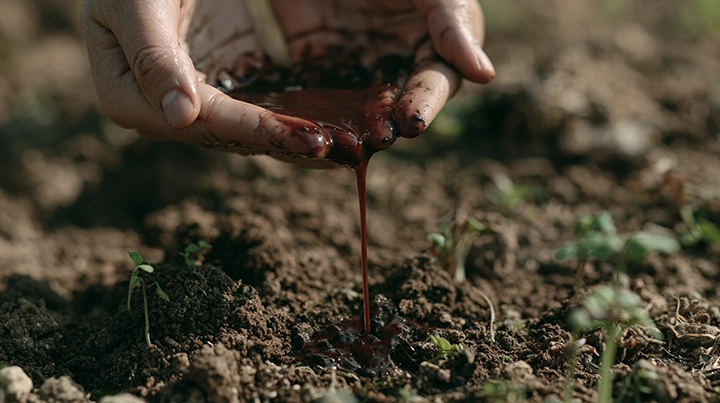

Compost is usually described as a soil amendment — a way to recycle organic waste, improve soil structure, and support plant growth. A 2026 study suggests that under the right conditions, compost may play a much broader role in agriculture. Fermented compost extracts, the research shows, may help suppress plant-pathogenic fungi and contribute to sustainable disease management.
Researchers in Saudi Arabia investigated non-aerated compost extracts produced from commercial composts and evaluated their ability to inhibit several economically important fungal pathogens. Rather than treating compost only as a nutrient source, the study examined how fermentation conditions shape antifungal activity.
The central reframing is significant. Compost may function not just as a soil input but as a microbial and biochemical platform capable of influencing plant health and disease pressure. The deeper question the study explores is not whether compost contains nutrients. It is whether compost can be optimized into a biocontrol system.
Why Agriculture Needs New Approaches to Fungal Disease Control
Plant-pathogenic fungi remain among the most destructive threats to global food production. Crop losses caused by fungal diseases affect yields, food quality, storage stability, and farm profitability worldwide.
For decades, chemical fungicides have been the primary defense. While effective, these tools face increasing pressure. Repeated use contributes to resistance development, raises environmental concerns, and conflicts with growing regulatory interest in more sustainable agricultural practices.
Researchers are therefore exploring biological alternatives. Compost-derived products are particularly attractive because they combine multiple potential suppressive mechanisms within a single system. Beneficial microorganisms may compete with pathogens for nutrients and space. Some microbes produce antimicrobial compounds. Others may stimulate plant defenses or modify the surrounding microbial environment in ways that reduce disease pressure.
The study notes microbial groups commonly associated with compost extracts, including Bacillus, Pseudomonas, Lactobacillus, Streptomyces, Trichoderma, Aspergillus, and Penicillium. These extracts may also contain bioactive compounds such as humic substances, phenolics, amino acids, siderophores, and lipopeptides.
Compost extracts are not simple liquids. They are living ecological systems.
The Recipe Matters More Than Many People Realize
One of the most valuable contributions of the study is its emphasis on process control. Researchers approached compost extracts not as informal agricultural products but as biological preparations whose performance depends heavily on how they are made.
The team examined four fermentation variables: temperature, compost concentration, glucose supplementation, and fermentation duration. Non-aerated extracts were produced in sealed containers without forced oxygenation and mixed daily. The study then evaluated how these conditions influenced antifungal activity against each target pathogen.
This approach addresses one of the most common criticisms of compost-based products: inconsistency. Two compost extracts may appear similar while behaving very differently biologically. Small differences in fermentation temperature, nutrient availability, microbial growth dynamics, or preparation time can significantly alter the final microbial community and chemical composition.
Compost extracts are fermentation products. Their effectiveness depends on how they are made.
Testing Four Plant-Damaging Fungi

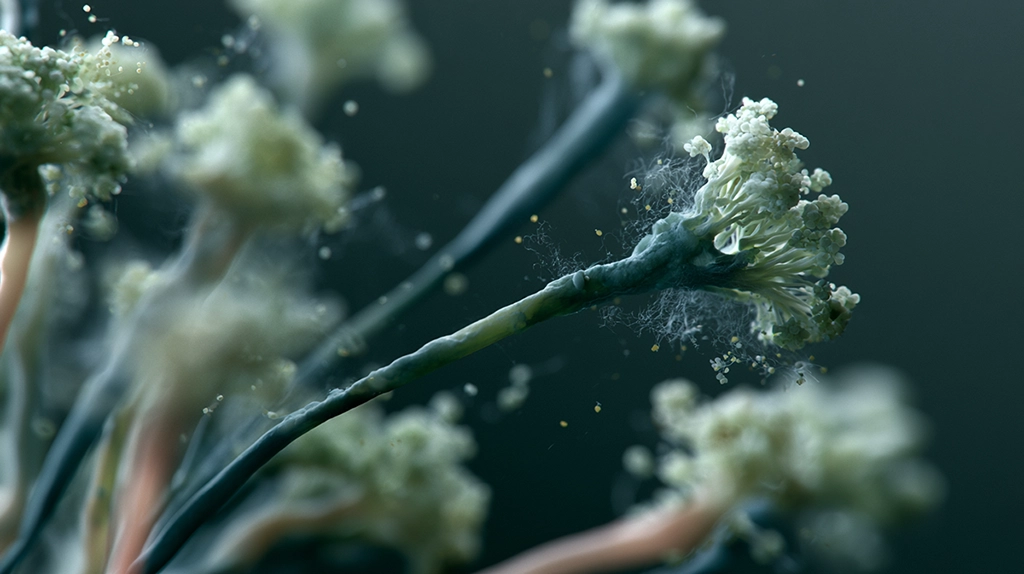
To evaluate antifungal performance, researchers challenged the compost extracts against four molecularly identified fungal pathogens: Syncephalastrum racemosum, Paramyrothecium roridum, Fusarium oxysporum, and Penicillium italicum.
These fungi represent different agricultural challenges. Fusarium oxysporum is a well-known soil-borne pathogen responsible for wilt diseases across numerous crops. Penicillium italicum causes blue mold decay in citrus fruits and contributes substantially to post-harvest losses. Paramyrothecium roridum affects various plant tissues including leaves and fruits, while Syncephalastrum racemosum has been isolated from diseased plant materials and organic-rich environments.
The diversity of pathogens tested strengthens the study’s significance. Rather than evaluating performance against a single target, the researchers assessed whether compost extracts can function across multiple fungal threats. Most extracts inhibited all four pathogens to varying degrees.
Different Fungi Responded to Different Fermentation Conditions
One of the study’s most instructive findings is that no single fermentation recipe worked best for every pathogen.
For some fungi, glucose supplementation improved antifungal activity. For others, it provided little benefit or even reduced effectiveness. Fermentation duration strongly influenced suppression of certain pathogens but was less important for others. Temperature similarly produced pathogen-specific outcomes.
This reveals a central principle of biological control. Unlike chemical fungicides, which typically rely on a single active ingredient with a defined mode of action, compost extracts function through complex microbial and biochemical interactions. The optimal conditions depend not only on the compost source but also on the target pathogen.
Biological control is not a one-size-fits-all solution. The microbial ecosystem must be matched to the biological challenge. That complexity creates opportunities for more precise and adaptable disease-management strategies.
The Strongest Evidence: Living Microbes Matter

The sterilization experiments provide some of the most compelling evidence in the study.
Researchers compared untreated compost extracts with extracts subjected to filtration or autoclaving. Both treatments reduced antifungal activity, while autoclaving produced the greatest loss of inhibition.
This finding is significant. If antifungal activity were caused solely by dissolved nutrients or chemical residues, sterilization would have little effect on performance. Instead, the substantial loss of activity following sterilization suggests that living microbial communities contribute significantly to pathogen suppression.
The compost extract was not functioning as a chemical solution. It was functioning as a biological community.
Beneficial microbes may suppress pathogens through competition, antibiosis, enzyme production, nutrient depletion, or other ecological mechanisms. The exact contribution of each mechanism remains unclear, but the study strongly supports the idea that living organisms are central to the suppressive effect. Microbial viability is not incidental to compost extract performance — it appears to be fundamental to it.
Chemistry and Microbiology Work Together
Although living microbes played a central role, the study also demonstrated that chemistry contributes to disease suppression. Researchers found that nitrogen-related parameters, ammonium levels, microbial abundance, and phenolic content all influenced antifungal performance.
Microbes do not operate independently from chemistry. Fermentation continuously alters nutrient availability, organic compounds, pH, and biochemical profiles. Those changes influence microbial growth, while microbial activity simultaneously reshapes the chemical environment.
The result is a dynamic system where chemistry and biology evolve together throughout fermentation. This complexity helps explain why compost extracts sometimes produce inconsistent results across different farms, crops, or research settings. Two products labeled “compost extract” may contain very different microbial ecosystems — and different ecosystems produce different outcomes.
From Traditional Composting to Biological Manufacturing
One of the most forward-looking implications of the study involves agricultural manufacturing.
Traditionally, compost has been produced through field experience and observation. But if compost extracts are intended for reliable disease suppression across diverse crops and pathogens, they begin to resemble biological products requiring process control rather than simple farm amendments.
Temperature, fermentation duration, microbial viability, pH, nutrient levels, compost-to-water ratios, and storage conditions become manufacturing variables requiring quality assurance. The study’s factorial design reflects this shift. Rather than treating compost preparation as an informal practice, researchers approached it as a process that can be optimized, standardized, and validated.
Future compost-based biologicals may require specifications similar to other agricultural biotechnology products, including microbial viability standards, efficacy testing, shelf-life validation, and safety monitoring. The future of compost may involve not only farming, but manufacturing science.
Promising Results, But Not Yet a Field-Scale Solution
Despite the encouraging findings, scientific restraint remains important.
The experiments were conducted under laboratory conditions using fungal growth assays on agar media. These tests provide valuable evidence of biological activity but do not guarantee equivalent performance under field conditions. Real agricultural environments are substantially more complex — temperature fluctuations, soil conditions, crop species, irrigation systems, microbial competition, and weather patterns can all influence effectiveness.
There are also biosafety considerations. Improper fermentation could potentially encourage undesirable microorganisms if raw materials and preparation methods are not carefully controlled.
Compost extracts should not be viewed as replacements for all fungicides. They are best considered promising components within integrated disease-management programs that combine biological, cultural, and chemical approaches.
Disease Control May Begin With Microbial Ecology
This study supports a broader shift in how fungal disease management is understood. For decades, crop protection has largely focused on suppressing pathogens directly. The compost-extract approach explores a different philosophy: managing microbial ecosystems so that beneficial organisms help limit pathogen success.
The research demonstrates that non-aerated compost extracts can suppress multiple plant-pathogenic fungi under laboratory conditions, and that performance depends on fermentation conditions, microbial abundance, nitrogen parameters, and biochemical composition. Most significantly, sterilization reduced antifungal activity — evidence that living microbial communities are central to the suppressive effect.
Compost is not dead organic matter. It is a living ecosystem. And under the right conditions, that ecosystem may become a meaningful tool in sustainable agriculture.
Sometimes the most effective way to manage a pathogen is not to kill it directly. It is to build an environment where it struggles to thrive.
Plant-Pathogenic Fungi Evaluated in This Study
Fusarium oxysporum, Penicillium italicum, Paramyrothecium roridum, and Syncephalastrum racemosum were the four pathogens directly evaluated in this study. Botrytis cinerea, a widespread gray mold pathogen affecting numerous crops and post-harvest environments, represents a broader class of opportunistic plant pathogens that biological-control strategies are increasingly designed to address.
FAQ: Compost Extracts and Fungal Biocontrol
What are non-aerated compost extracts?
They are liquid preparations created by fermenting compost in water without forced aeration, allowing microbial and biochemical compounds to develop during fermentation.
Can compost extracts suppress fungal pathogens?
In this study, most compost extracts inhibited several plant-pathogenic fungi under laboratory conditions.
Why does fermentation matter?
Fermentation influences microbial growth, nutrient availability, and biochemical composition, all of which affect antifungal activity.
Why did sterilization reduce pathogen suppression?
Because living microbial communities appear to contribute significantly to the antifungal effect, and sterilization eliminates those communities.
Can compost extracts replace fungicides?
Not currently. They are best viewed as potential components of integrated disease-management programs rather than universal replacements.
References
- Non-aerated compost extract antifungal activity. Scientific Reports (2026). https://www.nature.com/articles/s41598-025-33153-w