According to ZME SCIENCE
A Forest That Is Actually One Organism
Deep within Utah’s Fishlake National Forest stands an organism so vast that it challenges conventional ideas about what constitutes an individual living being.
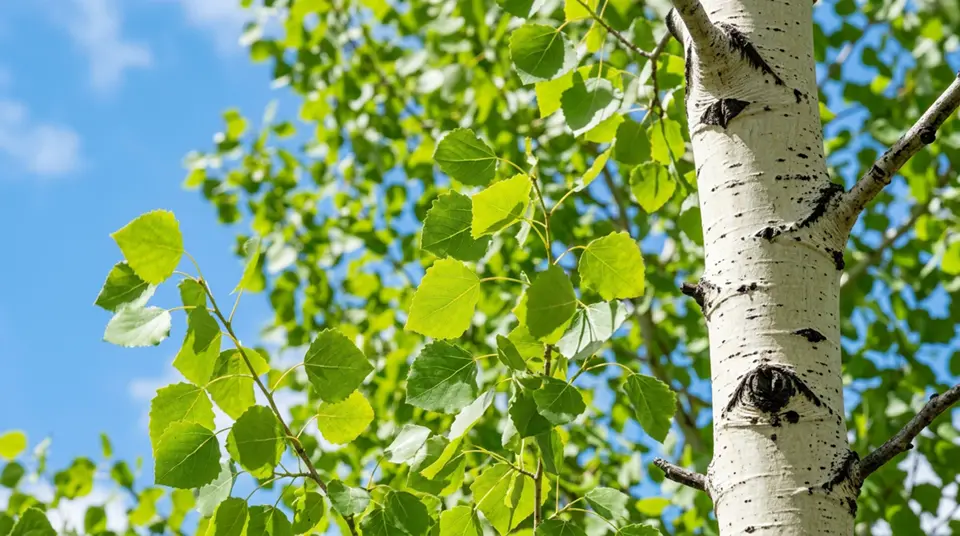
Known as Pando, this remarkable quaking aspen colony is widely considered one of the largest and oldest living organisms on Earth.
Although it appears to be a forest of thousands of separate trees, scientific research has revealed that the entire grove is actually a single genetic individual connected by a shared underground root system.

One Genetic Individual Spanning 43 Hectares
Pando, whose name means “I spread” in Latin, covers approximately 43 hectares and consists of more than 40,000 tree stems.
While visitors see a landscape filled with individual trunks, genetic analysis has demonstrated that every stem originates from the same organism.
Each visible tree is a genetically identical clone produced through vegetative reproduction from a common root network.
Unlike most forests, where individual trees grow from separate seeds, Pando expands by continuously generating new shoots from its underground roots.
As older trunks die, new stems emerge from the same root system, allowing the organism to persist across thousands of years.
This regenerative strategy has enabled Pando to survive environmental changes that would likely eliminate many other species.

One of the Oldest Living Organisms on Earth
Scientists estimate that Pando may be several thousand years old, with some studies suggesting an age of up to 14,000 years or more.
Although determining the precise age remains challenging, researchers agree that the organism predates many human civilizations and has survived dramatic climatic and ecological changes throughout its existence.
The organism’s immense size has also attracted scientific attention.
Pando is estimated to weigh approximately 6,000 metric tons, making it one of the heaviest known living organisms on Earth.
This extraordinary biomass is concentrated primarily within its extensive root system, which acts as the foundation supporting thousands of above-ground stems.
The discovery that an entire forest could represent a single organism fundamentally changed scientific understanding of plant biology.
Traditionally, organisms are viewed as distinct individuals with clearly defined boundaries.
Pando demonstrates that some living systems operate on a scale far larger and more interconnected than previously imagined.
Regeneration Is Essential for Survival
Researchers have increasingly focused on understanding how Pando maintains its long-term survival.
The organism’s persistence depends on a delicate balance between stem mortality and new shoot production.
Healthy regeneration is essential because aging trunks must continuously be replaced by younger growth.
However, recent studies indicate that Pando faces growing ecological challenges.
One of the most significant threats is reduced regeneration caused by excessive browsing from deer and other herbivores.
Young shoots emerging from the root system are often consumed before they can mature into new trees, limiting the colony’s ability to replace aging stems.
Human influence has also altered natural ecological processes that historically supported Pando’s survival.
Predator populations that once controlled herbivore numbers have declined in some areas, contributing to increased browsing pressure.
Changes in land use and forest management practices have further influenced the ecosystem surrounding the colony.
Climate Change Adds Additional Pressure
Climate change represents another potential challenge.
Rising temperatures, altered precipitation patterns, prolonged droughts, and increasing environmental stress may affect the health of both the root system and above-ground stems.
Aspen ecosystems are particularly sensitive to changes in moisture availability, making long-term climatic shifts an important concern for conservationists.
Despite these threats, Pando continues to serve as a valuable natural laboratory for scientists studying plant ecology, genetics, resilience, and ecosystem dynamics.
Its unique structure allows researchers to investigate how genetically identical organisms respond to environmental pressures across large spatial scales.
The organism also provides insight into clonal reproduction, a reproductive strategy used by many plants, fungi, and other organisms.
Through cloning, a single genetic individual can occupy large areas and persist for extended periods without relying exclusively on seed production.
This strategy can enhance survival under stable environmental conditions while maintaining genetic continuity over thousands of years.

Similarities Between Pando and Giant Fungal Networks
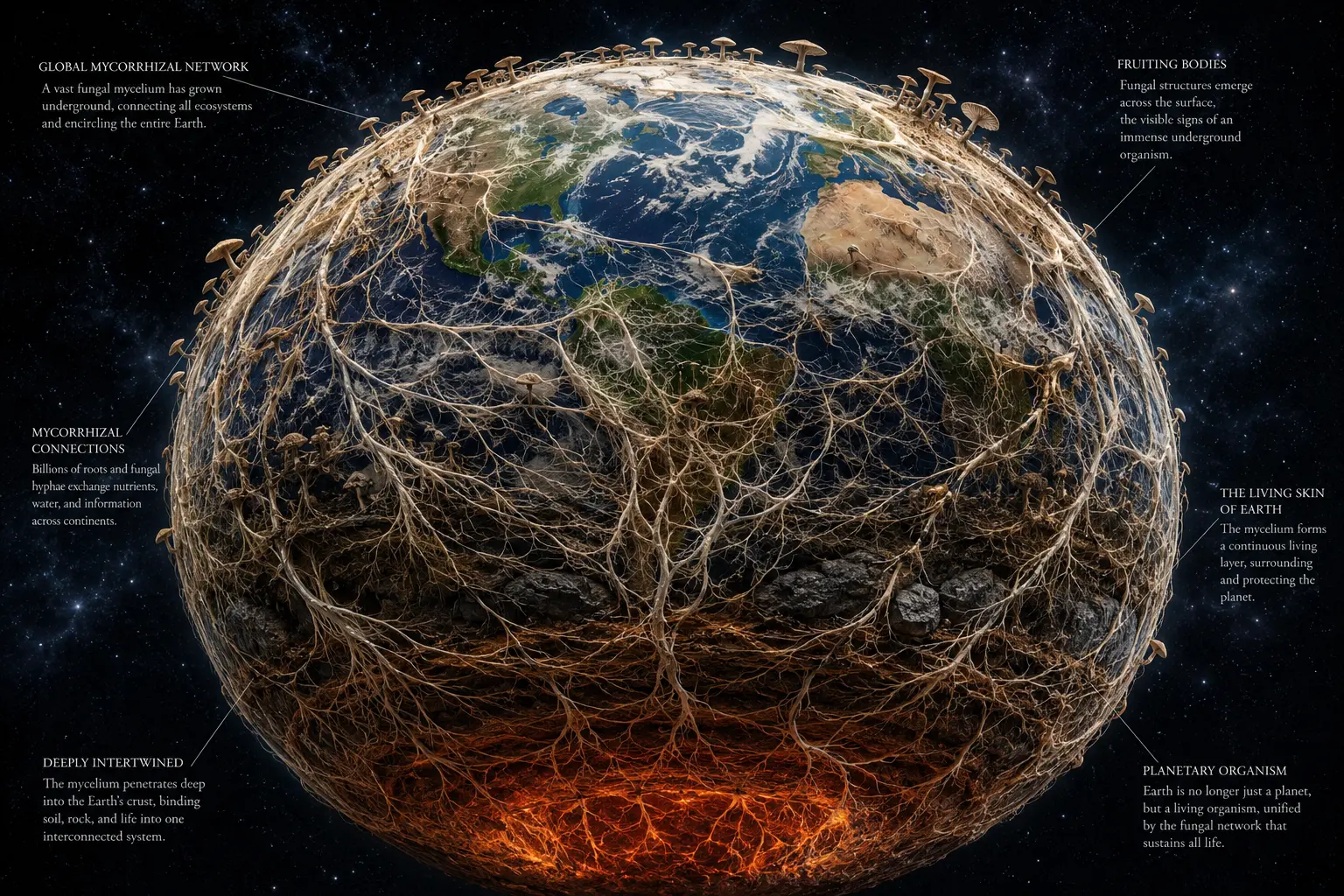
Interestingly, Pando is often compared with giant fungal networks, particularly the enormous underground mycelial systems produced by certain fungi.
Like these fungal organisms, Pando demonstrates that some of the world’s largest living entities may remain largely hidden beneath the surface.
In both cases, what appears to be multiple separate organisms may actually be parts of a single interconnected biological system.
The comparison highlights broader questions about biological individuality.
Scientists increasingly recognize that many organisms function as networks rather than isolated entities.
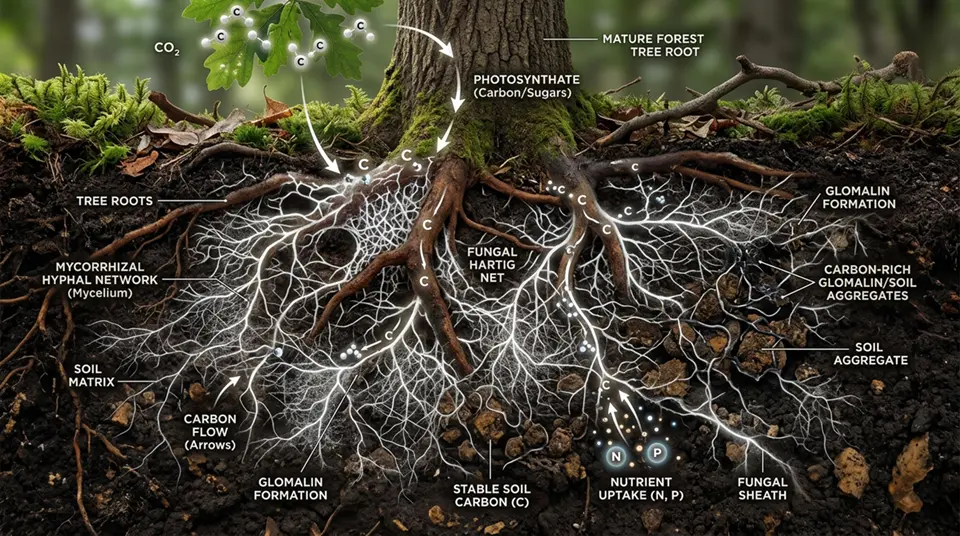
Trees, fungi, plants, and microbial communities often rely on extensive underground connections that challenge traditional definitions of where one organism ends and another begins.
A Critical Habitat for Biodiversity
Pando’s ecological importance extends beyond its remarkable size.
The aspen grove supports a diverse range of wildlife species, including birds, mammals, insects, and microorganisms.
The habitat created by the colony contributes significantly to local biodiversity and ecosystem stability within the region.
Conservation efforts have therefore focused not only on preserving Pando itself but also on protecting the broader ecological community associated with the organism.
Researchers continue to monitor regeneration rates, stem health, browsing impacts, and environmental conditions to better understand the long-term prospects of the colony.
The story of Pando also serves as a reminder that some of Earth’s most extraordinary life forms are easily overlooked.
What appears to be an ordinary forest is, in reality, a single living organism that has endured for millennia.
Its existence challenges assumptions about scale, longevity, and individuality in the natural world.
Lessons in Resilience and Interconnectedness
As scientific understanding continues to evolve, Pando remains one of the most fascinating examples of biological persistence and interconnectedness.
The organism demonstrates how life can thrive through cooperation among thousands of interconnected structures functioning as a single entity.
Its continued survival provides valuable lessons about resilience, adaptation, and the complexity of living systems.
The giant aspen clone stands as both a scientific curiosity and a symbol of nature’s capacity for endurance.
Protecting Pando will not only preserve one of the world’s most remarkable organisms but also contribute to understanding the ecological processes that sustain large-scale living systems across generations.
References
According to ZME SCIENCE