No more leaching chemicals or biodegradable dreams cut short—scientists have biohacked bamboo with enzyme-anchored essential oils, unlocking a new era of sustainable mold resistance.

From Green Beauty to Fungal Vulnerability
Bamboo is the darling of sustainable design. Fast-growing, self-regenerating, and elegantly simple, it promises an ecological alternative to timber in architecture, furniture, and infrastructure. But there’s a catch: nature’s most renewable stem is also one of the most mold-prone, particularly when used in the round—outer skin intact, structure untouched.
That outer layer, known as bamboo green, is paradoxically both its armor and its Achilles’ heel. Rich in silica and phenolic compounds, it’s exposed to moisture and fungi in every outdoor application—from garden fences to tropical eco-homes. And in humid climates, bamboo’s charm can rapidly decay into a biodegradable liability.
Traditionally, builders turned to synthetic biocides and heavy-metal treatments to fend off fungal decay. But as regulatory walls close in and the public demands cleaner, safer materials, the search for a bio-based antifungal strategy has reached a fever pitch. Now, a team of researchers has delivered one—by growing the solution directly into the material.
The Dual Enzyme Strategy That Changed Everything
The breakthrough? A two-step, bio-inspired treatment that transforms round bamboo into a mold-resistant champion—without compromising its natural aesthetic or ecological integrity.
Step 1: Open the Door
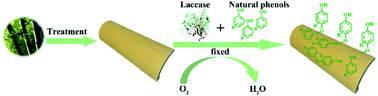
First, the bamboo is treated with dilute acid hydrothermal pretreatment—a gentle wash in 1% hydrochloric acid, followed by heat. This unlocks the bamboo’s tightly packed fibers, making the surface more chemically accessible. Think of it as loosening the zipper on a tightly closed jacket.
Step 2: Lock It In
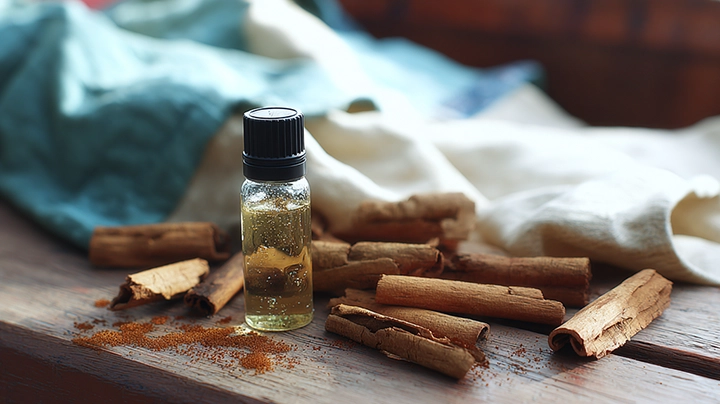
Next comes the star of the show: laccase, a naturally occurring oxidative enzyme. When combined with thymol—an antifungal compound extracted from thyme essential oil—laccase catalyzes a reaction that grafts thymol molecules directly onto the bamboo’s phenolic sites.
The result is a molecular handshake. Thymol, which usually washes off with rain, now holds fast like a vine clinging to a trellis. And just like that, bamboo’s greatest vulnerability becomes its bio-shield.
Mold Resistance You Can Measure
In controlled lab tests, the newly modified bamboo—dubbed HPLT-Bamboo—was put to the test in high humidity environments for 30 days, simulating tropical exposure. The untreated samples quickly developed visible mold. HPLT-Bamboo? Zero growth. Not even a spore.
But that’s not all. The surface of treated bamboo became dramatically more hydrophobic, reaching a water contact angle of 101.01°. That means water beads up and rolls off, denying fungi the moisture they need to colonize.
In simpler terms: no wet surface, no fungal foothold.

Why Bamboo Green Is the Key
Here’s where it gets even more elegant. The very layer most vulnerable to mold—the bamboo green—also turned out to be the most reactive in the enzymatic bonding process. Rich in silica and natural phenols, it serves as a fertile ground for laccase-thymol polymerization.
That means we don’t have to strip the outer layer or process the bamboo into engineered panels. We can use the natural form—round, intact bamboo—and make it mold-resistant without sacrificing strength or character.
It’s not just a new treatment. It’s a new preservation philosophy.
What This Means for Green Building
In an industry increasingly judged by carbon footprints and health risks, this innovation answers a long list of unsolved challenges:
- No synthetic biocides or metal salts
- No toxic solvents or high-energy production
- No aesthetic compromise
- Yes to durability, bio-compatibility, and scale-up potential
This isn’t a lab curiosity. It’s a prototype for climate-conscious construction materials—especially for projects that embrace circular bioeconomy values.

Broader Implications: The Enzymatic Future of Materials
If laccase can anchor thymol to bamboo, what else can it do?
The study hints at a future where bio-sourced antifungal agents are grafted onto natural surfaces across a wide material spectrum—rattan, cork, palmwood, even mycelium composites.
Enzymes like laccase work under mild conditions, don’t require complex equipment, and come from fungi themselves—a poetic inversion, where the very kingdom that causes decay now prevents it.
This could pave the way for:
- Edible packaging with antifungal surfaces
- Biodegradable textiles resistant to mold
- Food-safe cutting boards with embedded plant-derived antimicrobials
It’s not just anti-mold. It’s post-mold thinking—rethinking how we collaborate with biology to build, protect, and regenerate.
The MoldNews Verdict
“This isn’t bamboo treated like plastic—it’s bamboo defended by biology.”
This innovation sits at the intersection of bio-inspired engineering, green chemistry, and material ethics. It acknowledges the vulnerability of organic materials—but doesn’t coat them in petrochemical armor. Instead, it enhances their defense systems using tools from the forest floor, not the refinery.
In an era of rising humidity, tighter regulations, and growing ecological urgency, the mold-proof building material of tomorrow won’t be synthetic—it will be symbiotic.
And if that material happens to be round, golden, and held together by thyme-scented molecular bonds? Even better.
Key Takeaways
- Bamboo is susceptible to mold and fungal decay under humid conditions, limiting its use as a structural material despite its remarkable strength and rapid renewable growth.
- Research teams are developing enzyme-based and thymol-based treatments that protect bamboo from mold and fungal degradation while maintaining its natural appearance and sustainability profile.
- Thymol—a natural monoterpene phenol extracted from thyme—has documented antifungal activity and is being explored as a biodegradable alternative to synthetic biocides for wood and bamboo preservation.
- Defensive enzyme systems inspired by plants’ own immune mechanisms are being adapted for bamboo treatment, activating the bamboo’s residual biochemical defences against fungal attack.
- The development of effective natural bamboo preservation treatments is critical for bamboo to fulfil its potential as a high-performance sustainable building material in humid climates where mold risk is highest.
Frequently Asked Questions
Why is bamboo vulnerable to mold despite being such a strong material?
Bamboo’s remarkable mechanical properties—tensile strength comparable to steel by weight-to-strength ratio, flexural strength exceeding most structural timbers—exist alongside genuine vulnerability to mold and fungal decay that limits its durability as a building material. The biological basis: bamboo is a grass, not a wood; its cell walls contain cellulose, hemicellulose, and lignin (as in wood) but at different proportions and with different physical arrangements; the starch and sugar content of bamboo culms (the stems used in construction) is relatively high, particularly in younger culms, providing readily available nutrition for mold. Unlike many hardwoods that have high natural extractive content (resins, tannins, silica, and other compounds that inhibit decay), bamboo has relatively low natural extractive content and therefore limited innate resistance to mold and decay fungi. Surface texture and structure: bamboo has a waxy outer epidermis that provides some initial water repellence, but the node regions and cut ends expose inner tissues with high susceptibility to moisture absorption and mold colonisation. Geographic paradox: bamboo grows fastest and is most abundant in tropical and subtropical climates that are also highest in humidity, temperature, and mold pressure—precisely the conditions where bamboo is most susceptible.
What is thymol and how does it protect bamboo from mold?
Thymol (2-isopropyl-5-methylphenol) is a naturally occurring monoterpene phenol present in thyme (Thymus vulgaris) and other aromatic herbs of the Lamiaceae family, typically extracted as a component of thyme essential oil or produced synthetically. It has been used in medicine and food preservation for centuries for its antimicrobial properties. Antifungal mechanism of thymol: thymol disrupts fungal cell membrane integrity—its lipophilic nature allows it to penetrate the lipid bilayer of fungal cell membranes, increasing membrane permeability and causing leakage of cellular contents; it also inhibits chitin synthase (needed for fungal cell wall synthesis) and disrupts mitochondrial function in fungal cells. Efficacy against wood and bamboo molds: in vitro testing against common bamboo decay and mold fungi (Aspergillus, Trichoderma, Coniophora, Trametes) shows inhibitory activity at concentrations achievable in treatment solutions; bamboo impregnation studies where thymol is introduced into bamboo tissue (by soaking, pressure treatment, or diffusion) show measurable reduction in surface mold growth compared to untreated bamboo. Sustainability profile: thymol is biodegradable, has low mammalian toxicity at typical exposure levels, and is derived from renewable botanical sources—making it attractive as an alternative to synthetic organochlorine and boron-based biocides in bamboo preservation.
How does the ‘nature’s lock and key’ enzyme approach work for bamboo protection?
The ‘lock and key’ metaphor for bamboo protection refers to research approaches that use the specificity of enzyme-substrate interactions—where an enzyme (the ‘key’) acts only on its specific substrate (the ‘lock’)—to either activate plant defences or to degrade specific components of fungal or mold cells. Approach 1—activating bamboo’s own defences: bamboo, like all plants, has innate immune mechanisms that can be activated by pathogen-associated molecular patterns (PAMPs) or elicitor compounds; research has explored applying specific enzymes or elicitor compounds to bamboo surfaces that activate the bamboo’s own phenylpropanoid pathway and production of antimicrobial compounds (lignans, flavonoids, stilbenes)—essentially ‘priming’ the bamboo to defend itself. Approach 2—oxidative enzyme surface treatment: applying laccase or peroxidase enzymes (from fungi or plants) to bamboo surfaces catalyses the oxidative polymerisation of naturally present phenolic compounds in bamboo tissue, forming a denser, more hydrophobic surface layer that reduces moisture absorption and mold adhesion. Approach 3—chitinase application: chitinases are enzymes that degrade chitin (the structural component of fungal cell walls); applying chitinases to bamboo surfaces creates a coating that actively degrades mold spore walls that land on the surface. All three approaches remain at research stage for bamboo applications but draw on well-established biochemical principles.
Is bamboo a sustainable building material despite its mold vulnerability?
Bamboo’s sustainability profile is genuinely exceptional in terms of growth rate, carbon sequestration, mechanical properties, and agricultural inputs—making its mold vulnerability a problem worth solving through preservation technology rather than a reason to avoid the material. Sustainability advantages: growth rate—bamboo culms reach harvestable size in 3–5 years compared to 20–80+ years for structural timber species; carbon sequestration—bamboo sequesters carbon at rates per hectare comparable to fast-growing managed forests; minimal agricultural inputs—bamboo grows without irrigation in most of its native range and with minimal fertiliser; forest biodiversity compatibility—bamboo can be harvested from mixed natural and semi-natural stands without clear-felling; mechanical performance—bamboo’s strength-to-weight ratio rivals steel and structural timber, reducing material volumes needed for equivalent performance. Vulnerability management: untreated bamboo used in tropical humid conditions without shelter from rain may begin deteriorating within 2–10 years; properly treated bamboo (using traditional methods such as lime treatment and smoke treatment, or modern biocide treatments) can last 25–50 years; protected bamboo (in covered structures without direct rain and ground contact) can last even longer. For bamboo to reach its potential as a global sustainable building material, effective, safe, and economically viable preservation treatments that extend field life to 30–50+ years are needed—exactly what current research (including thymol and enzyme approaches) is working toward.
What are the most durable bamboo treatments currently available?
Currently available bamboo preservation treatments range from traditional methods used for centuries to modern industrial processes; durability varies significantly between methods. Most durable: pressure treatment with boron compounds (disodium octaborate tetrahydrate, DOT): borate is drawn into bamboo cells under pressure in an autoclave treatment similar to pressure-treated timber; boron is a durable, low-toxicity biocide; treated bamboo in protected above-ground applications shows dramatically improved mold and insect resistance; boron can leach from bamboo in wet conditions, limiting durability in exposed applications. CC (copper-chrome) and CCA (copper chrome arsenate) treatments: industrial treatments that provide excellent durability (20–30+ year service life in exposed applications) but raise environmental and health concerns from chromium and arsenic leaching—increasingly restricted in many countries. Thermal modification (bamboo carbonisation): heating bamboo to 180–220°C under controlled conditions reduces its hygroscopicity and digestibility to decay organisms; partially traded off against reduced mechanical properties; appropriate for decorative rather than structural applications. Traditional methods: smoke treatment (used in traditional Asian and African construction); lime treatment; oil impregnation—provide useful durability extension at low cost but are inferior to pressure-treatment for long-term protection in exposed conditions. Emerging: thymol, plant oil, and nano-biocide treatments offer promising natural alternatives but are not yet commercially deployed at scale.