
Nanotechnology is entering agricultural fungal disease management — not as a single product category, but as a set of platform technologies that could fundamentally change how crops are protected, monitored, and preserved.
A review published in Frontiers in Fungal Biology maps the current state of nano-enabled approaches to crop protection, covering materials science, delivery systems, detection technologies, and post-harvest applications. Its core argument: the next generation of fungal disease management will be defined less by chemical potency and more by precision delivery, early detection, and integrated systems thinking.
The Problem With the Current Model
Fungal pathogens remain one of agriculture’s most persistent economic threats. Species including Fusarium graminearum, Botrytis cinerea, Magnaporthe oryzae, Alternaria alternata, and Aspergillus flavus account for substantial crop yield losses each year — along with mycotoxin contamination that extends risk into food safety and international trade.
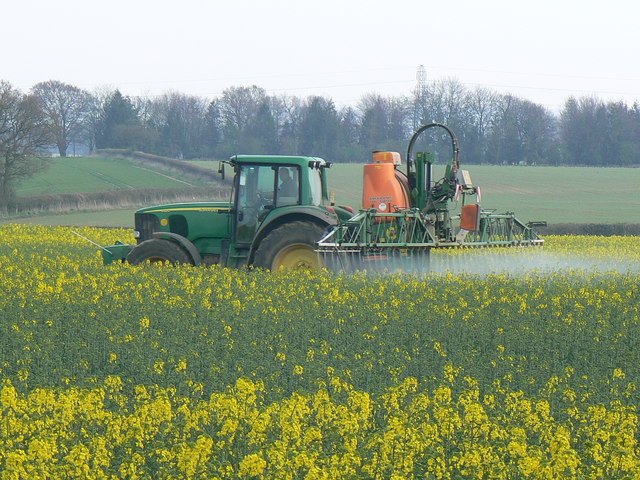
The dominant response to date has been fungicide application. These products work, but the model has limitations that are becoming harder to ignore. Resistant fungal populations are emerging under selection pressure from repeated chemical exposure. Residue concerns are increasing among regulators and consumers. Environmental persistence raises questions about long-term soil and water impact.
The review frames nanotechnology not as a replacement for this system, but as the architecture for a more sophisticated one.

A Toolbox, Not a Technology
The review emphasizes that nano-enabled crop protection is not a single solution. It encompasses a range of distinct material types, each with different mechanisms and application contexts.
Silver nanoparticles and zinc oxide nanoparticles demonstrate direct antifungal activity through membrane disruption and reactive oxygen species generation. Copper oxide nanoparticles offer similar mechanisms with different activity profiles. Nanoemulsions improve the bioavailability and coverage of existing fungicide compounds. Nanocarriers enable controlled, targeted release of active ingredients. Nanosensors provide early pathogen detection capability. Green-synthesized nanomaterials — produced using plant-based or biological processes — offer a more environmentally aligned synthesis pathway. Nano-enabled packaging systems bring antimicrobial properties into the post-harvest supply chain.
This diversity is strategically significant. Different challenges in the disease management chain — infection, spread, storage deterioration, contamination detection — can be matched to specific nano-enabled interventions rather than addressed with broad-spectrum chemistry.
How Nanoparticles Interact With Fungi
The review outlines several distinct mechanisms through which nanomaterials affect fungal biology. Nanoparticles can damage fungal cell membranes directly, disrupting structural integrity. They can generate reactive oxygen species that create oxidative stress within fungal cells, interfere with enzyme systems involved in metabolism, and inhibit spore germination before infection establishes. When used as nanocarriers, they can improve the penetration and retention of antifungal compounds within plant tissues.
This mechanistic diversity has an important implication for resistance management. Fungal resistance to conventional fungicides typically develops through specific molecular changes at the target site. When multiple mechanisms are active simultaneously, resistance development becomes more difficult to sustain — though the review acknowledges this advantage is theoretical until validated at scale.
From Reactive Treatment to Precision Detection
One of the most strategically significant aspects of the review is the emergence of nanosensors capable of detecting fungal pathogens before visible symptoms appear.
Conventional disease management is largely reactive. Farmers identify infection once symptoms are visible, apply treatment, and attempt to limit further crop damage. The intervention window is often narrow, and losses may already be significant by that point.
Nanosensors could shift this timeline substantially. By detecting molecular or biological signals associated with early fungal activity, these systems could enable intervention at stages where the disease has not yet established itself across significant crop area. The review frames this as a transition from chemical treatment to information-driven management — a model with parallels to predictive maintenance in manufacturing and early diagnostics in clinical medicine.
Post-Harvest: Extending the Protective System
The review’s coverage of nano-enabled packaging technologies addresses a stage that conventional fungicide programs do not reach: post-harvest handling, storage, transport, and processing.
Storage molds remain a significant source of product loss and mycotoxin contamination after crops leave the field. Nano-enabled packaging — materials engineered to incorporate antimicrobial properties or environmental sensing capabilities — offers one pathway toward extending fungal protection through the supply chain. The value proposition is different from field-applied crop protection: continuous, passive protection integrated into packaging infrastructure rather than applied as a discrete spray event.
Regulatory and Access Considerations
The review is appropriately cautious about commercialization timelines. Nanoparticle behavior in soil and water ecosystems is still under active investigation. Regulatory frameworks across major agricultural markets have not yet converged on consistent standards for nano-enabled materials — a factor that will slow adoption regardless of technical performance.
Access is a parallel concern. Advanced agricultural technologies have historically followed adoption curves that favor large-scale commercial operations. If nano-enabled crop protection arrives at price points accessible only to high-capitalization farms, the sustainability benefits cited in the review — lower chemical usage, reduced environmental burden, improved food safety — will not be distributed across the agricultural sector uniformly.
Industry Outlook
The review does not project a near-term displacement of conventional fungicide programs. What it identifies is an emerging infrastructure of complementary technologies that, over time, could redefine the operating model for crop disease management.
That shift — from broad-spectrum chemical suppression toward targeted, data-informed, integrated disease management — represents the direction agricultural R&D is moving. Nanotechnology provides one of the material platforms for that transition. Whether it scales into mainstream agricultural practice will depend on regulatory clarity, demonstrated environmental safety, accessible pricing, and integration with existing farm management systems.
For the agricultural input industry and food safety stakeholders, the review signals a technology landscape that is changing faster than most sector-wide discussions currently acknowledge.
Key Crop Fungal Pathogens
Fusarium graminearum (wheat and corn, deoxynivalenol producer), Botrytis cinerea (broad host range, gray mold), Magnaporthe oryzae (rice blast, global rice production threat), Alternaria alternata (post-harvest spoilage, alternaria toxin producer), and Aspergillus flavus (aflatoxin B1 production across multiple crops) are among the species highlighted in the review as primary targets for nano-enabled disease management.
FAQ
What is the core argument of this review? That nanotechnology provides an expanding set of tools — sensors, delivery systems, materials, packaging — that could shift crop protection from reactive chemical treatment toward targeted, information-driven disease management.
How do nanoparticles affect fungal cells? Through multiple mechanisms: membrane disruption, oxidative stress generation, enzyme interference, and spore germination inhibition. This mechanistic diversity is a key advantage over single-target conventional fungicides.
What are nanosensors used for in crop protection? Detection systems designed to identify fungal pathogens or infection-related signals at early stages — before visible disease symptoms appear — enabling earlier, lower-input intervention.
What are the main limitations? Incomplete understanding of nanoparticle behavior in agricultural ecosystems, inconsistent regulatory frameworks across markets, and access barriers that may limit adoption to large-scale operations.
Does this replace conventional fungicides? Not in the near term. The review presents nano-enabled technologies as complementary and integrative rather than immediately substitutional.
References
Nano-enabled systems for fungal disease management in agriculture. Frontiers in Fungal Biology, 2025. https://www.frontiersin.org/journals/fungal-biology/articles/10.3389/ffunb.2025.1653214/full
Key Takeaways
- A review published in Frontiers in Fungal Biology maps the current state of nano-enabled approaches to crop protection, covering materials science, delivery systems, detection technologies, and post-harvest applications.
- The dominant response to date has been fungicide application.
- Environmental persistence raises questions about long-term soil and water impact.
- It encompasses a range of distinct material types, each with different mechanisms and application contexts.
- Nanocarriers enable controlled, targeted release of active ingredients.
Frequently Asked Questions
What should you know about the Problem With the Current Model?
Fungal pathogens remain one of agriculture’s most persistent economic threats. Species including Fusarium graminearum, Botrytis cinerea, Magnaporthe oryzae, Alternaria alternata, and Aspergillus flavus account for substantial crop yield losses each year — along with mycotoxin contamination tha
What should you know about a Toolbox, Not a Technology?
The review emphasizes that nano-enabled crop protection is not a single solution. It encompasses a range of distinct material types, each with different mechanisms and application contexts.
How Nanoparticles Interact With Fungi?
The review outlines several distinct mechanisms through which nanomaterials affect fungal biology. Nanoparticles can damage fungal cell membranes directly, disrupting structural integrity. They can generate reactive oxygen species that create oxidative stress within fungal cells, interfere with enzy
What should you know about from Reactive Treatment to Precision Detection?
One of the most strategically significant aspects of the review is the emergence of nanosensors capable of detecting fungal pathogens before visible symptoms appear.
What should you know about post-Harvest: Extending the Protective System?
The review’s coverage of nano-enabled packaging technologies addresses a stage that conventional fungicide programs do not reach: post-harvest handling, storage, transport, and processing.