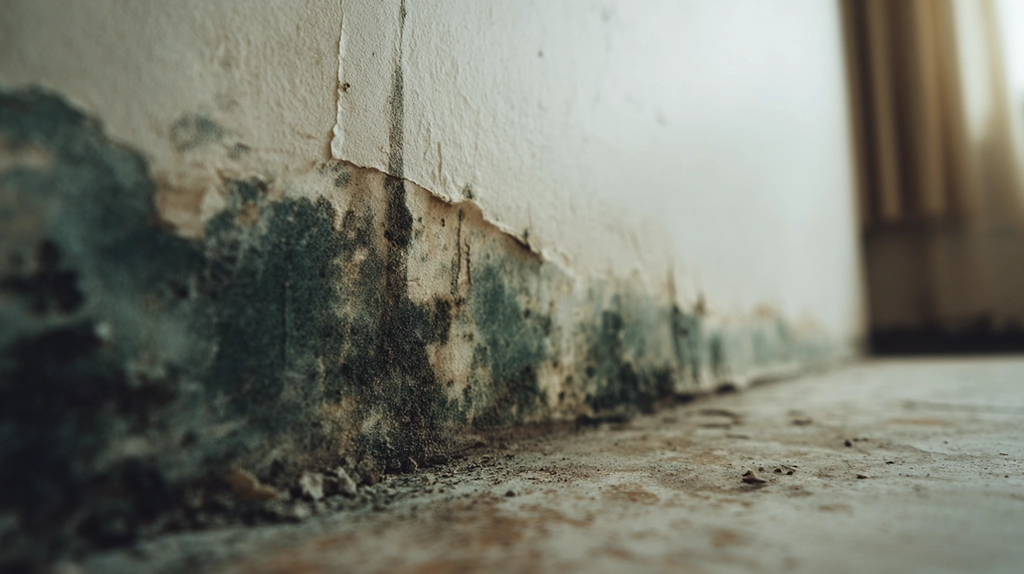
Mold growing on a wall after a water leak is a warning sign — but the species name matters far less than the moisture problem behind it. Dark indoor mold is commonly associated with Stachybotrys chartarum, the species most often called “black mold,” but color alone cannot confirm any species. Many common indoor molds appear dark. Reliable identification requires microscopy or laboratory testing, not a visual inspection.
What a dark patch does tell you — clearly and immediately — is that moisture has stayed in that area long enough for mold to establish. That is the problem to solve first, regardless of what species turns out to be growing there.
What Stachybotrys chartarum Actually Is
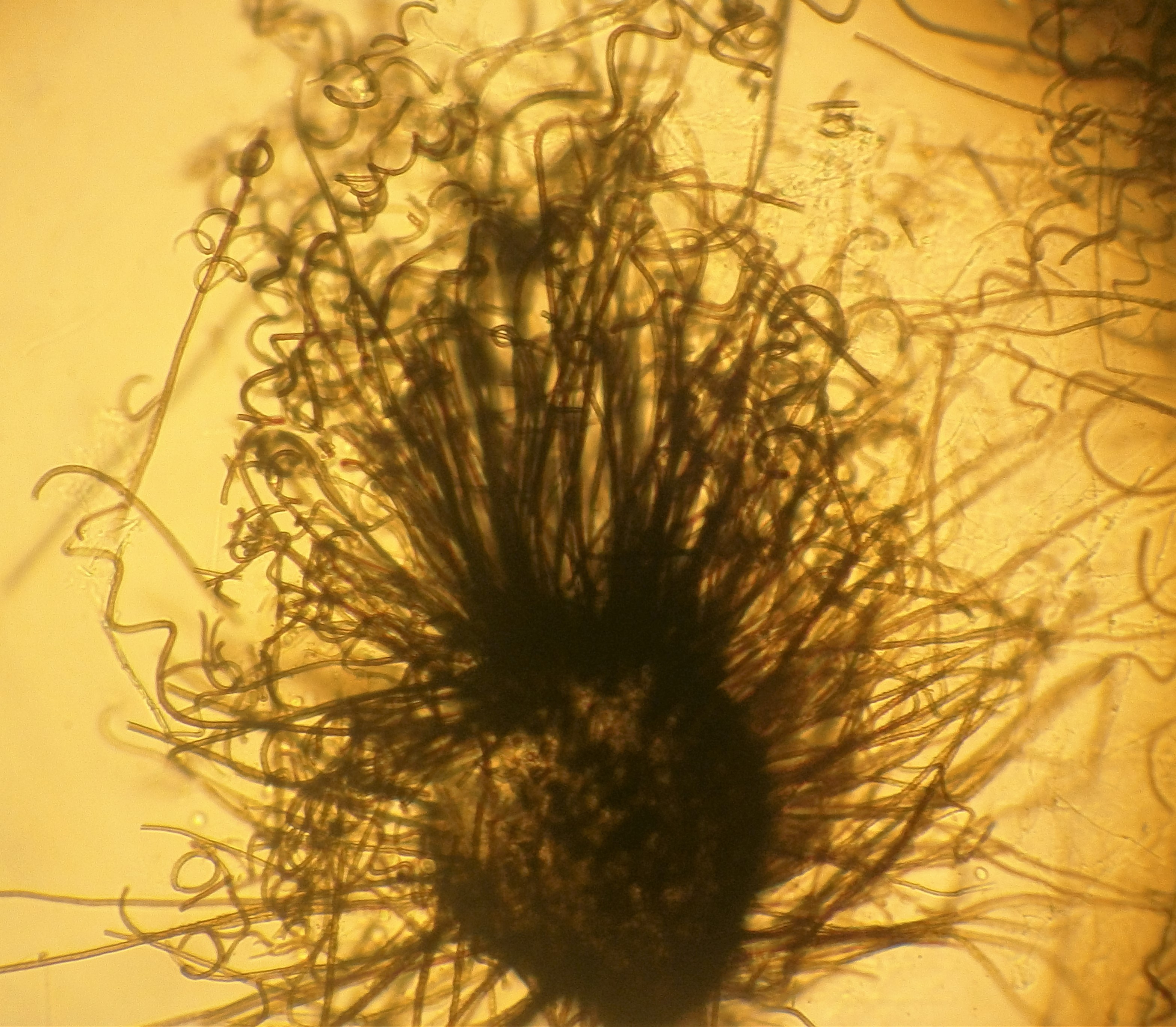
Stachybotrys chartarum is a filamentous fungus. It does not grow as a cap-and-stem mushroom. Instead, it spreads as microscopic threads called hyphae that colonize damp materials and release spores into the surrounding environment. In buildings, it typically appears as dark growth on water-damaged surfaces — greenish-black, sooty, or slightly slimy when wet. When material dries, appearance may change or blend with neighboring mold species, making visual identification even less reliable.
Without laboratory testing, species confirmation is not possible from appearance alone. In most building situations, the practical priority is not the species name — it is that water-damaged material is supporting active mold growth and the moisture source must be found.

Why It Grows Where It Does
Stachybotrys chartarum is a slow-growing species with specific requirements. It needs consistently wet, cellulose-rich material — not a surface that gets briefly splashed and dries within hours. In buildings, the materials it typically colonizes include:
- Gypsum board paper (drywall facing and backing)
- Ceiling tiles
- Fiberboard and particleboard
- Cardboard and paper products
- Paper-backed insulation
This profile makes it a reliable indicator of persistent moisture — roof leaks left unrepaired, plumbing failures hidden inside walls, flood water that was not properly dried, or chronic condensation from inadequate ventilation. A single, quickly-dried water event rarely creates the conditions this species needs. Recurring or prolonged dampness is the typical history behind it.
Why This Species Gets So Much Attention
Stachybotrys chartarum became a focus of public concern because some strains can produce trichothecene mycotoxins under certain conditions. Mycotoxins are chemicals produced by fungi that can cause adverse health effects with sufficient exposure. That potential is real — but it requires careful context.
Finding S. chartarum in a building does not automatically mean a health emergency. Risk depends on the amount of growth, whether contaminated material has been disturbed and is releasing particles, the airflow and ventilation of the space, how long exposure has continued, and the sensitivity of the people inside. Symptoms associated with damp buildings — regardless of specific species — can include musty odors, allergic reactions, worsening asthma, coughing, nasal congestion, and irritation of the eyes, nose, throat, or skin. People with asthma, mold allergies, weakened immune function, or chronic lung conditions are generally more vulnerable.
The appropriate response is measured: take post-leak mold seriously, find and fix the moisture source, and manage cleanup carefully. Do not make health decisions based on color or appearance alone.
What to Do When You Find Dark Mold
Step 1: Locate the moisture source first
Before cleaning anything, find out why the area was wet. Look for active or past leaks, condensation on pipes or cold surfaces, damp drywall, swollen baseboards, water stains on ceilings or floors, or areas that feel repeatedly damp. Mold removal without moisture correction is temporary. If the water source is not repaired, mold will return.
Step 2: Do not disturb large areas without protection
Cutting, scraping, sanding, or tearing out moldy material can release spores and particles into the air. If the affected area is large, hidden inside walls or above ceilings, or involves porous materials like drywall, insulation, or carpet, stop and seek professional assessment before attempting removal.
Step 3: Clean small growth on hard non-porous surfaces carefully
Small patches on tile, glass, metal, or sealed concrete may be cleaned with appropriate products, proper respiratory protection, and good ventilation. After cleaning, dry the surface thoroughly and confirm the moisture source has been addressed.
Step 4: Replace — do not clean — porous water-damaged materials
Drywall, ceiling tiles, insulation, fiberboard, cardboard, and carpet can hold moisture and contamination deep inside layers that surface cleaning cannot reach. If these materials have been wet long enough for mold to establish, removal is more effective than cleaning. Do not attempt to salvage material that has been structurally wet or heavily contaminated.
Step 5: Do not paint over mold or wet surfaces
Paint hides the stain. It does not stop the mold beneath or resolve the moisture that is sustaining it. Painting over active mold growth is a temporary cosmetic fix that allows the problem to continue and worsen inside the wall.
Common Mold Species Found in Damp Buildings
Dark indoor mold does not always mean Stachybotrys chartarum. Several species can colonize water-damaged buildings depending on moisture level, material type, airflow, and duration of dampness. Common species include Stachybotrys chartarum, Aspergillus niger, Cladosporium herbarum, Penicillium chrysogenum, and Chaetomium globosum.
In most building situations, identifying the exact species matters less than removing the moisture source and safely replacing affected materials. Species-level identification becomes more relevant in health investigations, legal assessments, or situations where occupants have unusual or persistent symptoms.
When to Call a Professional
Professional assessment is recommended when mold growth is extensive, hidden, or recurring; when the moisture source has not been identified; when porous materials like drywall or insulation are affected; when there are strong musty odors throughout the space; or when occupants — especially those with asthma, mold allergies, weakened immune function, or chronic lung disease — have health concerns potentially linked to the building.
Mold professionals can assess the full extent of contamination, locate hidden sources, take samples for laboratory identification when warranted, and oversee safe removal of affected building materials. In situations involving HVAC components, ductwork, or air-handling systems, professional involvement is especially important because mold in those locations can circulate through the entire building.
FAQ — Black Mold and Water-Damage Mold Risk
Is every black mold Stachybotrys chartarum?
No. Many molds can appear black, gray, brown, olive, or dark green. Color alone cannot identify a mold species. Laboratory testing is required for reliable identification.
Is Stachybotrys chartarum dangerous?
It should be taken seriously, especially when growth is large, hidden, or linked to persistently water-damaged materials. Risk depends on the amount of growth, exposure level, building conditions, and the health sensitivity of the people inside.
What materials does Stachybotrys chartarum grow on?
It grows best on wet, cellulose-rich materials such as gypsum board paper, ceiling tiles, fiberboard, cardboard, and paper-backed insulation. It typically requires persistent dampness to establish, not brief or isolated wetting.
Should I test the mold before cleaning it?
Testing may help in specific situations, but visible indoor mold already means moisture needs attention. In most cases, fixing the water source and safely removing affected materials is more urgent than identifying the species.
When should I call a professional?
Call a professional for large or hidden mold growth, recurring mold after repeated cleaning, mold on porous water-damaged materials, strong musty odors throughout the space, or when people with asthma, allergies, immune concerns, or chronic lung conditions may be affected.
References
ScienceDirect. (n.d.). Filamentous fungus. https://www.sciencedirect.com/topics/biochemistry-genetics-and-molecular-biology/filamentous-fungus
Encyclopaedia Britannica. (n.d.). Fungus: Nutrition. https://www.britannica.com/science/fungus/Nutrition