Floods Are Gone—But the Mold is Just Getting Started
Floods don’t just wash away homes—they create the perfect breeding grounds for mold. As climate change intensifies storms and rising waters sweep through communities, a new danger takes hold inside homes, creeping into walls, insulation, and air vents.
This isn’t just happening in one place—it’s happening everywhere. In hurricane-hit cities across the United States, in monsoon-ravaged South Asia, and now, once again, in Northern Rivers, New South Wales.
Governments have seen this before. They know what happens when homes stay damp, when floodwaters retreat but moisture lingers. And yet, they do nothing. The mold crisis isn’t just a consequence of storms—it’s the result of deliberate negligence. And now, families are paying the price.

Source: Wikimedia Commons, CC BY-SA 3.0
The Storm is Over—But For Northern Rivers, the Real Nightmare is Just Beginning
As of March 10, 2025, families in Northern Rivers are trapped inside homes they can’t afford to fix, breathing air that is making them sick. The floodwaters may have receded, but mold is only just beginning its takeover.
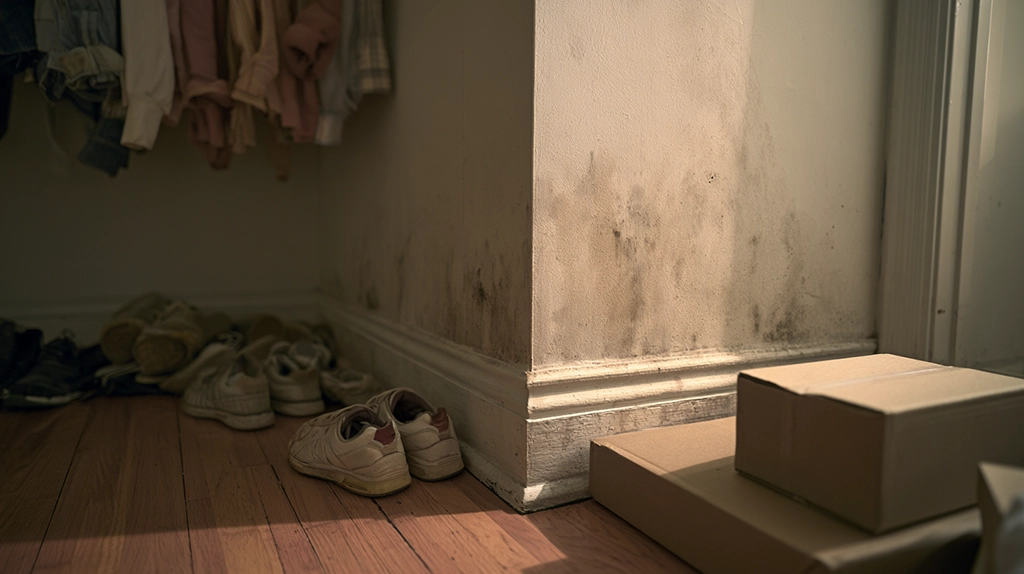
Walls are soaked. Insulation is rotting. Air vents are infested with spores. Parents are watching their children cough, battle fatigue, and struggle for air. The elderly and those with weak immune systems are at even greater risk—but they have nowhere else to go.
And the government? Silent.
There are no national emergency mold response teams. No funding for safe, flood-resistant housing. No guidance on how families are supposed to make their homes livable again.
And the insurance companies? Refusing to cover mold damage. Telling homeowners they’re on their own.
This isn’t just a housing issue. This is a public health disaster.

Source: Wikimedia Commons, CC BY-SA 3.0
This Isn’t Just Australia—This is a Global Crisis
If you think this is only happening in Northern Rivers, you haven’t been paying attention. Climate change is creating stronger storms, more floods, and a mold crisis no one is prepared for.
In the United States, hurricane survivors aren’t just fleeing storm damage—they’re leaving homes filled with toxic mold. Entire communities are forced to abandon their homes not because of floodwaters, but because of what’s left behind.
In Bangladesh, monsoon season is fueling an epidemic of fungal infections, lung diseases, and chronic illness. Families already struggling with poverty now face an invisible, airborne threat.
In Europe, historic rainfall is turning schools and hospitals into mold-infested spaces. Doctors are seeing spikes in mold-related illnesses as people unknowingly breathe in contaminated air.
And what do governments do? Delay. Deny. Ignore. They treat mold like a building issue instead of what it really is: a full-scale public health emergency.

Source: Wikimedia Commons, CC BY-SA 4.0
Why This Matters—And Why It’s Only Getting Worse
This crisis isn’t new. But every year, it’s getting worse.
Governments refuse to modernize flood-prone housing. Builders continue using moisture-trapping materials. Insurance companies deny claims.
And mold? It keeps evolving.
Spores are becoming resistant to basic cleaning methods.
Fungal strains are growing stronger, more toxic, and harder to remove.
Once a home is contaminated, it may never be livable again.
This isn’t just a temporary inconvenience. Long-term mold exposure is linked to:
Chronic respiratory illness—prolonged exposure can lead to asthma, bronchitis, and lung infections.
Neurological damage—certain molds release toxins that can affect memory, focus, and cognitive function.
Weakened immune systems—especially dangerous for children, the elderly, and those with preexisting conditions.
And yet, governments pretend this problem will fix itself. It won’t. It’s only growing.

Source: Wikimedia Commons, CC BY-SA 3.0
How Many More Have to Suffer Before We Take This Seriously?
This is predictable. This is preventable. This is deliberate negligence.
We don’t need another round of thoughts and prayers from politicians. We need real action.
Flood-resistant homes must be mandatory—using materials that prevent mold from taking over.
Emergency response teams must include mold specialists—so families aren’t left breathing in toxic air.
Insurance companies must stop abandoning homeowners—because no one should have to choose between their health and their home.
Public education must improve—because if people don’t understand mold, they can’t protect themselves from it.
We’ve seen this before. We should have learned. But we didn’t.
So how many more families have to get sick? How many more homes have to rot? How much longer will governments treat this like an inconvenience—rather than the crisis it truly is?

Source: Wikimedia Commons, CC BY-SA 4.0
References
- IPCC – Climate Change
- WHO – Environmental Health
- EPA – Mold Remediation
- Climate Change in Bangladesh – Wikipedia
- NCBI – Neurological Impact of Mold Exposure
- Wikimedia Commons images:
- Flooded neighborhood (CC BY-SA 3.0)
- Mold on wall (CC BY-SA 3.0)
- Flood risk world map (CC BY-SA 4.0)
- Asthma inhaler (CC BY-SA 3.0)
- Flood-damaged home (CC BY-SA 4.0)
Key Takeaways
- Despite the scale of the fungal disease crisis—over 1.5 million annual deaths from invasive fungal infections—government response in most countries lacks the urgency, funding, and policy infrastructure that comparable disease burdens attract.
- Mold in housing represents a significant public health burden that is borne primarily by vulnerable populations—renters, the poor, elderly residents—while remediation costs and health consequences are externalised to healthcare systems and affected individuals.
- The most effective government responses to the fungal crisis combine proactive housing standards enforcement, expanded access to antifungal medicines, increased diagnostic capacity, and research funding proportional to the disease burden.
- In many countries, the standards for acceptable mold levels in rented housing are vague or unenforced, creating de facto impunity for landlords who fail to maintain mold-free homes.
- Patient and advocacy groups are increasingly vocal about the inadequacy of government and healthcare system responses to fungal disease, drawing parallels with the early years of the HIV crisis when a marginalised patient population was inadequately served.
Frequently Asked Questions
Why have governments been slow to respond to the fungal disease crisis?
The inadequacy of government response to fungal diseases reflects structural factors in how public health priorities are set and resourced. The marginalised patient problem: the populations most severely affected by invasive fungal infections—people living with HIV/AIDS, haematological malignancy patients, organ transplant recipients—are relatively small in number and often already categorised as patients with another primary condition; their fungal disease deaths may be attributed to their underlying condition rather than the infectious complication, reducing measured mortality. The research funding gap: fungal diseases receive approximately 1–2% of the NIH infectious disease research budget despite causing a comparable mortality burden to tuberculosis; without a proportionate research base, the clinical and scientific community that would advocate for policy priority has been smaller than for better-funded infectious diseases. Diagnostic invisibility: fungal infections are underdiagnosed, meaning the true disease burden is not fully apparent in mortality statistics or healthcare utilisation data; what cannot be measured cannot generate policy response. The housing mold problem: housing quality is regulated through building codes and housing standards rather than health regulations in most jurisdictions, creating fragmented responsibility across housing, environment, and health departments that inhibits coordinated response.
What should governments be doing to better protect citizens from mold?
Public health evidence and advocacy groups have articulated several specific policy actions that would significantly reduce the mold-related disease burden. Housing standards: introduce and enforce specific enforceable standards for indoor humidity and mold in rented housing, replacing vague ‘habitable’ standards with measurable criteria; require proactive inspection of rented housing rather than complaint-only enforcement; establish tenant remediation rights with clear process and timelines. Healthcare: include mold exposure in routine clinical assessments for relevant conditions (asthma, rhinitis, recurrent respiratory infections, COPD); train primary care clinicians to assess housing conditions as determinants of respiratory health; establish clear patient pathways from housing-related health complaints to housing inspection. Research and surveillance: fund epidemiological surveillance of mold-related illness at the level commensurate with the documented disease burden; support clinical and basic research into mold exposure health effects at NIH/equivalent funding agencies. Public communication: implement public health campaigns with accurate, evidence-based guidance on mold risk and prevention—comparable to public health messaging around smoking, diet, and exercise. Planning: integrate indoor air quality requirements into building codes, planning permissions for conversions and extensions, and retrofit programmes.
Are there countries that handle mold and fungal disease better than others?
Several countries provide instructive models of policy approaches to mold and fungal disease that outperform the global average. New Zealand’s Healthy Homes Standards: following research documenting that cold, damp housing was a major driver of child respiratory illness and hospitalisation, New Zealand introduced the Residential Tenancies Act amendment and Healthy Homes Standards (2019), requiring rental properties to meet specific requirements for heating (minimum indoor temperature), insulation, ventilation, moisture (vapour barriers in crawl spaces), and draught-stopping; evaluations show improved health outcomes in affected housing. UK’s Housing Health and Safety Rating System (HHSRS): provides a systematic framework for assessing housing hazards including mold and dampness; local authorities have legal powers to require landlords to remediate Category 1 hazards (severe risk); the system lacks sufficient enforcement resourcing in practice but represents a more structured approach than exists in many countries. Nordic countries: building codes in Sweden, Norway, and Denmark have long required mechanical ventilation in residential construction and set high standards for building envelope performance, resulting in lower baseline rates of mold-affected housing. Hospital antifungal stewardship: Netherlands and Belgium have implemented more systematic invasive fungal infection surveillance and antifungal prescribing programmes than most countries.
What rights do tenants have regarding mold in their homes?
Tenant rights regarding mold vary significantly between jurisdictions, from comprehensive to essentially non-existent. Common legal frameworks: implied warranty of habitability—a legal doctrine in most US states, UK, and many comparable jurisdictions that landlords must maintain rental properties in a habitable condition; courts have increasingly interpreted this to include freedom from conditions that materially affect health, including severe mold growth. Specific mold statutes: some jurisdictions have enacted specific mold disclosure and remediation requirements; California (CA Health and Safety Code 17920.3), Texas (Title 8, Chapter 92, Texas Property Code), and several other US states have specific mold provisions; in the UK, the Homes (Fitness for Human Habitation) Act 2018 specifically includes mold and damp in the definition of unfit housing. EU: the European Convention on Human Rights and EU Charter provisions on right to adequate housing are relevant in cases of severe housing conditions including mold, though enforcement through housing courts rather than human rights frameworks is more practical. How to exercise rights: document the problem with photographs and dated written communication to the landlord; keep records of all communications; report to local authority housing inspection if the landlord does not respond; seek advice from tenant rights organisations or legal aid providers for jurisdiction-specific guidance.
How does the fungal disease crisis compare to HIV or tuberculosis in public health priority?
Comparative analysis of public health resourcing for fungal diseases versus other infectious diseases with comparable mortality reveals a striking disparity. Mortality comparison: HIV/AIDS kills approximately 650,000 people annually; tuberculosis kills approximately 1.3 million; invasive fungal infections are estimated to kill approximately 1.5–3.8 million annually (depending on the study methodology and inclusion criteria used); malaria kills approximately 620,000. Research funding comparison: in 2022, NIH funding for HIV/AIDS was approximately $3.1 billion; tuberculosis approximately $340 million; malaria approximately $490 million; all fungal diseases combined approximately $70–100 million. The gap is more extreme than the mortality ratio alone—HIV has had decades of activism and investment that created scientific and policy infrastructure that persists; fungal diseases lack comparable advocacy infrastructure. The HIV parallel: some fungal disease advocates explicitly compare the current state of fungal disease to the early 1980s HIV crisis—a disease primarily affecting marginalised populations, inadequately measured and understood, underinvested in research, and not a political priority; the advocacy model of the HIV crisis (patient-led grassroots organisation combined with scientific partnership, regulatory change, and political pressure) is explicitly cited as the model for fungal disease advocacy. Organisations including GAFFI (Global Action Fund for Fungal Infections) and ISHAM are working to build this advocacy infrastructure.