According to TUFTSNOWTUFTSNOW
Introduction: From Dairy to DNA
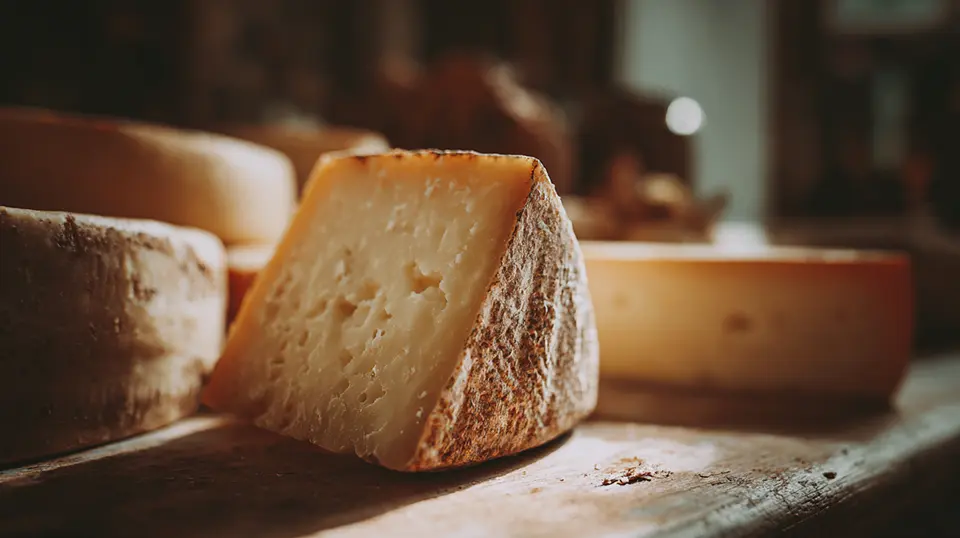
At first glance, a wedge of blue cheese or a creamy round of Camembert might seem like nothing more than a decadent indulgence. But under the rind lies something much deeper—a living laboratory of evolution.
Fungi that ripen and flavor cheeses are not just culinary collaborators; they’re evolutionary enigmas. And now, thanks to groundbreaking research led by scientists at Tufts University, the molds responsible for some of our most beloved cheeses are revealing how life adapts, transforms, and sometimes converges across distant lineages.
By studying the genomes, metabolic behavior, and environmental responses of cheese fungi—specifically Penicillium species—researchers are shedding light on one of biology’s most fascinating phenomena: convergent evolution.
In other words, cheese is helping us understand how completely different organisms evolve similar traits when adapting to similar environments. It’s a story of flavor, function, and fungal finesse.

Source: Wikimedia Commons, CC BY-SA 3.0
Section 1: The Evolution in Your Fridge
Most of us don’t associate dairy products with Charles Darwin, but for evolutionary biologists, cheese is a rare gift: a controlled ecosystem that has evolved in parallel with human culture.
Fungi used in cheesemaking have had to adapt to:
- Low-nutrient environments (milk solids, salt)
- Cool, moist caves or refrigeration units
- Competition with bacteria and other molds
- Human selection for aroma, appearance, and taste
It’s a microcosm of evolutionary pressure—and it moves faster than you might think.

Source: Wikimedia Commons, CC BY-SA 3.0
Section 2: The Tufts Study—What They Found
The research team, led by Benjamin Wolfe, associate professor of biology at Tufts University, studied multiple strains of cheese fungi, especially:
- Penicillium camemberti (used in Brie and Camembert)
- Penicillium roqueforti (used in blue cheeses)
- Penicillium biforme and others adapted to dairy
By comparing the genetic blueprints of these fungi, they discovered signs of independent but parallel adaptations—a clear signature of convergent evolution.
Key findings included:
- Loss of pigment production in multiple species (white molds like Camembert evolved separately from blue ones)
- Changes in secondary metabolism, leading to the loss of toxin production
- Accelerated gene loss and mutation, suggesting a shift toward specialized niches (cheese environments)
- Repeated domestication events, meaning humans may have “tamed” different species more than once
In short, the molds we rely on to make cheese creamy, tangy, and safe have been reshaped by human culture—and they’ve reshaped themselves in response.

Source: Wikimedia Commons, CC BY-SA 3.0
Section 3: What Is Convergent Evolution?
Convergent evolution is when unrelated organisms evolve similar traits due to similar environmental pressures.
Classic examples include:
- Bird wings and bat wings
- Shark fins and dolphin flippers
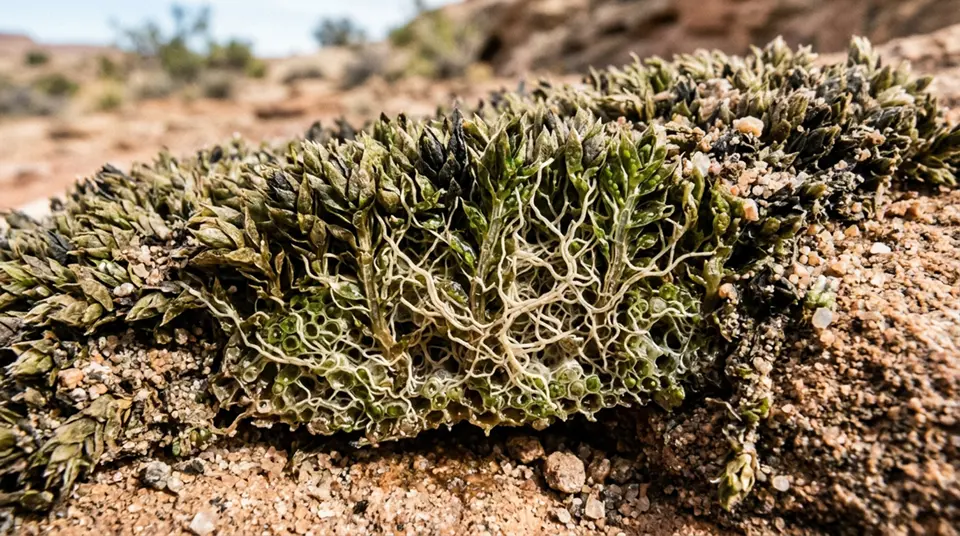
- Cacti and Euphorbia (spiny desert plants from different continents)
In fungi, this means different Penicillium species evolved:
- White coloration
- Reduced spore production
- Enhanced aroma production
… all independently, but in response to the same selection pressures: the cheese environment.
This makes cheese fungi a model for studying evolution in real time—across short timescales and under human influence.
Section 4: Cheese as an Evolutionary Niche
Cheese is a human-made habitat—not found in nature. Yet, fungi have adapted to thrive in it, behaving more like domesticated animals than wild molds.
Researchers refer to cheese fungi as having undergone “domestication syndrome”—a suite of changes often seen in species that co-evolve with humans. In cheese fungi, this includes:
- Docile growth (less aggressive spread)
- Improved flavor compound production
- Loss of competitive toxins
- Increased dependence on human-created environments
Similar to how wolves became dogs, cheese molds have become our microbial companions, evolving rapidly to suit our tastes and textures.
Source: Wikimedia Commons, CC BY-SA 3.0
Section 5: Implications for Science and Food
- Microbial Evolutionary Biology
This study helps scientists understand how fast and how flexibly organisms can evolve when faced with narrow ecological niches. - Domestication Models
Most domestication studies focus on animals and plants. Fungi offer a faster, easier-to-study system for tracking evolution, given their short generation times and small genomes. - Food Safety and Fermentation
Understanding the genetics of cheese fungi helps producers select strains that are safe, stable, and flavorful—minimizing spoilage and maximizing quality. - Biotechnology
Some of the flavor-producing enzymes found in cheese fungi could be repurposed for alternative foods, vegan cheeses, or flavor enhancers.
Section 6: The Role of Humans in Evolution
We often think of evolution as a slow process, but when humans enter the picture, the timeline accelerates. Our tastes, storage methods, and traditions exert pressure that rapidly reshapes microbial life.
This isn’t just true for cheese:
- Yeasts used in beer and bread have evolved unique fermentation pathways.
- Lactic acid bacteria in yogurt have been selected for texture and flavor traits.
- Koji molds in soy sauce and miso are now fundamentally different from their wild relatives.
In cheese, this pressure is visible in genome decay—a sign that fungi are adapting so closely to human-created environments, they may no longer survive outside them.
Section 7: My View – When Food Becomes a Window into Life Itself
I’ve always loved cheese for its richness, its culture, its rituals. But knowing that its molds are actively evolving with us, that they carry the fingerprints of our history and taste, adds a whole new dimension.
It turns our refrigerator into a museum of molecular adaptation. It blurs the line between food and biology. It reminds us that even what we eat is part of a living evolutionary story.
And perhaps most remarkably, it shows that evolution is not just about survival—but about taste, texture, and shared history.
Conclusion: A New Frontier for Evolutionary Science
The cheese rind has become a new frontier—not only for food artisans but for evolutionary biologists.
By examining the humble fungi that bring Brie to bloom or streak Roquefort with blue veins, scientists are learning how life adapts under pressure, how organisms specialize, and how human culture shapes the world at the genetic level.
As we navigate a future filled with climate change, food insecurity, and biodiversity loss, this kind of research matters more than ever. It shows us that evolution is not some ancient, distant process—it’s happening now, in our kitchens, on our plates, and in every bite of mold-ripened magic.
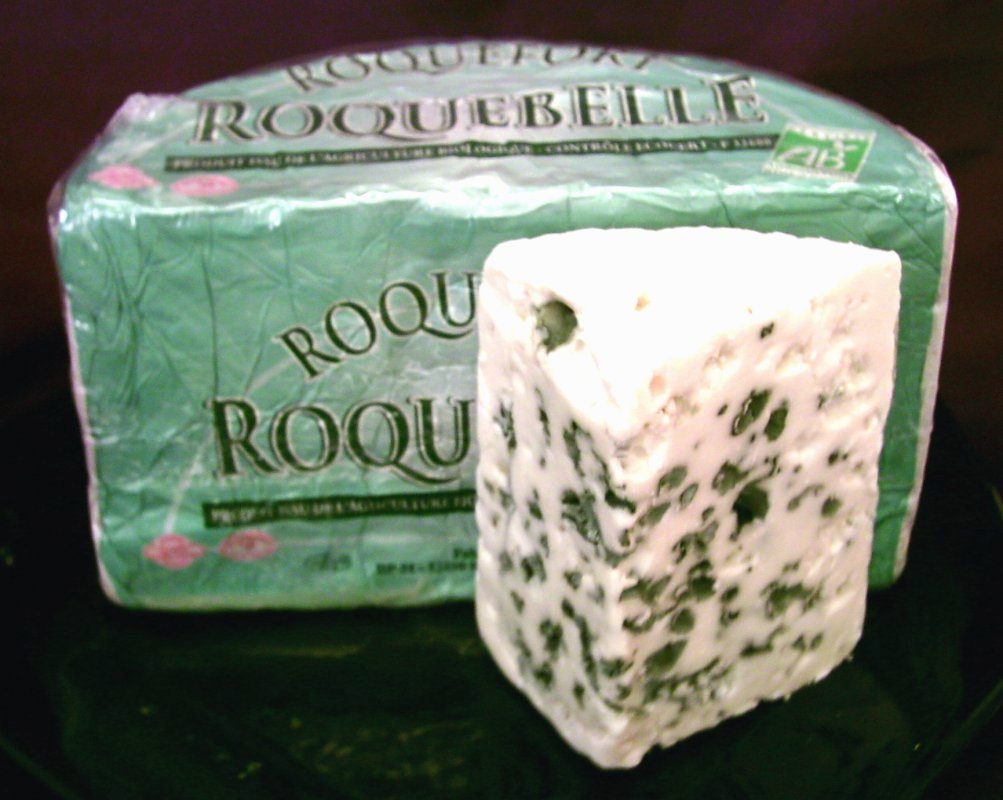
Source: Wikimedia Commons, CC BY-SA 3.0
References
- Wikipedia – Penicillium
- Wikipedia – Convergent evolution
- Wikipedia – Domestication syndrome
- Wikipedia – Penicillium camemberti
- Wikipedia – Penicillium roqueforti
- PubMed – Cheese fungi domestication studies
According to TUFTSNOW
Key Takeaways
- Mold species associated with cheese and dairy fermentation have undergone remarkable evolutionary changes from their wild ancestors, losing genes no longer needed in the dairy environment while retaining and amplifying genes useful for fermentation.
- Comparative genomics of Penicillium camemberti and Penicillium roqueforti against their wild relatives reveals extensive gene loss, horizontal gene transfer, and selection for cheese-specific adaptations including faster growth at cheese temperatures and altered secondary metabolism.
- The cheese-fermenting molds represent one of the clearest examples of domestication in fungi—a parallel evolutionary process to the plant and animal domestication that shaped human food systems.
- Milk offers a biochemically unusual environment for fungi—high protein, high fat, low carbohydrate—that selected for fungi with exceptional lipolytic (fat-digesting) and proteolytic (protein-digesting) enzyme systems.
- Horizontal gene transfer events have introduced novel metabolic capabilities into cheese molds from unrelated organisms, accelerating their adaptation to the dairy environment beyond what vertical inheritance alone could achieve.
Frequently Asked Questions
How have cheese molds evolved differently from wild fungi?
The evolutionary divergence of cheese-associated molds from their wild relatives has been studied through comparative genomics—comparing the full genome sequences of domesticated strains against wild strains of the same or closely related species. Key findings from these studies: genome reduction: domesticated cheese molds show significant gene loss compared to wild relatives; genes lost include those for producing secondary metabolites (toxins, antimicrobials, other bioactive compounds) that are useful in competitive natural environments but unnecessary or counterproductive in the specialised dairy environment. Sexual reproduction reduction: Penicillium camemberti shows extreme loss of genetic diversity and evidence of predominantly clonal reproduction—the characteristic white colour and texture of Camembert rind may represent selection for visual acceptability during cheesemaking. Horizontal gene transfer: analysis of cheese mold genomes has revealed the presence of gene clusters whose sequence similarity to other organisms suggests they were acquired by horizontal gene transfer (the movement of genes between unrelated species through mechanisms other than reproduction); these transferred clusters encode novel metabolic capabilities useful in cheese production.
What makes Penicillium roqueforti special for blue cheese?
Penicillium roqueforti is the mold responsible for the characteristic blue-green veins, pungent aroma, and distinctive flavour of blue cheeses including Roquefort, Gorgonzola, Stilton, and Danish Blue. Its key properties for blue cheese production: blue-green spore pigmentation: P. roqueforti produces characteristic blue-green conidial pigments (partly from mould-derived compounds); the blue colour visible in blue cheese is the dense sporulation of P. roqueforti in the air channels created by cheese needling (piercing the cheese to introduce oxygen). Lipolytic activity: P. roqueforti produces exceptionally active lipases that break down butterfat to free fatty acids; these free fatty acids (particularly caproic, caprylic, and capric acids, and octanoic acid) are directly responsible for the pungent, ‘goaty’ aroma characteristic of blue cheeses. Proteolytic activity: strong proteases break down casein protein, contributing to the soft, crumbly texture of ripe blue cheese and producing peptides that further affect flavour. Flavour compound production: P. roqueforti converts free fatty acids to methyl ketones (primarily 2-heptanone and 2-nonanone) that are the signature aroma compounds of blue cheese—this β-oxidation and decarboxylation pathway is a key metabolic feature of the species. Tolerance of low oxygen: growth in the cheese interior requires tolerance of reduced oxygen conditions.
Is the white mold on Brie the same as other environmental molds?
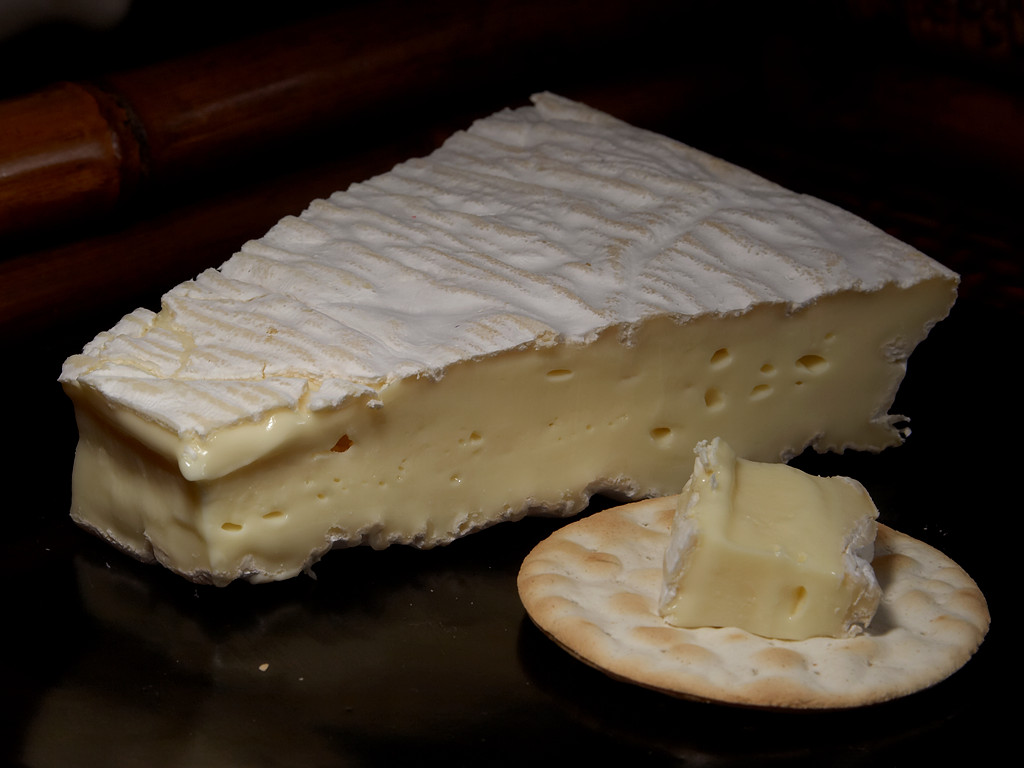
The white rind on Brie and Camembert is produced primarily by Penicillium camemberti (formerly known as P. candidum), a species that has been so extensively domesticated for cheese production that its relationship to wild relatives is phylogenetically distant. P. camemberti compared to environmental Penicillium: wild Penicillium species typically produce coloured (green, blue-green) spores—the characteristic colouring of environmental molds. P. camemberti used in commercial cheesemaking produces white or very pale spores, a trait selected during centuries of cheesemaking because white rind appearance is commercially preferred; genetic analysis shows that this depigmentation is the result of specific mutations in pigmentation pathways. P. camemberti grows to form the characteristic dense, velvety white rind of Camembert-style cheeses; its proteolytic activity breaks down casein protein from the rind inward, producing the characteristic soft, flowing texture of ripe Camembert. Secondary metabolism: unlike its wild relatives, P. camemberti has lost many of the secondary metabolite biosynthetic gene clusters that produce potentially toxic or otherwise bioactive compounds—the domestication process has selected for a biochemically ‘quieter’ organism adapted to safe food production.
Can molds in cheese make you sick?
The molds deliberately added to cheese (P. camemberti, P. roqueforti) are recognised as safe for human consumption and are not a direct health concern for the general population. However, several nuances are important. Intended cheese molds: P. camemberti and P. roqueforti have long histories of safe use and regulatory recognition as food-grade organisms; their secondary metabolites in cheese have been extensively evaluated and are not considered hazardous at typical consumption levels; some P. roqueforti strains do produce small amounts of mycotoxins (roquefortine C, mycophenolic acid) but at levels far below those of concern in the context of normal cheese consumption. Unintended mold contamination: cheese can become contaminated with unwanted mold species during production or storage; common contaminants include Aspergillus, Fusarium, Mucor, and other Penicillium species; these contaminants may produce mycotoxins at more concerning levels than the intended cheese molds. Consumer guidance: blue cheese and white-rinded cheeses should be consumed or properly wrapped and refrigerated; other varieties (cheddar, parmesan, other hard cheeses) with small spots of mold growth can have the molded area plus a 2-cm safety margin cut away if the cheese was otherwise properly stored; soft cheeses (ricotta, cottage cheese, cream cheese) with any mold growth should be entirely discarded.
What is the historical relationship between humans and cheese molds?
The deliberate use of specific molds in cheesemaking dates back thousands of years, with evidence of mold-ripened cheeses in ancient Europe, the Middle East, and Asia representing some of the oldest examples of systematic human-microbe management. Archaeological evidence: analysis of ancient cheese residues from Bronze Age Egypt (approximately 3,200 years old) found evidence suggesting blue mold presence; Roman texts describe mold-ripened cheese varieties; medieval European documents record specific cheese varieties now known to involve mold ripening. Pre-scientific knowledge: before microbiology, cheesemakers understood empirically (through observation and tradition) that specific environmental conditions, cave microenvironments, and handling practices produced consistent mold development with desirable properties; the famous caves of Roquefort-sur-Soulzon in France, where Roquefort cheese has been ripened for centuries, maintain specific microbial communities including P. roqueforti that produce consistent, characteristic results. Scientific characterisation: the systematic identification of cheese molds as Penicillium species occurred in the late 19th–early 20th century as microbiology developed; industrial production of pure P. roqueforti and P. camemberti starters for commercial cheesemaking developed through the 20th century, replacing reliance on environmental contamination with controlled inoculation.