According to THE COOL DOWN
I. The Waste Crisis and the Quest for Energy Alchemy
Food waste is a tremendous global challenge, not only consuming vast landfill space but also releasing potent greenhouse gases as it decomposes. A key solution lies in anaerobic digestion (AD), a process where an invisible army of microbes converts organic waste into usable, clean energy known as Renewable Natural Gas (RNG). This process is a foundational pillar of the circular economy, transforming discarded food scraps into pipeline-grade fuel.
However, AD systems are delicate ecosystems often prone to failure when faced with high-protein food waste. Now, a crucial discovery by researchers at the University of British Columbia (UBC) promises to stabilize and revolutionize this process: the identification of a powerful, previously unknown bacterium that thrives in extreme conditions.
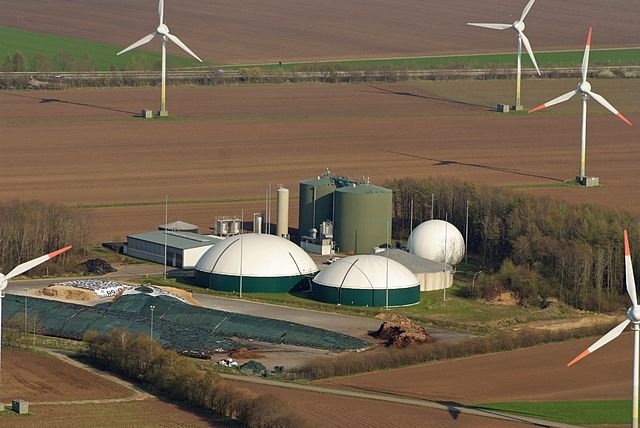
Source: Wikimedia Commons — CC BY-SA 3.0
II. Unveiling the Ammonia-Tolerant Microbe
The UBC team, led by civil engineering professor Dr. Ryan Ziels, made their breakthrough while studying microbial energy production at the Surrey Biofuel Facility, which processes over 100,000 tonnes of food waste annually. They observed a puzzling phenomenon: methane production continued smoothly even after the microbes traditionally responsible for the final stage of the process had mysteriously vanished.
The Missing Link: The researchers successfully identified a new bacterium, belonging to the Natronincolaceae family, as the critical, previously unknown player sustaining the energy flow.
The Acetic Acid Challenge: RNG production is a multi-step microbial dance. Initial bacteria break down food into simple compounds, which are then converted into organic acids, chiefly acetic acid. Methane-producing microbes then feed on this acetic acid to produce methane (CH₄). The newly discovered microbe is one of these crucial methane producers.

Source: Wikimedia Commons — CC BY-SA 4.0
III. The Breakthrough: Thriving Where Others Fail
The true game-changing quality of this new bacterium lies in its tolerance for high levels of ammonia (NH₃).
The Protein Problem: Protein-rich food waste (such as meat, dairy, or concentrated food leftovers) breaks down to produce high concentrations of ammonia.
System Failure: Excessive ammonia is toxic to most methanogenic archaea, causing them to shut down. This leads to the undesirable buildup of acetic acid, which turns the entire digester acidic, halting RNG production and requiring costly operational restarts.
The Solution: The newly identified microbe is unique because it is highly ammonia-tolerant. It continues to metabolize the acetic acid and produce methane even when ammonia levels are high, effectively insulating the AD system against the common risk of failure associated with protein-rich feedstocks.

Source: Wikimedia Commons — CC BY-SA 3.0
IV. Global Implications for Energy and Waste Management
The discovery holds profound implications for improving the reliability and efficiency of waste-to-energy systems worldwide:
- Increased RNG Output: By maintaining operational stability in high-ammonia environments, the bacterium can ensure consistent, higher yields of RNG from the same amount of food waste.
- Robust Digester Design: This insight will allow engineers to design more robust anaerobic digesters specifically capable of handling difficult, protein-rich waste streams that previous technology struggled to process efficiently.
- Environmental Benefits: Harnessing this microbe maximizes the beneficial conversion of waste, which in turn reduces methane emissions from landfills (methane is a greenhouse gas far more potent than carbon dioxide (CO₂)) and provides a cleaner, renewable energy source.
This research reinforces a compelling viewpoint: the key to solving some of our planet’s largest energy and waste crises does not always lie in complex, expensive industrial machinery, but often within the highly optimized, miniature powerhouses of the microbial world.
References
EPA. (2024). Anaerobic Digestion Basics.
NASA Climate. (2024). Why is CO₂ a Problem?
EPA GMI. (2024). The Importance of Methane.
According to THE COOL DOWN
Key Takeaways
- A novel bacterium with extraordinary enzyme production capabilities has been discovered that can break down complex organic compounds—including food processing byproducts and contaminants—more efficiently than previously known microorganisms.
- The discovery was enabled by metagenomic sequencing approaches that access bacterial genetic material directly from environmental samples, bypassing the limitation that most soil bacteria cannot be cultured in the laboratory.
- Enzyme discovery from diverse microbiomes is a major frontier in industrial biotechnology: microbial enzymes are used in food processing, textiles, detergents, biofuels, pharmaceuticals, and environmental remediation.
- The specific enzymatic capabilities of newly discovered bacteria are often characterised by expressing their genes in laboratory host organisms (E. coli or Bacillus subtilis), allowing large-scale enzyme production from a manageable lab strain.
- Food industry applications of novel microbial enzymes include: improving bread texture and volume, enhancing cheese flavour development, reducing viscosity of fruit juices, and converting food processing waste into valuable compounds.
Frequently Asked Questions
How are novel bacteria with food technology applications discovered?
The discovery of novel bacteria with valuable enzymatic capabilities has been revolutionised by metagenomic and metatranscriptomic approaches that circumvent the fundamental limitation of classical microbiology—that most environmental bacteria cannot be cultivated in the laboratory. Classical culture-based discovery: soil, food, compost, or other environment samples are plated on selective media; bacterial colonies that grow are screened for desired enzymatic activity; active strains are identified and their enzymes characterised. Effective for a small fraction of the total microbial community. Metagenomics: total DNA extracted from an environmental sample is sequenced; computational analysis identifies putative biosynthetic genes based on sequence similarity to known enzyme genes; genes of interest are synthesised and expressed in laboratory production hosts for functional characterisation. This allows discovery of enzymes from organisms that have never been cultured. Functional metagenomics: environmental DNA is cloned into expression vectors and introduced into a library host (E. coli); library clones expressing desired enzymatic activities are identified by screening in high-throughput assays. Metatranscriptomics: RNA extraction from samples captures only transcribed genes, providing information on which enzymes are actively produced in specific environments.
What makes a microbial enzyme valuable for food processing?
Industrial enzymes for food processing require a specific combination of functional and practical properties that make natural enzyme diversity—and the organisms producing them—a continuous source of discovery interest. Functional requirements: specificity—acts on the intended substrate without unwanted side reactions that affect product quality; optimal activity at processing conditions (temperature, pH, salt concentration specific to each food process); stability under processing conditions—must maintain activity through the food process duration; and the specific catalytic function needed (hydrolysis, oxidation, isomerisation, etc.). Regulatory requirements: enzymes used in food processing must be approved as safe food additives or processing aids in the jurisdictions where they are used; organisms used as production hosts must be food-grade or GRAS (Generally Recognised As Safe); proteins from novel organisms require specific safety assessments. Commercial requirements: the enzyme must be producible in sufficient quantity at cost-effective scale; this typically requires fermentation in established industrial production organisms (Aspergillus niger, Trichoderma reesei, Bacillus subtilis, or E. coli), not the original environmental organism.
What enzymes are already used in commercial food production?
Microbial enzymes are pervasive in modern food production, with the global industrial enzyme market valued at several billion dollars and food applications representing the largest segment. Baking enzymes: amylases (from Aspergillus and Bacillus species) break down starch to provide fermentable sugars for yeast and improve bread texture; xylanases improve dough handling properties and loaf volume; lipases and phospholipases improve crumb structure; proteases adjust gluten strength. Dairy enzymes: chymosin (rennet; now predominantly produced by recombinant fermentation) coagulates milk for cheese production; lipases are added to accelerate cheese ripening and develop flavour complexity; lactase converts lactose to glucose and galactose for lactose-free dairy products. Fruit and vegetable juice: pectinases break down pectin cell walls to improve juice yield and reduce viscosity; amyloglucosidases improve clarification. Brewing: amylases convert starch to fermentable sugars in beer brewing; proteases adjust foam stability; β-glucanases reduce viscosity from barley β-glucan. Starch processing: glucose isomerase converts glucose to fructose for high-fructose corn syrup production—one of the highest-volume industrial enzyme applications globally.
What food waste and sustainability applications exist for novel enzymes?
Novel microbial enzymes with potential for food waste valorisation—converting food processing byproducts into valuable compounds rather than waste—are a major research and development frontier. Specific applications under active development: lignocellulose degradation—cellulases and hemicellulases from novel organisms could improve the conversion of agricultural residues (corn stover, wheat straw, sugarcane bagasse) into fermentable sugars for biofuel or biochemical production; protein hydrolysis from food processing waste—proteases that efficiently hydrolyse complex proteins from brewery spent yeast, soybean processing residues, fish processing waste, and meat industry byproducts into valuable hydrolysates for use as flavour enhancers, nutrition supplements, or fermentation nutrients. Feather and keratin degradation: the poultry industry generates millions of tonnes of feathers annually; keratinase enzymes capable of hydrolyzing the tough keratin matrix of feathers have potential for converting this waste into protein hydrolysates for animal feed. Mycotoxin detoxification: enzymes that degrade or detoxify aflatoxins, fumonisins, and other mycotoxins in contaminated grain—transforming unsaleable contaminated grain into safe material—are under active research.
Are these bacterial enzymes safe if they get into food?
Microbial enzyme safety for food applications is evaluated through regulatory frameworks that consider the producing organism, the protein’s own properties, and the conditions of use. Safety assessment framework: first, the producing organism must be safe—either a long history of safe use (like Aspergillus oryzae in traditional fermented foods) or formal GRAS assessment; second, the enzyme protein itself must be evaluated for allergenicity (comparison with known allergen sequences, in vitro digestibility testing) and toxicology; third, the food contact conditions and likely exposure levels determine whether a food additive approval or ‘processing aid’ category designation is appropriate. Processing aid considerations: many food enzymes function during processing and are then inactivated (denatured) by heat treatment or present in such low concentrations in the final food that they are not meaningfully present in the consumed product—these can qualify as processing aids rather than food additives, simplifying regulatory requirements. Novel enzyme safety: enzymes from non-traditional organisms (bacteria from extreme environments or unusual environmental niches) require more extensive safety characterisation than those from organisms with established safe use history, but the fundamental safety evaluation framework is established and well-precedented.