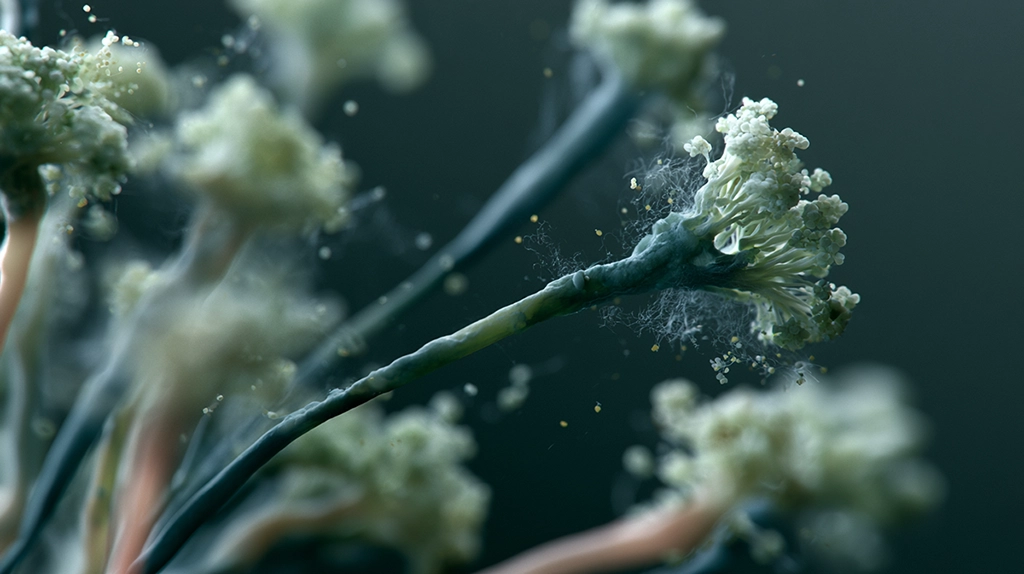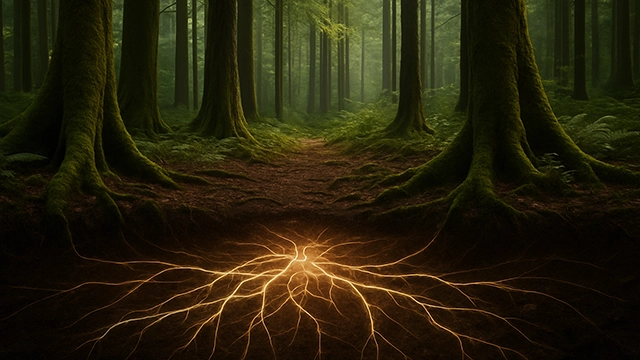
They don’t grow leaves. They don’t bask in sunlight. And unless you’re digging in the dirt, you’ll never lay eyes on them. But make no mistake—without these silent operators, Earth’s ecosystems would collapse like a ruined temple.
We’re talking about mycorrhizal fungi: microscopic powerhouses that form underground alliances with nearly every plant on Earth. And now, for the first time in history, scientists have mapped them across the globe. What they’ve found should shake the dust off every conservation plan on the planet.
A Fungal Treasure Map, 2.8 Billion Sequences Deep
In a scientific feat worthy of a fedora and whip, an international team trained machine learning algorithms on over 25,000 soil samples, decoding 2.8 billion fungal DNA sequences. Their mission: chart the strongholds of two major mycorrhizal groups—arbuscular mycorrhizal fungi and ectomycorrhizal fungi—that partner with roots to feed forests, grasslands, and crops.
The result? A first-of-its-kind global map showing exactly where these essential fungi thrive. Biodiversity hotspots. Functional strongholds. Hidden networks keeping ecosystems glued together from below.

And Here’s the Twist: We’re Not Protecting Them
The maps revealed a gut-punch of a fact: less than 10% of the world’s mycorrhizal hotspots are inside protected areas. That means the very fungal networks that regulate carbon, nitrogen, and phosphorus flows—those that keep plants fed, soils alive, and climate systems stable—are exposed. Vulnerable. Forgotten.
We’re guarding the canopy, but not the underground cathedral that holds it up.

Not Just Decomposers—These Are Ecological Engineers
Mycorrhizal fungi are more than soil sidekicks. They’re the biochemical diplomats of ecosystems—trading nutrients, shielding plants from drought, and potentially locking away carbon in the soil for centuries. In a warming, weather-whiplashed world, their services are priceless.
And yet, conservation efforts have overlooked them for decades. They weren’t pretty enough. Not visible enough. Not loud enough. Until now.

From Data to Boots-on-the-Ground Action
This isn’t just a pretty map to hang in a lab. It’s a toolkit. With these data, land managers and policymakers can:
- Target restoration zones where fungi still flourish
- Flag ecologically rich soil zones for immediate protection
- Detect shifts in fungal diversity as early warning signs of collapse
- Plan conservation like fungi matter—because they do
It’s time we updated our idea of biodiversity. The fungal frontier is open, mapped, and long overdue for a place in the spotlight.

Final Thought: This Is the Relic Worth Saving
We chase ancient bones and buried gold, but the real treasure has always been here—threaded through the soil, quietly holding life together. Mycorrhizal fungi aren’t just part of the story. They’re the root of it.
And now that we know where they are, we have no excuse not to act. Because ecosystems don’t begin above ground. They begin below it—with networks that, if protected, just might carry us into a livable future.
So here’s your map. The rest? That’s up to us.

References
- Tedersoo L. et al. (2014). Global diversity and geography of soil fungi. Science. DOI:10.1126/science.1256688
- IPCC. Climate Change and Ecosystems. IPCC
Key Takeaways
- Comprehensive global mapping of soil fungi is still in its early stages, with vast regions of the planet having essentially no soil fungal biodiversity data despite harbouring potentially millions of undescribed species.
- The Global Soil Mycobiome (GSM) consortium and related initiatives are using environmental DNA metabarcoding to systematically map soil fungal communities at unprecedented geographic resolution.
- Soil fungi are hidden architects of terrestrial ecosystems: decomposers, nutrient cyclers, plant symbionts, and carbon regulators whose activity fundamentally shapes the productivity and resilience of ecosystems above ground.
- Subtropical and tropical forest soils appear to harbour the highest soil fungal biodiversity globally, though sampling bias toward accessible temperate regions means tropical diversity is substantially undercharacterised.
- Soil fungal mapping data is increasingly used to identify biodiversity hotspots for conservation priority, predict ecosystem vulnerability to climate change, and guide ecological restoration.
Frequently Asked Questions
How are scientists mapping fungi beneath our feet?
Global soil fungal mapping relies on a combination of technologies that have dramatically advanced the field’s capabilities since 2010. Environmental DNA metabarcoding: the dominant approach; soil samples are collected from study sites, total DNA is extracted from the soil matrix, and the fungal-specific ITS (Internal Transcribed Spacer) region is amplified by PCR and sequenced on high-throughput platforms; the resulting sequences are compared against reference databases to identify fungal taxa. This approach detects fungi that cannot be cultured in the laboratory (estimated at >90% of soil fungal diversity) and generates quantitative data on community composition and relative abundance. Global sampling networks: the Earth Microbiome Project, GSMO (Global Soil Mycobiome project), and numerous national biodiversity surveys are collecting standardised soil samples from thousands of sites globally following harmonised protocols; these datasets enable continental and global-scale analyses when combined. Remote sensing integration: satellite data on vegetation type, climate, and land use is integrated with soil fungal data to extrapolate community predictions to unsampled areas. The result is increasingly detailed global maps showing how soil fungal diversity and community composition vary with climate, vegetation, soil properties, and human land use.
How many soil fungal species exist globally?
The total number of fungal species globally—and specifically soil fungal species—remains highly uncertain, reflecting both the genuine complexity of fungal diversity and the early state of systematic global sampling. Published global fungal species estimates range from 1.5 million (Hawksworth 1991 estimate, widely cited) to 3–12 million (more recent estimates accounting for tropical and cryptic diversity). Species already described formally: approximately 120,000–150,000 fungal species have been formally described and named in mycological literature. Soil-specific diversity: soil is estimated to harbour the majority of fungal diversity globally (more species and greater biomass than any other habitat), meaning soil alone may contain millions of undescribed species. The gap between described and actual diversity has been termed ‘the dark matter of mycology’—the vast undescribed component of fungal biodiversity that modern metabarcoding is beginning to reveal. Each major global soil metabarcoding study finds large fractions of sequences (often 30–60%) that do not match any described species in reference databases, quantifying this dark matter.
Which regions have the most undiscovered soil fungi?
The distribution of undescribed soil fungal diversity reflects both actual biological patterns and the strong geographic bias in sampling effort. Regions with the most undescribed diversity (most undersampled relative to likely richness): tropical forests of Central and West Africa—extremely high plant diversity (which drives fungal diversity through host specificity) combined with very limited soil biodiversity surveys; Southeast Asian tropical forests (Borneo, Sumatra, New Guinea)—similar combination of high diversity and poor sampling; Amazonian tropical forests—better sampled than Africa but still with large uncharacterised areas; tropical montane forests globally—elevational gradients often harbour high diversity through beta diversity across elevation bands, with most montane tropical systems poorly sampled. Regions better characterised: temperate forests of Europe and North America have the most intensive sampling history, reflecting the geographic distribution of professional mycologists; Australia has made substantial progress in systematic fungal mapping; boreal and arctic soils have good coverage from climate-driven research interest. The implication: the regions with the most potential biodiversity discoveries are in countries with the fewest mycological research resources—a situation that requires global research collaboration and capacity building.
What role do soil fungi play in climate regulation?
Soil fungi play multiple roles in terrestrial carbon cycling and climate regulation that make them significant components of the global climate system. Carbon sequestration: mycorrhizal fungi transfer photosynthate carbon from plant roots into stable soil organic matter as dead hyphae, associated aggregated organic material, and glomalin—a glycoprotein produced by AM fungi that constitutes a significant fraction of stable soil organic carbon globally. Saprotrophic fungi break down plant litter and woody debris, determining the rate at which this material is converted from solid carbon to CO₂ (respiration) versus stable humus; different fungal communities decompose organic matter at dramatically different rates, significantly affecting net ecosystem carbon balance. Methane cycling: fungi in wetland and rice paddy soils play complex roles in methane production and oxidation. Nitrous oxide: soil fungal denitrification contributes to N₂O production (a potent greenhouse gas); fungal contribution to soil N₂O emissions is increasingly recognised as significant. Climate feedback loops: as temperature rises, soil fungal community composition and activity rates shift; whether warming causes net acceleration of decomposition (releasing more CO₂) or stabilisation of soil carbon through different mechanisms depends on the composition of fungal communities—a major uncertainty in climate projections.
Can soil fungal maps help with conservation?
Soil fungal biodiversity maps are increasingly incorporated into conservation planning frameworks as complementary data to the plant and animal biodiversity information traditionally used. Applications in conservation: identifying soil fungal biodiversity hotspots—areas of high soil fungal species richness or endemism—to assess whether current protected area networks cover these hotspots or leave significant biodiversity unprotected; assessing ecosystem vulnerability by mapping soil fungal communities known to be sensitive to land use change, climate warming, or specific disturbances; guiding ecological restoration by identifying which fungal communities are needed for ecosystem function at specific sites and sourcing appropriate inoculants for restoration planting; monitoring conservation effectiveness—tracking changes in soil fungal community composition as metrics of ecosystem recovery following restoration or after invasive species removal. Limitations: soil fungal conservation biology is at an early methodological stage; the relationship between fungal species diversity (what maps show) and ecosystem function (what conservation protects) is complex and incompletely understood; soil fungal conservation lacks the charismatic appeal and public engagement of large animal conservation, affecting funding availability.