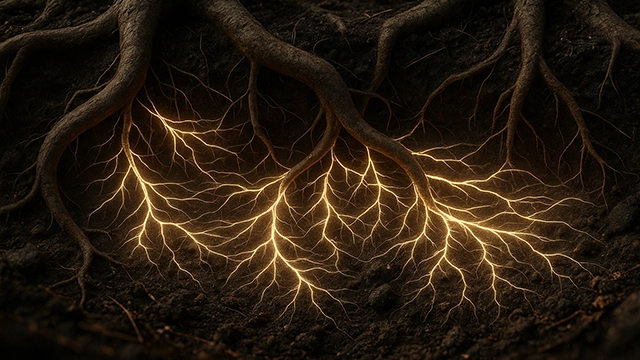
When we think of forests adapting to climate change, our minds often jump to visible signs—drought-stressed leaves, shifting tree lines, or forest fires. But a crucial part of this survival story lies underground, in the microscopic alliances between tree roots and fungi. A sweeping new study reveals just how much these invisible partners—particularly non-mycorrhizal endophytes—may shape forest resilience in a warming world.
Thousands of Trees, Thousands of Volunteers
In one of the largest citizen science efforts of its kind, over 1,000 volunteers across 20 U.S. states helped scientists gather root samples from diverse forests. The goal: map how root-associated fungi shift across temperature and rainfall gradients. Using high-resolution sequencing, the researchers zeroed in on three main fungal guilds:
- Arbuscular mycorrhizal (AM) fungi
- Ectomycorrhizal (EM) fungi
- Non-mycorrhizal endophytes (NME)
Each of these groups has a unique ecological role, and their presence or absence may determine how well trees thrive—or struggle—under pressure.
Drought-Tolerant Friends Beneath the Surface
The findings were striking. In hotter, drier regions, non-mycorrhizal endophytes—a lesser-known and poorly understood group—became increasingly dominant. Meanwhile, many ectomycorrhizal fungi declined with dryness, though some held strong in colder zones. AM fungi, on the other hand, were strongly tied to better seedling growth, especially in harsh conditions.
What does this mean? It suggests that fungal flexibility, not just tree traits, may define a species’ ability to adapt to climate extremes.

Surprise Ally: The Cladosporium Effect
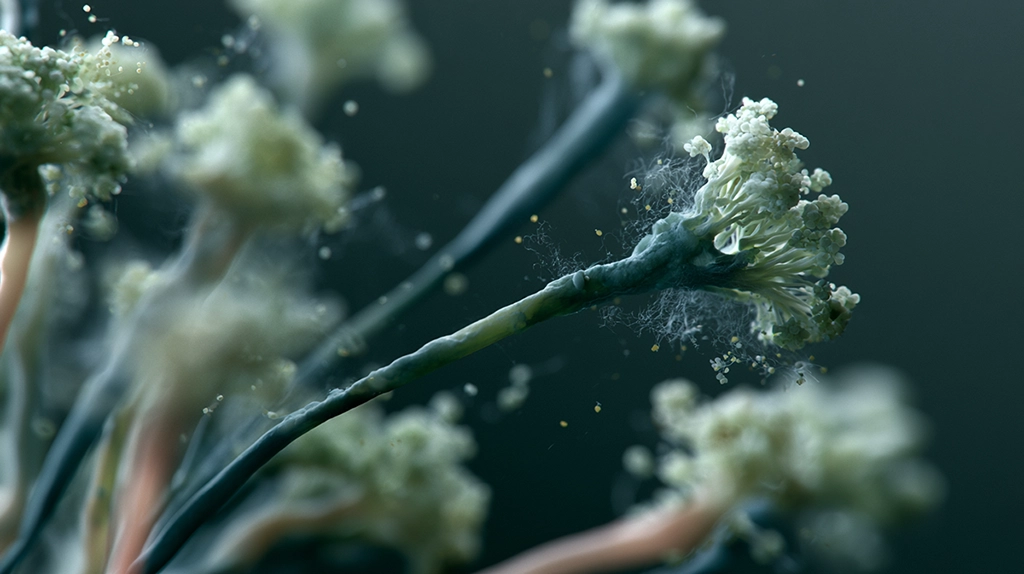
Among the many endophytes studied, one genus stood out: Cladosporium. Best known for its roles in decomposition and indoor allergies, Cladosporium was surprisingly abundant in dry, hot soils—and it appeared to boost the growth of Acer (maple) seedlings.
This opens new questions: Could certain fungal taxa act as secret weapons for tree survival in degraded or changing environments? And how many beneficial microbes have we overlooked by focusing only on mycorrhizal fungi?

A New Lens for Forest Resilience
This study reframes how we think about tree adaptation. It’s not just about bark thickness, leaf morphology, or root depth. Trees form dynamic, shifting alliances below ground—and these partnerships may evolve faster than the trees themselves. In other words, the fungi surrounding a tree may help stretch its climate limits.
As warming continues, these root-fungal relationships could become critical not only for natural forests but also for reforestation and conservation efforts.

A Takeaway That Roots Us
Forests don’t fight climate change alone. Beneath every healthy tree is a network of microscopic collaborators—some familiar, others still mysterious. The science is clear: fungi aren’t just passengers; they’re co-pilots in ecosystem resilience.
So next time you walk through a forest, remember: the most important partnerships are often the ones you can’t see.

References
Academic
- Peña, R. et al. (2017). Ectomycorrhizal fungi for survival under drought. New Phytologist. Full text
- Jumpponen, A. & Trappe, J. M. (1998). Dark septate endophytes and their roles in forest ecology. Canadian Journal of Botany. Full text
Official
Key Takeaways
- Underground mycorrhizal fungal networks connect trees and plants within forest ecosystems, enabling the transfer of carbon, water, and nutrients between organisms—sometimes called the ‘wood wide web.’
- Research shows mycorrhizal-connected trees have significantly higher survival rates during drought, pest attack, and storm damage events, as network connections allow resource sharing between healthy and stressed trees.
- Different forest types are dominated by different mycorrhizal types: ectomycorrhizal fungi (ECM) are dominant in temperate and boreal forests; arbuscular mycorrhizal fungi (AM) are most abundant in tropical forests.
- Soil disturbance from logging, agriculture, or construction severs mycorrhizal networks and can take decades to rebuild, affecting forest resilience for generations.
- Understanding mycorrhizal network ecology is increasingly applied in ecological restoration, urban forestry, and sustainable agriculture to improve plant establishment and reduce fertiliser requirements.
Frequently Asked Questions
What exactly is the ‘wood wide web’ of underground fungi?
The ‘wood wide web’ is a popular science term for the mycorrhizal fungal networks that physically connect the root systems of trees and plants within forests. Mycorrhizal fungi form symbiotic associations with plant roots: the fungus colonises root tissue and extends a vast network of thread-like hyphae through the surrounding soil, dramatically extending the plant’s effective root surface area. When the hyphal networks of adjacent trees overlap and anastomose (fuse), a physical network forms that can connect dozens or hundreds of trees across areas of forest floor. Carbon, water, nitrogen, phosphorus, and other nutrients have been demonstrated to flow through these networks between connected plants using radiotracer techniques—researchers inject carbon-14 dioxide or phosphorus-32 into one tree and detect the labelled compounds in neighbouring connected trees.
How do fungal networks help trees survive stress?
Mycorrhizal network connections contribute to tree stress resilience through several mechanisms: resource subsidisation, where a shaded or drought-stressed tree can receive carbon photosynthate from well-lit, well-watered connected neighbours; water redistribution, where hydraulic lift by deep-rooted trees transfers subsoil water upward into shallow-rooted connected plants via network hyphae; defence signal transmission, where damaged trees appear to transmit chemical stress signals (possibly including plant hormones) through network hyphae to neighbouring trees, allowing pre-emptive defence activation before herbivore arrival; and nutrient redistribution, where nitrogen and phosphorus from dying trees are redistributed to living neighbours as the dying tree’s carbon supply decreases and fungal partners seek more productive hosts.
What happens to fungal networks when forests are logged?
Industrial logging severely disrupts mycorrhizal networks in multiple ways. Clearcutting removes the photosynthetic source of carbon that supports mycorrhizal fungi—without tree partners producing sugars, fungal hyphal networks die back. Heavy machinery traffic compacts soil, physically destroying hyphal networks and reducing the pore space necessary for hyphal growth. Removal of the forest floor organic layer (slash burning or machinery scraping) eliminates the hyphal networks in leaf litter and humus. Post-logging replanting with tree seedlings grown in nursery conditions (without mycorrhizal inoculation) establishes trees with limited fungal associations that must rebuild slowly from soil spore banks. Research tracking mycorrhizal community recovery after clearcutting finds that while mycorrhizal colonisation of roots recovers relatively quickly (1–5 years), the community composition and network connectivity of old-growth-equivalent mycorrhizal communities may take decades to centuries to re-establish.
Can mycorrhizal fungi help trees in cities?
Urban trees face severe mycorrhizal network disruption compared to forest trees: soil compaction from pavement and foot traffic restricts hyphal growth and gas exchange; urban soils are often replaced with sterile fill materials containing few mycorrhizal propagules; street tree spacing and underground infrastructure (utilities, drainage) prevent network connectivity between adjacent trees; and urban soil chemistry (elevated heavy metals, pH alteration, salt from road treatment) stresses fungal communities. Research applying mycorrhizal inoculants to urban tree planting (introducing appropriate fungal species to tree roots at planting) shows significant improvements in establishment survival and growth rates, particularly for street trees in stressed conditions. Urban forestry practice is increasingly incorporating mycorrhizal inoculation in tree planting specifications for this reason.
Are mycorrhizal networks used in agriculture?
Mycorrhizal associations are increasingly important in sustainable agriculture as alternatives to synthetic phosphorus fertiliser. Most crop plants form arbuscular mycorrhizal (AM) associations naturally, and these associations dramatically reduce the plants’ dependence on soil phosphorus concentrations by extending the effective foraging range of roots. Conventional agriculture has historically suppressed mycorrhizal associations through: tillage (which destroys hyphal networks); high phosphorus fertiliser application (which reduces the plant’s incentive to invest in fungal partnerships—less carbon flows to fungi when soil phosphorus is abundant); and fungicide application. Regenerative agriculture practices—reduced tillage, cover cropping, reduced synthetic fertiliser—support mycorrhizal communities and reduce fertiliser requirements. Commercial mycorrhizal inoculant products are available for agricultural and horticultural use, though their efficacy is variable (depending on whether the soil already has adequate fungal populations) and not all products are reliably effective.