According to PEOPLE
Health officials are investigating a troubling cluster of fungal infections that has sickened 18 people and left one man fighting for his life. The outbreak, described as “mysterious” due to its unclear source and rapid spread within a small community, highlights a growing concern among infectious-disease specialists: fungal illnesses that once seemed rare or isolated are now appearing more frequently, sometimes with severe clinical outcomes.
According to preliminary reports, the critically ill patient developed life-threatening complications requiring hospitalization and intensive medical care. The remaining 17 individuals have shown varying degrees of symptoms, including respiratory distress, fever, persistent coughing, and generalized fatigue—classic signs associated with respiratory fungal infections.
Although officials have not confirmed the fungal species responsible, the clinical pattern points toward an environmental exposure rather than human-to-human transmission. This distinction is important because it suggests the outbreak may be tied to a contaminated site, disturbed soil, or an indoor structure harboring mold growth. Such scenarios are increasingly common as extreme weather, structural aging, and climate change reshape the environments where fungal spores proliferate.
From my perspective as a reporter covering mold-related public-health risks, this case underscores how easily fungal threats can go unnoticed until multiple people become ill. Fungi are quiet contaminants; they do not spread like viruses, nor do they always produce visible warning signs. Outbreaks often begin with small changes in airflow, moisture, or soil disruption—conditions that most people would not recognize as hazardous.

Source: Wikimedia Commons, CC BY-SA 3.0
Investigators Searching for the Source
Health investigators are currently tracing the activities and environments shared by the affected individuals. Early inquiries focus on:
recent construction or soil-moving activity,
possible water intrusion or structural mold in shared buildings,
exposure to contaminated dust, and
indoor environments with poor ventilation.
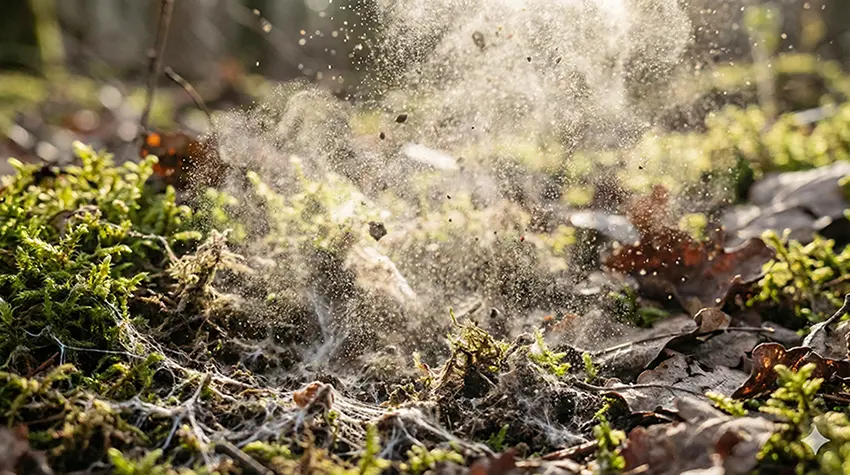
Fungal spores become especially dangerous when they are aerosolized in large quantities. Renovation projects, agricultural sites, and water-damaged buildings are common hotspots for such exposure. Without concrete identification, however, the investigation remains broad.
Officials emphasize that the outbreak does not currently pose a generalized public-health emergency, but they urge individuals experiencing respiratory symptoms to seek prompt medical evaluation—especially if they have pre-existing conditions or immunocompromised status.
Why Fungal Infections Are Becoming More Common
Experts warn that fungal diseases are rising globally for several reasons:
1. Climate Change
Warming temperatures allow environmental fungi to adapt to higher heat levels, making them more capable of surviving in the human body.
2. Increased Immunocompromised Populations
Modern medicine saves lives but also expands vulnerable populations.
3. Indoor Moisture Problems
Aging structures, humidity imbalance, and flooding create ideal mold habitats.
4. Environmental Disturbance
Construction, agriculture, and natural disasters disturb fungal reservoirs in soil.
These factors collectively create conditions where fungal infections can emerge more frequently—and sometimes more severely.

Carrollton neighborhood, Uptown.
Source: Wikimedia Commons, CC BY-SA 4.0
Symptoms and Progression in Fungal Illness
Common symptoms seen in fungal respiratory infections include:
persistent cough
shortness of breath
fever or chills
chest tightness
fatigue or weakness
The man who is currently in critical condition reportedly developed worsening breathing difficulties—a sign of deep lung involvement requiring aggressive antifungal treatment and supportive care.
Possible Fungal Culprits: What Science Suggests
Although the article does not confirm a causative species, similar outbreaks have historically involved:
Histoplasma capsulatum
Linked to soil and bird droppings.
Blastomyces dermatitidis
Associated with moist environments and decaying vegetation.
Coccidioides immitis
Spread through disturbed dry soil.
Aspergillus fumigatus
A major indoor mold pathogen.
Cryptococcus neoformans
Often found near bird-inhabited areas.
Without laboratory confirmation, the exact species remains unknown.

Source: Wikimedia Commons, CC BY-SA 2.5
My Perspective: This Outbreak Reflects a Larger Trend
Fungal outbreaks rarely make headlines, yet they demonstrate profound environmental and public-health vulnerabilities. People can walk through a contaminated area without ever seeing mold—breathing unseen spores that trigger severe respiratory illness.
Early symptoms often resemble flu or bacterial pneumonia, delaying proper diagnosis. By the time severe cases emerge, the infection may already be extensive.
This underscores the need for:
better diagnostics,
stronger clinician training,
more indoor air monitoring,
and clearer public messaging about fungal risks.
Fungal infections are not anomalies—they are a predictable outcome of environmental disruption.
Reference
According to PEOPLE
Key Takeaways
- Rare but serious disseminated fungal infections can present with non-specific systemic symptoms (fever, weight loss, fatigue) that are easily confused with bacterial infections, cancer, or autoimmune disease, leading to dangerous diagnostic delays.
- Cases of mysterious fungal infections sickening previously healthy individuals have been linked to unusual environmental exposures: cave exploration, construction site dust, bird roost disturbance, and travel to endemic regions.
- Antifungal treatment regimens for serious invasive fungal infections (typically azoles or amphotericin B) require weeks to months of therapy—substantially longer than antibacterial treatment courses.
- The gold standard for definitive diagnosis of invasive fungal infection requires culture, biopsy, or molecular testing; serological tests vary significantly in sensitivity and specificity by fungal species.
- Awareness of occupational and environmental exposures is critical for physicians evaluating febrile illness—patients should always volunteer travel history and relevant exposures when seeking care for fever of unknown origin.
Frequently Asked Questions
What types of fungal infections can affect otherwise healthy people?
While most severe invasive fungal infections occur in immunocompromised patients, several fungal species routinely cause serious infections in immunocompetent (healthy immune system) individuals through primary pathogenicity—the ability to overcome intact immune defences given sufficient infectious dose or virulence. The most clinically important include: Coccidioides immitis/posadasii (coccidioidomycosis; ‘Valley Fever’), endemic in the southwestern United States, northern Mexico, and parts of South America—inhaled spores cause a pulmonary infection that disseminates in 1–5% of healthy hosts; Histoplasma capsulatum (histoplasmosis), endemic in the Mississippi and Ohio River valleys and other regions, transmitted by disturbing soil contaminated with bird or bat droppings; Blastomyces dermatitidis (blastomycosis), endemic in north-central North America, causing pulmonary and skin disease; and Cryptococcus gattii (as opposed to C. neoformans which primarily affects immunocompromised hosts), which can cause meningitis in healthy adults.
What makes fungal infections so difficult to diagnose?
Invasive fungal infections are diagnostically challenging for multiple intersecting reasons. Symptom non-specificity: most invasive fungal infections present with fever, fatigue, weight loss, and respiratory or systemic symptoms indistinguishable from bacterial pneumonia, lymphoma, tuberculosis, or other common diagnoses—physicians unfamiliar with endemic fungi frequently do not initially consider fungal diagnosis. Slow laboratory turnaround: fungal cultures are slow-growing (days to weeks) compared to bacterial cultures (hours to days), meaning culture-based diagnosis introduces significant treatment delays. Test sensitivity limitations: serological tests (antibody and antigen detection) vary in sensitivity—Histoplasma urine antigen is relatively sensitive, but Coccidioides serology is negative in early infection, and Aspergillus galactomannan has variable sensitivity depending on patient population. Infrequency: many physicians, particularly outside endemic regions, have never seen a case and may not recognise the diagnostic possibility.
Why did one man get a severe fungal infection while others in the same exposure did not?
Variation in clinical outcomes after shared fungal exposure reflects a combination of exposure dose, individual immune status, and host genetics. Exposure dose: individuals who inhale larger quantities of spores—those working closest to a disturbed soil source, those working longer durations in a contaminated environment, or those without respiratory protection—have higher infectious burden and higher probability of severe disease. Host immune status: even within the ‘healthy’ population, there is considerable normal variation in innate and adaptive immune function. Genetic factors affecting myeloid cell function, complement activation, and T-cell responses influence susceptibility to specific fungal pathogens. Underlying conditions that may not have been diagnosed (mild diabetes, unrecognised immunodeficiency) can dramatically alter susceptibility. Interindividual variation in anatomical factors (respiratory physiology, lung structure) and mucus properties may affect alveolar deposition of inhaled particles.
How are serious fungal infections treated, and how long does treatment take?
Treatment of serious invasive fungal infections requires prolonged antifungal therapy—substantially longer than typical bacterial antibiotic courses. The choice of antifungal agent depends on the fungal species, infection severity, and patient factors. For most endemic mycoses (coccidioidomycosis, histoplasmosis, blastomycosis), mild-to-moderate infections are treated with oral itraconazole or fluconazole for 3–12 months; severe or disseminated infections may require initial treatment with intravenous amphotericin B before transitioning to oral therapy. For Aspergillus infections, voriconazole is the treatment of choice, with duration of 6–12 weeks for invasive pulmonary aspergillosis. For Cryptococcus meningitis, a three-phase regimen (induction with amphotericin B plus flucytosine, consolidation with fluconazole, followed by suppression therapy) spans months to years in immunocompromised patients. Treatment monitoring involves serial imaging and laboratory parameters to assess response.
What environmental exposures should raise concern about fungal infection?
Several environmental exposures are specifically associated with fungal infection risk and should prompt physician awareness and potentially diagnostic testing. Cave exploration (spelunking): bat guano in caves is associated with very high Histoplasma exposure—outbreaks in caving groups are well documented. Construction and excavation in endemic regions: disturbing soil in areas endemic for Coccidioides or Histoplasma releases spore clouds—construction workers are a high-incidence group. Disturbance of old bird roosts: demolishing or renovating buildings with large historical bird (especially starling and blackbird) or bat roosts releases Histoplasma-contaminated material; clusters of cases occur after building demolition. Travel to endemic regions: returning travellers from the southwestern USA, Central America, or areas endemic for rare fungi may present with infections unfamiliar to local physicians. Agricultural work in specific regions: soil contact in Coccidioides-endemic regions is a risk factor. Any physician evaluating a patient with fever of unknown origin or progressive respiratory illness should elicit a thorough exposure and travel history.