According to CARBONBRIEF
Introduction: An Underestimated Threat Grows
As the planet warms and ecosystems reorganize, a silent but potent danger is stirring in the fungal world. According to a guest article in Carbon Brief, fungi are adapting to changing climates—and that adaptation is increasingly enabling them to infect humans, crops, and ecosystems in novel ways.
While fungal infections have long occupied a niche in public health, the convergence of rising temperatures, shifting rainfall, and extreme weather is creating new opportunities for fungi to thrive. The result: expanded geographic ranges, thermotolerant strains, and mounting antifungal resistance. In short, climate change isn’t just about extra heat—it’s about empowering new disease agents hiding in plain sight.

Source: Wikimedia Commons, CC BY-SA 4.0
How Fungi Adapt: From Soil to the Human Body
Unlike many pathogens, fungi already live in the soil and environment. Most are harmless to humans, in part because they cannot grow at body temperature (roughly 37 °C). But the warming climate is pushing selective pressure: fungi that can tolerate higher temperature begin to push past that thermal barrier.
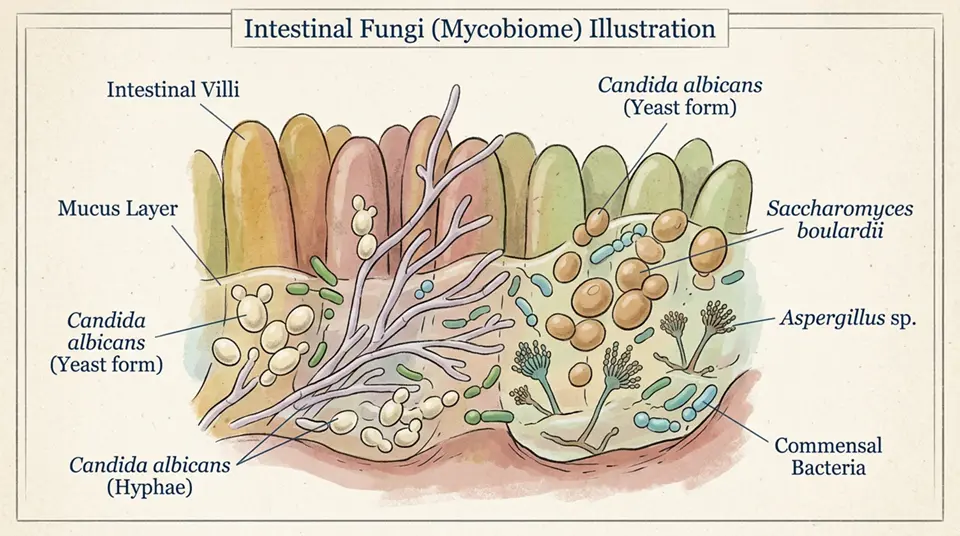
The Carbon Brief article emphasizes Candida auris as a prime example. This fungus emerged nearly simultaneously in multiple continents in the late 2000s. It resists multiple antifungal drugs and is tolerant to high temperatures. Some researchers suggest that increasing ambient heat may have selected for C. auris strains better able to survive in the human body.
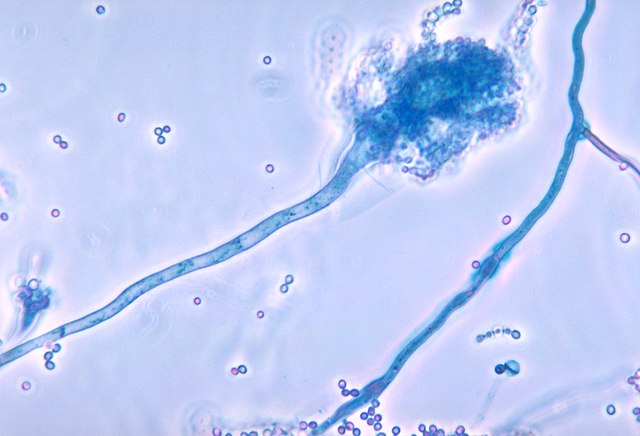
Meanwhile, the article also discusses Aspergillus fumigatus, which may expand northwards in Europe, Asia, and the Americas as climate zones shift.
What enables fungi to adapt? Their generally large genomes and flexible metabolic pathways allow them to exploit new niches, endure stress, and evolve resilience.

Source: Wikimedia Commons, CC BY 4.0
How Climate Change Expands Fungal Threats
Geographic Range Shifts
Regions once too cold for certain pathogenic fungi are now becoming viable habitats. For instance, Coccidioides, which causes Valley Fever, has already been observed in regions beyond its traditional southwestern U.S. soil domain.
Models project that Coccidioides and similar endemic fungi will spread northwards and into new territories.
Similarly, fungi like Cryptococcus gattii have made inroads into previously temperate regions, possibly aided by warming trends.
Source: Generated by AI based on CDC/USGS endemic mycoses summaries
Extreme Weather and Dispersal
Floods, wildfires, storms, and dust events act as vectors for fungal spores. Storms can aerosolize spores, spreading them over long distances. Flooding can push fungi into human habitats or damage barriers. Indoor mould outbreaks increase during periods of high humidity or storm damage.
One study cited in reviews showed clusters of mucormycosis (a dangerous fungal infection) following tornadoes, hinting at how injury plus spore exposure can cause outbreaks.

Source: Wikimedia Commons, Public Domain
Agricultural and Food Security Risks
Fungal pathogens already cause 10–23% losses in crops annually, plus further losses post-harvest due to mould.
As fungal species adapt and spread, crop disease may intensify. Monoculture systems (where all plants are genetically identical) make large-scale outbreaks easier. The banana industry’s struggle with Fusarium is one iconic example: Fusarium oxysporum wiped out the dominant Gros Michel bananas in the 1950s, forcing a shift to Cavendish variety—which now faces its own threats from evolving fungal strains.
Rising fungicide use can drive resistance, further complicating the defense of both crops and humans.

Symptoms (incipient): Wilt, foliar yellowing, vascular necrosis in pseudostem, peduncle, petioles and fruit
Location: Hawaii (Big island)
Source: Wikimedia Commons, CC BY 3.0
Antifungal Resistance & Limited Tools
Medical antifungals are far fewer in number than antibacterial drugs. Fungi and humans share greater cellular similarity, making selective toxicity harder to achieve.
Worryingly, many agrichemicals use modes of action overlapping with medical antifungals (for example, azole fungicides). Environmental exposure to these compounds can select for resistant fungal strains, which then cause harder-to-treat infections in people.
Moreover, fungal infections are underdiagnosed and underfunded. Many healthcare systems lack the infrastructure or awareness to properly detect them, especially in lower-resource settings.
Evidence from Reviews & Literature
A recent PLOS Pathogens review outlines mechanisms by which climate change affects pathogenic fungi: greater spore dispersal, niche expansion, evolving thermotolerance, and drug resistance.
Another review in The Lancet Microbe warns that natural disasters exacerbate fungal outbreaks, and that fungi are becoming more virulent as they adapt to hotter, harsher environments.
In Europe, a Thorax review argues climate change is shifting the boundaries for Candida auris, Candida orthopsilosis, Aspergillus fumigatus, and Cryptococcus deuterogattii — fungi already flagged for public health concern.
Source: Wikimedia Commons, CC BY-SA 3.0
Risks to Vulnerable Populations
The burden of fungal disease is not equally distributed. People with weakened immune systems—transplant recipients, cancer patients, those with HIV, or chronic lung disease—are at higher risk.
In areas with poor healthcare infrastructure, delayed diagnosis or misdiagnosis can turn treatable infections fatal.
Climate-driven fungal disease may further exacerbate inequalities: poorer regions often suffer more from extreme weather, have weaker healthcare systems, and less capacity to respond.

Source: Wikimedia Commons, CC BY-SA 4.0
What Needs to Be Done
Enhanced surveillance and diagnostics
— Build wastewater, environmental, and clinical fungal monitoring systems
— Train clinicians in fungal disease recognition
— Scale up laboratory capacity
Cross-sector collaboration
— Integrate agricultural, environmental, and medical antifungal use
— Regulate fungicide application to minimize cross-resistance
Research & development
— Develop new antifungal classes, vaccines, immunotherapies
— Study fungal adaptation mechanisms
— Model future distribution shifts
Public health planning
— Prepare for fungal outbreaks after disasters
— Include fungal disease in climate adaptation frameworks
— Protect vulnerable populations with better housing and healthcare
Global equity and funding
— Allocate funding comparable to viral and bacterial research
— Support low- and middle-income countries in fungal capacity building
My View: Fungi Rising, But Unnoticed
This is a wake-up call. The fungal world has been quiet, often invisible, but climate change is pulling it into the frame. While pandemics and antibiotic resistance grab headlines, fungal pathogens are evolving in parallel, slipping through our defenses.
If we fail to build awareness, diagnostics, and cross-disciplinary strategies now, we risk facing fungal epidemics that hit hardest where care is weakest. Fungi may not wield explosions or headlines, but their spread under climate pressure could quietly reshape global health—for the worse.
Recognition, preparation, and investment are overdue. In the climate era, fungi must become part of the public health conversation, not fringe footnotes.
References
Overviews & Reviews
Carbon Brief. Guest article on climate change and fungi (access overview)
Benedict, K. et al. (2023). Climate change, disasters, and fungal diseases. The Lancet Microbe.
Thorax Editorial Board (2023). Climate change and fungal pathogens in Europe. Thorax.
According to CARBONBRIEF
Key Takeaways
- Fungi are evolving in response to climate change and expanding human populations in ways that are simultaneously creating new disease threats and altering existing ecological relationships.
- Climate warming is enabling previously cold-sensitive fungal pathogens to establish in new geographic areas—Coccidioides (Valley Fever) is expanding northward in North America, and Aspergillus fumigatus’s thermal tolerance is shifting toward higher temperatures.
- Climate change-driven increases in wildfire frequency are creating vast areas of nutrient-rich, sterile ash substrates that fuel explosive growth of certain opportunistic fungi.
- The intersection of fungal evolution and human encroachment into natural habitats is increasing the frequency of novel human exposures to fungal species with which we have no co-evolutionary history.
- Antifungal-resistant fungi are emerging not just from clinical antifungal use but from agricultural fungicide application—creating a One Health resistance problem spanning farms, clinics, and ecosystems.
Frequently Asked Questions
Are fungi actually evolving faster because of climate change?
Climate change is not causing fungi to evolve faster in a genetic sense—evolutionary rates are determined by generation time and mutation rates, not temperature directly. However, climate change is intensifying selection pressure, meaning beneficial mutations spread through populations more rapidly when environmental conditions change dramatically. Specifically: warming temperatures are selecting for strains with higher thermal tolerance; changing precipitation patterns select for drought-tolerant or humidity-adapted variants; and expanding use of antifungals in both medicine and agriculture selects for resistance. The result is directional evolution that is moving fungal pathogen populations toward traits that are more problematic for human health and agriculture—a process that climate change accelerates by creating rapid, dramatic environmental shifts.
Which new geographic areas are most at risk from expanding fungal diseases?
The most significant documented and projected geographic expansions of fungal disease include: Coccidioides immitis and C. posadasii (Valley Fever) expanding northward from traditional endemic areas in the US Southwest into the Pacific Northwest, Great Plains, and potentially Canada; Histoplasma capsulatum range expanding north in the US Midwest; Cryptococcus gattii (previously restricted to tropical regions) establishing in the Pacific Northwest following an outbreak on Vancouver Island beginning in 1999; Aspergillus fumigatus thermal tolerance increasing with warming; and in agriculture, aflatoxin-producing Aspergillus species establishing in maize-growing regions of Europe previously too cool for significant contamination. Climate modelling projects continued northward and upward (into higher elevations) expansion under most emissions scenarios.
How does agricultural fungicide use drive clinical antifungal resistance?
Agricultural fungicides and medical antifungals frequently share the same molecular targets—the most significant example is azole resistance. Agricultural triazole fungicides (tebuconazole, epoxiconazole, propiconazole) are used in enormous quantities on cereal crops globally. These compounds target the same CYP51A enzyme as medical azoles (voriconazole, itraconazole). Resistance mutations in Aspergillus fumigatus—particularly the TR34/L98H mutation in CYP51A—appear to have evolved primarily in agricultural soil environments exposed to fungicide residues, then spread globally in airborne spore populations. Patients contracting azole-resistant aspergillosis may never have taken antifungal drugs—their infection was with pre-resistant environmental strains. This represents a genuine One Health resistance problem where agricultural practices drive clinical treatment failures.
What role does habitat destruction play in emerging fungal diseases?
Human encroachment into previously wild habitats creates new interfaces between people and environmental fungi with which humans have no co-evolutionary history—and therefore no prior immune exposure or resistance. Activities that amplify this risk include: construction on previously forested or desert land that disturbs soil and releases fungal spores in high concentrations; agricultural land clearing that fragments wildlife habitats and concentrates human-wildlife-soil interfaces; increased recreational access to caves (bat habitats for Histoplasma and Cryptococcus) through ecotourism; and climate-driven migration of people into geographic areas where endemic fungi occur. The AIDS pandemic’s interaction with Cryptococcus meningitis is one example of a pre-existing environmental fungus causing an emerging disease when a large human population became immunocompromised.
What can be done at a global level to address evolving fungal threats?
Addressing evolving fungal threats requires coordinated multi-level action. Surveillance: expanding global fungal disease surveillance, analogous to WHO’s influenza monitoring network, to detect emerging species and resistance patterns early. Research funding: dramatically increasing investment in antifungal drug discovery (the pipeline is thin—very few new antifungal classes are in development). Agricultural stewardship: coordinating agricultural and medical azole use at regulatory levels to reduce selection pressure for resistance. Training: improving diagnostic capacity and fungal disease awareness in healthcare systems globally, particularly in lower-income countries where mortality is highest. Biodiversity: protecting ecosystems that maintain natural fungal community balance, including supporting soil health practices that maintain diverse native fungal communities.