According to GROUND ENGINEERING
Introduction: Engineering Meets Ecology
In a rapidly warming world, the construction sector faces mounting pressure to decarbonise. Traditional infrastructure projects often rely on carbon-intensive materials—cement, steel, synthetic chemicals—resulting in heavy environmental footprints. However, researchers in the UK are pioneering a novel, nature-inspired method that could offer a greener path forward: fungal-based soil stabilisation.
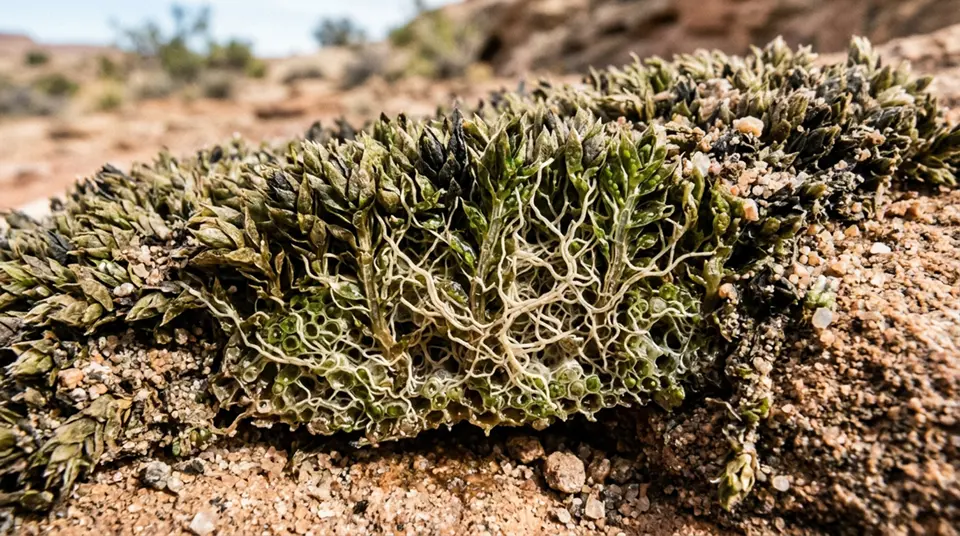
By combining fungi with plant-based biopolymers, scientists aim to strengthen soil structure in ways that mimic natural ecological processes—enhancing load-bearing capacity, reducing erosion, and simultaneously storing carbon. If successful, this biomaterial approach could become a foundation for low-carbon infrastructure worldwide.

Source: Wikimedia Commons (CC BY-SA 4.0)
The Research Behind the Innovation
The project, led by a cross-disciplinary team from institutions including the University of Strathclyde and Newcastle University, is backed by the Engineering and Physical Sciences Research Council (EPSRC). The researchers are experimenting with natural organisms and compounds to bind soil particles together, improving mechanical properties traditionally achieved using cement or chemical additives.
The approach revolves around two main components:
- Fungal Mycelium – the vegetative network of fungi, forming dense thread-like structures that naturally interlock soil particles.
- Biopolymers – plant-derived compounds such as xanthan gum or guar gum that act as natural glues or hydrogels, improving adhesion and moisture regulation.
Early findings suggest that this combination provides sufficient cohesion and compaction for use in infrastructure projects, particularly for embankments, rural roads, and other low-impact earthworks.
The Role of Fungi in Soil Engineering
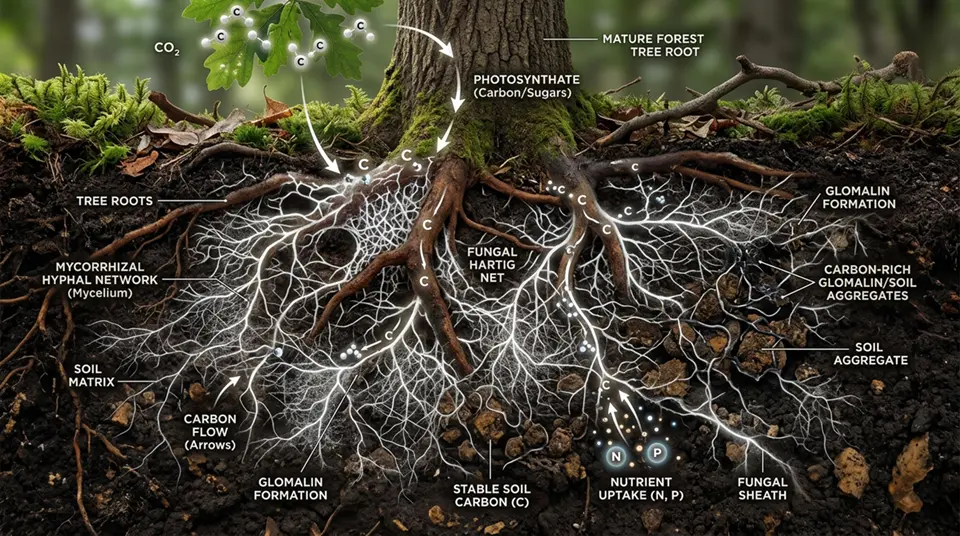
Fungi are not new to soil science. Their ecological importance in binding and nourishing soil is well-established. In natural environments, fungal hyphae play a critical role in soil aggregation, acting like thread through fabric—connecting particles and stabilising structure.
Mycelial Networks: Nature’s Reinforcement Mesh
The mycelium of Pleurotus ostreatus, commonly known as the oyster mushroom, has been chosen for its rapid growth and robust hyphal structures. It forms dense networks capable of anchoring soil in place, reducing risk of landslides or erosion.
Meanwhile, Rhizophagus irregularis, a common arbuscular mycorrhizal fungus, has shown promise in improving soil health by creating micro-aggregates, enhancing nutrient exchange, and protecting organic carbon deposits.
These fungal agents not only physically stabilise soil but chemically interact with the environment—producing enzymes and polysaccharides that further solidify surrounding particles.

Source: Wikimedia Commons (CC BY-SA 3.0)
The Biopolymer Connection
Biopolymers like xanthan gum or guar gum—derived from plant sources—are added to complement fungal activity. These substances form hydrogels in soil, retaining moisture vital for fungal growth while contributing to soil cohesion.
Laboratory tests have demonstrated that combining mycelium with biopolymers significantly enhances shear strength and erosion resistance, particularly in sandy or granular soils where stability is otherwise poor.
Importantly, unlike synthetic stabilisers, these materials biodegrade safely, enriching rather than harming surrounding ecosystems.
Addressing Carbon Emissions
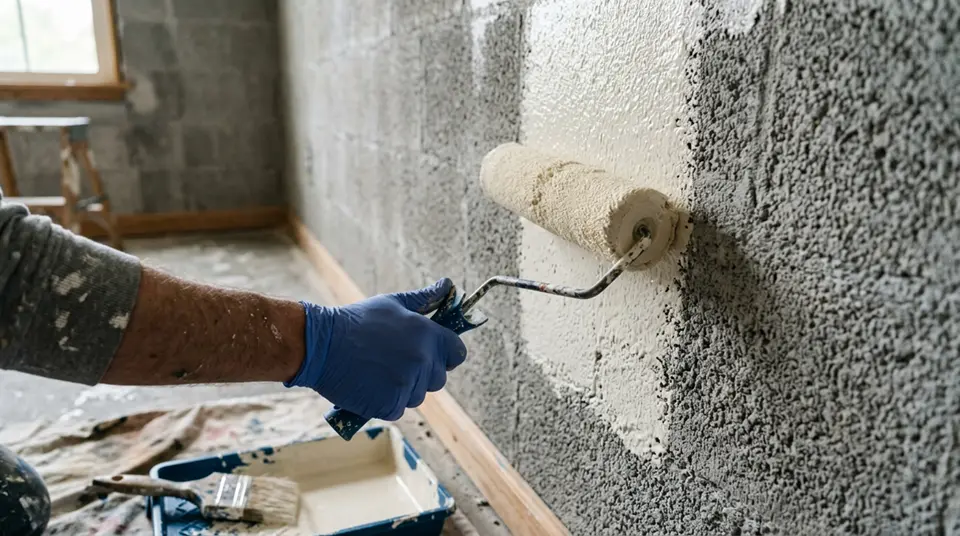
Soil stabilisation is not just a structural challenge—it is a carbon challenge. Conventional stabilisers like cement are associated with high embodied carbon, releasing CO₂ during production and application. By contrast, the fungal-biopolymer method has a carbon-negative potential in certain applications.
- Reduced Emissions: Avoiding cement, lime, or synthetic binders cuts associated CO₂ output.
- Carbon Sequestration: Fungi, through their natural metabolic processes, lock carbon into soil organic matter.
- Improved Soil Health: Promoting microbial diversity and organic content increases long-term carbon storage potential.

Source: Wikimedia Commons (Public Domain)
Early Applications and Future Potential
While still in the research phase, fungal soil stabilisation holds strong promise for:
- Rural road embankments
- Slope and dune stabilisation
- Temporary access roads
- Erosion control in flood-prone areas
- Post-industrial or contaminated land restoration
Its use could be particularly beneficial in developing regions, where material costs are high, but bio-resources like fungi and agricultural waste are abundant.
It also aligns with UN Sustainable Development Goals in climate adaptation, circular economy, and ecological restoration.
Engineering Performance and Limitations
Strength Testing
Lab experiments have measured parameters such as:
- Unconfined Compressive Strength (UCS)
- Shear Resistance
- Water Retention & Erosion Tolerance
In many cases, fungal-treated soils have reached or exceeded the required benchmarks for non-critical load applications—though they are not yet a full substitute for cement in high-load urban infrastructure like highways or foundations.
Time and Conditions
One major limitation is curing time. Fungal mycelium takes days to weeks to fully colonise a substrate. For fast-paced construction schedules, this delay may be a barrier. Additionally, fungi require specific moisture and temperature ranges to grow optimally—conditions that may be harder to maintain on some job sites.
Safety and Ecological Considerations
Using live fungi in construction raises legitimate questions:
- Biosecurity: Ensuring that fungal species are non-invasive and pose no risk to native ecosystems.
- Allergens: Avoiding species that produce airborne spores harmful to humans.
- Decomposition: Designing systems that balance biodegradability with durability.
So far, selected fungi like Pleurotus ostreatus are considered safe, widespread in nature, and well-studied. Nonetheless, long-term monitoring will be necessary as projects scale.
Industry Implications and Regulatory Gaps
Despite the growing interest, the construction sector lacks standardised protocols or regulations for bio-based stabilisation methods. Existing geotechnical codes primarily cover cementitious or chemical binders.
Adopting fungal stabilisation at scale would require:
- Revised material classifications
- Updated civil engineering guidelines
- On-site growth protocols
- Environmental assessments and risk reviews
It also demands a cultural shift—one that embraces nature-based solutions not just for aesthetics or landscape design, but for core structural performance.
Expert Perspectives
Dr. Colin Jones, professor of civil engineering at the University of Strathclyde, explains:
“Fungi have evolved over millions of years to bind and shape soil ecosystems. We’re simply borrowing that intelligence to reduce the environmental impact of the built environment.”
Meanwhile, Dr. Sarah Montgomery, a soil ecologist not involved in the project, notes:
“This approach is as much about rethinking the material logic of infrastructure as it is about replacing individual components. It blends engineering with ecology.”
My View: A Quiet Fungal Revolution
The idea of fungi stabilising embankments or roads might sound novel—even improbable. But the more we understand about mycology, the clearer it becomes: fungi are not just recyclers of organic matter—they are builders, too.
Nature already has elegant answers to many of our design problems. We just need to listen.
Fungal soil stabilisation won’t replace cement overnight, nor should it be seen as a silver bullet. But in the right contexts—with the right fungi, the right soils, and the right purpose—it might just help build a future that’s not only stronger, but significantly more sustainable.
Conclusion: The Path Forward
Fungi-based soil stabilisation represents a paradigm shift in how we think about earthworks, materials, and the carbon economy of construction. While early in its journey, this technique aligns with global trends toward green innovation, circular resource use, and climate-conscious design.
As more pilot projects emerge, and regulatory frameworks adapt, fungal soil stabilisation could become a critical tool in the infrastructure engineer’s toolkit—combining the oldest living organisms with the newest frontiers of sustainable design.
References
- Cement – Wikipedia
- Steel – Wikipedia
- Fungus – Wikipedia
- Biopolymer – Wikipedia
- University of Strathclyde
- Newcastle University
- EPSRC – UKRI
- Pleurotus ostreatus – Wikipedia
- Rhizophagus irregularis – Wikipedia
- Carbon dioxide – Wikipedia
- UN SDGs
- Unconfined Compressive Strength – Wikipedia
According to GROUND ENGINEERING
Key Takeaways
- Fungal mycelium is being tested as a soil stabilisation agent for engineering applications including slope stabilisation, erosion control, and road subgrade improvement—offering a low-carbon alternative to cement grouting.
- Mycelium binds soil particles by growing through soil pores and around particle surfaces, creating a biologically cemented matrix that significantly increases shear strength and cohesion.
- Mycelium soil stabilisation is carbon-neutral or net-negative carbon (since the organic matter used as a fungal feedstock sequesters carbon in the stabilised soil) compared to highly carbon-intensive Portland cement.
- Preliminary trials using Ganoderma and Pleurotus species in sandy soils have achieved shear strength improvements of 30–150% compared to untreated controls.
- Challenges to field deployment include the need for controlled moisture and temperature during mycelium growth, potential for decomposition of the stabilising matrix over time, and inconsistent performance in clay-rich soils.
Frequently Asked Questions
How does mycelium stabilise soil mechanically?
When fungal mycelium grows through soil, hyphal strands penetrate the pore spaces between soil particles, bridging across contacts and weaving around particle surfaces. As the mycelium develops and matures, it creates a three-dimensional network of fibres (individual hyphae are 1–20 μm in diameter) that physically enmesh soil particles. This biogenic network increases inter-particle friction and cohesion, essentially stitching the soil together similarly to how plant roots reinforce slopes but at a microscopic scale. Additionally, some fungi produce extracellular polymers (glomalin, polysaccharides) that act as biological glues, further bonding particles to hyphal surfaces.
How does mycelium stabilisation compare to traditional cement grouting?
Portland cement grouting remains the dominant approach for ground improvement in geotechnical engineering. It achieves very high strength reliably (tens of MPa compressive strength) but has major limitations: high embodied carbon (cement production produces approximately 0.9 tonnes CO₂ per tonne), permanence (cannot be biologically degraded if remediation is required later), cost, and inability to penetrate very fine-grained soils. Mycelium stabilisation offers much lower carbon impact, natural biodegradability, and potentially lower cost for raw materials—but currently achieves far lower strength values and has inconsistent performance. The technologies target different applications: mycelium stabilisation is most viable for surface erosion control and low-load applications rather than deep foundation engineering.
Which fungal species work best for soil stabilisation?
Research has tested multiple species for soil stabilisation performance. Ganoderma lucidum and G. applanatum produce very dense, hard mycelium composites and have shown good performance in sandy soil binding experiments. Pleurotus ostreatus grows rapidly and extensively, making it useful where speed of coverage is important. Trichoderma species, which are commonly used soil inoculants in agriculture, have also been evaluated. The optimal species depends significantly on soil type, climate conditions, substrate availability for fungal growth, and the intended engineering outcome (surface coverage vs. deep binding). Species selection also needs to consider local ecology—using only native fungal species reduces the risk of environmental impact from field deployment.
What applications could most benefit from mycelium soil stabilisation?
Most viable near-term applications include: temporary erosion control on construction sites and disturbed land (where biodegradability is an advantage rather than a limitation); slope stabilisation for low-load applications in restoration contexts; stabilisation of earthen archaeological sites or embankments where chemical grouting would be invasive; dust suppression on unpaved roads in arid environments; and shoreline or riverbank stabilisation where the biodegradable and ecologically benign nature of mycelium offers environmental advantages over concrete revetments or rock armour. Emergency stabilisation of landslide debris or earthquake-disturbed ground is a more speculative but potentially high-impact application.
What are the current barriers to commercial deployment of mycelium soil stabilisation?
Several technical and commercial barriers must be overcome before mycelium soil stabilisation can be widely deployed. Performance consistency: fungal growth rates and the resulting strength gains are sensitive to soil moisture, temperature, and chemical conditions—achieving consistent specification compliance across variable field conditions remains challenging. Longevity: once the fungal substrate is exhausted, mycelium may decompose, potentially losing stabilisation benefit over months to years depending on soil conditions. Scale-up: producing sufficient fungal inoculum to treat large areas and developing practical field application methods (spray application, injection) are engineering challenges. Regulatory acceptance: building codes and geotechnical design standards have no framework for biological ground improvement, requiring extensive testing and demonstration before designers can specify it with confidence.