
According to ELPAIS
In a Softly Lit Dutch Lab, Buildings Begin to Breathe
In a softly lit lab in the Netherlands, molecular biologist Han Wösten holds up a sponge-textured block. It looks organic, familiar, almost alive. But this is no garden sponge—it is one of the early building components of tomorrow: a block grown from fungal networks, integrating living systems into architecture.
Wösten and his collaborators across Europe are working under a bold vision: buildings that are alive. Their project, Fungateria, is seeking to create engineered living materials (ELMs) by merging fungal mycelium with bacteria. The resulting structures aim to grow, sense, repair, adapt—and even degrade at end-of-life. In short, architecture as a living organism.
Why Living Materials Matter Now
Traditional construction exacts a heavy toll on the planet. The extraction of raw materials, the production of concrete and plastics, and demolition waste together contribute significantly to greenhouse-gas emissions and landfill burdens. The construction sector, particularly in Europe, drives a large share of that impact.
By contrast, fungal composites can be grown from agricultural waste—straw, husks, plant residues—turning by-products into building elements. These ELMs could reduce waste, cut embodied carbon, and usher in structures that heal and respond to their surroundings.
Moreover, living materials blur the line between nature and built form. Architect Phil Ayres of CITA – Royal Danish Academy, coordinating Fungateria’s design direction, speaks of shifting from static materials to structures in continuous change—organisms that evolve with their environment.

Source: Wikimedia Commons, CC BY-SA 4.0
The Science Behind Fungal Buildings
Mycelium + Bacteria = Living Composite
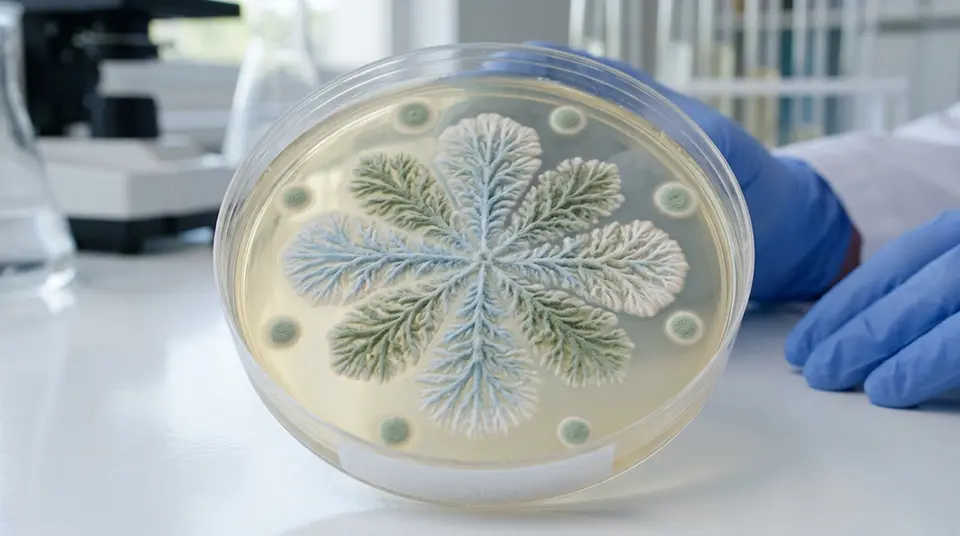
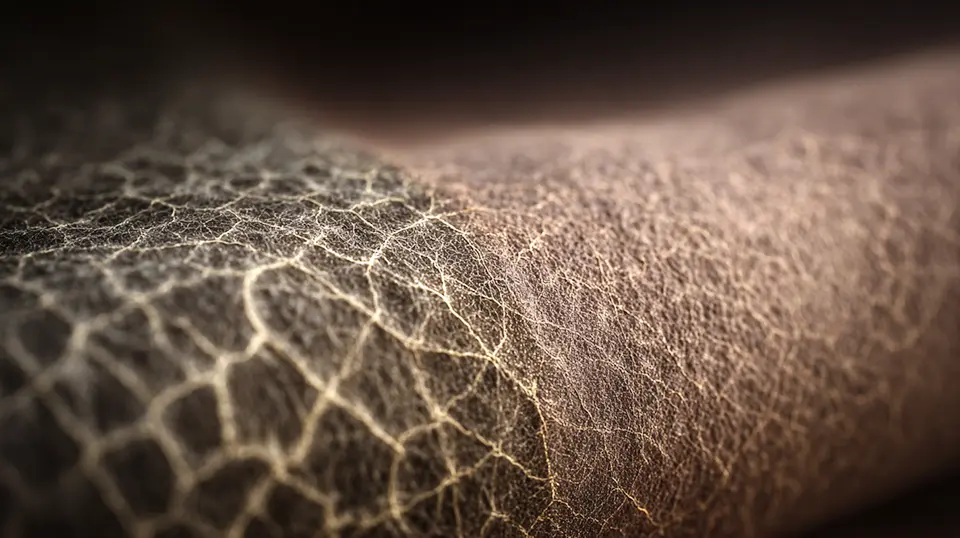
At the core is the mycelium, the network of fungal threads (hyphae) that in nature decompose wood and litter. Wösten’s team cultivates the mycelium of Schizophyllum commune—a split-gill fungus—using agricultural waste as substrate. The growing hyphae bind the substrate into a lightweight composite.
To control this living system, the project pairs the fungus with bacterial partners. These bacteria feed the fungus certain nutrients and, when removed or altered, can halt growth. In some designs, bacteria are engineered to release antifungal compounds on command—biological off-switches built into the material.
Environmental signals—light, temperature, humidity—also cue growth or dormancy. By combining biological and environmental controls, researchers hope to make materials that behave predictably and safely.
Self-Repair, Sensing, and Adaptation
One of the magical promises of living materials is self-repair. Suppose a micro-crack forms in a wall; living mycelium could respond by extending hyphae into the crack, sealing it with fungal biomass or biominerals. Over time, the structure heals itself.
Even sensing is possible: living materials might detect moisture changes, chemical signatures, or mechanical stress and adapt accordingly. Future systems could regulate humidity, absorb CO₂, or neutralize pollutants.
Already, the team has shown that their composites can survive stressors such as drought and elevated temperature—key for real-world durability.
Prototypes, Progress & Future Vision
While fully living buildings remain aspirational, the project has produced tangible prototypes:
- Blocks and panels grown from fungal composites
- Insulation elements tested for thermal conductivity
- Bio-architectural installations displayed at events like the Venice Biennale to engage the public
- Hybrid experiments combining mycelium panels with wooden or 3D-printed frames, envisioning fungi growing into and around supports
Wösten is optimistic: “Ten years from now, we should have the first fungal buildings.”
The EU Horizon Europe-funded project runs through 2026, aiming to scale production, refine safety controls, and integrate living composites into pilot structures.

Source: Wikimedia Commons, CC BY-SA 4.0
Challenges & Risks
This visionary approach faces formidable hurdles:
- Durability & resilience: Can living composites resist fire, pests, UV, moisture, and mechanical stress over decades?
- Containment: Growth must be tightly controlled so material does not invade structural wood or other components.
- Building codes & standards: Current regulations assume inert materials—codes must evolve to address living systems.
- Public perception: Many equate fungi with mold or decay. Distinguishing beneficial mycelium from harmful mold is both social and educational work.
- Scalability & cost: Biological growth is slower and less uniform than industrial manufacturing. Scaling while ensuring consistency remains a challenge.
My Take: Architecture as Living Ecosystem
This project feels less like a futuristic dream and more like a paradigm shift. If buildings become alive—not just passive boxes—we must rethink architecture itself: as ecology, medium, and process, not merely enclosure.
Caution is warranted: living systems can misbehave. Questions about containment, safety, and long-term stability are real. But the vision is bold—to pivot from extraction and waste toward growth, regeneration, and symbiosis.
We may be approaching a moment where architecture, biology, and material science converge. In that world, a wall might not just hold up a roof—it might heal itself, breathe, sense its surroundings, and integrate with the living world.
References
- Horizon Europe Project – Fungateria (2022–2026).
- Wösten, H.A.B., Utrecht University Microbiology Group. “Fungal materials for sustainable construction.” Journal of Fungi (2024).
- Ayres, P. et al., CITA – Royal Danish Academy. “Architectural agency of living materials.” Nature Materials (2023).
- ELMs Consortium Report, Engineered Living Materials White Paper, European Commission (2024).
- Carbon Brief. “How climate change and biotech are converging in materials science.” (2024).
- The Royal Society Interface. “Mycelium composites: self-healing bio-materials.” (2022).
According to ELPAIS
Key Takeaways
- In a softly lit lab in the Netherlands, molecular biologist Han Wösten holds up a sponge-textured block.
- Wösten and his collaborators across Europe are working under a bold vision: buildings that are alive.
- The resulting structures aim to grow, sense, repair, adapt—and even degrade at end-of-life.
- The construction sector, particularly in Europe, drives a large share of that impact.
- These ELMs could reduce waste, cut embodied carbon, and usher in structures that heal and respond to their surroundings.
Frequently Asked Questions
What should you know about in a Softly Lit Dutch Lab, Buildings Begin to Breathe?
In a softly lit lab in the Netherlands, molecular biologist Han Wösten holds up a sponge-textured block. It looks organic, familiar, almost alive. But this is no garden sponge—it is one of the early building components of tomorrow: a block grown from fungal networks, integrating living systems into
Why Living Materials Matter Now?
Traditional construction exacts a heavy toll on the planet. The extraction of raw materials, the production of concrete and plastics, and demolition waste together contribute significantly to greenhouse-gas emissions and landfill burdens. The construction sector, particularly in Europe, drives a lar
What should you know about the Science Behind Fungal Buildings?
At the core is the mycelium, the network of fungal threads (hyphae) that in nature decompose wood and litter. Wösten’s team cultivates the mycelium of Schizophyllum commune—a split-gill fungus—using agricultural waste as substrate. The growing hyphae bind the substrate into a lightweight composite.
What should you know about mycelium + Bacteria = Living Composite?
At the core is the mycelium, the network of fungal threads (hyphae) that in nature decompose wood and litter. Wösten’s team cultivates the mycelium of Schizophyllum commune—a split-gill fungus—using agricultural waste as substrate. The growing hyphae bind the substrate into a lightweight composite.
What should you know about self-Repair, Sensing, and Adaptation?
One of the magical promises of living materials is self-repair. Suppose a micro-crack forms in a wall; living mycelium could respond by extending hyphae into the crack, sealing it with fungal biomass or biominerals. Over time, the structure heals itself.