According to VINEPAIR
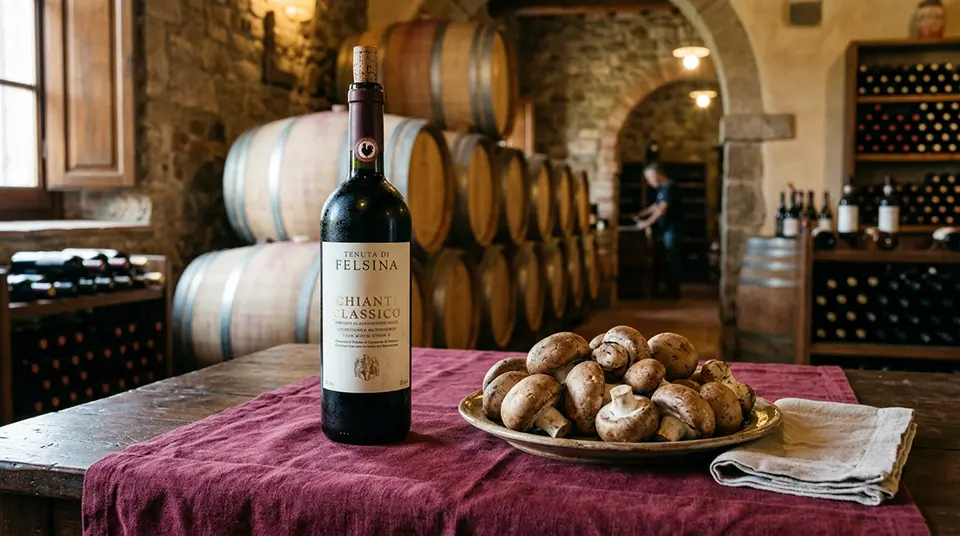
Mushrooms are increasingly appearing in beverages, but their role in alcoholic drinks is shifting away from wellness claims. Winemakers and distillers are exploring fungi primarily for their earthy aromas, savory depth, and umami flavor, offering consumers an alternative to conventional fruit-forward wines and spirits.
At Va La Vineyards in Avondale, Pennsylvania, mushrooms influence wine indirectly through the surrounding agricultural environment. Winemaker Anthony Vietri comes from a family that grew mushrooms for 50 years, and mushroom farming remains active near his vineyard — the region around Kennett Square is often called the mushroom capital of the United States. Visitors often describe Va La’s wines as earthy or mushroom-like, a characteristic the vineyard now includes in its regional story, with some of its field blends drawing directly from the black mushroom soils found in the center of the property.

Nearby mushroom compost releases heat as organic material decomposes. When that heat combines with moisture, it creates a thick, musty fog that Vietri calls the “smelly ghost.” He suspects the fog may have helped Nebbiolo, a difficult Italian grape variety, adapt to Pennsylvania. Nebbiolo is traditionally associated with the foggy valleys of Piedmont, and its name is commonly connected to the Italian word “nebbia,” meaning fog. As Vietri put it, Nebbiolo “is planted all over the world and it fails everywhere… it loves this soil, it loves [the manure-induced phantasm].”
The theory has not been scientifically confirmed, but it demonstrates how neighboring agriculture may contribute to local terroir. Vietri also uses massal selection, propagating vines that perform well under local conditions. This approach allows the vineyard to preserve variations adapted to its soil, climate, and mushroom-producing surroundings.
Other producers add mushrooms directly to spirits. Isolation Proof in New York’s Catskills uses shiitake, maitake, and chaga in its Mushroom Gin. Shiitake contributes a recognizable mushroom flavor, maitake adds earthy and buttery notes, and chaga provides a golden color. The mushrooms are most noticeable in the aroma, while the palate carries a restrained oxidative character and lingering umami.

Extraction remains challenging. Isolation Proof founder Jake Sherry found that early distillation trials produced an undesirable cooked flavor, while maceration preserved a more natural mushroom character. Morgan McLachlan of Amass Botanics reported similar difficulties, noting that some experiments produced flavors resembling soil.
Amass previously used reishi and lion’s mane in its botanical gin but later replaced them with porcini following increased regulatory scrutiny of functional mushrooms in alcoholic beverages. The change was intended to preserve the spirit’s flavor while addressing regulatory concerns — notably, distillation’s heat destroys most of the bioactive compounds associated with adaptogens like reishi and lion’s mane regardless, meaning McLachlan says these mushrooms were functioning as flavor ingredients in the gin rather than delivering measurable functional benefit.
These examples highlight an important distinction: extracting mushroom flavor is different from obtaining functional compounds. A mushroom gin may offer earthy aromas without providing the quantities associated with supplements or wellness products. In wine and spirits, fungi are therefore most valuable as culinary ingredients and expressions of place.
Although wellness trends helped introduce mushrooms to wider audiences, flavor may give them a more lasting role in alcoholic beverages — the U.S. mushroom-beverage market, spanning coffees, teas, and both alcoholic and non-alcoholic ready-to-drink cocktails, was estimated at $3.7 million in 2023, with a projected annual growth rate of 6.7 percent through 2030. From mushroom compost surrounding grapevines to umami-rich gin, fungi are creating new opportunities for producers interested in savory complexity and regional identity.
References
According to VINEPAIR