According to Fox4news
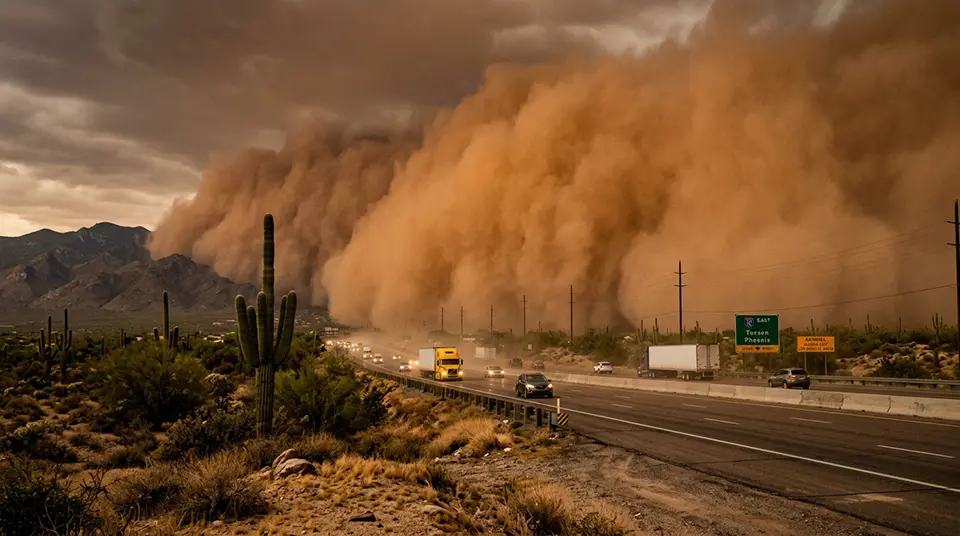
Health officials are warning that powerful dust storms across the southwestern United States may significantly increase exposure to Coccidioides, the soil-dwelling fungus responsible for Valley fever (coccidioidomycosis). As dry conditions, prolonged drought, and strong winds become more frequent, large quantities of dust containing fungal spores can become airborne and travel long distances. Experts emphasize that while most people exposed to these spores do not develop severe illness, certain individuals—including older adults, pregnant women, immunocompromised patients, and people with chronic medical conditions—face a higher risk of serious infection. The warning highlights the growing importance of environmental fungal diseases as changing climate conditions influence human exposure.

Valley fever is caused by inhaling microscopic spores of Coccidioides immitis or Coccidioides posadasii, fungi naturally found in arid and semi-arid soils throughout parts of Arizona, California, New Mexico, Texas, Nevada, Utah, and neighboring regions, including south-central Washington. Soil disturbance caused by dust storms, construction, agriculture, earthquakes, or excavation can release large numbers of spores into the air. Once inhaled, the spores transform into fungal structures within the lungs, where they may cause respiratory illness. Most infections remain mild or asymptomatic, but some individuals experience fever, persistent cough, chest pain, fatigue, and pneumonia-like symptoms that can last for weeks or months. In a small percentage of patients, particularly those with weakened immune systems, the infection may spread beyond the lungs to the skin, bones, joints, or central nervous system. Case counts illustrate the scale of the recent increase: Arizona reported a record 14,680 cases in 2024, up from 9,148 in 2023, while California had already logged at least 2,197 cases by mid-2026, approaching its full-year 2025 total of 2,996.

Spherule and endospore forms of Coccidioides immitis are present.
Medical experts note that Valley fever is frequently underdiagnosed because its symptoms closely resemble influenza, bacterial pneumonia, or other respiratory infections. Delayed diagnosis may postpone appropriate antifungal treatment and contribute to prolonged illness. According to infectious disease specialists, increased awareness among healthcare providers is particularly important following major dust events, especially when patients have recently traveled to or reside in endemic regions. Although antifungal medications are available for moderate to severe infections, early laboratory testing remains essential because antibacterial drugs are ineffective against fungal diseases. Researchers continue to monitor the geographic expansion of Coccidioides as warming temperatures, prolonged drought, and changing rainfall patterns may alter the distribution of suitable environmental habitats — climate modeling has projected that under a high-warming scenario, the endemic region could expand from 12 to 17 states by 2100, pushing north into states including Idaho, Wyoming, Montana, Nebraska, and the Dakotas, with total case numbers potentially rising by 50 percent.

Public health agencies recommend reducing exposure to airborne dust whenever possible during severe dust storms. Individuals living in affected areas are advised to remain indoors, close windows and doors, use high-efficiency air filtration systems when available, and wear properly fitted N95 respirators if outdoor exposure cannot be avoided. Construction workers, agricultural workers, military personnel, and others who frequently disturb soil may require additional protective measures because of repeated occupational exposure — the CDC has documented Coccidioides outbreaks among wildland firefighters as recently as 2021, reflecting the substantial quantities of disturbed soil dust inhaled during fire suppression work. Scientists emphasize that while dust storms do not guarantee fungal infection, they increase the likelihood of inhaling airborne spores in endemic regions. Continued surveillance, environmental monitoring, and public education will be essential for improving early diagnosis and reducing the health burden associated with Valley fever as environmental conditions continue to evolve.
References
According to Fox4news