According to LIVERPOOLECHO
Mold developing inside wardrobes is a common household problem that often goes unnoticed until clothing, shoes, or wooden shelving begin showing visible signs of fungal growth or musty odors. Cleaning expert Chantel Mila, widely known as Mama Mila, has shared a simple household method that uses uncooked rice and lemon essential oil to help reduce moisture inside enclosed storage spaces. A Melbourne mother-of-two who began posting cleaning content during COVID lockdowns and has since built a following of over 1.6 million and authored two books, Mila has previously shared mould-removal tips for the home on her social channels. While the approach is intended as a low-cost alternative to commercial moisture absorbers, experts emphasize that preventing mold ultimately depends on controlling humidity and improving ventilation rather than relying solely on odor-control methods.

Wardrobes and cupboards provide favorable conditions for mold because they are enclosed spaces with limited airflow. During colder seasons, warm indoor air can condense on cooler interior surfaces, increasing humidity inside closets. Storing damp clothing, shoes, towels, or other textiles before they are fully dry further raises moisture levels, allowing naturally occurring airborne mold spores to colonize fabrics, leather, wood, cardboard, and shelving. Once fungal colonies become established, they may release microbial volatile organic compounds (MVOCs), producing the characteristic musty odor commonly associated with mold-contaminated wardrobes. If left unmanaged, spores can spread to additional stored items and become increasingly difficult to remove.
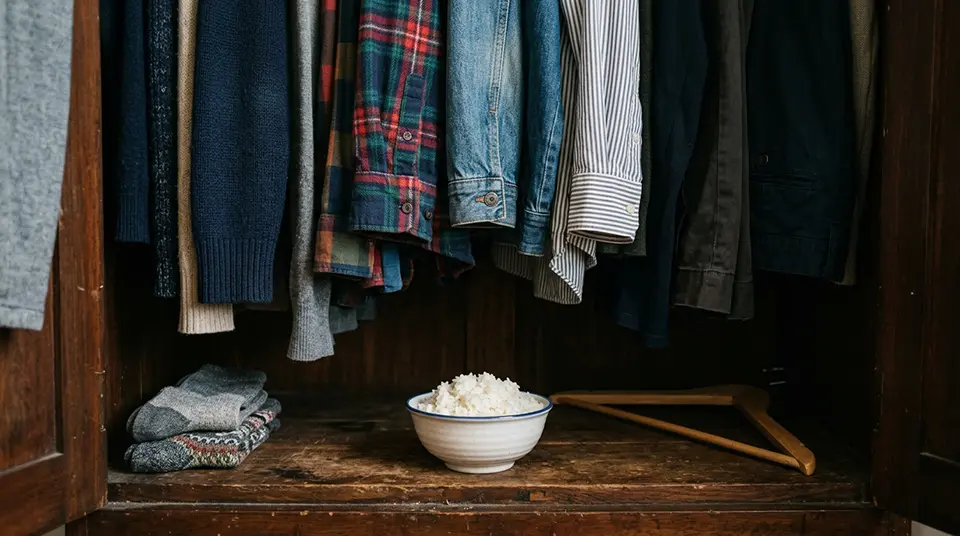
The suggested household method involves placing uncooked rice inside a breathable fabric or drawstring bag and adding several drops of lemon essential oil before positioning the bag inside wardrobes or cupboards. Rice acts as a natural desiccant, absorbing limited amounts of moisture from the surrounding air, while the essential oil helps provide a fresher scent that may reduce unpleasant odors. According to cleaning professionals, this approach can be useful for small enclosed spaces with relatively low humidity and may remain effective for approximately two to three months before the rice should be replaced, particularly if it begins to clump together after absorbing moisture. However, experts note that rice has a much lower moisture-absorbing capacity than purpose-built dehumidifiers or commercial desiccant products and should be viewed as a supplementary measure rather than a complete solution for significant dampness.

Building and indoor air quality specialists stress that persistent wardrobe mold usually indicates an underlying moisture problem that requires attention. Improving airflow by avoiding overcrowded storage, leaving wardrobe doors open periodically, moving furniture slightly away from exterior walls, maintaining indoor relative humidity below recommended levels, and promptly repairing water leaks remain the most effective long-term prevention strategies. If visible mold repeatedly returns despite cleaning or moisture-control efforts, homeowners should investigate possible hidden condensation, insulation defects, or plumbing leaks.

Although small household mold problems can often be managed safely, individuals with allergies, asthma, or weakened immune systems may be more sensitive to prolonged mold exposure. Experts therefore recommend addressing the root cause of moisture rather than relying solely on odor-masking techniques to maintain healthier indoor storage conditions.
References
U.S. EPA. A Brief Guide to Mold, Moisture and Your Home.
U.S. EPA. Mold Course Chapter 2: Moisture, Mold and Buildings.
According to LIVERPOOLECHO