According to UBC
I. The Pyrophilous Pioneers: Life on Charred Earth
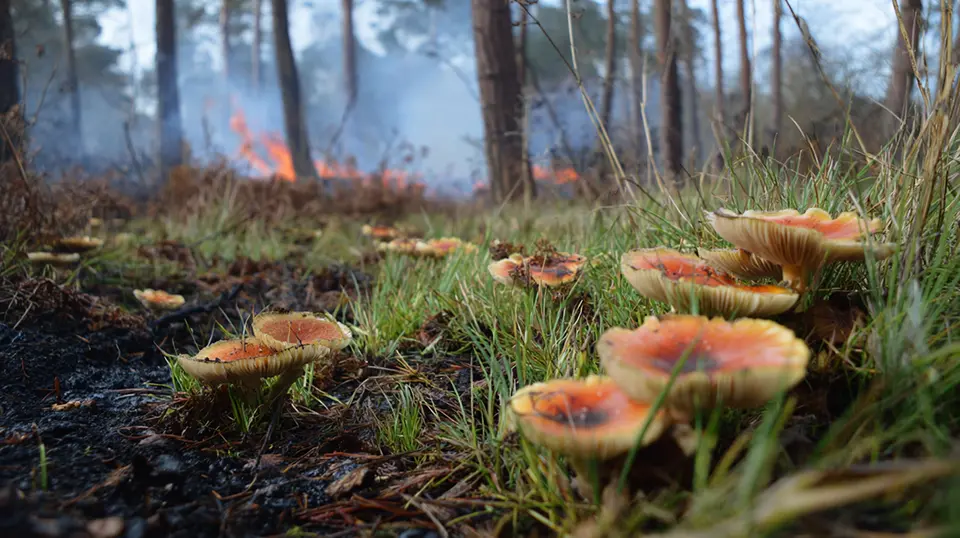
As British Columbia faces increasingly severe and frequent wildfire seasons, a critical question for ecologists is how these vast, scorched landscapes can possibly recover. The answer, according to new research from the University of British Columbia (UBC), lies beneath the ash, in a specialized group of organisms known as pyrophilous fungi—literally, “fire-loving fungi.”
UBC researcher Dr. Monika Fischer, an Assistant Professor, is studying these remarkable organisms that not only survive intense heat but actually thrive in the aftermath of a burn. Unlike the typical fungi found in mature forests, these species are post-fire specialists. Once the fall rains return, these fungal pioneers emerge within weeks, transforming the stark, blackened ground into a canvas of surprising color.

Source: Wikimedia Commons, CC BY-SA 3.0
II. Nature’s Restoration Crew: Stabilizing and Cleaning the Soil
Dr. Fischer’s research highlights the vital and multi-faceted ecological roles these fungi play in kickstarting forest regeneration. They are, in essence, nature’s emergency restoration crew, tasked with fixing the immediate damage caused by the fire:
Erosion Control and Water Management
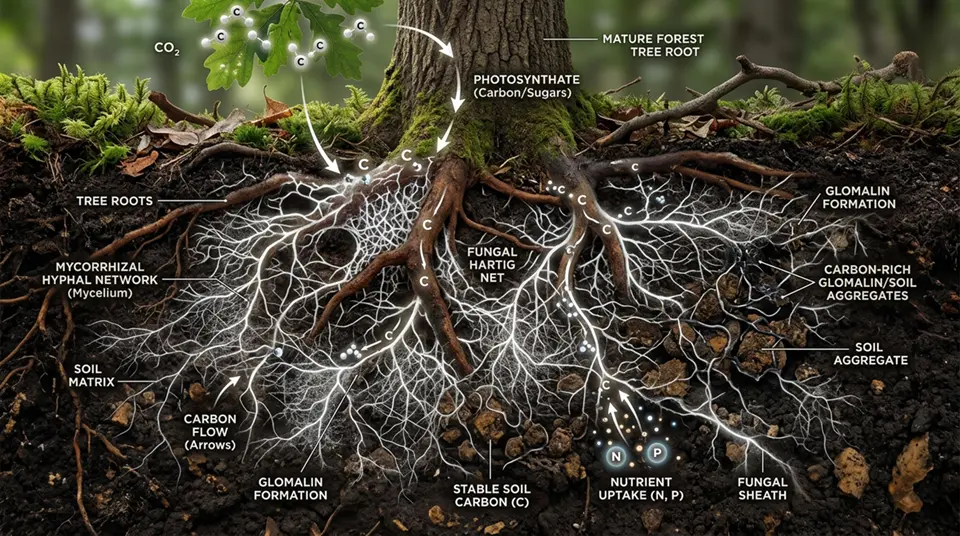
The intense heat of a wildfire can often leave soil water-repellent (hydrophobic), leading to rapid runoff and severe erosion. The thread-like structures of the fungi, known as hyphae, rapidly grow and bind the soil together. This action prevents soil loss and allows precious rainwater and fire suppression water to soak into the ground, a critical step for future plant life.

Source: Wikimedia Commons, CC BY-SA 4.0
Restarting Nutrient Cycles
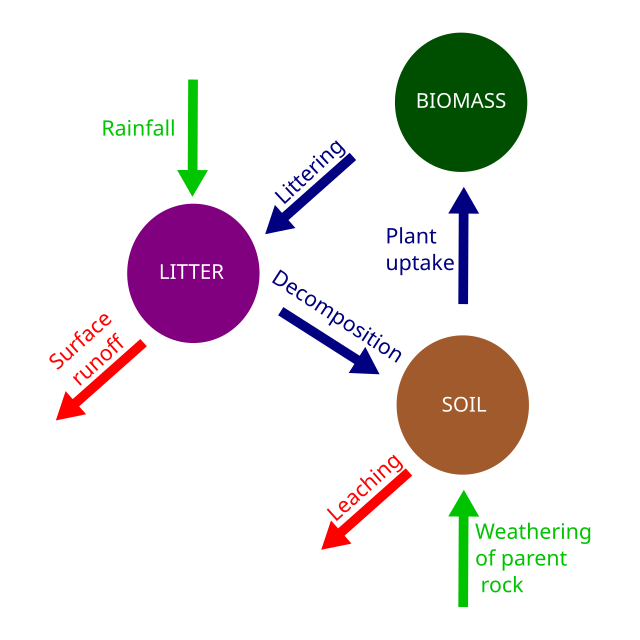
Fires consume organic matter and lock nutrients within charcoal. Pyrophilous fungi, such as Pyronema and Neurospora, are experts at breaking down this charcoal and carbon, effectively restarting the essential nutrient cycling that is vital for new plant growth. They act as saprophytes, restoring nutrients to the depleted soil.
Source: Wikimedia Commons, CC BY-SA 4.0
Pollutant Remediation
Remarkably, some species possess the ability to digest tough chemical pollutants in the soil—a process akin to mycoremediation—helping to clean and restore the landscape as they rebuild the microbial foundation.
III. The Post-Fire Rainbow: Fungal Diversity on Display
These specialized fungi often belong to the Ascomycota group and are distinguished by their tiny, cup-shaped fruiting bodies, which provide a rare splash of color in an otherwise monochrome environment.
Vibrant Species
Dr. Fischer’s observations in B.C.’s burn zones have documented a colorful array of these organisms:
- Pyronema: Creates a distinctive neon orange crust.
- Geopyxis: Forms brown cups with bright white rims.
- Peziza: Adds small splashes of purple to the charred ground.
These fungi often emerge quickly, particularly in moist areas like near creeks or where fire suppression was used, sometimes showing up within weeks. Certain species, like the studied Neurospora, appear rapidly and then vanish, having completed their initial, rapid groundwork for recovery.
IV. Global Patterns and Future Implications
Further studies suggest that this phenomenon is not unique to British Columbia. Dr. Fischer’s research on fire sites in California showed that the same genera, such as Pyronema and Anthracobia, consistently appear after fires, regardless of the ecosystem type. This indicates a universal ecological mechanism where a small, specialized group of fungi is crucial to post-fire recovery worldwide.
The research emphasizes that these overlooked fungi may be critical in enhancing the conditions for the germination and growth of new trees and plants. Ecologists and forest managers are now considering whether restoration activities should avoid or delay actions that disturb the ground too heavily in the early post-fire phase, ensuring the critical work of these natural fungal allies is not disrupted.
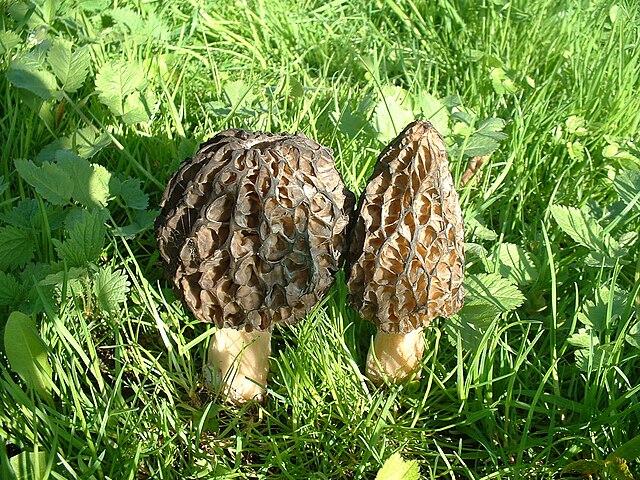
The more well-known example of a fire-loving fungus is the highly prized edible morel (Morchella), which often fruits abundantly in the spring following a burn, symbolizing the return of life and the economic potential hidden within this natural recovery process.
Source: Wikimedia Commons, CC BY-SA 3.0
References
- US Forest Service (2022). “Hydrophobic Soils after Wildfire.” RMRS-GTR-292.
- Mycoremediation – Wikipedia.
According to UBC
Key Takeaways
- University of British Columbia (UBC) researchers have identified fire-loving (pyrophilic) fungi that preferentially colonise and fruit in recently burned forest ecosystems, exploiting post-fire conditions unavailable to most species.
- Post-fire environments provide unique conditions for specialist fungi: elevated soil pH from ash deposition, reduced fungal competition, heat-transformed organic matter, and specific volatile compounds from burned wood.
- The most famous pyrophilic fungi are morel mushrooms (Morchella species), which fruit abundantly in the first spring after forest fires—driving both scientific interest and commercial foraging activity.
- Fire-adapted fungi play a critical ecological role in post-fire forest recovery by initiating decomposition cycles and re-establishing mycorrhizal networks that facilitate tree seedling establishment.
- Climate change is increasing fire frequency and intensity in western Canadian and Pacific Northwest forests, altering succession dynamics and creating both opportunities and challenges for fire-adapted fungal communities.
Frequently Asked Questions
What are pyrophilic fungi and how do they adapt to fire environments?
Pyrophilic fungi (from Greek ‘pyro’ = fire, ‘philic’ = loving) are species that preferentially fruit or colonise habitats in the period immediately following fire. True pyrophilous species—those that fruit almost exclusively post-fire—include certain morel species (Morchella tomentosa, M. importuna in some regions), Pholiota highlandensis, Rhizina undulata (a pathogen of conifer seedlings in burned areas), and various cup fungi (Pyronema domesticum, Anthracobia species). Their adaptations include the ability to detect fire-associated chemical signals such as ethylene, karrikin (a compound from burned plant matter), and specific smoke compounds that trigger germination and fruiting, as well as spore heat tolerance that allows survival through moderate fire temperatures.
Why do morel mushrooms appear after forest fires?
Morel mushrooms (Morchella species) have evolved complex ecological relationships with fire that are still not fully understood. The most widely accepted explanation involves the mass death of ectomycorrhizal fungi and forest trees in burned areas: as trees die, the mycorrhizal fungi they hosted shift from living plant tissue to decomposing dead root matter, and some evidence suggests this transition triggers fruiting. Morels may also respond to karrikins—butenolide compounds produced by burning plant material that have been shown to stimulate germination and growth in fire-adapted plants and may play a similar role in fungi. The reduced competition from other fungi in ash-covered soil and the elevated mineral nutrients from ash may also contribute.
Is post-fire morel foraging sustainable?
Commercial morel foraging following large forest fires has expanded significantly in western North America. The ecological sustainability of this foraging is debated. Heavy harvesting before spore release (the commercial preference for fresh, unopened caps) could theoretically reduce local morel reproduction in subsequent years. However, morels reproduce by spores that disperse widely and also through mycelial networks that persist in soil, so the impact of any single harvest event may be limited. More significant sustainability concerns include: foragers starting new fires in forests adjacent to burned areas; vehicle traffic and trampling in sensitive post-fire soils; and competition between commercial harvesters and traditional Indigenous harvesters with established use rights.
What role do fungi play in forest recovery after fire?
Fungi are among the first colonisers of burned forest ecosystems and play multiple critical roles in post-fire recovery. Early-succession saprotrophic fungi initiate decomposition of the enormous amounts of charred organic matter (biochar) and burned woody debris created by fire. Mycorrhizal fungi re-establish networks that facilitate seedling establishment and nutrient access in nutrient-poor ash soils—burned areas adjacent to unburned forest regenerate mycorrhizal networks faster as spores and mycelium recolonise from unburned refugia. Pioneer mycorrhizal species often differ from the climax forest mycorrhizal community, representing a succession from early-coloniser to late-climax fungal assemblages that parallels plant succession over decades.
How is climate change affecting fire-adapted fungal communities in western Canada?
Climate change is fundamentally altering fire regimes in western Canadian forests: larger fires, longer fire seasons, increased crown fire severity, and fire return intervals shortening from the historical 50–200 years to potentially 10–30 years in some areas. For fire-adapted fungi, these changes have complex implications. More frequent fire may benefit pyrophilic specialists in the short term by creating more post-fire habitat. However, more severe fires that destroy deeper soil layers and organic material may impair mycorrhizal fungal survival and slowing post-fire regeneration of forest ecosystems. The compression of fire return intervals below the recovery time for mature forest may ultimately reduce the diversity of both plant and fungal communities in repeatedly burned landscapes.