According to REAL SIMPLE
I. The Expiration Date Illusion: A Guide to Safety vs. Quality
The dates stamped on food packaging—often labeled “Sell By”, “Best By,” or “Use By”—frequently trigger confusion and contribute massively to household food waste. These labels are primarily indicators of peak quality, not absolute indicators of food safety.
For many products, discarding food immediately after the date passes means throwing away perfectly good, safe-to-eat items.
A growing consensus among food safety experts is that consumers must move beyond strict date adherence and learn to trust their senses and understand the difference between a decline in quality and a genuine risk of microbial danger.
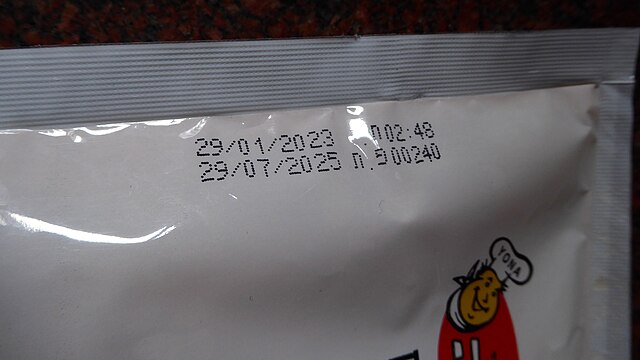
Source: Wikimedia Commons, CC BY-SA 4.0
II. The Green Light: Foods Safe to Consume After the Date
Several common household staples, due to their inherent composition or processing methods, remain safe long after the printed date—provided proper storage and absence of visible mold or foul odors.
Shelf-Stable and Pantry Items
Dry Pasta and Rice
When stored in airtight containers away from moisture and pests, dry pasta and uncooked rice can remain safe to eat virtually indefinitely. Their extremely low moisture content prevents microbial growth.
Brown rice contains oils that may eventually turn rancid.
Dry Beans and Lentils
Similar to rice, dry beans and lentils are safe indefinitely, though older beans take longer to cook.
Canned Foods
Canned goods are sealed and sterilized through commercial sterility, making them safe years past the “Best By” date as long as the can is undented, unbulging, and unrusted.
Sugar and Salt
These natural preservatives—sugar and salt—never expire when stored dry.
Vinegar and Vanilla Extract
Due to high acidity or alcohol content, vinegar and vanilla extract remain safe indefinitely.
Dairy and Refrigerated Items
Eggs
Eggs are often safe 3–5 weeks after purchase if they pass the float test (fresh eggs sink; spoiled ones float).
Hard Cheese
Hard cheeses like Cheddar and Parmesan resist spoilage due to low moisture.
If surface mold appears, trim at least 1 inch around it.
Yogurt and Milk
Yogurt and milk may remain safe for days past the date if they lack curdling, sour smell, or texture changes.

Source: Wikimedia Commons, CC BY-SA 4.0
III. The Red Flag: Foods Where the Date is Critical
For certain high-risk foods, expiration dates must be taken seriously. These items can harbor pathogenic bacteria such as Listeria monocytogenes, Salmonella, or E. coli, often without visible signs.
Deli Meats and Luncheon Meats
Highly prone to Listeria contamination, making date adherence essential.
Pre-Cut Fruits and Vegetables
Broken cell walls accelerate spoilage and microbial growth.
Soft Cheeses
Soft cheeses like Ricotta and Cottage cheese are high in moisture.
If mold appears, discard the entire container.

Source: Wikimedia Commons, CC BY-SA 4.0
IV. The Expert Viewpoint: Trust Your Senses, Not Just the Stamp
The definitive rule of food safety is simple:
“When in doubt, throw it out.”
Food safety experts emphasize:
Smell Test
If a product smells sour, putrid, or “off,” discard it.
Visual Test
Look for:
- mold (fungal growth)
- slime
- discoloration
- swelling packaging (gas from bacteria)
Storage Matters
Food longevity depends heavily on proper storage:
airtight containers, dry environment, cold refrigeration, and minimal cross-contamination.
References
- Centers for Disease Control and Prevention (CDC).
Listeria – Food Safety Risks. - USDA Shelf-Stable Food Safety Guide.
According to REAL SIMPLE
Key Takeaways
- ‘Best by,’ ‘use by,’ and ‘sell by’ dates indicate peak quality rather than safety thresholds for most food categories—except for infant formula (safety) and certain ready-to-eat deli meats.
- Mold contamination on food typically occurs well within labeled date windows if storage conditions are poor; date labels are not a reliable mold safety indicator.
- Visible mold on soft foods (bread, soft cheese, fruit, yogurt, cooked meat) indicates the food should be discarded entirely—mold roots penetrate far beyond the visible surface.
- Hard cheeses, firm vegetables, and firm fruits with isolated mold spots can often be salvaged by cutting away a 2.5 cm (1 inch) margin around and below the mold.
- The USDA FoodKeeper App provides science-based guidance on safe storage durations by product type and storage method.
Frequently Asked Questions
What is the difference between ‘best by,’ ‘use by,’ and ‘sell by’ dates?
‘Sell by’ dates are primarily for retailers and indicate how long to display the product; the food is typically safe to consume for a period after this date if stored properly. ‘Best by’ or ‘best before’ dates indicate when the manufacturer believes the product will be at peak quality (flavour, texture, nutrition); the product is often still safe after this date but may have declined in quality. ‘Use by’ dates are the closest to safety guidance—products labelled ‘use by’ are at greatest risk of quality or safety decline after the date listed. Only infant formula carries a ‘use by’ date with a genuine safety implication that should always be respected.
Which moldy foods can be salvaged, and which should be thrown away?
The USDA provides clear guidance: hard cheeses (cheddar, parmesan, gouda), firm fruits and vegetables (carrots, cabbage, bell peppers), and salamis and hard sausages with surface mold can have the mold cut away with a 1-inch margin and the remainder safely consumed. These foods have low water activity that limits mold penetration. Foods that should be discarded entirely if any mold appears include: soft cheeses (brie, camembert, cottage cheese, cream cheese); soft fruits (berries, peaches, tomatoes); bread and baked goods; yogurt and sour cream; cooked meat, poultry, and fish; casseroles and pasta dishes; and peanut butter—in these moist or porous foods, mold toxins can spread invisibly throughout.
Are mycotoxins from food mold dangerous?
Mycotoxins—toxic secondary metabolites produced by certain mold species—are a genuine health concern in food, though primarily in grains and nuts rather than typical household food mold scenarios. The most significant food mycotoxins are aflatoxins (produced by Aspergillus flavus and A. parasiticus on corn, peanuts, tree nuts, and dried spices) which are classified as Group 1 carcinogens; fumonisins (on corn); and ochratoxin A (on coffee, dried fruit, cereals). The visible household molds on bread or fruit (typically Penicillium, Botrytis, or Rhizopus species) produce fewer dangerous mycotoxins but may still produce compounds with mild toxicity—which is why the USDA recommends discarding, not trimming, moldy bread.
How should different food types be stored to minimise mold risk?
Key storage principles include: keep refrigerator temperature at 4°C (40°F) or below and freezer at -18°C (0°F); store bread in cool, dry conditions—refrigeration extends shelf life but may affect texture, while freezing is ideal for long storage; keep fruits and vegetables dry (moisture on surfaces accelerates mold); store hard cheeses wrapped in wax paper or parchment (not plastic wrap, which can cause sweating) and change the wrapping periodically; store nuts and nut butters in the refrigerator after opening if keeping longer than 3 months; and inspect produce regularly and remove any items showing mold immediately to prevent spread to adjacent items.
What causes food to mold faster than expected before its date?
Several factors cause food to mold prematurely: temperature abuse (leaving food at room temperature for extended periods, or refrigerator temperature above 4°C); high humidity within the storage environment (moisture condenses on food surfaces from produce packed while damp, or from refrigerator humidity imbalance); cross-contamination from other moldy items in close proximity; packaging damage that introduces oxygen and ambient mold spores; and inadequate acidity—many preserved foods rely on low pH to inhibit mold, and products where the acid/salt/sugar concentration has been reduced for health reasons may have shorter effective shelf life than their conventional counterparts.