According to TIMES ENTERTAINMENT
Introduction: Beauty That Kills
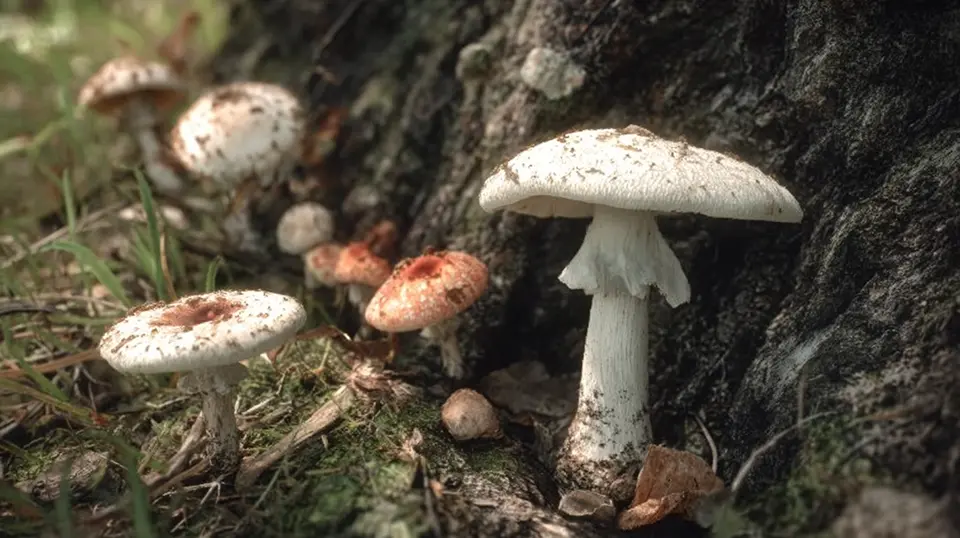
It’s pale, delicate, and almost inviting. Nestled under trees and rising after rainfall, the Death Cap mushroom looks like something out of a fairytale. But it’s anything but magical. Scientifically known as Amanita phalloides, this seemingly harmless fungus is one of the deadliest organisms on Earth—responsible for the majority of fatal mushroom poisonings globally.
In many parts of the world, Death Cap mushrooms grow alongside edible varieties, sharing similar shapes and colors. For the untrained eye, it’s an easy mistake with irreversible consequences. A single cap—about the size of a coin—is enough to kill an adult human.
As the popularity of wild foraging grows, so too does the risk. This article explores what makes Amanita phalloides so uniquely dangerous, how it acts on the human body, why it’s so often misidentified, and what the world is doing to protect people from this fatal fungus.

Source: Wikimedia Commons, CC BY-SA 3.0
Section 1: What Is the Death Cap Mushroom?
The Death Cap is a member of the Amanita genus—a family of mushrooms known for their extreme toxicity. Native to Europe, it has since spread to North America, Asia, and Australia, often thriving under oak, beech, and other hardwood trees.
Physical Characteristics:
- Cap: Greenish to yellowish in color, smooth, up to 6 inches wide
- Gills: White, free from the stem
- Stem: White, often with a ring (annulus)
- Volva: A sac-like base that distinguishes many Amanita species
It resembles several edible mushrooms, including paddy straw mushrooms (Volvariella volvacea) in Asia and Caesar’s mushrooms (Amanita caesarea) in Europe, which is what makes it so deceptively dangerous.
Section 2: The Lethal Chemistry Inside
The main toxins in the Death Cap are amatoxins, particularly alpha-amanitin. These molecules are exceptionally stable—resisting heat from cooking, drying, and even digestion.
Once ingested, amatoxins target the liver and kidneys, binding to RNA polymerase II, an enzyme essential for cell function. Without it, cells can’t produce proteins, and vital organs begin to shut down.
Lethal Dose:
Just 0.1 mg of alpha-amanitin per kg of body weight can be fatal. A single mushroom can contain up to 15 mg, making even small amounts deadly.
There is no widely available antidote, though treatments like silibinin (from milk thistle) and liver transplants have saved lives in some cases.
Section 3: Symptoms and Delayed Danger
What makes Death Cap poisoning particularly cruel is its delayed symptom onset. Victims often feel fine for several hours—sometimes up to 12—before the first signs appear.
Stages of Poisoning:
- Latent Phase (6–12 hours): No symptoms; toxins are silently damaging organs.
- Gastrointestinal Phase (6–24 hours): Vomiting, severe diarrhea, abdominal pain. Dehydration and electrolyte imbalance set in.
- Apparent Recovery (1–2 days): Symptoms improve temporarily, lulling victims and doctors into false hope.
- Liver Failure (3–5 days): Jaundice, internal bleeding, seizures, coma.
- Death (4–7 days): Often from multi-organ failure or brain swelling due to liver toxicity.
Prompt hospitalization is critical, but even then, survival is uncertain.

Source: Wikimedia Commons, CC BY-SA 4.0
Section 4: Global Cases and Fatal Outcomes
Europe has seen the most documented fatalities, particularly in countries with a strong mushroom-foraging culture like Poland, Italy, and France. However, as Amanita phalloides spreads globally, Australia, India, and the United States are seeing increased incidents.
Notable Cases:
- In California (2023), a family of four required liver transplants after mistaking Death Caps for edible mushrooms during a foraging trip.
- In New Delhi (2021), two street food vendors died after using locally foraged mushrooms in a curry dish.
- In Victoria, Australia, repeated public health warnings followed multiple hospitalizations.
Despite warnings, misidentification remains common—especially when mushrooms are picked without guidance or cooked into food shared communally, making multiple poisonings from one meal tragically frequent.
Section 5: Why Do People Keep Eating Death Caps?
The reasons vary, but several common themes emerge:
- Foraging culture: In many cultures, foraging is a tradition passed through generations, often without formal education on fungal taxonomy.
- Language barriers: Refugees or immigrants from tropical regions may confuse local toxic species with edible ones from their home countries.
- Mushroom misidentification: Death Caps look remarkably similar to safe mushrooms, especially when young.
- Internet misinformation: Online foraging guides are sometimes incomplete or inaccurate, leading to confusion.
Section 6: The Rise of Foraging and the Risk of Trend
Foraging has experienced a renaissance—fueled by movements toward sustainability, organic eating, and plant-based living. Influencers, chefs, and nature lovers are increasingly promoting wild food as “cleaner,” “closer to nature,” and even spiritually fulfilling.
While there is beauty in reconnecting with nature, the risk of untrained foraging is immense, especially with species like Amanita phalloides lurking in similar habitats.
Without expert guidance, the difference between a gourmet meal and a fatal error can be heartbreakingly thin.

Source: Wikimedia Commons, CC BY-SA 4.0
Section 7: Preventive Education and What to Do
How to Stay Safe:
- Never forage mushrooms unless trained by a qualified mycologist.
- Avoid mushrooms with white gills, a ring, and a volva.
- Use multiple identification sources—books, apps, and experts.
- When in doubt, throw it out.
If You Suspect Poisoning:
- Seek medical attention immediately.
- Do not wait for symptoms.
- Bring a sample of the mushroom (uncooked) for identification.
Time is critical—hospital treatments are more effective early on.
Section 8: My View – A Fungus That Teaches Humility
As someone who has followed food culture, wildcrafting trends, and ecological science for years, the Death Cap represents something more than a poisonous mushroom. It is a lesson in humility. In a world that encourages us to “go natural” and “eat wild,” Amanita phalloides reminds us that nature does not exist solely for human use—and it doesn’t forgive mistakes easily.
The mushroom is not evil. It is simply doing what it has evolved to do—spread, survive, and protect itself. The danger lies in our ignorance, our arrogance, and our romanticization of nature without understanding it.
As we push for sustainable lifestyles, plant-based diets, and wild food trends, we must also push for science-based education, caution, and respect for ecosystems. A beautiful green cap under a tree may be alluring—but it could be your last meal.
Conclusion: A Fungus Worth Fearing, and Understanding
Amanita phalloides is not just another mushroom. It is the deadliest fungus in the world—stealthy, persistent, and unforgiving. As long as people venture into forests and fields to gather wild food, the risk remains.
But this risk can be mitigated. With education, regulation, and respect, we can reduce deaths and raise awareness. Whether you’re a curious forager or a passionate foodie, let the Death Cap serve as a warning: in the world of mushrooms, knowledge isn’t optional—it’s survival.

Source: Wikimedia Commons, CC BY-SA 4.0
References
- CDC – Mushroom Poisoning Outbreaks
- Wikipedia – Amanita phalloides
- Wikipedia – Amatoxin
- Wikipedia – Alpha-Amanitin
- Wikipedia – Silibinin
- Wikipedia – Mycology
- WHO – Food Safety
According to TIMES ENTERTAINMENT
Key Takeaways
- The death cap mushroom (Amanita phalloides) is responsible for approximately 90% of fatal mushroom poisonings worldwide and can be lethal in doses as small as half a cap.
- Death caps have no reliable distinguishing visual feature for untrained observers—they can closely resemble edible species including paddy straw mushrooms (Volvariella volvacea), a confusion that has caused fatal poisonings among Asian immigrant communities in Western countries.
- Amatoxins (alpha-amanitin and beta-amanitin) are the primary toxic compounds; they block RNA polymerase II, halting protein synthesis in liver and kidney cells, causing delayed-onset multi-organ failure.
- The latency period of 6–24 hours between ingestion and first symptoms is one of death cap’s most dangerous characteristics—by the time symptoms appear, a lethal dose of amatoxin has typically been absorbed.
- A promising treatment, silibinin (milk thistle extract), given intravenously within 96 hours of ingestion, has significantly improved survival rates in European clinical trials and is now used as a standard treatment in several countries.
Frequently Asked Questions
How do amatoxins kill, and why is the death cap so lethal?
Amatoxins (primarily alpha-amanitin) are bicyclic peptides that bind with extremely high affinity to RNA polymerase II—the enzyme responsible for transcribing DNA into messenger RNA in eukaryotic cells. By blocking this enzyme, amatoxins halt protein synthesis in every cell that absorbs them. The liver bears the greatest amatoxin load because it is the primary detoxification organ and processes amatoxins through enterohepatic circulation (amatoxins are excreted in bile, reabsorbed in the intestine, and recirculate through the liver multiple times). Progressive hepatocellular necrosis leads to acute liver failure 4–8 days after ingestion. Without liver transplantation, death rates in untreated cases approach 30%.
What does a death cap mushroom look like, and how can I avoid it?
Amanita phalloides typically has a pale green, olive-green, or whitish cap (5–15 cm diameter), white gills, a white ring (annulus) on the stipe, and a distinctive white cup-like volva at the base where the stem emerges from the soil. The volva is diagnostic but may be partially buried—always check the base of any mushroom carefully. The most dangerous lookalike confusion involves paddy straw mushrooms (Volvariella volvacea), which are commonly eaten across East Asia and may be dried and sold commercially; their button stage can resemble a young death cap. The safest rule: never eat any foraged mushroom without confident identification by a trained mycologist or experienced forager.
What should I do if I think I or someone else has eaten a death cap?
Seek emergency medical care immediately—do not wait for symptoms to develop. The 6–24 hour symptom-free period is misleading; amatoxin absorption continues during this window and treatment is most effective when initiated before organ damage occurs. Bring a sample or photograph of the mushroom consumed if possible. Treatment in hospital may include activated charcoal (if ingestion was recent), IV hydration, and silibinin (if available). The National Poison Control Center (US: 1-800-222-1222) provides immediate expert guidance. Early referral to a liver transplant centre is appropriate for confirmed cases even before liver damage is apparent.
Are death caps native to North America, or were they introduced?
Amanita phalloides is native to Europe and was introduced to North America via the roots of imported European trees—particularly cork oaks and other nursery-stock deciduous trees. It is now established on both North American coasts, with documented populations throughout California (particularly the San Francisco Bay Area, where it colonises live oaks and introduced European trees) and in New England and the Mid-Atlantic. It continues to expand its North American range as infected nursery trees are planted and the fungus colonises local host trees. Australia has also experienced death cap introductions via European tree imports.
What is silibinin and how does it treat death cap poisoning?
Silibinin is the major active component of silymarin, a flavonoid extracted from milk thistle (Silybum marianum). It has been used as a liver-protective herb for centuries. Research beginning in the 1970s in Germany identified that intravenous silibinin significantly improves survival in Amanita phalloides poisoning by two mechanisms: it competitively inhibits the organic anion-transporting polypeptide (OATP1B1/1B3) uptake transporters in liver cells that facilitate amatoxin entry—blocking further cellular poisoning; and it has direct antioxidant and anti-inflammatory effects that protect liver cells. Silibinin (as Legalon SIL) is approved for IV use in several European countries and has been used under compassionate use protocols in the US and Australia.