According to UF NEWS
I. The Silent Spread of a Beloved Fungus
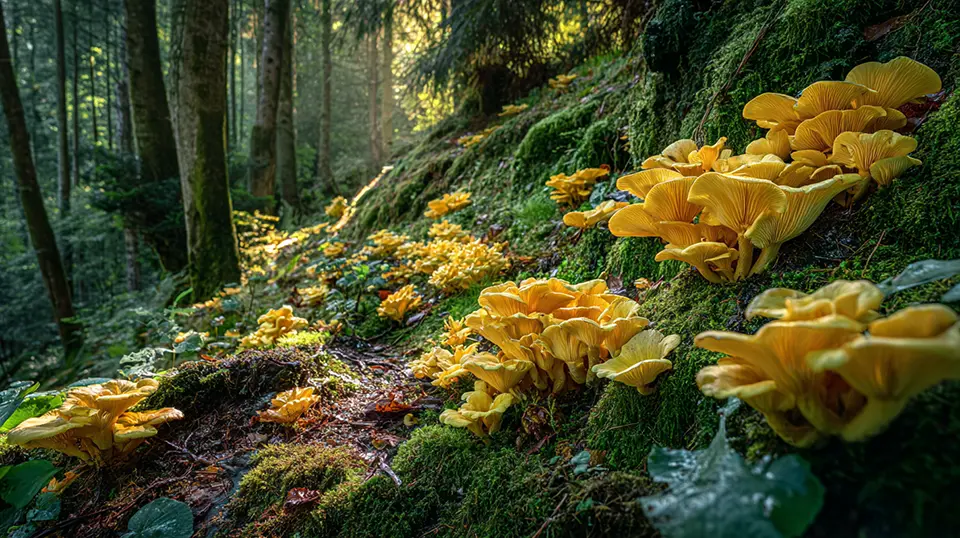
The Golden Oyster Mushroom (Pleurotus citrinopileatus), recognized by its bright yellow caps and popular among culinary enthusiasts, is increasingly available in grocery stores and grow-your-own kits across the United States. However, its popularity is masking a serious, escalating ecological threat. Research, including a recent study co-designed by University of Florida (UF) assistant professor Dr. Michelle Jusino, warns that this cultivated species is successfully escaping controlled environments and invading natural forests, potentially reducing native fungal biodiversity.
Dr. Jusino, a forest pathology expert at UF/IFAS, cautions growers that the simple act of cultivating this prized mushroom comes with a great ecological responsibility, as not all fungi stay where they are put.

Source: Wikimedia Commons — CC BY-SA 4.0
II. Mapping the Invasion: A Swift March South
The invasion of the Golden Oyster Mushroom is not isolated; it represents a rapidly spreading pattern across North America.
Rapid Expansion: Using community science data from platforms like iNaturalist and Mushroom Observer, researchers mapped the mushroom’s spread. Evidence suggests the species was introduced around the early 2010s, yet its spread has been remarkably fast.
Geographical Reach: In just over a decade, the mushroom has been reported in more than 25 U.S. states. Dr. Jusino notes the mushroom is “slowly marching south,” with confirmed sightings in states like Texas, North Carolina, Alabama, and Louisiana.
Terrifying Pace: By 2016, the species was found in the wild in only five states, confined to the Midwest and Northeast. Today, Jusino estimates that fewer than 10 states east of the Mississippi River remain without records of the Golden Oyster in the wild.
III. Ecological Cost: Biodiversity Reduction and Ecosystem Impact
The core concern is not the mushroom’s presence, but its aggressive competitive nature. The Golden Oyster Mushroom is proving to be a strong competitor capable of outcompeting native fungal species, leading to significant ecological disruption.
A. Evidence of Outcompetition
Dr. Jusino and her team examined dead elm trees (Ulmus spp.) in field studies, comparing those colonized by the invasive mushroom with those that were not. They used DNA-based metabarcoding techniques on wood samples to identify all fungal species present.
Biodiversity Loss: Trees hosting the Golden Oyster Mushroom had significantly fewer fungal species overall.
Community Shift: The types of native fungi present in colonized trees were noticeably different from those in uncolonized trees. Some native fungi with known medicinal or ecological importance have been negatively impacted.

Source: Wikimedia Commons — CC BY-SA 3.0
B. Disrupting Natural Processes
The reduction in fungal biodiversity poses a threat to the fundamental processes that sustain forest health. Fungi are essential decomposers, and their disruption can impact:
- Wood Decomposition: The speed and efficiency at which dead wood is broken down.
- Carbon Cycling: The process by which carbon is released back into the atmosphere or stored in soil.
IV. A Call to Action: Microbes and the Conservation Blind Spot
The research also serves as a critical warning about the often-overlooked issue of microbial invasions in conservation efforts. While agencies typically focus on monitoring invasive plants, insects, and animals, fungi and bacteria can quietly and fundamentally reshape entire ecosystems.
The Larger Issue: Dr. Jusino stresses that invasive fungi are a vital part of the global biodiversity crisis. “They’re small, but their impact can be enormous,” she notes.
Prevention and Education: Researchers urge commercial and home growers to take active steps to prevent accidental release. Suggested measures include enhanced monitoring, education, and considering the use of local, native mushroom species for cultivation instead of easily escaping foreign varieties.
The overarching viewpoint is one of urgency: paying attention to fungal biodiversity now is critical to protecting native ecosystems before the competitive imbalance tips too far and disrupts the delicate genetic diversity required for forests to adapt to climate change.
References
iNaturalist Global Biodiversity Database. (2025).
According to UF NEWS
Key Takeaways
- Golden oyster mushrooms (Pleurotus citrinopileatus), while prized as gourmet culinary fungi, pose a documented ecological threat when cultivated outdoors, as they can establish feral populations that outcompete native fungi.
- Originally native to East Asia (eastern Russia, China, Japan), golden oysters have naturalised in parts of North America and Europe following escape from outdoor cultivation operations.
- Invasive Pleurotus species can degrade decaying wood habitats that native saprotrophic fungi—including rare and protected species—depend on for reproduction and survival.
- Indoor cultivation in properly contained environments eliminates the escape risk; mycologists and food producers are encouraged to grow golden oysters strictly indoors.
- The broader pattern of edible mushroom cultivation creating ecological threats mirrors concerns about other high-value cultivated species, including wine cap mushrooms (Stropharia rugoso-annulata) in temperate forests.
Frequently Asked Questions
Are golden oyster mushrooms invasive?
Yes, golden oyster mushrooms (Pleurotus citrinopileatus) are considered potentially invasive when cultivated outdoors in regions outside their native East Asian range. They produce large numbers of airborne spores that can travel considerable distances and establish in suitable wood habitats. In parts of the eastern United States, Canada, and Central Europe, feral golden oyster populations have been documented growing on dead hardwood trees in areas where they do not occur naturally. Once established, they are impossible to eradicate from natural areas. The species is typically fast-growing and competitive, potentially displacing native saprotrophic fungi from dead wood resources.
How does invasive fungi impact ecosystems differently from invasive plants or animals?
Fungal invasions operate through different ecological mechanisms than plant or animal invasions. Invasive fungi compete for decomposer niches (dead wood, leaf litter) rather than for light, water, or prey. An invasive saprotrophic fungus like golden oyster competes with native wood-decomposing species for the substrate they need to fruit and reproduce. This can reduce the reproductive success of rare native wood-rot fungi without necessarily killing them outright—instead reducing their fruiting frequency and spore production until populations gradually decline. Fungal invasions are also much harder to detect because the bulk of the organism (mycelium) lives within the substrate and only the fruiting bodies are visible.
What is the difference between golden oyster and regular oyster mushrooms?
Several Pleurotus species are sold commercially as ‘oyster mushrooms.’ Pearl oyster (P. ostreatus) is the most widely cultivated globally and is native to Europe, Asia, and North America—it has complex native range dynamics. Blue oyster (P. ostreatus var. columbinus), pink oyster (P. djamor), and king oyster (P. eryngii) are other commercial species. Golden oyster (P. citrinopileatus) is distinguished by its bright yellow-golden colouring, smaller cap size (3–8 cm), more intensely mushroomy-fruity flavour, and lower optimal fruiting temperature than pink oyster. It is considered one of the most delicate and flavourful oyster varieties for culinary use.
Can I grow golden oyster mushrooms at home safely?
Yes, you can grow golden oyster mushrooms at home with minimal ecological risk by following indoor containment practices. Grow kits should be used strictly indoors; all spent substrate (used growing blocks) should be sealed in plastic bags before disposal, not composted outdoors or dumped in natural areas. Avoid fruiting the mushrooms near open windows in spring and summer when spore production is highest and air currents could carry spores outdoors. Commercial kit manufacturers generally do not warn about this issue, so individual growers need to apply their own caution if they live in areas with suitable deciduous woodland.
Which other cultivated mushroom species pose ecological risks?
Several cultivated mushroom species have established invasive or naturalised populations. Wine cap mushrooms (Stropharia rugoso-annulata), widely used in no-dig gardening and permaculture, are native to Europe but have established naturalised populations in North America. Shiitake (Lentinula edodes) has been documented establishing feral populations in parts of Europe. Japanese oyster (Pleurotus pulmonarius) has been found outside its native range. The general principle for responsible home cultivation is: grow only native species outdoors, or confine all cultivation of non-native species to fully indoor environments with careful spore containment.