According to CAMBRIDGE DAY
I. The Autumnal Alarm: Black Spots on the Canopy
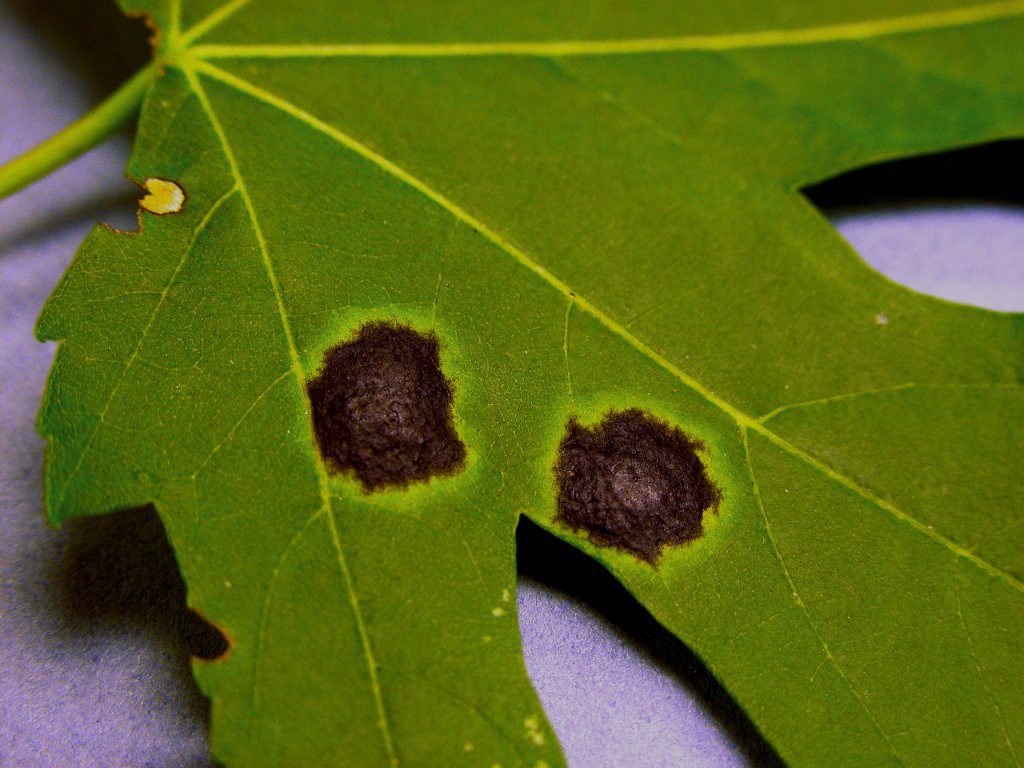
As autumn descends across North America, many residents notice a disturbing sight on their maple trees: small, raised, black lesions peppering the otherwise colorful leaves. This alarming appearance often triggers concern that the tree is suffering from a serious disease or imminent death. However, local arborists and plant pathologists confirm that this phenomenon, known as Tar Spot, is largely a cosmetic issue—a visible but benign biological interaction.
The condition is caused by a specific group of fungi, primarily Rhytisma acerinum and related species. The reassuring truth is that while the fungus looks aggressive and unsightly, it generally does not harm the long-term health or vitality of the maple tree.

Source: Wikimedia Commons, CC BY-SA 4.0

II. Tar Spot: The Fungus and Its Lifecycle
Tar Spot is easily identified by its distinctive appearance, which resembles dried spots of black paint or tar on the leaf surface. The fungus has a predictable life cycle tied closely to the weather and the host tree’s annual growth pattern.
Formation
In the late spring and early summer, fungal spores are released from infected leaves lying on the ground. These spores are carried by the wind and rain and land on new, emerging maple leaves.
Lesion Development
After the initial infection, the fungus causes small, yellowish-green spots to form. As the season progresses through late summer and early autumn, the fungal tissue within these spots thickens and turns a glossy, raised black, forming the characteristic “tar spot.”
According to The Morton Arboretum, the disease affects only maples (Acer spp.) and is considered cosmetic rather than harmful.
A fact sheet by Natural Resources Canada states: “Oval or irregular-shaped yellowish-green spots become raised, then blacken over time… This disease rarely poses a serious threat to their health.”
Benign Nature
The fungus infects only the leaves and relies on the leaf falling to the ground to survive the winter. Because the infection occurs relatively late in the growing season, after the tree has already completed the vast majority of its photosynthesis and energy storage, the fungus does not cause defoliation early enough to significantly stress the tree’s health or growth.
Reference: Maine Department of Agriculture, Conservation & Forestry

Source: Wikimedia Commons, CC BY-SA 4.0
III. The Arborist’s Viewpoint: Prevention Over Treatment
Experts stress that since Tar Spot is primarily an aesthetic problem, expensive and aggressive fungicide treatments are almost universally unwarranted and discouraged. The effort and environmental impact of applying fungicides far outweigh the negligible benefit to the tree.
The Recommended Proactive Measures Are Simple and Mechanical
- Raking and Disposal: The most effective control measure is raking and disposing of all fallen maple leaves in the autumn. By removing the infected leaves, the grower eliminates the primary source of the fungal spores that would otherwise overwinter and re-infect the tree the following spring. (Recommended by The Morton Arboretum)
- Composting Caveat: While composting is generally encouraged, infected maple leaves should not be added to home compost piles unless the compost is known to reach sufficiently high temperatures to kill the fungal spores, which is often difficult to ensure in small, residential piles. (Guidance from Maine Forest Service)
- Focus on Tree Health: Instead of focusing on the fungus, arborists advise property owners to focus on general tree health, ensuring the tree has adequate water and nutrients. A healthy, vigorous tree is inherently more resilient to all forms of minor stress, including late-season fungal infections.

Source: Wikimedia Commons, CC BY-SA 3.0
IV. Conclusion: A Lesson in Ecological Tolerance
Tar Spot serves as a valuable lesson in ecological tolerance. While the blackened leaves may signal “disease” to the untrained eye, science confirms that this fungus is merely a companion to the tree’s life cycle. The proper response is not panic or chemical intervention, but simple mechanical hygiene, allowing the tree to continue its life cycle unhindered.

References
- The Morton Arboretum. “Tar spot of maple.”
- Natural Resources Canada. “Tar Spot.”
- Royal Horticultural Society (RHS). “Tar Spot of Maple.”
According to CAMBRIDGE DAY
Key Takeaways
- Tar spot fungus (Rhytisma acerinum) causes distinctive black blotches on maple leaves that alarm homeowners but are primarily a cosmetic issue for established trees rather than a serious health threat.
- The disease is caused by an ascomycete fungus that overwinters in fallen infected leaves; removing and disposing of fallen leaves (not composting them) significantly reduces the following year’s spore load.
- Tar spot thrives in humid, cool spring conditions and has expanded its range in North America as air quality has improved—the fungus is highly sensitive to sulfur dioxide pollution, which historically suppressed it near industrial areas.
- Silver maples (Acer saccharinum) and Norway maples (Acer platanoides) are most severely affected; sugar maples (Acer saccharum) are somewhat more resistant.
- Fungicide treatments for tar spot are rarely recommended for ornamental trees because the disease doesn’t threaten tree survival and applications must be precisely timed to effective windows during leaf emergence.
Frequently Asked Questions
What is tar spot and is it dangerous to maple trees?
Tar spot is a foliar fungal disease caused by Rhytisma acerinum (and related species like R. americanum) that produces distinctive raised black tar-like spots on maple leaves. The spots range from 1–2 cm in diameter and may be surrounded by a yellow halo. While dramatically visible and often alarming to homeowners, tar spot is generally not a serious health threat to established maple trees. Heavily infected trees may drop leaves earlier than normal in autumn, but this premature defoliation typically does not significantly weaken healthy trees over the long term. Young or stressed trees (drought-stressed, recently transplanted) may be more adversely affected.
Why is tar spot spreading to new areas now?
Rhytisma acerinum is unusually sensitive to sulfur dioxide (SO₂) air pollution—so much so that it was historically used as an air quality bioindicator, with its absence near industrial areas confirming high SO₂ levels. As air quality has improved dramatically across North America and Europe since the 1970s through Clean Air Act regulations and industrial changes, tar spot has re-emerged in areas where it had been absent for decades. The disease was rare in many urban areas in the mid-20th century due to industrial pollution; its current appearance is, ironically, a sign of improved urban air quality rather than deteriorating forest health.
How do I manage tar spot on my maple trees?
The most effective management for tar spot is leaf hygiene. In autumn, rake, bag, and remove infected leaves from beneath affected trees—do not add them to compost, as Rhytisma overwinters in leaf litter and compost temperatures are typically insufficient to destroy the fungus. Removing fallen leaves breaks the disease cycle and significantly reduces the following year’s infection pressure. Shredding leaves with a mower before they can be raked, or using a leaf blower to move them away from the canopy, are practical alternatives. Fungicide treatments are available but are rarely cost-effective for ornamental trees due to the low threat level and precise timing requirements.
Can tar spot spread to other tree species?
Rhytisma species are largely host-specific. R. acerinum primarily infects maples (Acer species), while closely related species cause similar symptoms on willows (Rhytisma salicinum) and sycamores (also technically a maple in the European sense). The maple tar spot fungi do not infect oaks, elms, or other deciduous trees in your garden. Different Rhytisma species also show preferences within the Acer genus—R. americanum predominantly affects silver and red maples in North America, while sugar maples are less commonly affected. If you have mixed plantings, maple tar spot will not spread to non-Acer species.
Should I be concerned if my maple’s leaves drop early due to tar spot?
Early leaf drop from tar spot is generally not a cause for significant concern in established, otherwise healthy trees. Trees store the majority of their energy reserves by late summer, so premature defoliation of a few weeks in late summer or early autumn typically has minimal long-term impact on tree health. However, if a tree experiences heavy early defoliation combined with other stressors—drought, construction damage, other disease, or pest damage—the cumulative stress can be more concerning. Monitor trees for signs of decline over multiple seasons: dieback of branches, reduced canopy density year-over-year, or bark damage may indicate that other problems require attention.