According to yahoo!
Mysterious Orange Fungi Spark Public Interest
A vivid orange fungus appearing on trees across forests, gardens, and residential landscapes is attracting growing public attention, prompting questions about whether the unusual growth is harmful, beneficial, or a warning sign of deeper ecological changes within trees.
According to fungal and horticultural experts, one of the most commonly identified bright orange growths found on tree trunks and branches is a jelly fungus known as Tremella mesenterica, often referred to as “witch’s butter.” Other orange-colored fungi frequently observed on trees include species within the Laetiporus genus, particularly Laetiporus sulphureus, commonly known as “Chicken of the Woods.”
Although their appearance can be dramatic, experts emphasize that not all bright orange fungi represent the same ecological function. Some species act primarily as decomposers, while others may indicate that a tree is already experiencing internal decay or structural stress.

Why Orange Fungi Suddenly Appear
The striking coloration often causes concern among homeowners because the fungus can appear suddenly after periods of rain or elevated humidity. Bright orange clusters may emerge on trunks, dead branches, rotting wood, or damaged bark, creating the impression of a rapidly spreading infection.
However, researchers note that fungal growth is usually the visible portion of a much larger biological system already present within the wood.
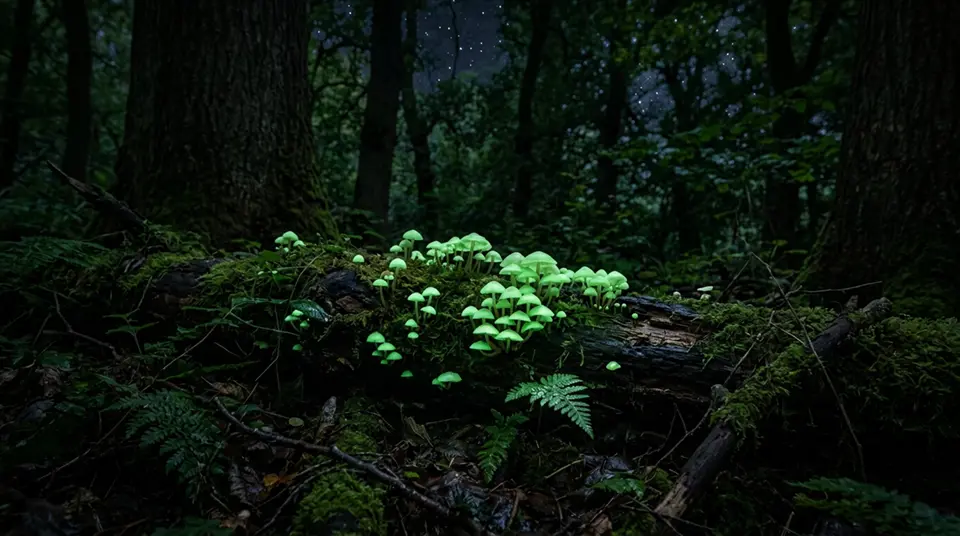
Fungi play a critical role in natural ecosystems by breaking down organic material and recycling nutrients back into the environment. Without fungi, forests would accumulate enormous quantities of dead wood, fallen branches, and decaying plant matter.
The appearance of fungal fruiting bodies on trees often signals ongoing decomposition processes occurring inside the wood.
Tremella mesenterica: The Jelly Fungus
One species receiving significant attention is Tremella mesenterica, a gelatinous fungus recognized by its bright yellow-orange appearance and soft, jelly-like texture. The fungus frequently grows on dead or decaying branches, especially after rainfall.
Unlike aggressive tree pathogens, Tremella mesenterica is generally considered a secondary organism that develops on already weakened or dying wood rather than directly causing major tree decline.
Its appearance often indicates that decomposition has already begun.
Fungal Growth Conditions
Generated by AI based on fungal ecology studies showing increased fungal activity under elevated humidity conditions.
Chicken of the Woods and Tree Health
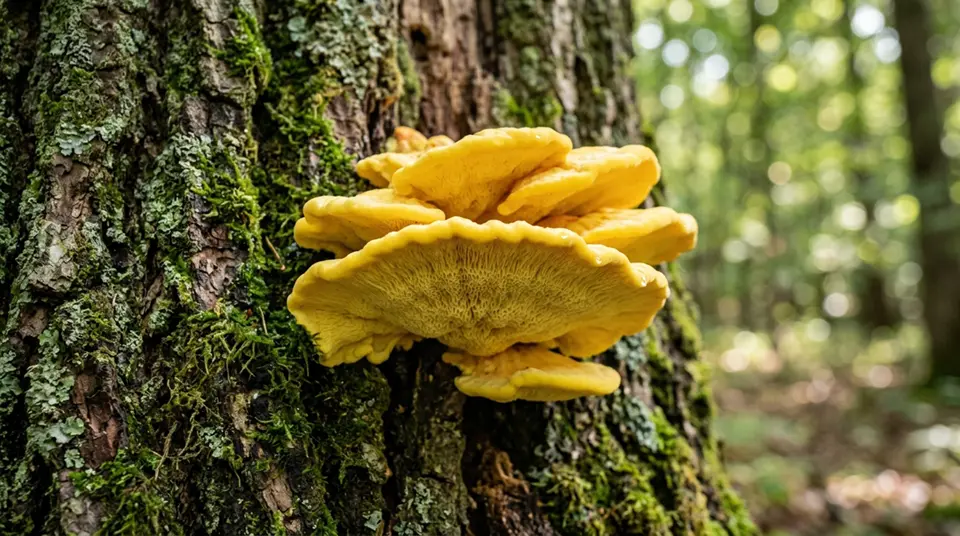
Another highly recognizable orange fungus is Laetiporus sulphureus, commonly called Chicken of the Woods due to its texture and culinary reputation among mushroom foragers. This bracket fungus forms large shelf-like structures that protrude from tree trunks and branches.
Its bright orange and yellow coloration makes it one of the most visually distinctive fungi found in forests.
While Chicken of the Woods is considered edible when properly identified and prepared, its presence on living trees may indicate a more complex relationship between the fungus and its host.
Scientists classify Laetiporus sulphureus as a wood-decaying fungus capable of causing brown rot within tree tissues. The fungus breaks down cellulose inside wood, leaving behind brittle structures that can weaken the tree over time.
As decomposition progresses, affected wood may become increasingly fragile and susceptible to breakage.

Understanding the Relationship Between Fungi and Trees
Researchers explain that the relationship between fungi and trees is often misunderstood.
Many people assume fungi simply attack healthy trees, but in reality, fungal colonization frequently begins after environmental stress, physical injury, aging, drought, storm damage, or existing decay creates opportunities for fungal establishment.
In these cases, fungi function more as biological recyclers than primary aggressors.
Within forest ecosystems, this process serves an important ecological purpose.
As fungi decompose wood, they release nutrients locked inside tree tissues, making those resources available to surrounding plants, microorganisms, and soil ecosystems. Decaying wood also provides habitat for insects, birds, mammals, amphibians, and countless microscopic organisms.
Scientists describe fungi as some of the most important nutrient recyclers on Earth.
Wood Decay Fungi and Decomposition Processes
The bright orange fungi growing on trees are part of a broader category known as wood-decay fungi. These organisms possess specialized enzymes capable of breaking down lignin and cellulose, the structural components that give trees their strength.
Different fungal species utilize different decomposition strategies.
Some fungi produce white rot, breaking down both lignin and cellulose, while others produce brown rot, primarily targeting cellulose and leaving darker, brittle wood behind.
The presence of fungal fruiting bodies can therefore provide important clues about the internal condition of a tree.
Arborists often use visible fungal growth as an indicator that further inspection may be necessary, particularly when fungi appear near the base of large trees, around root systems, or along major structural branches.
This does not automatically mean a tree is dangerous.
However, experts note that extensive fungal colonization may suggest internal hollowing or structural weakening that is not immediately visible from the outside.
White Rot vs Brown Rot
Growing Awareness of Fungal Ecology
The growing public interest in colorful fungi reflects a larger trend in fungal awareness and ecological education.
Over the past decade, scientific research has increasingly highlighted the importance of fungi in maintaining ecosystem health, regulating nutrient cycles, supporting plant growth, and influencing biodiversity.
Fungi form one of the largest biological kingdoms on Earth, yet scientists estimate that only a small percentage of fungal species have been formally identified.
Millions of fungal species may still remain undocumented.
Modern fungal research has also revealed that fungi participate in complex ecological networks extending far beyond decomposition.
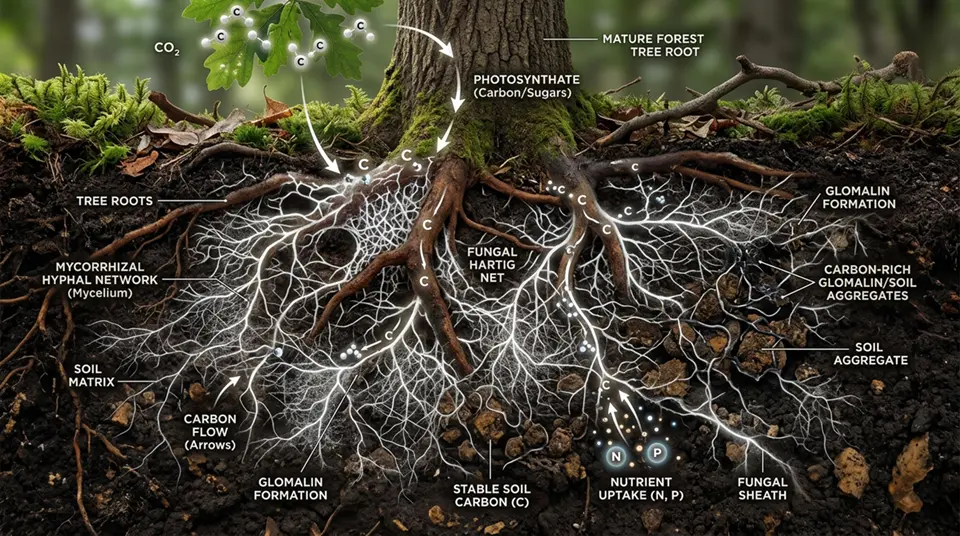
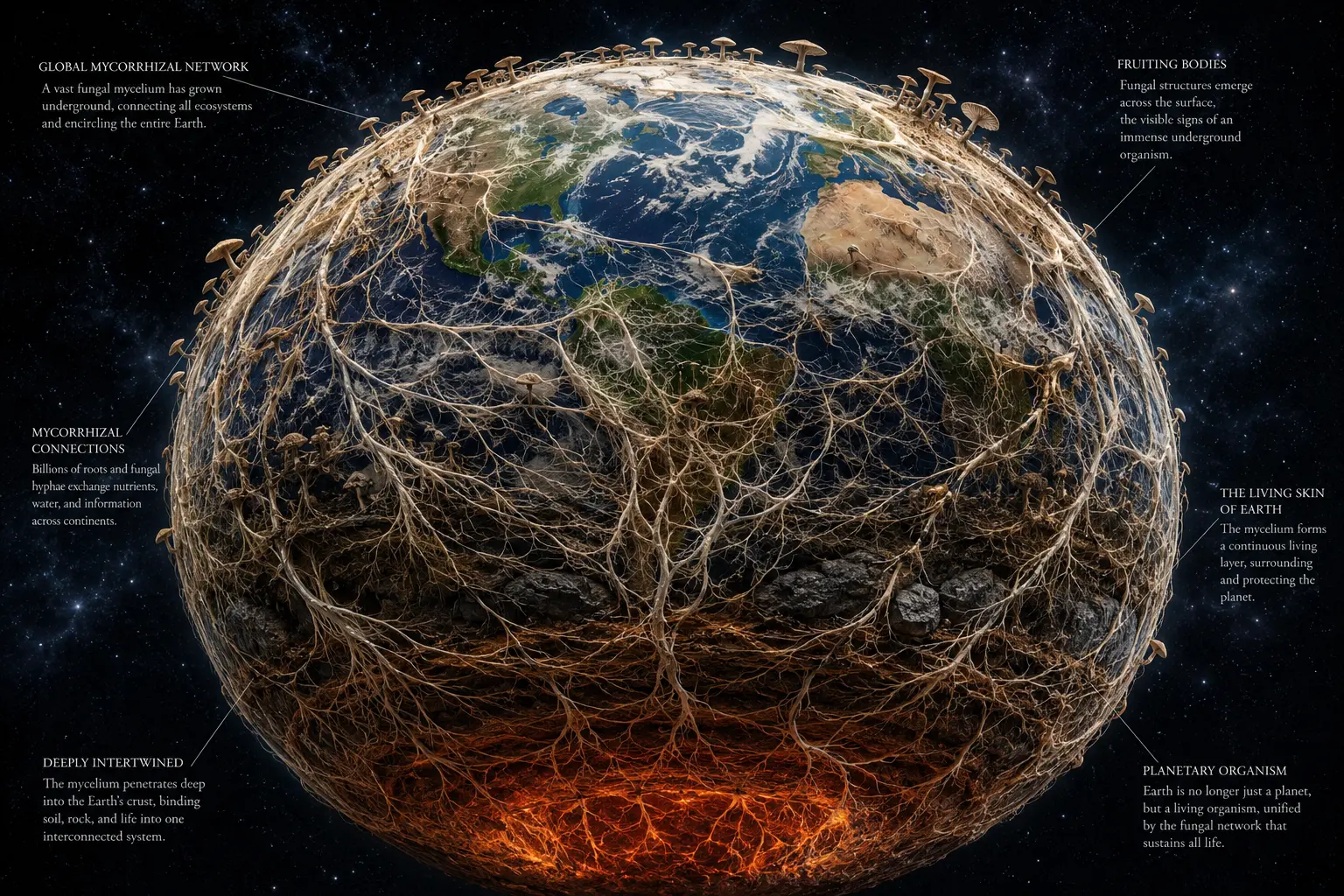
Many species form symbiotic relationships with plant roots, creating underground nutrient exchange systems often referred to as mycorrhizal networks. These fungal networks help plants absorb water and minerals while contributing to forest resilience.
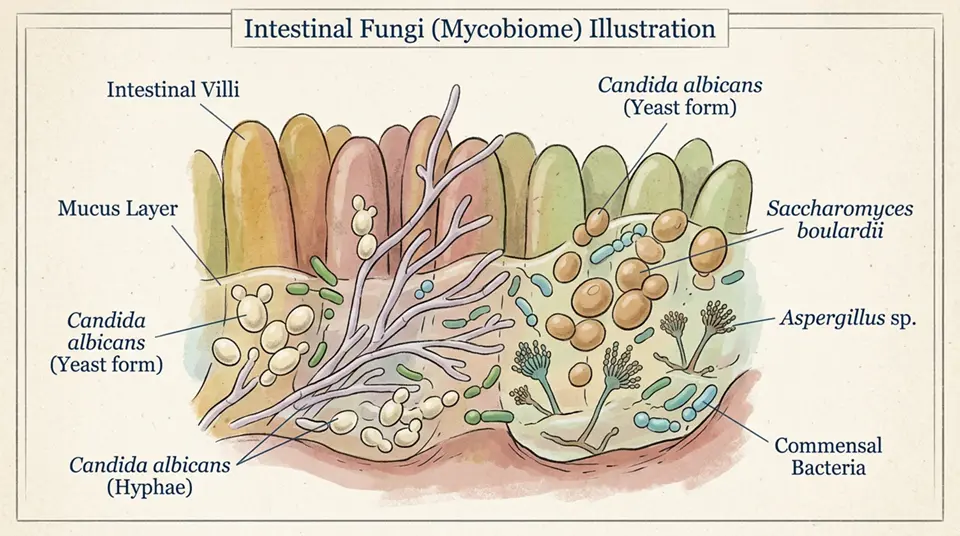
At the same time, some fungal species act as pathogens capable of infecting plants, insects, animals, and even humans.
This dual role highlights the extraordinary diversity of fungal biology.

Should Homeowners Remove Visible Fungi?
Experts caution against immediately removing all visible fungi from landscapes.
In natural environments, fungal growth is often an essential component of ecological balance. Dead wood, decomposing logs, and aging trees support countless species that depend upon fungal-driven nutrient recycling.
Removing fungi without understanding their ecological role may sometimes disrupt local biodiversity.
For homeowners, however, the appearance of fungi on living trees can warrant professional evaluation.
Tree specialists recommend monitoring trees that show large fungal growths, especially if additional signs of decline are present, such as dead branches, cracking bark, canopy thinning, or leaning trunks.
The fungus itself may not always be the direct cause of decline, but it can serve as evidence of underlying structural changes occurring within the tree.
Climate Change May Increase Fungal Visibility
Climate conditions may also be contributing to increased fungal visibility in some regions.
Periods of high humidity, intense rainfall, warmer temperatures, and environmental stress can create favorable conditions for fungal growth and spore production. As weather patterns shift, researchers expect some fungal species to expand into new habitats or become more noticeable within urban and suburban landscapes.
The bright orange fungi appearing on trees serve as a reminder that forests and gardens are dynamic living systems shaped by countless biological interactions.
What appears at first glance to be an unusual or alarming growth is often part of a much larger ecological process unfolding beneath the bark and within the wood itself.
For scientists, these fungi represent more than colorful curiosities.
They are indicators of decomposition, nutrient cycling, biodiversity, and the ongoing relationship between life and decay that sustains ecosystems worldwide. Their vivid colors may capture attention, but their true significance lies in the hidden biological work they perform within forests, woodlands, and landscapes every day.
As research into fungal ecology continues to expand, experts believe public understanding of fungi will increasingly shift from viewing them solely as signs of decay toward recognizing them as essential architects of environmental balance.
References
Hawksworth DL, Lücking R. (2017). Fungal Diversity Revisited. Microbiology Spectrum.
According to yahoo!