According to INSIDE CLIMATE NEWS
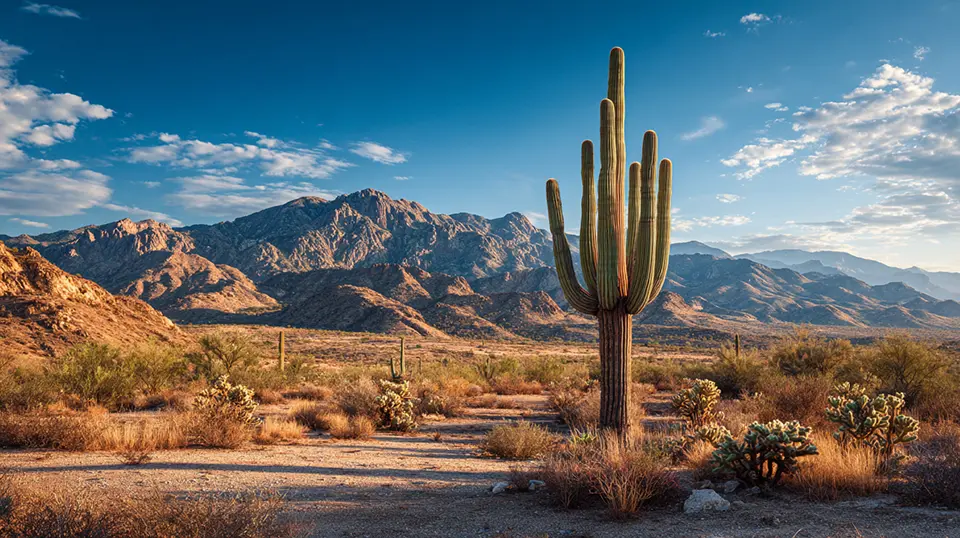
Deep in the Sonoran Desert, where summer heat can soar beyond 110 °F and rainfall barely exceeds a dozen inches a year, the saguaro cactus reigns as an icon of endurance.
Source: National Park Service, Public Domain
Yet even this giant of the desert is not alone. Beneath the surface, a hidden world of fungal life may be helping the cactus survive—especially as climate change tightens its grip. A new exploration into the secret lives of cacti and fungi is underway. Researchers are beginning to uncover how mycorrhizal fungi—fungi that colonize plant roots—may form essential alliances with saguaros, exchanging water and nutrients for carbon. But as desert climates intensify, development fragments habitat, and heat stress mounts, the question is whether this ancient alliance can endure.

Source: National Park Service, Public Domain
Yet even this giant of the desert is not alone. Beneath the surface, a hidden world of fungal life may be helping the cactus survive—especially as climate change tightens its grip. A new exploration into the secret lives of cacti and fungi is underway. Researchers are beginning to uncover how mycorrhizal fungi—fungi that colonize plant roots—may form essential alliances with saguaros, exchanging water and nutrients for carbon. But as desert climates intensify, development fragments habitat, and heat stress mounts, the question is whether this ancient alliance can endure.
The Landscape and the Players
The Sonoran Desert, centered around southern Arizona and parts of Mexico, is one of the hottest, most variable ecosystems on Earth. At the heart of this desert lies Saguaro National Park, where the towering saguaros punctuate creosote flats and mesquite groves.
Saguaros are keystone species. They live for centuries, don’t flower until they’re about 100 years old, and their fruit and arms provide habitat, food, shade, and nesting sites for desert life during the harshest months.

Joshua Tree National Park (pink) shown at the ecotone of the Colorado (‘low desert’) and Mojave Desert (‘high desert’).
Source: Wikimedia Commons, CC BY-SA 3.0
Yet for saguaros, life in the desert is a constant struggle. Their survival depends not just on storing water or minimizing evaporation, but on accessing scarce nutrients in dry soils. That’s where fungi may come in.
Mycorrhizal Fungi: The Hidden Lifeline
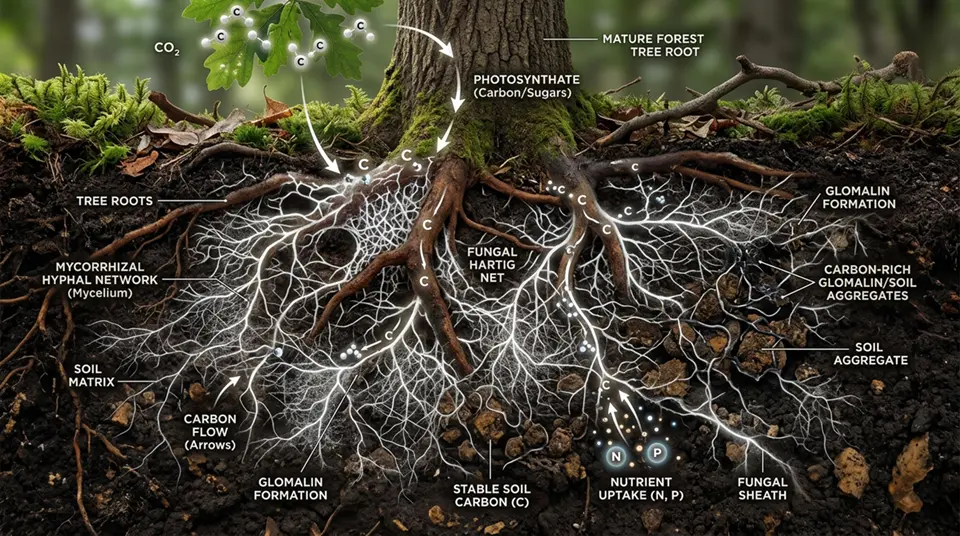
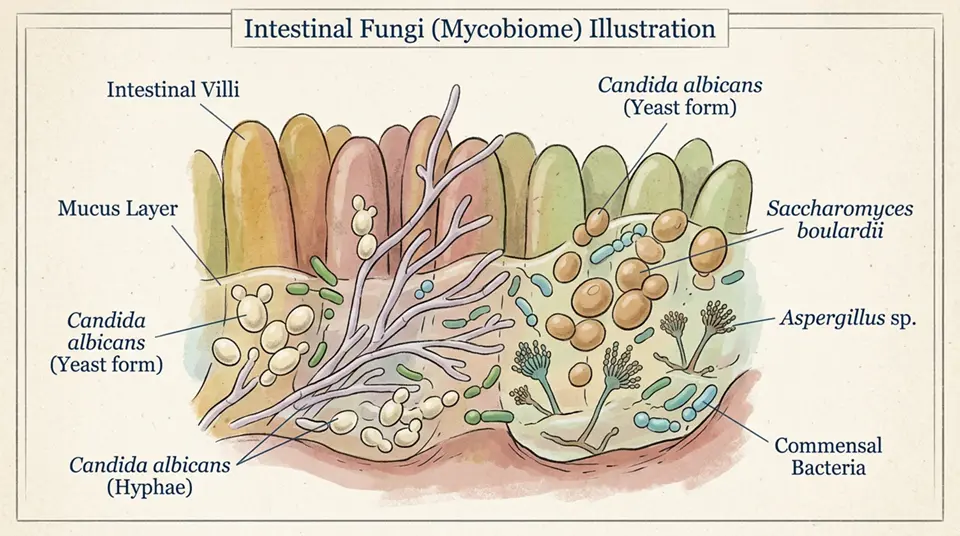
Mycorrhizal fungi form symbiotic associations with plant roots. In healthier ecosystems, such fungi create “nutrient highways” underground, delivering phosphorus, nitrogen, and water in exchange for carbon from the host plant’s photosynthesis.

Source: Wikimedia Commons, CC BY-SA 4.0
In humid forests, mycorrhizae have been studied for decades. But in desert environments, especially in deep, dry soils, fungal life is far less understood. Scientists know mycorrhizae exist in desert soils, but which species partner with saguaros, and how strong those partnerships are, is unknown.
The Arizona researchers aim to fill that “black box.” Soil samples collected around saguaros are being analyzed for fungal DNA, fungal root colonization, and how fungal networks shift under climate stress or habitat fragmentation. During a field trip with desert ecologists, soil was collected at various distances from cactus bases. Measurements of cactus health (stem growth, water stress markers) were paired with fungal assays.
At night, the desert cooled, but not enough to slow fungal metabolism entirely—some fungal activity persists even under heat stress. The scientists are particularly interested in how these fungal relationships may buffer saguaros during drought or nutrient-poor phases. If fungi help sap scarce soil moisture or unlock bound phosphates, they could be critical to cactus resilience as climates shift.

Source: Wikimedia Commons, CC BY 2.0
The Climate Threats Tighten
Saguaros and their fungal partners now face compounding stress: Extreme heat and prolonged drought push saguaros beyond their physiological limits, increasing mortality. Urban development fragments desert habitat, interrupting contiguous soil fungal networks. Wildfires and invasive grasses worsen, altering soil structure and fungal habitat. Dust deposition or atmospheric changes may disrupt fungal spores or soil chemistry.
In recent years, many saguaros in Phoenix’s suburbs have died, sometimes simply toppling in yards after blistering summers. Ecologists warn that some populations may never recover unless soil and fungal support remains intact. One researcher expressed urgency: if we lose fungal diversity before mapping it, we may never know what’s been lost.
First Insights and Early Data
The early reports from the project are modest but suggestive: Soil fungal DNA shows high diversity near cactus bases, with many unidentified taxa—a reminder that desert mycorrhizal fungi remain under-sampled globally.
In some soil cores, fungal colonization rates align with healthier cactus growth metrics. Preliminary mapping from the affiliated group Society for the Protection of Underground Networks (SPUN) indicates that over 90% of fungal communities globally are unprotected, putting their capacity to support ecosystems at risk. These early signals hint at a broader truth: fungal networks may be foundational in deserts, not marginal.
Why This Matters Beyond Cacti
Understanding cactus–fungus symbiosis has ramifications far beyond Arizona:
- Desert conservation & restoration: Replanting saguaros without soil fungal partners may yield failure. Restoration efforts must consider fungal inoculations.
- Carbon cycling: Fungi participate in soil carbon storage and turnover. Disrupted fungal networks can affect soil carbon budgets and feedbacks under climate change.
- Biodiversity resilience: Many desert plants likely rely on shared mycorrhizal networks. Loss of fungal diversity could ripple across desert communities.
- Agriculture in marginal lands: Insights might help crops in arid lands by mimicking fungal support systems.
In short, fungal life beneath saguaros is not esoteric—it may be essential to ecosystem function, desert resilience, and climate adaptation.

Helping plant native species and assisting with trail cleanup help preserve the life in the monument and improves the visitor experience.
Source: Wikimedia Commons, CC BY-SA 4.0
Challenges Ahead
This research is just the beginning; significant obstacles remain:
- Taxonomy and identification: Many fungal sequences match no known species, hindered by limited desert fungal reference databases.
- Functional validation: DNA presence doesn’t confirm active nutrient transfer—laboratory isotopic tracing is needed to prove mutualism.
- Experimental manipulation: Testing how fungi support saguaros under drought, or whether fungal inoculation improves survival, is logistically difficult in multi-decade plant life cycles.
- Human disturbance: Infrastructure, roads, irrigation canals, and soil compaction likely disrupt fungal networks in unrecognized ways.
My Perspective: We Live Above the Surface, But We Are Supported Below
Walking among the towering saguaros, it’s easy to see them as singular sentinels of the desert. But to survive, they rely on hidden fungal frameworks—threads of life beneath the soil.

Source: Wikimedia Commons, CC BY-SA 3.0
The existential challenge of climate change may test not just the visible plants and animals—but the invisible fungal scaffolding holding ecosystems together. If we lose fungal networks, desert resilience may unravel. I believe that mapping and conserving fungal systems must become a priority equal to that of charismatic species above ground. Without the underground network, saguaros are more vulnerable, and so, too, is the refuge they provide to desert life.
In the heat and dust of Arizona, the alliance of cactus and fungus reminds us that what we see is only half the story. The greatest lifelines may lie beneath our feet—and may need protection far more urgently than we’ve realized.
References
- Arizona State University. (n.d.). Desert ecology research initiatives.
- Intergovernmental Panel on Climate Change (IPCC). (2022). Climate Change 2022: Impacts, Adaptation, and Vulnerability.
- National Park Service. (2024). Saguaro National Park.
According to INSIDE CLIMATE NEWS
Key Takeaways
- Mycorrhizal fungi form symbiotic relationships with saguaro cacti in the Sonoran Desert, exchanging water and nutrients for carbon—a partnership that may be critical for cactus survival under climate change.
- Desert mycorrhizal networks are increasingly disrupted by urban development, off-road vehicle use, and invasive species, fragmenting the underground fungal connections cacti depend on.
- Research into cactus-fungi relationships is still in early stages; scientists are only beginning to understand which fungal species associate with saguaros and how these relationships change under drought stress.
- The saguaro cactus (Carnegiea gigantea) takes 75 years to grow its first arm and can live over 150 years, making it an irreplaceable component of Sonoran Desert ecosystems.
- Climate change is extending drought periods and increasing temperature extremes in the Sonoran Desert, potentially stressing mycorrhizal networks beyond their adaptive capacity.
Frequently Asked Questions
What are mycorrhizal fungi and why are they important to plants?
Mycorrhizal fungi are soil fungi that form symbiotic associations with the roots of most terrestrial plant species. The fungal network (mycelium) extends far beyond the plant’s own root zone, dramatically increasing the plant’s access to water and soil nutrients—particularly phosphorus—in exchange for carbon-rich sugars produced by the plant through photosynthesis. This partnership underlies the survival of over 80% of land plant species, including many desert plants.
Do cacti form mycorrhizal relationships?
Yes, though the relationships are more variable than in temperate forest ecosystems. Many cactus species—including saguaros—associate with arbuscular mycorrhizal fungi (AMF), a group that colonises root cells directly. Research suggests these associations help cacti access water and phosphorus in nutrient-poor desert soils. However, the specific fungal partners and the strength of these relationships vary by cactus species, soil conditions, and seasonal moisture availability.
How does climate change threaten desert fungal networks?
Rising temperatures and extended drought periods reduce soil moisture, which is essential for fungal hyphal growth and spore germination. Increased wildfire frequency in desert-adjacent areas can destroy surface soil layers where mycorrhizal networks are most dense. Additionally, invasive annual grasses—which expand with warming and altered rainfall patterns—associate with different fungal communities than native cacti, potentially displacing the specific AMF species that saguaros depend on.
How big is a saguaro cactus and how long does it live?
Saguaro cacti (Carnegiea gigantea) are the largest cacti in the United States, reaching heights of 12–15 metres. They grow extraordinarily slowly: seedlings take 10 years to reach 2.5 cm in height, and the iconic side arms do not typically appear until the plant is 75–100 years old. Saguaros can live for 150–200 years, making each mature individual an ecological landmark that took over a century to develop.
What human activities most threaten mycorrhizal networks in deserts?
The primary threats include: urban and suburban development that seals or disturbs soil; off-road vehicle use, which physically destroys hyphal networks and compacts soil; invasive annual grasses that alter the fungal community composition; excessive groundwater pumping that reduces deep soil moisture; and atmospheric nitrogen deposition from vehicle emissions and agriculture, which can shift mycorrhizal community composition toward less beneficial species.