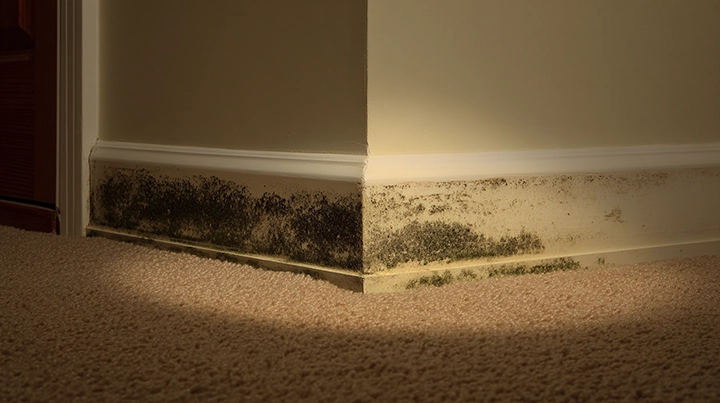
People use the phrase confidently. They say they have “mold sickness,” or that someone they know got sick from mold. The term carries a clear implication — exposure caused illness — and the logic feels sound. Damp building, sick person, obvious connection.
The problem is that “mold sickness” describes the conclusion, not the mechanism. And without the mechanism, the conclusion can mean almost anything.
A Label Without a Diagnosis
“Mold sickness” does not appear in medical literature as a recognized condition. It is not a diagnosis a physician can make, a code that appears in clinical classification systems, or a syndrome with established diagnostic criteria. It is a colloquial term — one that groups together a range of symptoms and experiences that may share a location but do not necessarily share a cause.
This is not a semantic point. It has practical consequences. When symptoms are attributed to a single unified condition called “mold sickness,” the underlying mechanisms — which are multiple, distinct, and require different responses — remain unexamined. The label substitutes for understanding rather than contributing to it.
What actually happens when people feel unwell in mold-affected environments is more specific than the label suggests, and more varied.
The Mechanisms Behind the Symptoms
The experiences people describe as “mold sickness” can arise from several different biological pathways, each operating independently.
The most clearly established pathway is allergic. Mold spores are potent allergens for sensitized individuals. Exposure triggers immune responses through well-characterized hypersensitivity mechanisms — the same pathways involved in pollen or pet dander allergy, operating through IgE-mediated reactions that produce predictable symptoms in predictable patterns.
A second pathway involves direct irritation. Airborne particles, including fungal spores and fragments, can irritate mucosal surfaces regardless of whether an individual is allergic. This is a non-immunological response — physical contact with respiratory tissue producing inflammatory reactions that do not require prior sensitization.
A third pathway is environmental rather than biological. Spaces that support mold growth — characterized by moisture accumulation, poor ventilation, and inadequate air exchange — also tend to have elevated levels of other indoor pollutants: dust mites, volatile organic compounds, carbon dioxide from inadequate fresh air supply. Symptoms attributed to mold may partly or entirely reflect these co-occurring conditions.
Finally, in specific clinical contexts, mold exposure can trigger recognized medical conditions with defined mechanisms — which occupy a different category entirely from the ambiguous “sickness” framing.
What the Evidence Actually Supports
The respiratory and mucosal effects of mold exposure are the most consistently documented in research. Coughing, wheezing, nasal congestion, throat irritation, and shortness of breath are reported across multiple study populations and settings. These responses have a clear mechanistic basis: inhalation of particulate matter produces airway inflammation.
The amplification effect is also well supported. Mold does not typically initiate respiratory disease in otherwise healthy individuals, but it reliably worsens existing conditions. For people with asthma, allergic rhinitis, or chronic obstructive pulmonary disease, exposure to mold-affected spaces is associated with increased symptom frequency and severity.

The Symptoms That Are Harder to Map
Fatigue, cognitive difficulty, and what is commonly called “brain fog” occupy a different evidentiary position. These symptoms are widely reported by people who attribute them to mold exposure, and the experiences themselves are not in question.
What is less clear is the causal pathway. The indoor environments associated with mold growth also tend to have poor ventilation, which produces elevated carbon dioxide concentrations linked to cognitive impairment and fatigue independent of any biological contaminant. Sleep disruption from respiratory symptoms, stress from living in deteriorating housing, and the psychological effects of perceived environmental threat all contribute to outcomes that are real but multifactorial.
This does not mean mold is not involved. It means the attribution is difficult to isolate, and attributing these symptoms to mold specifically — rather than to the conditions associated with mold — requires more precision than “mold sickness” as a category provides.
The Mycotoxin Question
No discussion of this topic avoids mycotoxins. These compounds — produced by certain mold species under specific conditions — are genuine toxicological concerns in food safety and occupational exposure contexts, where concentrations can reach levels with documented health effects.
In typical residential environments, the picture is more complicated. Mycotoxins can be present in water-damaged buildings, but significant airborne exposure at concentrations capable of causing systemic toxicity is considered uncommon under ordinary residential conditions. The conditions that produce meaningful mycotoxin concentrations — severe, prolonged water damage, specific temperature and humidity ranges, inadequate remediation — are not universal features of buildings with visible mold growth.
The distinction matters: the question is not whether mycotoxins exist, but whether the exposure dose in a given environment is sufficient to cause harm. That assessment requires measurement, not inference from symptom presence.
When the Diagnosis Is Specific
Alongside the ambiguous territory of “mold sickness” sit conditions that are anything but ambiguous.
ABPA — allergic bronchopulmonary aspergillosis — is a recognized immune-mediated condition involving a complex hypersensitivity response to Aspergillus species colonizing the airways. It occurs primarily in people with asthma or cystic fibrosis, produces characteristic clinical and radiological findings, and responds to specific treatment. It is diagnosable, treatable, and mechanistically understood.
Hypersensitivity pneumonitis is another defined condition — immune-mediated inflammation of lung tissue following repeated inhalation of organic particles, including fungal antigens. Invasive fungal infections, though occurring primarily in immunocompromised populations, represent a third category with clear pathophysiology.
These conditions demonstrate that mold can cause serious, clinically significant illness. They also demonstrate what that looks like when it is understood at the level of mechanism rather than label.

Individual Susceptibility and the Range of Responses
One of the features that makes “mold sickness” as a concept difficult to work with is that identical exposure conditions produce very different outcomes in different people. A household where one occupant reports significant symptoms may contain other occupants with none.
This variability is not evidence against mold’s role. It reflects the biology of susceptibility. People with atopic conditions — asthma, allergic rhinitis, eczema — have immune systems already primed for reactivity to environmental antigens. Children and older adults have different physiological baseline states. Individuals with compromised immune function are vulnerable to pathways that healthy immune systems contain effectively.
Susceptibility mediates exposure into outcome. Understanding that relationship is more useful than treating “mold” as either universally harmful or universally tolerable.
The Environment Is the Variable
Across all of these mechanisms, one factor consistently appears: the indoor environment. Mold growth requires moisture. Its impact is shaped by ventilation, airflow, surface area of colonization, and the concentration of airborne particles that results.
Symptoms are signals from an environment that is out of balance. They indicate that conditions — humidity, air exchange, building integrity — have shifted into ranges that support biological growth and compromise air quality. Addressing those conditions is the intervention that matters. Cleaning visible mold without correcting moisture and ventilation produces temporary results. Correcting the environmental conditions that allow mold to establish and persist is the response that aligns with what the evidence actually describes.
FAQ
What does “mold sickness” mean? It is an informal term used to describe various symptoms that may arise from different biological mechanisms — allergy, irritation, environmental air quality, or recognized clinical conditions — that share a location but not necessarily a single cause.
What symptoms are most strongly linked to mold exposure? Respiratory symptoms — coughing, wheezing, nasal congestion, throat irritation, and shortness of breath — have the strongest and most consistent evidence base.
Can mold cause fatigue and brain fog? These symptoms are widely reported, but their direct causal link to mold is difficult to isolate. Poor ventilation, elevated CO₂, sleep disruption, and stress in mold-affected environments all contribute to outcomes that overlap with what people describe.
Are mycotoxins a common cause of illness in homes? Significant airborne mycotoxin exposure at concentrations capable of causing systemic toxicity is considered uncommon in typical residential settings. Severe water damage scenarios may be different.
How can mold-related symptoms be reduced? By controlling the moisture that enables mold growth, improving ventilation and air exchange, and maintaining building integrity — addressing the environment rather than only the visible growth.
References
- CDC — Mold and Health: https://www.cdc.gov/mold-health/about/index.html
- American Lung Association — Mold: https://www.lung.org/clean-air/indoor-air/indoor-air-pollutants/mold
- PMC — Indoor Mold and Health Effects: https://pmc.ncbi.nlm.nih.gov/articles/PMC7231651/
- Allergy & Asthma Network — ABPA: https://allergyasthmanetwork.org/news/allergic-bronchopulmonary-aspergillosis-abpa/