The Fungal War No One Told You About—Until Now
You think your home is clean? Think again. Mold is lurking behind your walls, creeping through your vents, and settling into your carpets, waiting for its moment to strike. You might be fighting it with dehumidifiers, bleach, and sheer willpower, but the battle is already rigged against you.
And while you’re busy obsessing over that one patch of mildew in your bathroom, there’s a whole other fungal disaster happening where you least expect it—your child’s daycare.
Brace yourself. Daycares aren’t just playgrounds for toddlers—they’re playgrounds for yeast. New research from the University of Oslo just exposed a hidden microbial war happening in buildings everywhere. Your home is a mold empire, but your kid’s daycare? It’s basically a yeast factory. The very place you trust to keep your child safe is a petri dish of skin fungi, gut bacteria, and airborne microbial chaos. And the worst part? No one is doing anything about it.

Source: Wikimedia Commons, CC BY-SA 3.0
Daycares Are Yeast-Infested. Homes Are Mold-Ridden. No One Wins.
A new study from the University of Oslo just ripped the lid off an invisible fungal crisis. Scientists swabbed homes and daycare centers expecting to find the usual suspects—but what they found was worse than anyone predicted.
Homes are flooded with mold spores, including Aspergillus, Penicillium, and Cladosporium—the fungal trio responsible for allergic reactions, asthma flare-ups, and indoor air quality nightmares.
Daycares, on the other hand, aren’t mold-free. They’re just playing host to an entirely different microbial empire—yeasts.
The study found daycares were absolutely drowning in yeast species like Saccharomyces, Candida, and Cryptococcus—the same microbes found on human skin, in food, and in gut microbiota. Roughly 31% of the fungal species found in daycares were completely unique to those environments, while homes had their own 20% mold-exclusive microbiome.
In short, your home is a slow-brewing mold disaster, and your child’s daycare is a high-speed yeast experiment in full motion.
Still feel good about where you live and where you send your kid every day?

Source: Wikimedia Commons, CC BY-SA 3.0
The Hidden Fungus Factory: Why Homes and Daycares Are Teeming With Opposing Microbial Threats
You need to understand why your home is a mold-ridden mess while daycares are yeast-infested zones. Mold thrives in stale, humid, poorly ventilated spaces. That tiny leak under your sink? The bathroom you never quite dry out? Mold is moving in, setting up shop, and multiplying at a rate you don’t even want to think about.
But daycares are not stale. They’re filled with running, sweating, snack-covered kids, touching everything, rolling on the floor, and passing microbes like party favors. Yeast loves warm, busy, high-contact environments. It lives on skin, spreads through toys, and thrives in saliva-covered everything.
Daycares? They’re basically a perfect storm for yeast to go from “background player” to “dominant species.”
Think of it like this: Your house is a mold-infested basement. Your daycare is a warm, bustling bakery where the yeast is always rising.

Source: Wikimedia Commons, CC BY 2.0
If You Think This Doesn’t Affect You, You’re Wrong
This isn’t just an interesting study—it’s a wake-up call for every parent, homeowner, and health-conscious person who thinks indoor air quality is just about dust.
Mold exposure in homes is a silent health disaster that leads to chronic respiratory issues, allergies, and sinus infections.
And while some scientists think yeast exposure in childhood might actually help immune development, don’t assume it’s all harmless. Too much yeast exposure is linked to skin infections, gut imbalances, and invasive fungal diseases.
What’s worse? No one is regulating any of this.
No one is testing daycares for excessive yeast buildup. No one is checking homes for long-term mold risk. The entire indoor microbial ecosystem is completely ignored until people start getting sick—and even then, the industry pretends it’s not happening.
So ask yourself: Is your home a fungal death trap? Is your child’s daycare a microbial landmine?

Source: Wikimedia Commons, CC BY-SA 3.0
Here’s Why This Matters—And Why No One Is Talking About It
This study confirms something terrifying. You don’t “eliminate” fungi from indoor environments—you just trade one kind for another.
Regulations for mold exposure barely exist. Yeast contamination in public spaces? No one is even tracking it. Your health is entirely at the mercy of how well buildings are maintained—and let’s be real, most buildings aren’t built to protect you.
We need to stop assuming that “clean” means “safe.” Your overly sanitized daycare? Might be fueling an unchecked yeast boom. Your freshly renovated home? Might already be a mold problem waiting to happen.
And the scariest part? If you don’t think about this now, you won’t notice the damage until it’s too late.
Here’s What You Can Do Before Your Home Becomes a Fungal Breeding Ground
If you don’t want mold taking over your home, increase ventilation immediately. Stop letting your house sit in stale, damp air, because mold loves it. Use dehumidifiers to keep humidity under 50%, because above that, mold starts throwing a housewarming party.
Check for leaks behind walls, under sinks, and anywhere moisture could be seeping in—because if you ignore it, mold won’t.
If you’re concerned about daycares, understand that you’re not eliminating microbes—you’re shifting the balance. Proper handwashing and surface cleaning should reduce yeast without wiping out beneficial bacteria. Over-sanitizing everything could be making yeast even stronger, so the key isn’t killing everything—it’s controlling the environment.

Source: Wikimedia Commons, CC BY-SA 3.0
Final Thought: The Fungal War is Already Happening—Are You Paying Attention?
Mold in homes. Yeast in daycares. Two different threats, both ignored until they become unavoidable.
This is what happens when indoor health is an afterthought. No regulations, no microbial safety standards, and no serious efforts to prevent fungal overgrowth before it becomes a crisis.
The real question is: How long will it take before someone actually does something about it? Because while the world ignores this problem, your home is slowly turning into a mold farm, and your child’s daycare is running a full-scale yeast experiment.
Still think this isn’t your problem? Give it a few years.
References
- CDC – Mold FAQs
- CDC – Mold and Children’s Health
- CDC – Fungal Diseases
- NCBI – Sinus Infections
- NCBI – Immune Development
- NCBI – Skin Infections
- NCBI – Gut Imbalance
- Wikimedia Commons images:
- Mold on wall (CC BY-SA 3.0)
- Yeast SEM (CC BY-SA 3.0)
- Daycare children (CC BY 2.0)
- Asthma inhaler (CC BY-SA 3.0)
- Dehumidifier (CC BY-SA 3.0)
- Chart: Generated by AI based on University of Oslo data
Key Takeaways
- Daycares and early childhood education centres present a heightened mold risk due to their combination of factors: high humidity from children’s respiration, frequent cleaning creating perpetual surface moisture, soft furnishings that trap spores, and the biological sensitivity of young children to fungal exposures.
- Children under 5 are at substantially greater risk from mold exposure than adults because their immune systems are still developing, their lungs are more permeable to inhaled particles, they breathe more air relative to body mass, and they spend more time on floors where settled spore concentrations are highest.
- A home that shows visible mold and persistent moisture problems can be characterised as a ‘mold-infested nightmare’—not because all mold is equally dangerous, but because uncontrolled mold in living spaces indicates systemic moisture management failures that will perpetuate exposure until resolved.
- Yeast-like fungi—particularly Candida species—can proliferate in daycare environments on food-contact surfaces, soft toys, water tables, and bathroom fixtures, with Candida capable of causing oral thrush and diaper dermatitis in young children beyond the respiratory effects associated with mold.
- Parents concerned about mold in their home or their child’s daycare should focus on three key indicators: visible mold or persistent musty odour, any moisture-damaged materials (staining, peeling paint, warped surfaces), and children’s unexplained chronic respiratory or skin symptoms.
Frequently Asked Questions
Is mold in my home dangerous for my young children?
Mold in homes with young children is a genuine health concern because children’s developing physiology makes them more vulnerable than adults to the same mold exposures—and because indoor environments are where children spend the majority of their time. Why children are more vulnerable: developing immune systems—children under 5 have immune systems still being calibrated; exposure to mycotoxins and fungal allergens during this critical period may have longer-term effects on immune development and allergic sensitisation than similar exposures in adulthood. Increased ventilation rate—children breathe more air per kilogram of body weight than adults; a 2-year-old inhales approximately 3× more air per unit body mass than an adult, meaning higher relative inhaled spore doses from the same air concentration. Time on floors—young children spend extensive time on floors and low surfaces where settled dust (concentrated with spores) is resuspended by crawling and movement; floor-level spore concentrations can be substantially higher than at adult breathing height. Lung development—the alveoli (air sacs) of children’s lungs are still developing and may be more permeable to inhaled particles than mature adult lungs. Established health effects of mold exposure in children: increased incidence and severity of asthma—one of the most strongly established effects; housing dampness and mold exposure doubles or trebles the risk of childhood asthma in multiple large prospective studies. Increased frequency of respiratory infections—recurrent lower respiratory tract infections in young children are associated with living in damp, mold-contaminated environments. Allergic sensitisation—first-time sensitisation to fungal allergens (Alternaria, Aspergillus, Cladosporium) in early childhood establishes life-long allergic responses that persist into adulthood. What to do: any visible mold in a home with young children warrants prompt action; do not delay remediation; consult a paediatrician if a child has unexplained chronic respiratory symptoms in a home with known mold.
Are daycares and childcare centres required to address mold problems?
Daycare and childcare facilities face regulatory requirements at state, territory, and local levels that include building safety and maintenance standards, some of which explicitly or implicitly address mold and indoor air quality. Regulatory framework: in the United States: childcare licensing is primarily state-regulated; most state childcare licensing regulations require facilities to maintain a clean, sanitary, and safe physical environment; specific mold provisions vary by state; some states (California, New York, Minnesota) have more specific indoor air quality provisions; the CDC and AAP (American Academy of Pediatrics) recommendations in ‘Caring for Our Children’ (the national health and safety standards for out-of-home childcare) include guidance on environmental quality including ventilation and moisture control. In Australia: childcare services must comply with the National Quality Framework including the National Quality Standard (NQS); Quality Area 2 (Children’s Health and Safety) and Quality Area 3 (Physical Environment) set standards for safe, healthy physical environments; state and territory childcare licensing add specific facility requirements; local government building codes set baseline standards for health and safety. UK: Ofsted-registered childcare must comply with the Early Years Foundation Stage (EYFS) requirements including suitable premises with no significant hazard; Healthy Homes legislation (Homes (Fitness for Human Habitation) Act 2018) applies to rented daycare premises. Enforcement: licensing inspections typically check visible compliance but may not specifically test for mold; complaints from parents are often the trigger for regulatory investigation; documented health complaints linked to a facility create regulatory action obligations; parents concerned about mold in a childcare setting should report concerns to the relevant licensing authority.
What are the signs of a mold problem in a daycare or home with children?
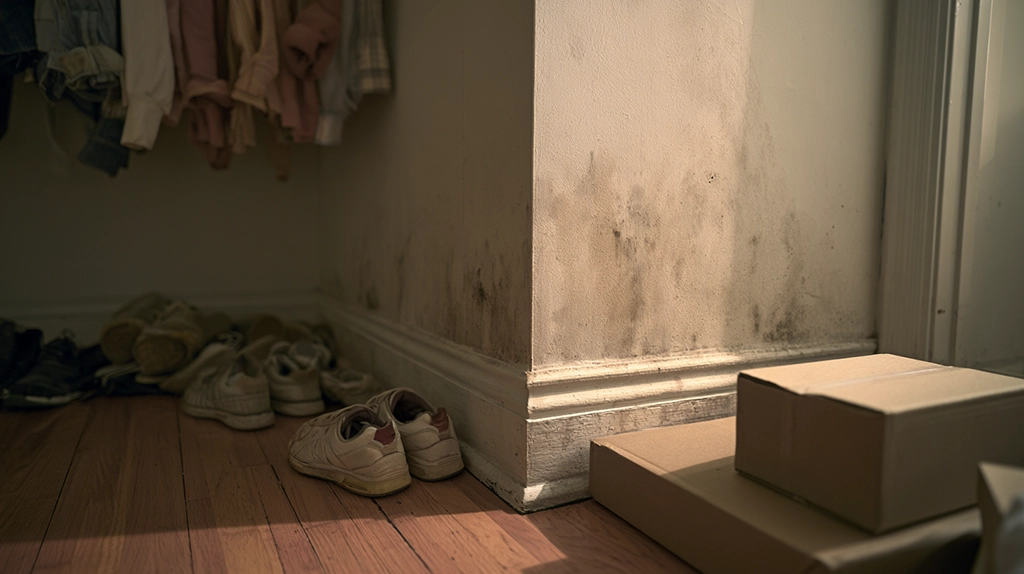
Recognising a mold problem early—before it becomes extensive or causes significant health effects—requires attention to both visual indicators and health patterns in the children using the space. Visual and olfactory indicators: visible mold growth—any visible mold on walls, ceilings, floors, fixtures, or furnishings is an indicator of a mold problem regardless of colour or apparent extent; common locations in daycare settings: bathroom tiles and grout, around sinks and water tables, window sills, air conditioning outlets, soft furnishings near windows, carpet edges against exterior walls. Persistent musty odour—a musty, earthy, or stale smell that persists after thorough cleaning is a reliable indicator of hidden mold; the odour is caused by microbial volatile organic compounds (MVOCs) produced during fungal metabolism; if a room smells musty, there is mold somewhere even if it is not visible. Moisture damage indicators—water staining on walls or ceilings (brown or yellow rings), peeling or bubbling paint, warped or swollen wood surfaces, rust stains around fixtures, condensation on interior window surfaces. Recurring condensation—windows that regularly have interior condensation in cold weather indicate indoor humidity is too high (typically above 60% RH during cold periods). Health-based indicators in children: patterns of health symptoms in children attending a specific facility or room that cannot be explained by infectious illness; symptoms that improve when children leave the facility (weekends, holidays) and worsen on return; disproportionate rates of respiratory symptoms, runny nose, eye irritation, or skin rashes among children in the facility compared to similar facilities; staff also experiencing unexplained respiratory symptoms in the same environment. What to do when mold is suspected: arrange professional inspection with a qualified building inspector or environmental consultant; do not assume the problem is minor because it is not visible.
How should you clean a home with mold to make it safe for a baby or toddler?
Cleaning mold in a home with a baby or toddler requires balancing the need for thorough mold removal with the precaution of minimising infant exposure to disturbed spores and cleaning chemicals during the process. Key principles for safe mold cleaning in homes with young children: remove children from the area before cleaning—children (especially infants and toddlers) should not be present during mold cleaning or in the immediate aftermath; spore disturbance during cleaning creates acute high-concentration exposures; return children to the area only after thorough cleaning and adequate ventilation time (typically several hours minimum). Use appropriate but child-safe cleaning agents: white vinegar (5% acetic acid)—effective against most surface molds, non-toxic residue, child-safe after drying; recommended concentration: undiluted for active mold cleaning. Hydrogen peroxide (3% household grade)—effective mold killer, breaks down to water and oxygen, no toxic residue; recommended: spray, leave 10 minutes, scrub, ventilate. Avoid: bleach, ammonia, and commercial biocides that are not child-safe; if bleach is used, thorough rinsing and extended ventilation are required before children re-enter; never mix bleach with vinegar or ammonia. Surface-specific approaches: non-porous surfaces (tiles, sealed floors, glass)—can be effectively cleaned and disinfected; wipe surfaces with cleaning agent, allow contact time, scrub with a dedicated cleaning tool, wipe clean, ventilate. Porous materials with mold (carpet, soft toys, fabric furnishings, wallboard)—cannot be effectively cleaned; must be removed and discarded; attempting to clean porous mold-affected materials simply relocates the problem. After cleaning: test the air quality by returning one air quality indicator (portable CO₂/humidity monitor) before reintroducing children; verify the moisture source has been addressed (most important step); continue monitoring for mold recurrence.
What can parents do if their child’s daycare has a mold problem?
Parents who suspect or discover mold in their child’s daycare have several avenues for raising concerns, insisting on remediation, and protecting their child’s health while the situation is resolved. Steps for parents: communicate concerns to the director in writing—document concerns about visible mold, musty odour, or health symptoms in your child that you believe may be related to the facility environment; written communication creates a record of when concerns were raised; request a written response. Request facility inspection records—licensed childcare facilities have regulatory inspection records; request copies of recent licensing inspections; check whether any building/health/safety issues were noted; in most jurisdictions, inspection records are public documents. Consult licensing authorities—if the facility does not respond adequately or if you believe the situation poses immediate health risk: report concerns to the state or territory childcare licensing authority; file a written complaint; request an inspection; licensing authorities can require facilities to address structural and environmental deficiencies as a condition of continued operation. Document your child’s health symptoms—keep a written record of respiratory symptoms, skin conditions, or other health issues; note whether symptoms are worse during the week when attending daycare and improve on weekends or during childcare holidays; this temporal pattern is important evidence if health complaints are formally linked to the facility. Seek medical assessment—if your child has persistent or significant symptoms, discuss the potential environmental connection with your paediatrician; the paediatrician can provide a medical record linking symptoms to the exposure period, which supports regulatory action. Consider temporary arrangements—while a remediation dispute is ongoing, consider whether temporary alternative childcare is appropriate depending on the severity of the problem and your child’s symptom burden. Know your rights: in most jurisdictions, childcare providers have a duty of care to maintain a safe environment; this includes addressing environmental health hazards promptly.