
Introduction: When Nature Feels Like Meat
According to NATIONAL GEOGRAPHIC
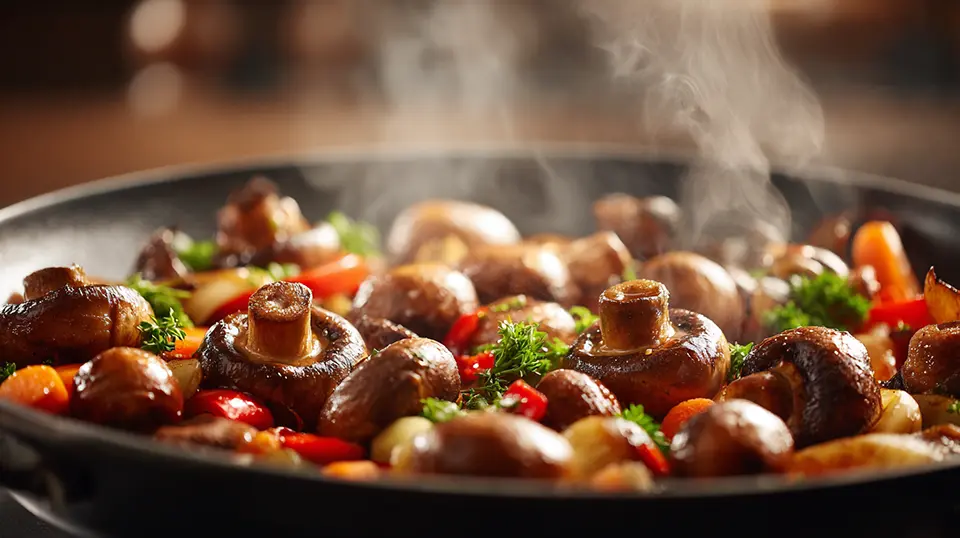
Bite into a well-cooked lion’s mane mushroom (Hericium erinaceus), and you might be surprised. It pulls apart like chicken, chews like crab, and satisfies with the same fullness as meat. In a world hungry for sustainable alternatives, this isn’t a coincidence—it’s biology, culture, and engineering, all working together.
For centuries, cooks have reached into the forest or the garden to find meat-like qualities in plants and fungi. But today, we’re going further. Scientists, chefs, and food innovators are intentionally crafting meat-like foods—not just for taste, but for texture, aroma, and nutrition—with fungi at the center of the movement.
Why do some natural foods feel meaty to begin with? And what happens when we don’t just mimic meat, but build something better?

Source: Wikimedia Commons, CC BY-SA 3.0
Section 1: Texture Is King—And Mushrooms Know It
Most of what we associate with meatiness isn’t taste—it’s texture. The chew, the tear, the resistance of muscle fiber as it gives way between our teeth.
Mushrooms come remarkably close. Why?
Because their cell walls are made of chitin—the same tough, fibrous material found in crab shells and insect exoskeletons. This gives mushrooms, especially lion’s mane and shiitake (Lentinula edodes), their distinct bounce and chew. Slice them thick, sear them hot, and suddenly you’re in steak territory.
Plants like jackfruit also mimic meat through long, fibrous strands that shred like pulled pork. But mushrooms go a step further: they not only feel like meat, they flavor like meat too.

1cup sliced shiitakes and 1 tbsp oregano, 1 tbsp parsley, 4 tbsp Liquid Smoke– grill on barbeque.
1 cup white beans, cooked and mashed 2 tbsp vegan mayo juice of 1/2 lemon Pepper, Salt 1 clove garlic, minced 1 tsp celery seed 1 scallion, minced
Mix together bean mash.
Spread beans on lavish, layer the mushrooms, add a romaine leaf and roll, cut, and eat.
Source: Wikimedia Commons, CC BY-SA 3.0
Section 2: Umami—The Fifth Taste That Changes Everything
Mushrooms are packed with glutamates, compounds responsible for umami—a savory depth often associated with beef, soy sauce, or aged cheese.
Add heat, and mushrooms trigger the Maillard reaction—the browning process that forms the crispy seared crust on a steak, or the caramelization in roasted vegetables. This reaction releases complex flavor molecules, turning plain fungi into something that smells and tastes indulgent.
Spices and aromatics also help build the illusion. Onions and garlic, rich in sulfur compounds, develop meaty aromas when cooked. Dried herbs like cumin and paprika, full of aldehydes, add fat-like warmth. Together, they create what food scientist Felix Stöppelmann calls a “meaty-like smell” from humble origins.

Source: Wikimedia Commons, CC BY-SA 3.0
Section 3: From Kitchen to Laboratory—Designing the Meatiness
While home cooks can coax mushrooms into tasting like short ribs or scallops, scientists are now engineering ingredients to go even further.
In a 2024 study at Stanford University, mechanical engineering researchers tested plant-based meats under tension and compression—just like building materials. They found that ground meats are fairly easy to mimic, but whole cuts like steak or chicken breast remain technologically complex.
That’s where fungi shine.
Startups like Prime Roots use mycelium—the branching underground network of fungi—as a ready-made scaffold. Its natural fibrosity mimics muscle tissue without extensive processing.
“When you tear it apart, it has that fibrosity,” says founder Kimberlie Le. “But obviously, it’s not an animal.”
Other entrepreneurs like Ziliang Yang, founder of Mourish, focus on mushroom jerky that leverages the native texture of fungi—no extrusion, no tricks. Just natural structure, carefully dried and seasoned.
Section 4: Flavor From Fermentation—The Ancient Trick
Across cultures, fermentation has always been the shortcut to umami: from Korean doenjang to Indian dosa batter. Now, scientists are fermenting vegetables with fungi to develop meat-like flavor molecules.
At the University of Hohenheim, Stöppelmann and his team fermented onion water with fungi. The result? A broth that smells like liver and sausage, thanks to aroma compounds naturally produced by the fungi as they metabolize sulfur-rich ingredients.
“After fermentation, you get this meaty-like smell,” he says.
These broths can act as flavor bases for plant-based meats, bringing them closer to the real thing without additives.

Source: Wikimedia Commons, CC BY-SA 4.0
Section 5: The Protein Puzzle—Can Fungi Compete?
Flavor and texture are only part of meat’s appeal. The other is protein—and this is where mushrooms have historically fallen short.
Though fungi do contain protein, they’re not cultivated for it. But Luiza Villela, founder of unClassic Foods and former Beyond Meat developer, is changing that.
By growing mushrooms on protein-rich media, her company has created strains with four times more protein than traditional mushrooms. The result: fungi that don’t just resemble meat in texture—but can rival it nutritionally.

Source: Wikimedia Commons, CC BY-SA 4.0
Section 6: Beyond Imitation—A Better Meat Experience?
For Kesha Strickland, founder of The Mushroom Meat Co., imitation is no longer the goal. Instead, she argues, fungi can surpass meat.
“If you could eat mushrooms and get the experience of beef, without the drawbacks of beef, and with all the benefits of mushrooms—why would you not?” she asks.
Those benefits are real:
- No cholesterol
- High in fiber
- Rich in beta-glucans that support immunity
- Far less resource-intensive to grow
Why aim to copy meat when fungi might offer a better version of indulgence?

Source: Wikimedia Commons, CC BY-SA 3.0
Section 7: Meat, Masculinity, and Meaning
Even with all this innovation, Desiree Nielsen, a registered dietitian and author, believes meat’s hold is as much cultural as it is sensory.
“Meat represents indulgence, masculinity, power,” she explains. “We associate it with wealth and status.”
This creates emotional ties. A lentil stew may taste amazing, but a sizzling steak communicates something more—tradition, celebration, identity.
Even as we develop sustainable, flavorful alternatives, we’re also fighting against deep-rooted perceptions of what “real food” should look and feel like.

Source: Wikimedia Commons, CC BY-SA 3.0
Section 8: My View – Mushrooms as Memory and Future
As a reporter who’s watched the plant-based revolution evolve over the last decade, I believe fungi hold a special place. They’re not just ingredients—they’re bridges.
They connect tradition with technology, nature with lab science, and sensory pleasure with sustainability.
A mushroom doesn’t need to become a cow to be satisfying. Its flavors, fibers, and even flaws can offer something unique, not just derivative. In a world struggling with climate, supply chains, and health, mushrooms are not just substitutes—they’re solutions.
Conclusion: The New Meatiness Isn’t Imitation—It’s Innovation
Mushrooms are meaty not by accident, but by evolution. Chitin, glutamates, natural fibers—all converge to create food that feels indulgent, tastes savory, and satisfies deeply.
As scientists, chefs, and food entrepreneurs tap into fungi’s potential—from mycelium-based jerky to protein-rich fermented broths—the future of meat may no longer depend on animals.
We may never fully give up on meat. But we don’t have to, because nature already offers us options that are just as satisfying—and possibly even better.

Source: Wikimedia Commons, CC BY-SA 4.0
References
- Wikipedia – Hericium erinaceus
- Wikipedia – Shiitake
- Wikipedia – Chitin
- Wikipedia – Umami
- Wikipedia – Maillard reaction
- Prime Roots
- unClassic Foods
- Beyond Meat
- University of Hohenheim
- Stanford University
According to NATIONAL GEOGRAPHIC
Key Takeaways
- Bite into a well-cooked lion’s mane mushroom (Hericium erinaceus), and you might be surprised.
- In a world hungry for sustainable alternatives, this isn’t a coincidence—it’s biology, culture, and engineering, all working together.
- And what happens when we don’t just mimic meat, but build something better?
- The chew, the tear, the resistance of muscle fiber as it gives way between our teeth.
- Slice them thick, sear them hot, and suddenly you’re in steak territory.
Frequently Asked Questions
What should you know about section 1: Texture Is King—And Mushrooms Know It?
Most of what we associate with meatiness isn’t taste—it’s texture. The chew, the tear, the resistance of muscle fiber as it gives way between our teeth.
What should you know about section 2: Umami—The Fifth Taste That Changes Everything?
Mushrooms are packed with glutamates, compounds responsible for umami—a savory depth often associated with beef, soy sauce, or aged cheese.
What should you know about section 3: From Kitchen to Laboratory—Designing the Meatiness?
While home cooks can coax mushrooms into tasting like short ribs or scallops, scientists are now engineering ingredients to go even further.
What should you know about section 4: Flavor From Fermentation—The Ancient Trick?
Across cultures, fermentation has always been the shortcut to umami: from Korean doenjang to Indian dosa batter. Now, scientists are fermenting vegetables with fungi to develop meat-like flavor molecules.
What should you know about section 5: The Protein Puzzle—Can Fungi Compete??
Flavor and texture are only part of meat’s appeal. The other is protein—and this is where mushrooms have historically fallen short.