
According to CAU
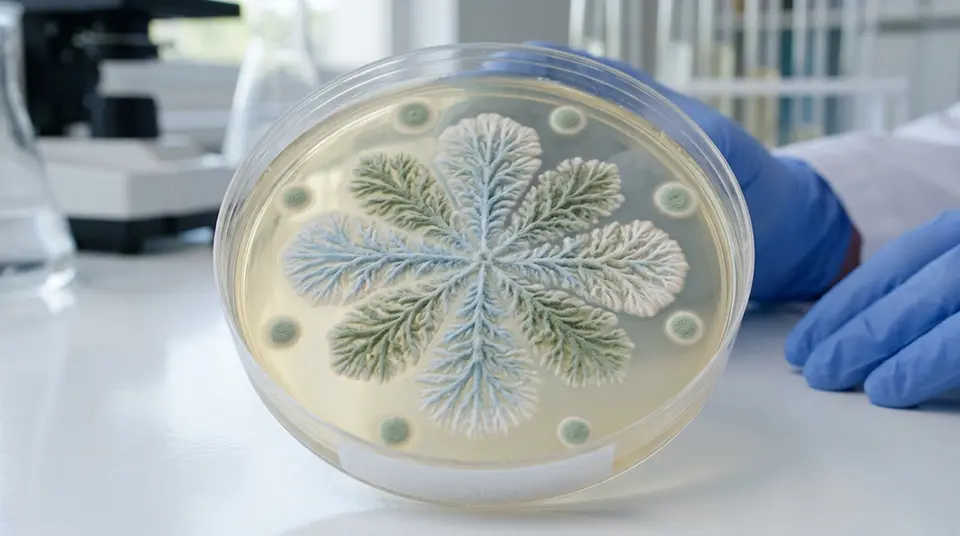
As global temperatures rise and environmental conditions shift, fungal infections are increasing worldwide, posing growing risks to agriculture, wildlife, and human health. While the majority of fungi are harmless—or even beneficial—new research suggests that the evolutionary leap from environmental fungus to human pathogen may be far smaller than previously believed. Scientists warn that climate change , combined with changing human health landscapes, could accelerate the emergence of new fungal threats.

Source: Wikimedia Commons – File:Mold_spores_microscope.jpg, CC BY 3.0
Fungi: From Ecological Allies to Opportunistic Threats
Fungi are essential components of Earth’s ecosystems. They decompose organic matter, recycle nutrients, and form symbiotic relationships with plants and animals. Many fungi live harmlessly in soil, water, or on living organisms without causing disease.
However, a subset of fungi are classified as opportunistic human pathogens. These organisms typically do not cause illness in healthy individuals but can trigger severe and sometimes life-threatening infections in people with weakened immune systems. Such infections are becoming more common as global populations age, medical treatments suppress immunity, and environmental conditions change.

Source: Wikimedia Commons – File:Fungi_collage.jpg, CC BY-SA 3.0
Shifting Research Focus Toward Human Health
Traditionally, fungal research has focused heavily on crop pathogens due to their economic impact. Institutions such as Kiel University and the Max Planck Institute for Evolutionary Biology have long studied fungi that damage plants.
In recent years, however, researchers have increasingly turned their attention to fungi that threaten humans. A new international study led by Professor Eva Stukenbrock has investigated why certain fungi might transition into human pathogens under conditions associated with global change.
The research focuses on fungi belonging to the order Trichosporonales, a group that includes both harmless soil-dwelling species and species capable of causing serious infections in humans.
Comparing Harmless and Harmful Fungi
To understand what differentiates dangerous fungi from benign ones, researchers conducted a comparative genomic analysis of closely related species. Some of these fungi typically inhabit soil environments, while others thrive within mammalian bodies.
The initial assumption was that pathogenic fungi would possess unique “virulence genes” that directly enable them to invade human tissues, evade immune responses, or produce toxins. Instead, the analysis revealed a surprising result: harmless and pathogenic species were genetically very similar.
This finding challenged conventional ideas about fungal pathogenicity. Rather than being driven by the presence or absence of specific genes, the transition toward pathogenic behavior appeared to depend on how efficiently fungi use their existing genetic toolkit.
The Importance of Protein Production Efficiency
The study identified a crucial difference in how fungi translate genetic information into proteins. While both harmless and harmful species share largely similar genes, pathogenic fungi are more efficient at producing certain proteins—particularly those involved in fat metabolism.
This distinction is significant because the human body is rich in lipids, whereas soil environments are typically dominated by carbon-based nutrients. Fungi that can rapidly produce proteins optimized for fat metabolism are therefore better suited to survive and grow within a mammalian host.
The mechanism underlying this efficiency lies in the process of translation, a late stage of gene expression in which messenger RNA (mRNA) is converted into proteins. Translation speed depends on how well mRNA codons align with transfer RNA (tRNA) molecules.
In pathogenic fungi, this alignment is especially efficient for genes involved in lipid metabolism, allowing faster protein production and quicker physiological adaptation.
Laboratory Evidence Supports the Findings
The researchers confirmed these genomic insights through laboratory experiments. When grown in lipid-rich conditions that mimic the mammalian body, fungi with optimized fat-metabolism translation adapted significantly faster and showed stronger growth than their soil-dwelling relatives.
These results support the idea that improved efficiency in protein production—not dramatic genetic innovation—can enable fungi to exploit new environments such as the human body.
A Smaller Evolutionary Step Than Expected
One of the most concerning conclusions of the study is that the evolutionary barrier to pathogenicity may be relatively low. Because harmless and harmful species already share much of their genetic makeup, only subtle shifts in gene expression efficiency may be required for a fungus to become a health threat.
This raises the possibility that fungi currently considered harmless could evolve pathogenic traits relatively quickly, especially under selective pressures such as higher temperatures.
Climate Change and Fungal Adaptation
Climate change plays a central role in this emerging risk. Rising global temperatures mean that more fungi are becoming capable of surviving at or near human body temperature—a key prerequisite for human infection.
As fungi adapt to warmer environments, the number of species pre-adapted to human hosts may increase. When combined with optimized fat metabolism and efficient protein production, this thermal tolerance could accelerate the emergence of new fungal pathogens.

Source: Wikimedia Commons – File:Global_Warming_Map.jpg, CC BY-SA 4.0
Antifungal Resistance Adds to the Concern
The findings are particularly troubling in the context of growing antifungal resistance. Treatment options for fungal infections are already limited compared to those for bacterial diseases. If more fungi gain the ability to infect humans while also developing drug resistance, managing fungal disease could become significantly more difficult.
Researchers emphasize that understanding early warning signs—such as genomic signatures linked to fat-metabolism optimization—could help identify potential threats before they cause widespread illness.
Public Health Implications
From a public health perspective, the study suggests a need to rethink how fungal risks are monitored. Instead of focusing solely on known pathogens, scientists may need to track environmental fungi that show metabolic and translational traits associated with human adaptation.
This proactive approach could become increasingly important as climate change, global travel, and expanding immunocompromised populations create new opportunities for fungal diseases to emerge.
Rethinking Fungal Pathogenicity
Overall, the research challenges long-held assumptions about what makes a fungus dangerous. Pathogenicity is not necessarily driven by unique genes, but by how efficiently existing genes are used in a new environment.
This insight fundamentally changes the understanding of fungal evolution and highlights fungi as highly adaptable organisms capable of rapid ecological shifts.
Conclusion
The study reveals that fungi may become human pathogens more easily and more quickly than previously assumed. Optimized fat metabolism, efficient protein production, and rising global temperatures together create conditions that favor this transition.
As climate change continues and human vulnerability increases, monitoring fungal evolution will be essential. Understanding these subtle but powerful mechanisms offers a critical opportunity to anticipate and mitigate future fungal health threats before they escalate into widespread public health crises.
References
Centers for Disease Control and Prevention (CDC) – Fungal Infections
Intergovernmental Panel on Climate Change (IPCC)
According to CAU
Key Takeaways
- As global temperatures rise and environmental conditions shift, fungal infections are increasing worldwide, posing growing risks to agriculture, wildlife, and human health.
- Scientists warn that climate change , combined with changing human health landscapes, could accelerate the emergence of new fungal threats.
- Many fungi live harmlessly in soil, water, or on living organisms without causing disease.
- Such infections are becoming more common as global populations age, medical treatments suppress immunity, and environmental conditions change.
- Institutions such as Kiel University and the Max Planck Institute for Evolutionary Biology have long studied fungi that damage plants.
Frequently Asked Questions
Why might fungi increasingly become human pathogens in a warming world?
As global temperatures rise and environmental conditions shift, fungal infections are increasing worldwide, posing growing risks to agriculture, wildlife, and human health. While the majority of fungi are harmless—or even beneficial—new research suggests that the evolutionary leap from environmental
How does climate change make humans more vulnerable to fungal infections?
Fungi are essential components of Earth’s ecosystems. They decompose organic matter, recycle nutrients, and form symbiotic relationships with plants and animals. Many fungi live harmlessly in soil, water, or on living organisms without causing disease.
What steps are researchers taking to prepare for rising fungal threats?
However, a subset of fungi are classified as opportunistic human pathogens. These organisms typically do not cause illness in healthy individuals but can trigger severe and sometimes life-threatening infections in people with weakened immune systems. Such infections are becoming more common as globa
What are the main risks associated with Why Fungi?
Traditionally, fungal research has focused heavily on crop pathogens due to their economic impact. Institutions such as Kiel University and the Max Planck Institute for Evolutionary Biology have long studied fungi that damage plants.
What actions are recommended regarding Why Fungi?
In recent years, however, researchers have increasingly turned their attention to fungi that threaten humans. A new international study led by Professor Eva Stukenbrock has investigated why certain fungi might transition into human pathogens under conditions associated with global change.