A Case of Mistaken Identity in the Microbial World
What are oomycetes and why are they often mistaken for fungi?
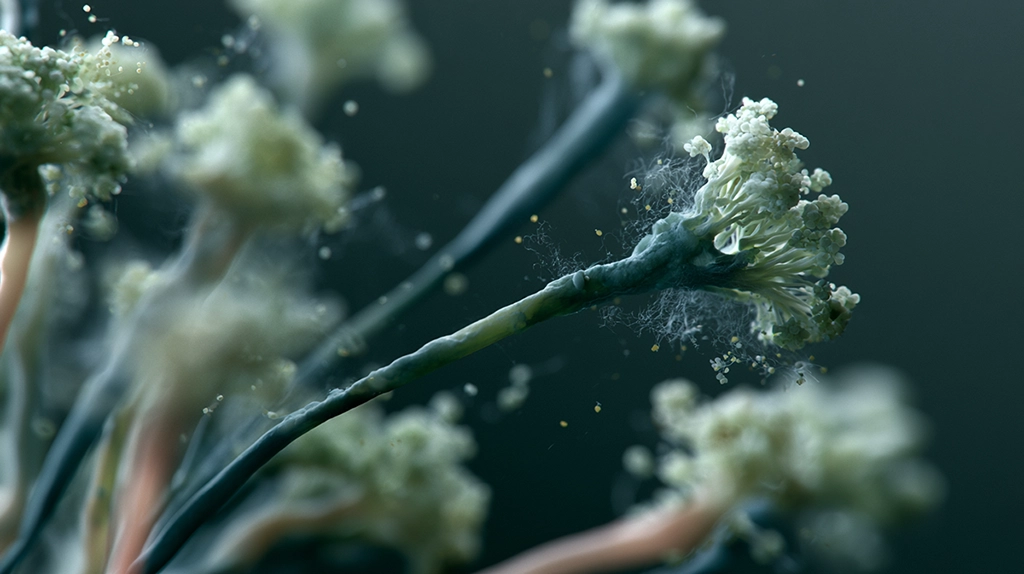
In plant pathology, some of the most destructive organisms on Earth look almost identical to fungi. Under a microscope, they form branching filaments, invade plant tissues, and spread through spores—traits typically associated with molds.
However, many of these organisms are not fungi at all.
They belong to a separate group called oomycetes, a lineage more closely related to algae than to true fungi. Despite their similar appearance, oomycetes differ in their cellular structure, genetics, and biochemical behavior.
A recent study published in the Journal of Inflammation Research examined two species, Peronospora ficariae and Wilsoniana bliti, revealing how these fungus-like organisms infect plants and develop disease.
This distinction is not just scientific nuance. It directly affects how plant diseases are diagnosed and controlled.

Watching Plant Pathogens at Work
How do oomycetes infect plants at the microscopic level?
To better understand these organisms, researchers conducted controlled laboratory experiments that allowed them to observe infection processes in detail. Using microscopy and specialized culture systems, they tracked how oomycetes develop their filament-like structures and interact with plant tissues.
These structures resemble fungal hyphae and allow the pathogen to penetrate plant surfaces. Once inside, the organisms form specialized feeding structures that extract nutrients from host cells without immediately killing them.
This strategy enables the pathogen to spread quietly through plant tissues before visible symptoms appear. By the time discoloration or leaf damage becomes noticeable, the infection may already be well established.
Observing these early stages under laboratory conditions provides critical insight into how infections begin and why they are often detected too late.

Why Oomycetes Resemble Fungi
What are the key biological differences between fungi and oomycetes?
At first glance, oomycetes and fungi appear nearly identical. Both produce filamentous growth and spores, and both can cause widespread plant disease.
However, their biology tells a different story. True fungi have cell walls made primarily of chitin, the same material found in insect exoskeletons. Oomycetes, in contrast, build their cell walls largely from cellulose, a compound more commonly associated with plants.
Genetically, oomycetes belong to a group called stramenopiles, which includes algae and diatoms. This evolutionary distinction influences how they grow, reproduce, and respond to treatments.
Many fungicides are designed to target fungal-specific metabolic pathways. As a result, they may be less effective against oomycetes. Misidentifying these organisms as fungi can therefore lead to ineffective disease control strategies.

Oomycetes and Agricultural Disease
Why are oomycetes important in crop protection?
Oomycetes are responsible for some of the most devastating plant diseases in history and continue to threaten global agriculture today.
One of the most famous examples is Phytophthora infestans, the organism behind the Irish Potato Famine. This outbreak reshaped global food systems and caused widespread famine and migration.
Modern oomycete pathogens, including those responsible for downy mildews and water molds, continue to infect crops such as vegetables, grains, and ornamental plants. These organisms thrive in moist conditions and can spread rapidly through rainfall, irrigation systems, and dense plant canopies.
Once established, infections can move quickly through fields, often outpacing detection and treatment efforts. Understanding how these pathogens operate is essential for protecting crop yields and ensuring food security.

How Infection Begins
What are the stages of oomycete infection in plants?
Oomycete infections typically begin when microscopic spores land on plant surfaces. Under favorable environmental conditions, these spores germinate and produce filamentous structures capable of penetrating plant tissues.
After breaching the outer defenses, the pathogen spreads between plant cells while extracting nutrients from the host. This phase often occurs without triggering strong immune responses, allowing the infection to progress unnoticed.
As the pathogen continues to grow, visible symptoms begin to appear. Leaves may develop lesions, discoloration, or abnormal growth patterns. By this stage, the organism may already have colonized significant portions of the plant.
Identifying these stages helps researchers pinpoint where interventions may be most effective.

Why Laboratory Research Matters
How do laboratory studies improve plant disease management?
Field observations can show where and when plant diseases occur, but laboratory research reveals how infections develop at the biological level.
Controlled experiments allow scientists to isolate specific processes, observe pathogen behavior step by step, and analyze plant responses. These insights support the development of better diagnostic tools, predictive models, and targeted treatments.
As climate change alters environmental conditions, pathogens are expanding into new regions. Rising temperatures, changing rainfall patterns, and global trade all influence how diseases spread.
Understanding the biology of oomycetes is becoming increasingly important for managing these emerging risks.
Seeing Beyond Appearances
Why is correct pathogen identification critical for disease control?
The study of oomycetes highlights an important lesson in microbiology: organisms that look similar may behave very differently.
When pathogens are misidentified as fungi, treatments designed for fungal biology may fail. This can allow diseases to spread unchecked and increase crop losses.
Modern tools such as genetic sequencing, biochemical analysis, and advanced imaging are helping scientists distinguish between fungal and fungus-like organisms more accurately.
Accurate identification is the foundation of effective disease management.

When Classification Shapes Control
How does classification influence agricultural treatment strategies?
For researchers and farmers alike, understanding what a pathogen truly is determines how it should be controlled.
Oomycetes occupy a unique position between fungal biology and other microbial lineages. Their distinct characteristics require tailored management approaches that differ from traditional antifungal strategies.
Recognizing these differences allows for more precise interventions, better treatment outcomes, and improved crop protection.
In plant pathology, knowing the identity of the pathogen is often the first and most important step toward controlling it.

❓ FAQ
What are oomycetes?
Oomycetes are fungus-like organisms that resemble fungi but belong to a different evolutionary group related to algae. They include important plant pathogens such as downy mildews and water molds.
Why are oomycetes often mistaken for fungi?
They share similar physical traits, including filamentous growth and spore production. However, their cellular structure and genetic makeup are different from true fungi.
Why don’t fungicides always work against oomycetes?
Many fungicides target biological pathways specific to fungi. Since oomycetes have different cellular processes, these treatments may be less effective.
What crops are affected by oomycete diseases?
Oomycetes infect a wide range of crops, including potatoes, vegetables, grains, and ornamental plants. Some species have caused major agricultural crises.
How can farmers manage oomycete infections?
Effective management includes accurate pathogen identification, targeted treatments, environmental control, and monitoring conditions that favor disease spread.
References
Kamoun, S., et al. (2015). The Top 10 oomycete pathogens in molecular plant pathology. Molecular Plant Pathology.
Haas, B. J., et al. (2009). Genome sequence and analysis of the Irish potato famine pathogen Phytophthora infestans. Nature.
Journal of Inflammation Research (2026). Study on Peronospora ficariae and Wilsoniana bliti.
FAO – Plant disease and food security resources.
https://www.fao.org