
According to THE GUARDIAN
Introduction: Floating Toward a Fungal Future
A kayak made of mushrooms sounds like something straight out of a science fiction novel or a child’s whimsical dream. But in 2025, artist and experimental designer Sam Shoemaker turned this idea into a reality—constructing and paddling a fully functional kayak made not from plastic, but from mycelium, the filament-like root structure of fungi.
Shoemaker’s creation is more than an artistic stunt. It’s a living challenge to the global plastic crisis, and a poetic demonstration of what’s possible when biology, craftsmanship, and imagination collide. But can a boat made of fungus truly replace conventional materials in design, transportation, and beyond? Or is this kayak simply symbolic—a floating metaphor for sustainability?
In this in-depth feature, we examine the innovation, science, limitations, and promise of a mushroom-based alternative to plastic, told through the journey of one unusual vessel and the man who grew it.
Section 1: A Mushroom in the Shape of a Boat
Sam Shoemaker’s kayak was not manufactured—it was grown.
Using Ganoderma spp., a wild polypore fungus he foraged near his home in Los Angeles, Shoemaker inoculated a hemp-based substrate placed inside a mold shaped like a traditional ocean fishing kayak. Over the course of four weeks, the mycelium colonized the form, knitting the substrate into a singular, rigid structure.
Once fully grown, the kayak was dried to stop fungal growth and sealed with beeswax, rendering it resistant to water. The final product, weighing roughly 135 pounds, was launched into open water and paddled like any conventional vessel. It floated. It held. And with it, Shoemaker opened a new conversation.

Source: Wikimedia Commons, CC BY-SA 4.0
Section 2: What Is Mycelium, and Why Use It?
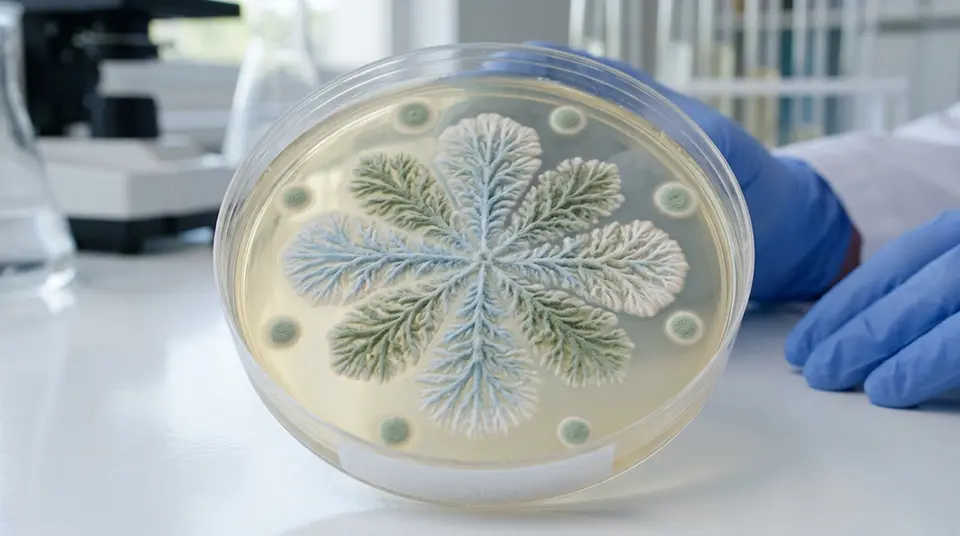
Mycelium is the vegetative part of a fungus—a vast underground network of thread-like structures called hyphae. Unlike mushrooms, which are the fruiting bodies, mycelium is the organism’s root system. It’s not only regenerative, but incredibly versatile.
Over the past decade, mycelium has been studied for use in:
- Biodegradable packaging
- Acoustic and thermal insulation
- Faux leather products
- Furniture and homeware
- Food alternatives
- And now, watercraft
The appeal is clear: it grows rapidly, requires minimal energy, can be shaped into almost any form, and naturally decomposes without harming the environment. In a world choked by microplastics and oil-based polymers, mycelium offers a potentially circular, zero-waste material cycle.

Source: Wikimedia Commons, CC BY-SA 4.0
Section 3: Building the Kayak – A Step-by-Step Overview
Shoemaker’s process was both scientific and intuitive. Here’s how he built the mushroom kayak:
- Selecting the Fungus: He chose a wild Ganoderma polypore for its known structural qualities and natural abundance.
- Preparing the Substrate: Hemp fiber, a renewable and strong material, was used as the “food” for the fungi.
- Inoculation and Growth: The fungus was introduced to the substrate and packed into a mold shaped like a standard kayak. Growth occurred over roughly 4 weeks in a humid, controlled environment.
- Drying: After the mycelium fully colonized the form, it was dried to kill the living organism and lock in the shape.
- Sealing: A layer of natural beeswax provided water resistance.
While simple in theory, this process required patience, precision, and experimentation. Temperature, moisture, and fungal health all had to be monitored closely.

Source: Wikimedia Commons, CC BY-SA 4.0
Section 4: From Mold to Marine – Putting It to the Test
Once completed, Shoemaker paddled the kayak in calm coastal waters off Southern California. Though it performed admirably, a few realities surfaced:
- It was heavy—about 135 pounds, far more than a typical fiberglass or plastic kayak.
- It moved slower than commercial alternatives, due to the weight and friction of the unpolished surface.
- Durability under stress (waves, sun, saltwater) remained untested over long periods.
Still, the fact that it floated, could be paddled, and didn’t fall apart, was enough to ignite public interest—and skepticism.

Source: Wikimedia Commons, CC BY-SA 4.0
Section 5: Strengths and Weaknesses of the Mushroom Boat
Strengths
- Fully biodegradable
- Made from renewable resources
- Grown, not manufactured—requiring low energy inputs
- Symbolically powerful; draws attention to sustainable alternatives
Weaknesses
- Heavy and less durable than plastic or fiberglass
- Susceptible to UV, salt, and mechanical degradation over time
- Growth process takes weeks, not scalable yet for mass production
- Finish materials like beeswax may not hold up in harsh conditions
Section 6: More Than a Boat – A Metaphor for Change
What Shoemaker has created isn’t just a kayak—it’s a living metaphor. It asks us to rethink our dependency on petroleum-based products. It urges designers to work with biology instead of against it. It invites conversations about sustainability that don’t begin with guilt but with curiosity and creativity.
In Shoemaker’s words, this is “less a product and more a possibility.”
And in a world deeply entangled in oil, waste, and climate anxiety, that possibility may be the most important part.
Section 7: The Future of Mycelium-Based Design
The mushroom kayak joins a growing list of biodesign projects exploring mycelium’s potential:
- Ecovative Design has pioneered mycelium packaging as an alternative to Styrofoam.
- MycoWorks is developing mycelium-based “leather” for fashion and footwear.
- The Growing Pavilion in the Netherlands is a full building made from mycelium panels.
The shift toward fungal futures isn’t just experimental—it’s gaining serious traction. But for mycelium to move from prototype to product, challenges must be addressed:
- Standardizing growth methods
- Improving waterproofing without harming biodegradability
- Reducing weight and increasing structural resilience
- Navigating regulatory and industry certifications
Still, as researchers and artists push boundaries, what was once fantasy becomes material reality.
Section 8: My Reflections – Between Awe and Accountability
I find Shoemaker’s kayak deeply compelling—not just for its novelty, but for its sincerity. In a world of greenwashing, fast fixes, and marketable “eco-products,” this project feels honest. It doesn’t pretend to be perfect. It doesn’t overpromise. Instead, it invites us to witness a process, embrace an experiment, and reconsider what “natural” materials could mean in the Anthropocene.
We’re far from mass-producing mushroom boats. But that’s not the point. The point is to float an idea—literally—and see where it might take us.
Conclusion: Paddling Forward, Gently
Shoemaker’s mushroom kayak may never replace plastic crafts at scale. But as a piece of design, art, and ecological inquiry, it achieves something rare: it reshapes the narrative. It reminds us that materials can be grown instead of extracted, that decay can follow use without pollution, and that maybe, just maybe, fungi are our unlikely allies in designing a future we can float on—safely, sustainably, and beautifully.
References
According to THE GUARDIAN
Key Takeaways
- A kayak made of mushrooms sounds like something straight out of a science fiction novel or a child’s whimsical dream.
- But can a boat made of fungus truly replace conventional materials in design, transportation, and beyond?
- In this in-depth feature, we examine the innovation, science, limitations, and promise of a mushroom-based alternative to plastic, told through the journey of one unusual vessel and the man who grew it.
- Once fully grown, the kayak was dried to stop fungal growth and sealed with beeswax, rendering it resistant to water.
- Mycelium is the vegetative part of a fungus—a vast underground network of thread-like structures called hyphae.
Frequently Asked Questions
What should you know about section 1: A Mushroom in the Shape of a Boat?
Sam Shoemaker’s kayak was not manufactured—it was grown.
What should you know about section 2: What Is Mycelium, and Why Use It??
Mycelium is the vegetative part of a fungus—a vast underground network of thread-like structures called hyphae. Unlike mushrooms, which are the fruiting bodies, mycelium is the organism’s root system. It’s not only regenerative, but incredibly versatile.
What should you know about section 3: Building the Kayak – A Step-by-Step Overview?
Shoemaker’s process was both scientific and intuitive. Here’s how he built the mushroom kayak:
What should you know about section 4: From Mold to Marine – Putting It to the Test?
Once completed, Shoemaker paddled the kayak in calm coastal waters off Southern California. Though it performed admirably, a few realities surfaced:
What should you know about section 6: More Than a Boat – A Metaphor for Change?
What Shoemaker has created isn’t just a kayak—it’s a living metaphor. It asks us to rethink our dependency on petroleum-based products. It urges designers to work with biology instead of against it. It invites conversations about sustainability that don’t begin with guilt but with curiosity and crea